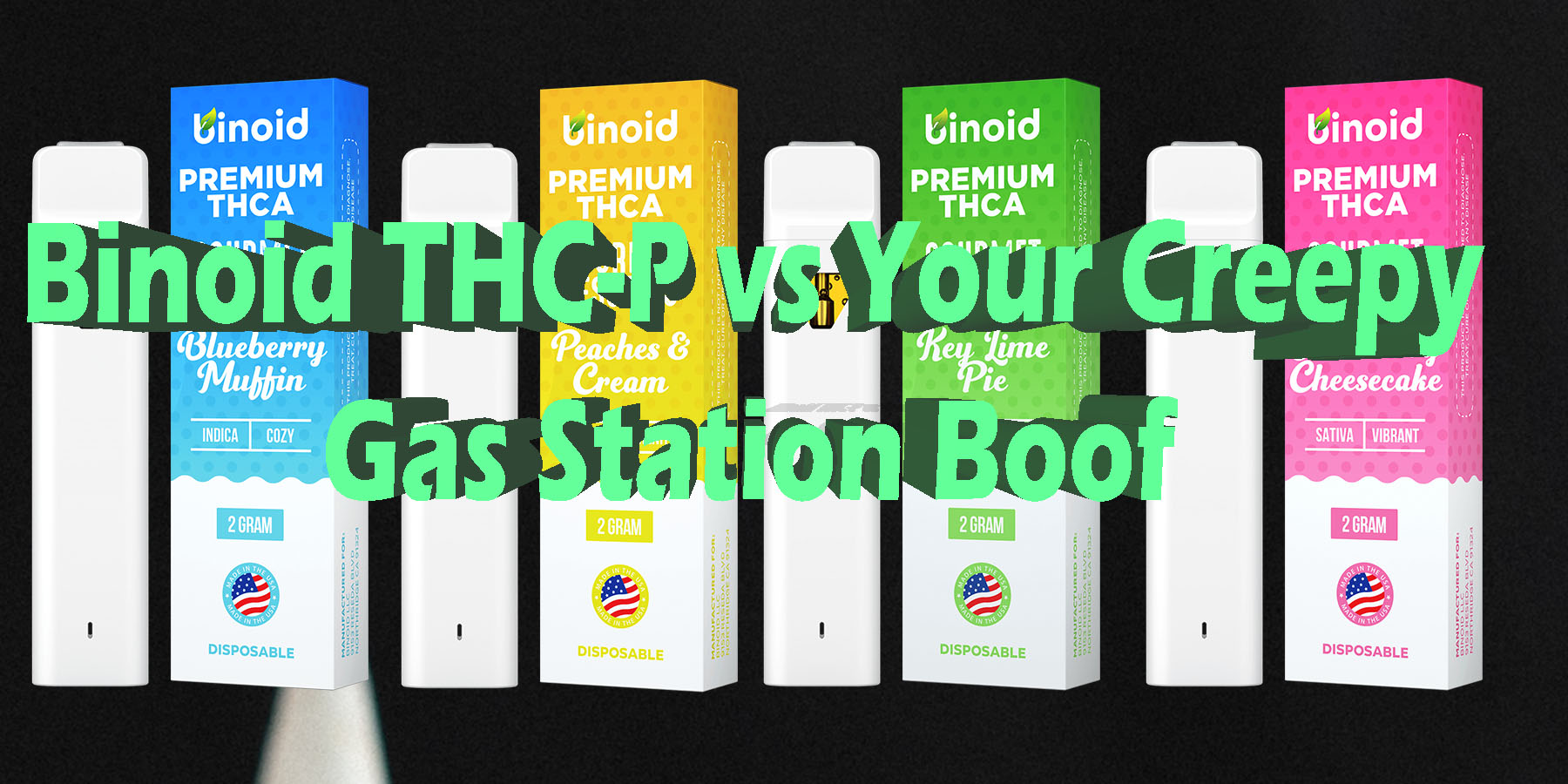
There Is a Gas Station on Every Corner, and Most of Them Are Lying to You
Let us begin with a scene that will be uncomfortably familiar to anyone who has spent time navigating the wilder frontiers of the hemp derived cannabinoids market. You are standing beneath fluorescent lights, somewhere between the beef jerky and the lottery tickets, staring at a rotating display rack of foil-wrapped THC-P disposables with names like “Galaxy Blast” and “Chronic Thunder” and “Alien OG Supreme,” each one promising an experience so transcendent it apparently required a comic book aesthetic and a font last seen on a mid-2000s energy drink. The price point is aggressively accessible. The ingredients panel is a work of creative fiction.
The Certificate of Analysis, if one exists at all, is a QR code that leads to a PDF that was last updated during a different presidential administration. You buy it anyway, because it is Tuesday and the options feel limited, and two hours later you are either underwhelmed, mildly concerned about what you just inhaled, or both simultaneously which is its own kind of achievement.
This is not a niche problem. It is the defining consumer experience of a market that expanded faster than its quality controls, populated by operators whose relationship to the actual science of hemp derived cannabinoids is approximately as deep as their relationship to the customers purchasing their products. The hemp cannabinoid industry created enormous opportunity, and enormous opportunity attracts both genuine innovators and extraordinarily motivated opportunists and the fluorescent-lit rotating rack is where the opportunists most visibly congregate.
Against this backdrop, the question of where to source your THC-P products is not a matter of brand preference. It is a matter of basic self-respect, applied chemistry, and the recognition that what you consume ought to meet at least the same sourcing standards you apply to, say, your olive oil. Binoid CBD, operating through Binoidcbd.com, exists at the precise opposite end of this spectrum and understanding why requires starting where all meaningful conversations about cannabinoids should start: with the molecule itself.
To Buy THC-P Products Click Here
THC-P: The Compound That Rewrote the Potency Conversation
THC-P tetrahydrocannabiphorol was not engineered in a laboratory by someone trying to create the hemp industry’s next marketing hook. It was discovered in 2019 by a team of Italian researchers analyzing the chemical composition of a specific FM2 cannabis variety using advanced liquid chromatography and mass spectrometry techniques, and its identification represented a genuine scientific development rather than a commercial one. The structural distinction between THC-P and the more familiar Delta-9 THC is a matter of carbon chain length — a detail that sounds arcane until you understand what it means at the receptor level. Delta-9 THC carries a pentyl side chain, meaning five carbon atoms in its alkyl tail. THC-P carries a heptyl side chain seven carbon atoms and that additional length dramatically changes how the molecule fits into and activates the CB1 receptor, the primary cannabinoid receptor in the central nervous system.
The research emerging from that 2019 discovery suggested that THC-P binds to CB1 receptors with an affinity approximately thirty-three times greater than conventional Delta-9 THC a figure that has since been widely cited, occasionally misunderstood, and consistently compelling to anyone paying attention to the frontier of cannabinoid pharmacology. Greater binding affinity does not translate in a simple linear fashion to a proportionally more intense subjective experience, because the relationship between receptor binding and phenomenology is considerably more complex than a multiplier applied to a familiar baseline.
What it does suggest, and what experienced consumers have broadly corroborated, is that THC-P operates in a qualitatively distinct register producing an effect profile that is deeper, more enveloping, and more persistent than what most hemp derived cannabinoids deliver, at doses that would read as modest by conventional standards. This is a molecule that rewards respect and punishes carelessness, which is precisely why the sourcing conversation matters so much more here than it does with, say, a CBD wellness supplement.
Recommended products
The Regulatory Architecture: Why the Gas Station Problem Exists at All
To understand why the hemp cannabinoid market contains such a dramatic quality range from rigorously formulated, third-party tested products available through platforms like Binoidcbd.com all the way down to the foil-wrapped mystery compounds of the rotating rack you need to spend a moment with the regulatory environment that made all of it possible. The 2018 Farm Bill federally legalized hemp and its derivatives under a Delta-9 THC threshold of 0.3% by dry weight, creating an overnight legal market for an enormous range of hemp derived cannabinoids that had previously existed in considerably murkier territory. The legislation was transformative. It was also, inevitably, incomplete because the speed of cannabinoid chemistry innovation consistently outpaces the deliberative pace of regulatory development, leaving meaningful gaps in oversight that responsible brands fill through voluntary standards and that irresponsible ones exploit through deliberate opacity.
THC-P, as a naturally occurring hemp constituent, sits within the legal framework established by the Farm Bill when derived from compliant hemp but the absence of specific federal regulation around minor cannabinoids means that the consumer protection infrastructure most people take for granted in regulated product categories simply does not exist in a standardized form here. There is no mandatory third-party testing requirement uniformly enforced at the federal level. There is no standardized labeling framework that compels brands to disclose what is actually in their products with the precision that, for instance, pharmaceutical or food manufacturing regulations demand.
State-level frameworks vary enormously some have moved to schedule specific minor cannabinoids, others have implemented testing requirements, and still others have left the market entirely to its own devices. The result is a consumer landscape in which the burden of vetting a product falls almost entirely on the individual, and in which the difference between a brand that has internalized this responsibility and one that has not is the difference between an experience worth having and a situation worth regretting. This is not an argument for avoiding THC-P it is an argument for being extremely selective about where you source it, and for understanding that Binoidcbd.com operates in a categorically different space than the gas station endcap.
The Hardware Conversation: Why the Vessel Is as Important as What’s Inside It
There is a particular irony embedded in the gas station THC-P disposable experience that does not get discussed nearly enough, and it is this: even if the extract inside a cheaply manufactured device were somehow pure and accurately labeled which, to be clear, is a significant hypothetical the hardware itself would still compromise the experience in ways that range from mildly disappointing to genuinely concerning. The delivery mechanism for an inhaled cannabinoid is not a neutral vessel. It is an active participant in the chemistry of consumption, and the materials, heating element design, and engineering tolerances of a vaporizer device have direct, measurable consequences for what actually reaches the consumer’s respiratory system and, subsequently, their bloodstream.
The heating element is where this conversation begins and, for most budget hardware, where it ends badly. Resistive coil systems the kind found in the majority of inexpensive THC-P disposables heat unevenly, run hot at their contact points, and are frequently constructed from materials that off-gas under thermal stress in ways that introduce compounds into the vapor stream that have no business being there. The degradation of cannabinoids and terpenes under excessive heat is not a theoretical concern; it is a documented chemical reality.
When a delicate molecule like THC-P already operating at the edge of the potency spectrum is subjected to the thermal inconsistency of a poorly calibrated coil, the result is a vapor that is simultaneously less representative of the extract’s actual composition and more likely to contain thermal degradation byproducts. Ceramic heating elements, which distribute heat more evenly and operate at more stable temperatures without the off-gassing characteristics of cheaper metals, represent the hardware standard that a cannabinoid as precise and potent as THC-P genuinely requires. This is the standard that Binoid CBD applies to its THC-P disposables not as a premium upsell, but as a baseline engineering requirement for a product that takes its own formulation seriously.
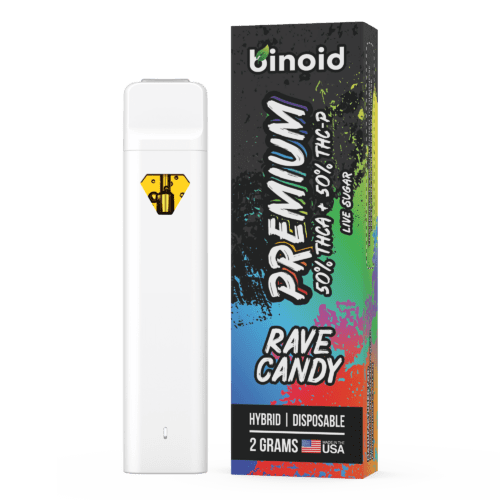
THC-P Disposables: Accessibility Without Apology
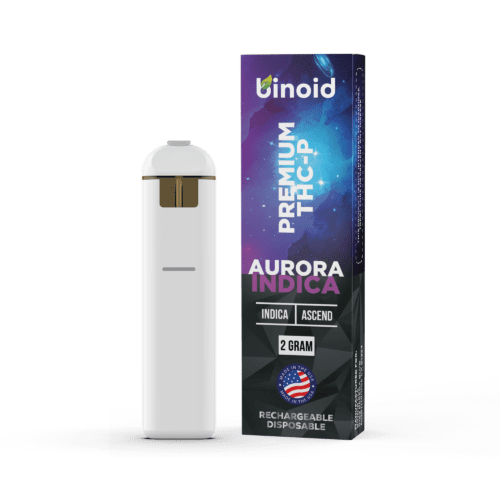
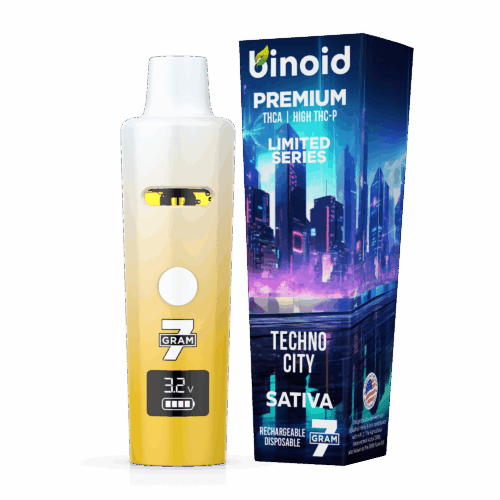
The THC-P disposable occupies a specific and valuable position in the consumption format landscape one defined by immediacy, portability, and the elimination of any friction between the decision to consume and the experience itself. Draw-activated, self-contained, and requiring no battery management or cartridge compatibility research, a well-made THC-P disposable is the format that travels without complications, that functions reliably in unfamiliar settings, and that delivers the full quality of the extract it carries without demanding anything from the user beyond the capacity to inhale. The appeal is obvious. What is less obvious until you have made the comparison directly is how dramatically the quality of that experience diverges based on where the device was sourced.
Binoid CBD’s THC-P disposables, available through Binoidcbd.com, are engineered around a set of commitments that the gas station product cannot make and would not make if it could. The battery maintains consistent voltage output across the full operational life of the device, which matters because voltage inconsistency is one of the primary causes of the “hits differently on draw three than it did on draw one” phenomenon that characterizes poorly engineered disposables. The oil reservoir is sealed against oxidative degradation in a way that preserves the integrity of the THC-P extract from first use to last.
The formulations themselves are built around specific cannabinoid and terpene combinations that give each product a defined experiential character not a generic “strong” designation, but a considered profile that reflects genuine formulation intent. When a Binoid THC-P disposable describes itself as indica-leaning or sativa-forward, that language is backed by actual terpene composition rather than conjured from the same creative energy that produces names like “Cosmic Dragon Platinum.” This is what it looks like when a brand respects both the molecule and the person consuming it.
THC-P Cartridges: For the Consumer Who Has Developed Opinions About Voltage
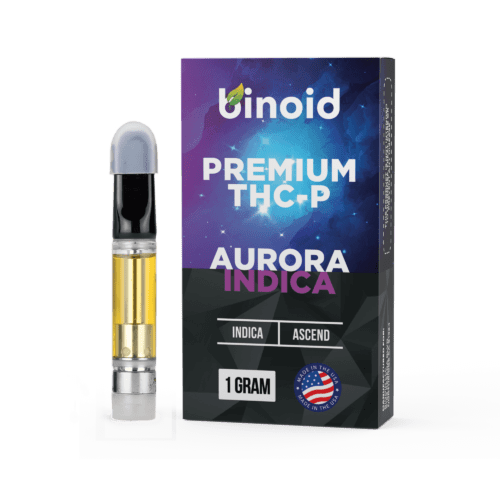
The THC-P cartridge format serves a consumer who has graduated past the set-it-and-forget-it convenience model and arrived at a place of genuine hardware engagement someone who owns a quality 510-thread variable voltage battery, who has preferences about preheat functions and draw resistance, and who understands that the ability to modulate temperature is not an audiophile-style affectation but a practical tool for shaping the experience. At lower voltage settings, the more volatile terpene fractions of a THC-P extract are preserved in the vapor, producing a flavor-forward draw with a gentler onset that allows the full effect profile to develop gradually. At higher voltages, the vapor becomes denser and more immediately potent the extract’s full cannabinoid payload delivered with a directness that leaves little ambiguity about what just happened.
Binoid CBD’s THC-P cartridges, sourced through Binoidcbd.com, are constructed to withstand the demands of variable voltage hardware without compromising either the integrity of the oil or the structural reliability of the cartridge itself. The materials in contact with the extract the chamber walls, the mouthpiece, the connection hardware are selected for chemical inertness under heat, which is a specification that sounds technical until you consider that the alternative is plasticizers and adhesives migrating into a THC-P extract at operating temperature and arriving in your lungs as an uninvited additive. The cartridge lineup spans a range of formulations that reflect the same specificity of purpose found across the Binoid catalog different cannabinoid ratios, different terpene profiles, different intended experiential registers giving the consumer enough range to match the product to the moment rather than forcing every context into a single format’s capabilities.
THC-P Gummies: The Long Arc of a Considered Experience
There is a category of experience that inhalation simply cannot provide, and it belongs to the edible format specifically to the THC-P gummy, which operates on a timescale and with a duration that transforms the nature of the engagement entirely. When THC-P is consumed orally and processed through the hepatic system, the liver’s first-pass metabolism converts a portion of the THC-P into metabolites that are themselves psychoactively active, which means the oral route delivers not just the parent compound but a cascade of related molecular activity that deepens and extends the experience in ways that inhalation bypasses entirely. The onset is slower typically ranging from forty-five minutes to two hours depending on the individual’s metabolic rate, recent food intake, and digestive efficiency but the duration extends correspondingly, producing an experience arc that can sustain itself across four to eight hours with a consistency that no inhalation format can match.
This pharmacokinetic profile makes the THC-P gummy a format that demands more planning than a disposable and rewards that planning proportionally. It is not the format for a spontaneous fifteen-minute window; it is the format for an evening that has been deliberately cleared, a creative session with genuine time allocated to it, or a restorative day off that deserves more than a passing encounter with a cannabinoid. Binoid CBD’s THC-P gummies, available on Binoidcbd.com, address the formulation challenges unique to the oral format with the same rigor applied across the rest of the product line.
The bioavailability problem inherent to lipophilic cannabinoids in an aqueous digestive environment the tendency of oil-based compounds to aggregate rather than disperse for absorption is addressed through emulsification technology that improves consistency of uptake and reduces the dose-to-dose variability that makes poorly formulated edibles an exercise in unpredictability. The dosing is clearly labeled, the cannabinoid content batch-verified through third-party testing, and the flavor profiles crafted with enough care that the consumption experience itself is worth something before the THC-P ever reaches systemic circulation.
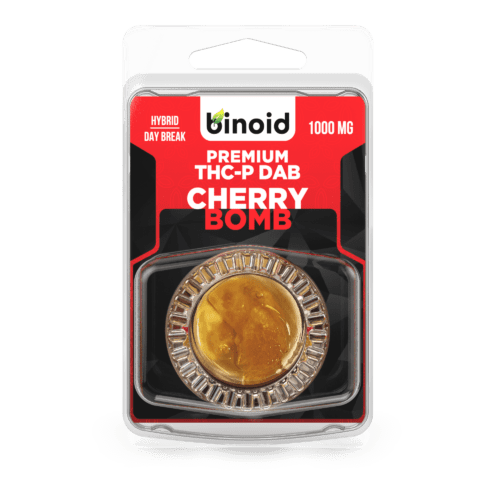
THC-P Tinctures: Precision as a Practice
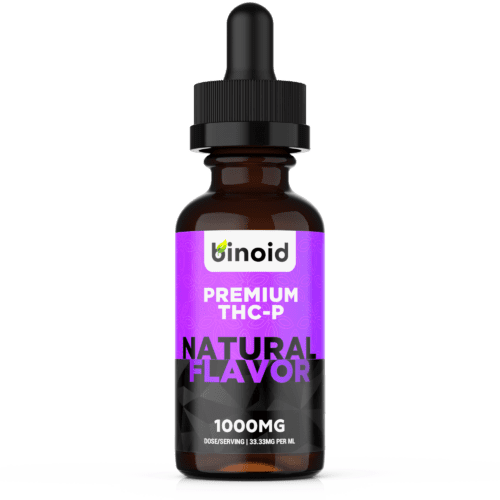
The THC-P tincture is the format for the consumer who has decided to treat their cannabinoid practice the way a serious home cook treats their spice cabinet with specificity, with calibration, and with the understanding that imprecision at the input stage produces inconsistency at the output stage. Administered sublingually, a THC-P tincture delivers its cannabinoid payload through the mucosal tissue beneath the tongue and along the inner cheeks, bypassing much of the first-pass hepatic metabolism that characterizes oral ingestion and producing onset in a timeframe that sits between inhalation and full edible digestion typically fifteen to forty-five minutes, with a duration meaningfully longer than inhalation but more modifiable than a gummy that has already been fully committed to the digestive process.
The graduated dropper is the tincture format’s defining feature and its primary advantage for anyone interested in precise dose management with a compound as potent as THC-P. The ability to adjust dose in increments to start conservatively, assess the experiential landscape, and titrate upward from an informed baseline rather than committing to a fixed dose and waiting to discover whether it was appropriate is a capability that experienced consumers of high-potency hemp derived cannabinoids consistently identify as essential. Binoid CBD’s THC-P tinctures, sourced through Binoidcbd.com, are formulated in MCT oil carriers that enhance the lipid-soluble cannabinoid’s absorption profile, labeled with the transparency that makes dose management actually possible, and tested at the batch level to ensure that the concentration on the label corresponds to the concentration in the dropper. That last point should be unremarkable. In the current market, it is anything but.
The Sourcing Standard: What Binoid’s Transparency Actually Means
The Certificate of Analysis has become the hemp cannabinoid industry’s most cited and most frequently abused quality signal. Every brand with a website and a product claims to be “lab-tested,” and in a technical sense, most of them are because running a single potency test on a single sample and posting the result as a blanket quality endorsement for an entire product line is, technically, testing. What it is not is the rigorous, batch-specific, multi-panel verification that actually tells a consumer something meaningful about the product in their hand. The distinction matters enormously with a compound like THC-P, where the consequences of inaccurate labeling either in potency or in contaminant presence are not the mild inconvenience they might be with a low-potency CBD product but are instead potentially significant experiences that a consumer had no intention of signing up for.
Binoidcbd.com makes its Certificates of Analysis accessible, batch-specific, and comprehensive in a way that reflects genuine institutional commitment to transparency rather than the performance of it. The testing panels cover not just cannabinoid potency confirming that the THC-P concentration matches its label claim but residual solvents from the extraction process, heavy metals that can concentrate in hemp biomass from contaminated agricultural soil, pesticide residues that represent a particular concern given hemp’s well-documented capacity for phytoremediation, and microbial contamination profiles that matter for any inhaled or ingested product.
The laboratories conducting this testing are independent and ISO-accredited, which means their results are not subject to the conflict of interest that plagues in-house testing or the relationships that exist between some brands and their preferred testing partners. This is the infrastructure of accountability, and it is what separates a brand that deserves your trust from one that is simply asking for it.

The Final Verdict: Spend Your Money Where the Science Lives
The gas station THC-P disposable is not an inherently bad idea. It is a bad execution of a reasonable concept, operating in a context that has no structural incentive to do better and every financial incentive to do cheaper. The rotating rack does not care about your experience. It cares about its margin, which is why the product sitting in that foil pouch was sourced, formulated, and manufactured at the intersection of minimum viable cost and maximum plausible deniability. The market has produced this outcome predictably, and it will continue to produce it, because the consumer who buys on price and convenience without asking harder questions will continue to be served by brands optimized for price and convenience rather than quality and integrity.
The consumer that Binoid CBD is built for has decided, at some point, to ask the harder questions about extraction methodology, about testing protocols, about the sourcing of hemp biomass, about the engineering standards of the hardware delivering the extract, about whether the terpene profiles described on a product page correspond to anything detectable in the actual vapor. These are not difficult questions. They are the same questions that any informed consumer asks in any product category where what they are buying enters their body and affects their experience of being alive.
THC-P is a potent, genuinely fascinating molecule that sits at the frontier of what hemp derived cannabinoids can offer and it deserves to be engaged with through THC-P disposables, THC-P cartridges, THC-P tinctures, and THC-P gummies that were made by people who understand what it is, respect what it does, and have staked their reputation on delivering it cleanly, accurately, and without compromise. That brand is available at Binoidcbd.com. The other option glows under fluorescent lights between the energy drinks and the scratch tickets, and it will be there whenever you need a reminder of why sourcing matters.
To Buy THC-P Products Click Here
Recommended products
-
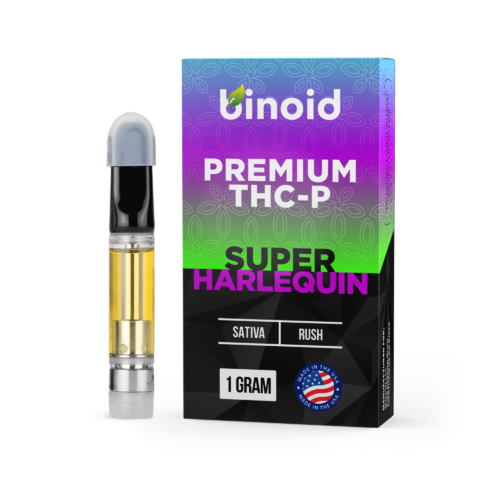
THC-P Vape Cartridge – Super Harlequin
$29.99$59.99 -
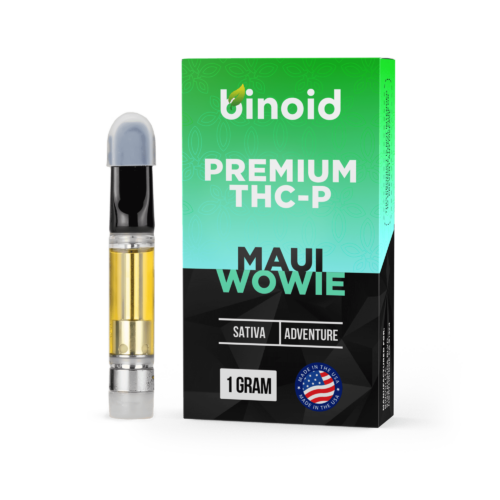
THC-P Vape Cartridge – Maui Wowie
$29.99$59.99 -
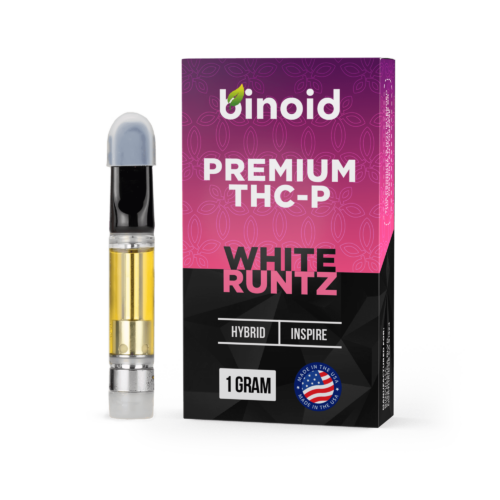
THC-P Vape Cartridge – White Runtz
$29.99$59.99