
Before the High, There’s the Science
There is a particular kind of magic in the cannabis plant that most people never stop to appreciate not because it’s hidden, but because the industry has historically done a poor job of explaining it. We talk about THC like it’s the whole story, when in reality, the plant is running an elaborate molecular theater long before anyone lights a match or presses a vaporizer button. At the center of that theater, playing what might be the most important role, is THCA tetrahydrocannabinolic acid and if you’ve arrived here wondering what is THCA, you’ve just asked one of the most rewarding questions the modern cannabis landscape has to offer.
THCA is, in the most precise terms, the raw, acidic precursor to Delta-9 THC. It is the compound that exists abundantly in freshly harvested, uncured cannabis flower the molecule the plant actually synthesizes through its own biosynthetic machinery before heat enters the equation. While the plant is alive and growing, it doesn’t produce THC in any significant quantity. It produces THCA. This is a distinction that carries enormous implications, not just scientifically, but legally, commercially, and experientially. Understanding it is the price of admission to an entirely new tier of cannabis literacy, and frankly, it’s the lens through which every sophisticated consumer should be evaluating their options in 2025 and beyond.
The chemistry here is elegant in its simplicity. THCA and Delta-9 THC share the same molecular skeleton, differing only in one critical detail: THCA carries an additional carboxyl group a cluster of atoms (–COOH) appended to the main structure that fundamentally changes how the molecule behaves in the body. Because of that carboxyl group, THCA does not bind effectively to the CB1 receptors in the human endocannabinoid system the receptors most directly associated with psychoactive experience. In its raw form, THCA is, for most practical purposes, non-intoxicating. You could consume raw THCA flower or THCA-rich fresh juice and not experience the effect most people associate with cannabis. The molecule is present, but it’s wearing a molecular overcoat that keeps it from engaging the receptors in question.
To Buy THCA Products Click Here
Recommended products
-
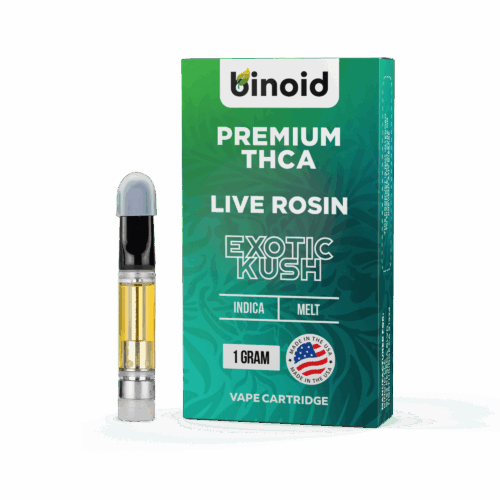
THCA Vape Cartridge – Live Rosin
$30.99$59.99 -
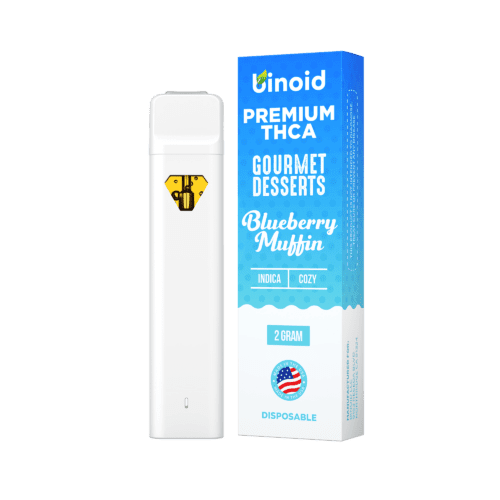
THCA Disposable 2 Gram – Gourmet Desserts
$37.99$73.00 -
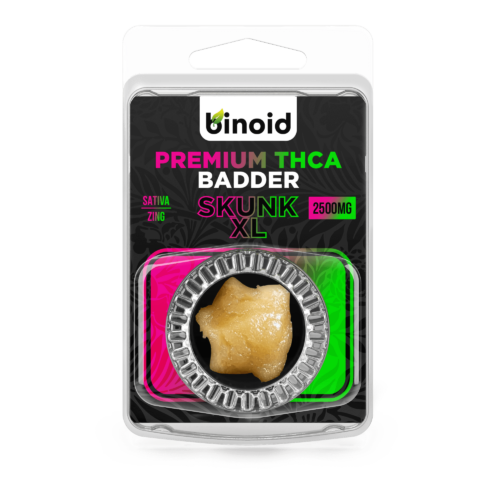
THCA Badder – 2500mg
$37.99$59.99 -
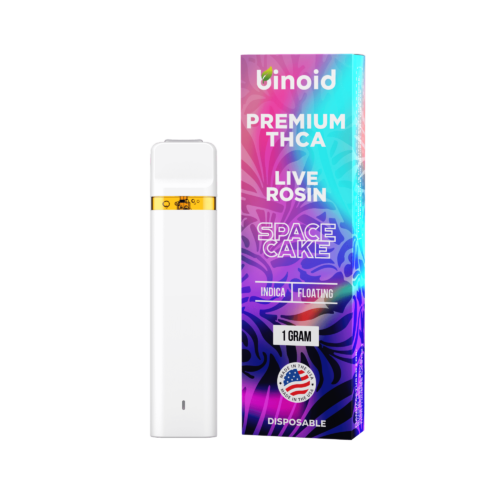
1 Gram THCA Disposable Vapes – Live Rosin
$32.99$67.99
Decarboxylation: The Transformation Nobody Talks About Enough
What changes everything and what every beginner absolutely must understand is a process called decarboxylation. When THCA is exposed to sufficient heat, that carboxyl group is cleaved off, releasing carbon dioxide and converting the molecule into Delta-9 THC with remarkable efficiency. This is why smoking a bowl or vaping a cartridge produces an intoxicating effect that eating raw hemp flower does not. The heat of combustion or vaporization performs the conversion in real time, transforming the inert acidic precursor into the fully activated compound that engages the CB1 receptor and delivers the experience consumers are seeking.
This is not a minor chemical footnote it is the entire mechanism that makes THCA products function as they do. When you pick up a product from Binoidcbd.com and see THCA listed as the primary cannabinoid, you are looking at a product whose potency and character is defined by this conversion process. The THCA content on the lab report is essentially a promise: apply heat, and this is what you will get. It is a more honest and, in many ways, more precise way of representing potency than some of the legacy THC labeling conventions that consumers grew accustomed to in the early days of cannabis retail.
The temperature thresholds matter here too, and they’re worth understanding if you care about getting the most from your product. Decarboxylation begins occurring at roughly 220°F (104°C) and accelerates significantly at higher temperatures. This is why different consumption methods vaping at controlled temperatures versus combustion versus oven-decarbing for edibles can produce subtly different experiential profiles. Lower-temperature vaporization tends to preserve more of the terpene compounds alongside the converted THC, which many experienced consumers argue produces a more nuanced, layered effect. This is one of the reasons the hardware you choose matters as much as the compound itself, a point we’ll return to in detail when we address the world of THCA cartridges and THCA disposables.
The Legal Architecture and Why It Matters for You
To understand why THCA has emerged as such a culturally significant product category in the American market specifically, you have to spend a moment inside the legal framework that governs hemp in the United States. The 2018 Farm Bill federally legalized hemp and hemp-derived products, defining hemp as cannabis with a Delta-9 THC concentration of no more than 0.3% by dry weight. That definition, written with the best intentions of a regulatory body trying to distinguish industrial hemp from recreational marijuana, created a nuanced opening that the market was quick to identify. Because THCA itself is not Delta-9 THC, hemp plants that are rich in THCA but low in Delta-9 can, under federal testing guidelines, qualify as legal hemp even when their total potential THC (after full decarboxylation) would be considerably higher.
This is not a loophole in the conspiratorial sense. It is a genuine artifact of how the law was written, and it is one that responsible, quality-focused brands have built serious businesses around. The operative word there, however, is responsible. The THCA market, precisely because of its legal accessibility, has attracted operators across the full spectrum of quality and integrity from meticulous craft cultivators and lab-obsessed formulators to cut-rate producers who treat third-party testing as an afterthought and consumer trust as a renewable resource. Navigating that landscape as a beginner requires exactly the kind of sourcing intelligence we’ll address in Part Two of this guide, but the foundational principle is worth stating here: the legal framework makes THCA accessible, but it does not make all THCA products equal.
What brands like Binoid have understood and built their reputation on is that the accessibility of the THCA market is only valuable insofar as it’s matched by product integrity. Binoidcbd.com has positioned itself at the premium end of this emerging category, sourcing hemp that meets rigorous standards and subjecting every product to comprehensive third-party lab testing that consumers can access directly. For a beginner trying to orient themselves in a market that can feel overwhelming, that kind of institutional commitment to transparency is not a minor differentiator it is the entire foundation of a trustworthy consumer relationship.
Recommended products
-
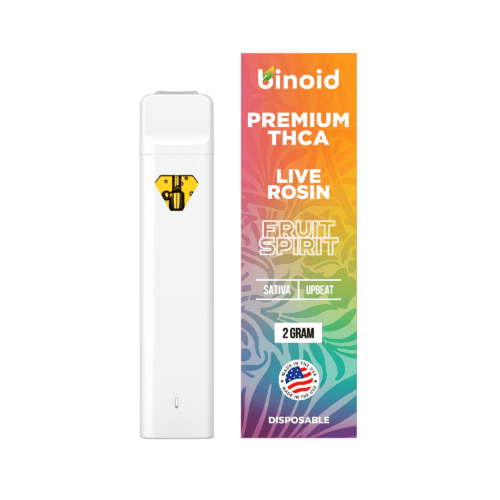
2 Gram THCA Disposable Vapes – Live Rosin
$39.99$73.00 -
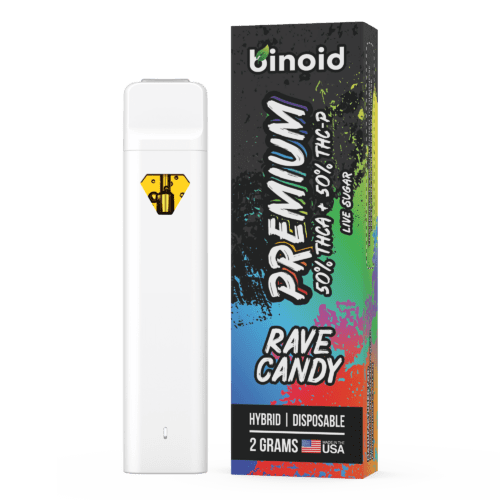
Live Sugar THCA + THC-P Disposable Vape – Pure 50/50
$39.99$69.99 -
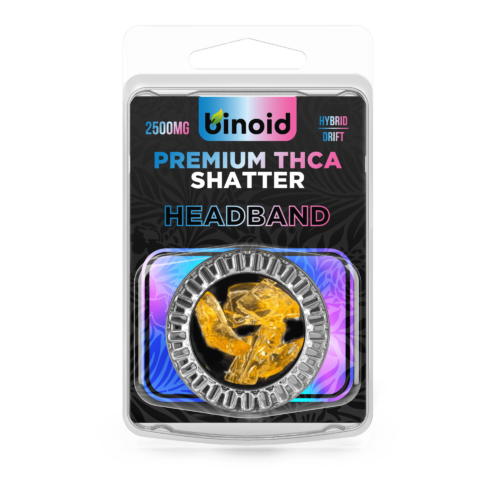
THCA Shatter – 2500mg
$37.99$59.99 -
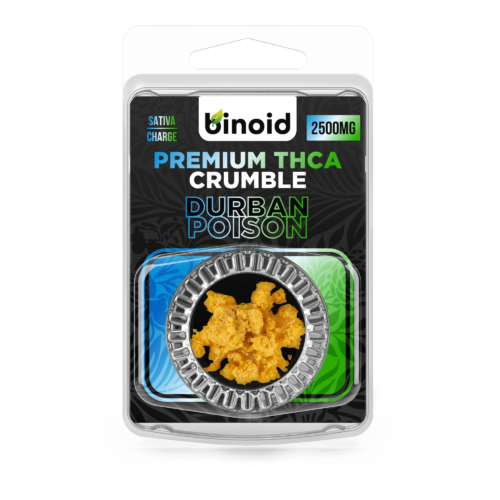
THCA Crumble – 2500mg
$37.99$59.99
Hardware, Heating, and the Architecture of a Good THCA Experience
The conversation about THCA cannot be separated from the conversation about delivery format, because THCA more than almost any other cannabinoid product is a compound whose experience is defined by the hardware and method through which it is consumed. This is particularly true in the vaporization category, where THCA cartridges and THCA disposables have become two of the most prominent and fastest-growing product formats on the market.
A THCA cartridge is, at its core, a pre-filled container of THCA-rich oil or distillate designed to attach to a compatible 510-thread battery. The consumer controls the experience through their choice of battery including voltage settings that determine the temperature at which the oil is vaporized and therefore the speed and completeness of the decarboxylation happening in real time. A well-engineered cartridge from a brand like Binoid will use hardware designed to minimize leakage, ensure consistent airflow, and heat the oil evenly without scorching the material a failure mode that produces harsh, unpleasant vapor and degrades the terpene profile that gives a strain its character. The oil itself matters enormously: Binoidcbd.com products are formulated with attention to the interplay between the THCA distillate and the terpene blends that determine the strain-specific experience, which is why their cartridge lineup reads more like a craft dispensary menu than a commodity product catalogue.
THCA disposables, meanwhile, represent the format designed for accessibility and convenience without sacrificing quality when they’re made well. A disposable is a self-contained, all-in-one device: battery, heating element, and THCA oil integrated into a single unit that requires no assembly, no separate hardware, and no technical knowledge to operate. For a beginner, this is often the ideal entry point, and Binoid’s disposable offerings are engineered to that standard devices that deliver a consistent, reliable experience from the first draw to the last, with strain-specific terpene profiles that give consumers real choice rather than a generic “hemp flavor” experience. The question of battery life and oil volume is worth attention too; a quality THCA disposable should be transparent about how many draws it’s designed to deliver and ensure the battery outlasts the oil, something cheaper options frequently fail to guarantee.
The Edible Dimension: When THCA Meets Your Kitchen Chemistry
If the vaporization formats represent THCA at its most immediate and technically precise, then the edible category represents the compound at its most culturally interesting and, for the uninitiated, its most frequently misunderstood. THCA gummies have emerged as one of the most searched and most purchased formats in the hemp-derived cannabinoid space, and for good reason: they offer a familiar, discreet, and portion-controlled entry point for consumers who either don’t vaporize or who simply want a different kind of experience from the one a cartridge or disposable provides. But there is a layer of science here that is genuinely important to understand before you reach for that first gummy, because the edible format introduces variables that don’t exist in the vaporization world.
The central question with any THCA edible is decarboxylation specifically, whether it has occurred during the manufacturing process and, if so, to what degree. Unlike a THCA cartridge or disposable, where the heat of vaporization performs the conversion in real time at the moment of consumption, an edible requires that the THCA be converted prior to ingestion in order to deliver a psychoactive experience. A well-formulated THCA gummy from a rigorous manufacturer like Binoid will specify whether the THCA has been decarboxylated in the production process, giving consumers the information they need to calibrate their expectations. This is not an academic distinction it is the difference between a product that delivers a robust psychoactive experience and one that delivers a more subtle, body-oriented effect profile. Brands that obscure this information, or that don’t have a clear answer when you ask, are brands you should approach with skepticism.
When THCA gummies are properly formulated with decarboxylated material, the resulting experience follows the classic logic of cannabinoid edibles: slower onset, typically ranging from 45 minutes to two hours depending on individual metabolism and the presence of food in the stomach, and a duration that tends to be significantly longer and more full-bodied than the experience delivered by inhalation. For beginners, this means that the golden rule of edible consumption applies here with full force start with a low dose, allow a full two hours before considering any additional intake, and treat the first session as a calibration experience rather than an optimization event. Binoidcbd.com structures its THCA gummy formulations with this beginner-friendly philosophy in mind, offering clearly dosed options that allow consumers to build their understanding of their own response before moving toward higher-potency configurations.
Recommended products
-
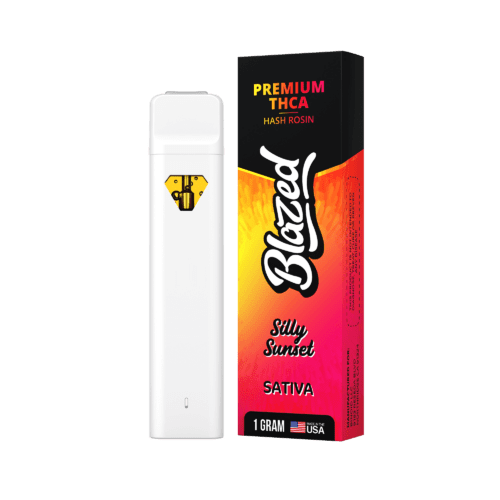
1 Gram THCA Disposable Hash Rosin – Blazed
$31.99$67.99 -
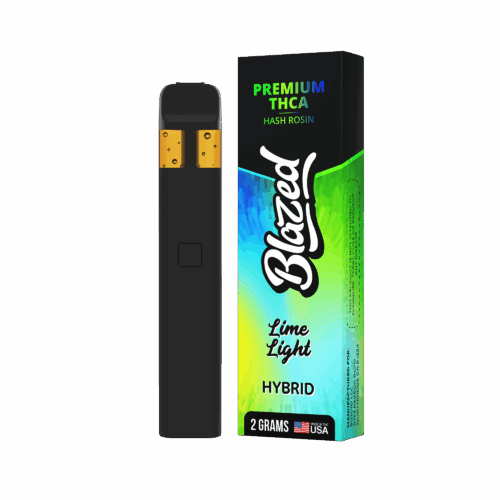
2 Gram THCA Disposable Hash Rosin – Blazed
$37.99$59.99 -
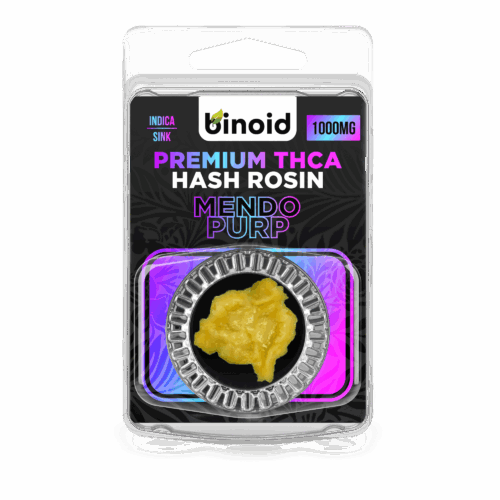
THCA Hash Rosin Dabs – 1000mg
$33.99$59.99 -
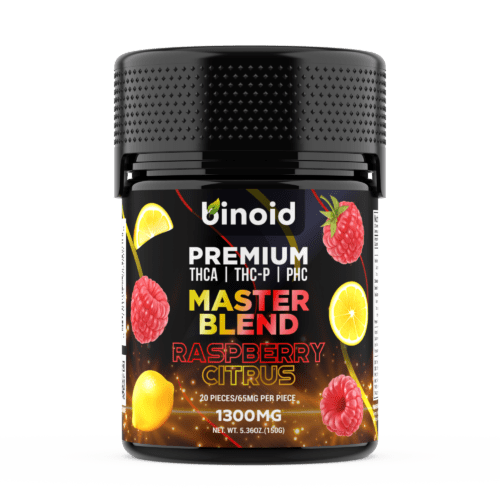
Master Blend Gummies (Release Sale)
$35.99$59.99
The Terpene Conversation: Why the Supporting Cast Deserves Top Billing
One of the more sophisticated developments in the premium THCA market and one that separates brands like Binoid from the commodity end of the spectrum is the increasing emphasis on terpene profiles as a primary quality indicator. Terpenes are the aromatic compounds responsible for the distinctive scents and flavors of different cannabis strains, but their significance extends well beyond sensory pleasure. Decades of research into the so-called entourage effect have built a compelling body of evidence suggesting that terpenes modulate and shape the experience of cannabinoids in meaningful ways that the same THCA content in a Sativa-leaning Durban Poison profile versus an Indica-leaning Granddaddy Purple profile will produce experientially distinct outcomes even at equivalent doses.
This matters practically for the beginner who is trying to navigate the product menu at Binoidcbd.com with any degree of intentionality. The strain names and terpene designations on Binoid’s THCA cartridges and disposables are not marketing decoration they are functional information about what kind of experience you’re likely to have. A cartridge heavy in myrcene and linalool, common in Indica-leaning profiles, tends to produce a more relaxed, physically settled experience. One dominated by limonene and pinene, characteristic of many Sativa-leaning varieties, tends toward a more alert, creative, socially energized effect. Learning to read terpene profiles is, for the serious THCA consumer, the equivalent of learning to read a wine label beyond the grape variety it is the move from casual consumption to genuine connoisseurship, and it’s a skill that pays dividends with every subsequent purchase.
Binoid’s product development philosophy leans heavily into this terpene-forward approach, which is one of the reasons their THCA cartridge lineup has developed such a loyal following among consumers who’ve previously felt underserved by generic, flavorless distillate products. The terpene blends used in Binoidcbd.com formulations are curated with attention to authenticity the goal being to deliver a profile that genuinely mirrors the character of the strain it references rather than approximating it with cheap, synthetic aromatic compounds that degrade quickly and taste artificial after the first few draws.
Sourcing Intelligence: How to Read a Brand Like a Professional
Perhaps the most important skill a beginner can develop in the THCA space more important than understanding decarboxylation curves, more important than memorizing terpene profiles is the ability to evaluate a brand’s sourcing and testing standards with the same critical eye that a food journalist would bring to evaluating a restaurant’s supply chain. This is not paranoia. It is a rational response to a market that, as noted in Part One, spans an enormous range of quality and integrity. The accessibility of THCA products is one of the great developments in the modern hemp industry, but accessibility without discernment is just a faster route to a disappointing experience.
The baseline standard for any THCA brand worth your consideration is comprehensive, third-party lab testing specifically, Certificates of Analysis (COAs) that are current, conducted by accredited independent laboratories, and accessible without friction directly from the product page or a simple QR scan. A COA should confirm the cannabinoid profile (including the THCA content and the Delta-9 THC level to verify legal compliance), the absence of residual solvents from the extraction process, and a clean bill of health for pesticides, heavy metals, and microbial contaminants. Any brand that makes it difficult to find this documentation, or that provides COAs from labs with questionable accreditation, is a brand telling you something important about their priorities — and it’s not something you should dismiss.
Binoidcbd.com operates with a transparency standard that should serve as the benchmark against which other brands are measured. Their COAs are accessible, current, and comprehensive, and the brand’s commitment to sourcing hemp from domestic farms with rigorous cultivation practices means that the quality conversation begins at the agricultural level rather than starting only at formulation. This matters because THCA, as a hemp-derived compound, carries the full quality signature of the plant it came from soil health, cultivation practices, harvest timing, and post-harvest handling all leave their fingerprints on the final product in ways that a formulation process can only partially compensate for. Starting with premium biomass is not an optional luxury at Binoid; it is a foundational operating principle.
Recommended products
-
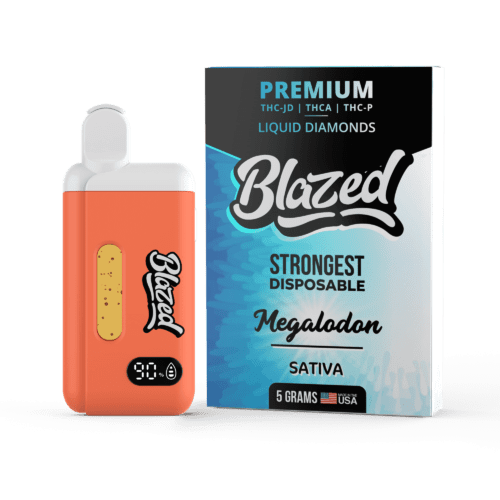
5 Gram Disposable – Blazed
$51.99$79.99 -
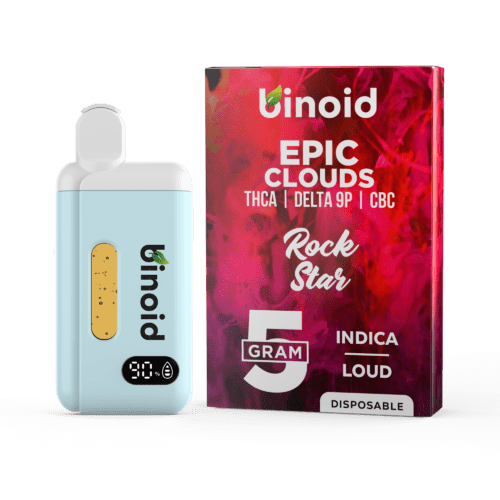
5 Gram THCA + CBC Disposable Vape – Epic Clouds
$53.99$87.99 -
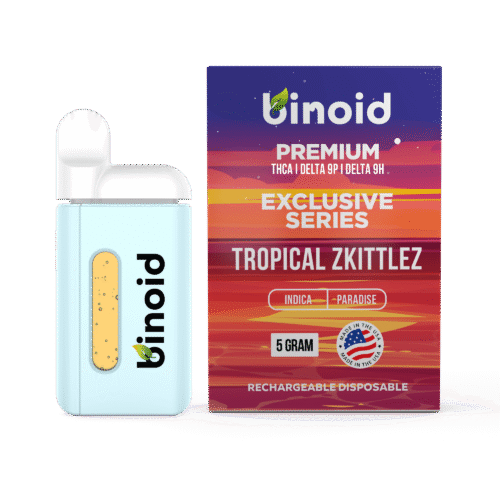
5 Gram THCA Disposable Vape – Exclusive Series
$55.99$89.99 -
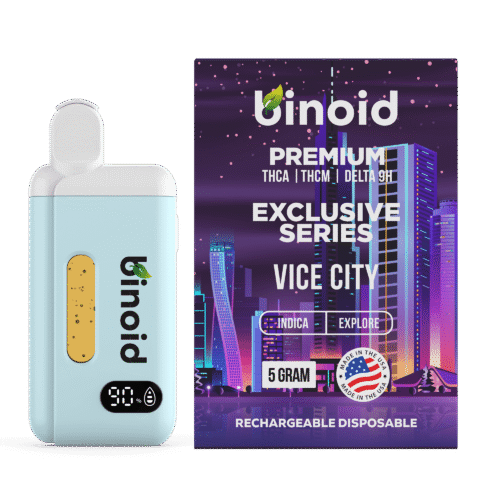
5 Gram THCA + THCM Disposable Vape – Exclusive Series
$55.99$89.99
Dosing Philosophy: The Art of Starting Right
For all the sophistication of the molecular science and the sourcing conversation, the most practically useful thing a beginner can take away from this guide is a dosing philosophy that prioritizes intentionality over ambition. The THCA experience, particularly for consumers who may not have extensive prior cannabis history, is not a race to intensity it is a process of calibration, of learning your own response patterns across different formats, doses, and terpene profiles until you’ve built an accurate personal map of what works for you and what doesn’t.
With THCA disposables and THCA cartridges, this means beginning with one or two draws and waiting a full fifteen to twenty minutes before assessing where you are and whether you want to continue. Vaporized cannabinoids reach peak blood concentration quickly, typically within ten to fifteen minutes, so patience at this stage is genuinely useful rather than merely cautionary rhetoric. With THCA gummies, the calibration process requires considerably more patience, as the edible pathway involves metabolic processing that introduces both delay and individual variability that even experienced consumers occasionally underestimate. The beginner who treats the two-hour onset window as a suggestion rather than a guideline is the beginner who ends up having a less-than-optimal first experience which is unfortunate, because that experience shapes the narrative they carry forward about whether THCA is for them.
Binoid’s product line is designed with this calibration process in mind. The range of potency options available across their THCA formats means that a beginner can enter the ecosystem at a genuinely entry-level dose and graduate upward as their experience and self-knowledge develop, rather than being forced to choose between an inadequate dose and an overwhelming one. This range and the transparency around what each option delivers is a design philosophy as much as it is a product strategy, and it reflects a brand that thinks seriously about the full arc of a consumer’s relationship with the category.
The Verdict: Why THCA Deserves Your Serious Attention
There is a version of this guide that could have been written more simply a quick explainer, a few product mentions, a generic sign-off. But THCA doesn’t deserve that treatment, because it is not a simple story. It is a compound that sits at the intersection of sophisticated plant biochemistry, evolving legal architecture, and a genuine revolution in how American consumers can access and experience the cannabis plant. Understanding what is THCA at anything more than a surface level is to understand why this category has grown from a niche curiosity to one of the most dynamic product segments in the entire hemp industry in the span of just a few years.
The brands that will define this category for the long term are not the ones racing to the lowest price point or exploiting regulatory ambiguity with minimal investment in quality. They are the brands building institutional knowledge around cultivation, formulation, testing, and consumer education the brands that treat the beginner’s first experience as something worth getting right rather than something worth monetizing and moving on from. Binoidcbd.com has demonstrated, consistently and across an expanding product portfolio spanning THCA cartridges, THCA disposables, and THCA gummies, that it belongs in that first category.
For the beginner reading this guide, the recommendation is uncomplicated: start with a format that matches your experience level and your lifestyle, source it from a brand whose testing standards you’ve verified, approach your first sessions with patience and genuine curiosity, and pay attention to the terpene profiles that shape the character of what you’re consuming. The THCA category, done right, is one of the most rewarding spaces in the modern hemp landscape a place where molecular science, craft cultivation, and genuine consumer respect converge into something that deserves to be taken seriously. Binoid has built their brand on exactly that convergence. The rest is your exploration to begin.
To Buy THCA Products Click Here
Recommended products
-
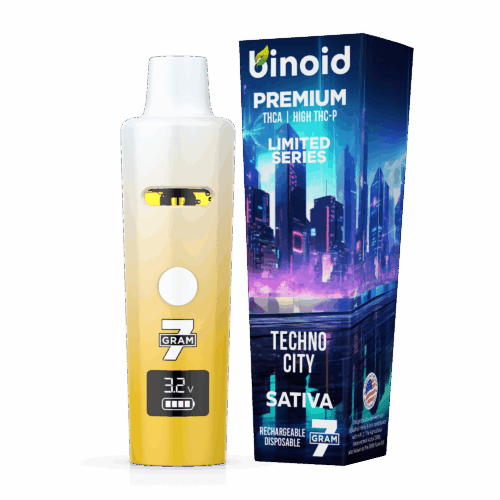
7 Gram THCA + High THC-P Disposable Vape – Limited Series
$67.99$109.99 -
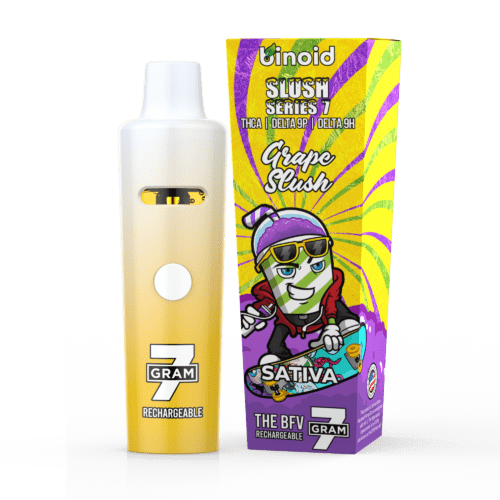
Slush Series 7 Gram THCA Disposable Vape – Grape Slush
$59.99$109.99 -
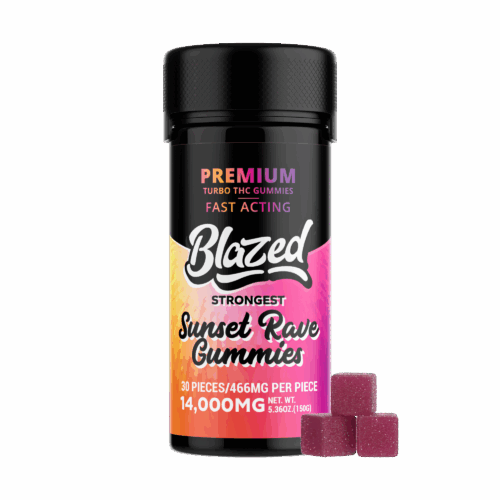
14,000MG Turbo THC Gummies – Blazed
$49.99$84.99