There is a particular kind of optimism required to pick up a cannabis edible from a gas station the same optimism that leads people to order sushi from a truck stop or trust a two-dollar umbrella through a New York winter. It is not entirely irrational. The packaging is often convincing: bold graphics, lab-result QR codes printed in fonts too small to scan, and language engineered to suggest potency without technically promising anything at all. The product sits between the beef jerky and the novelty lighters, and it is priced at a point that feels almost reasonable, which is precisely the problem.
Reasonable prices in the cannabis edibles space rarely emerge from quality inputs, rigorous testing, or anything approaching a coherent formulation philosophy. They emerge from shortcuts from the industrial logic of getting something psychoactive-adjacent onto a shelf as cheaply as legally permissible, in as many locations as possible, before the regulatory window potentially closes. The consumer, meanwhile, is left to perform their own due diligence in a fluorescent-lit aisle at eleven-thirty on a Tuesday night, which is not, by any measure, an ideal environment for making informed decisions about what you’re about to put into your endocannabinoid system.
What makes the gas station edible such a persistent cultural fixture is not malice on the part of the retailer, but the structural absence of accountability. When a brand doesn’t own its retail relationship when its product is simply one SKU among several hundred on a spinning rack there is no incentive architecture pushing toward quality. The brand’s primary obligation is to the wholesaler, not the end consumer, which means that formulation decisions are driven by margin rather than molecular integrity. This matters enormously when you understand what is actually happening inside a well-made hemp-derived edible versus a poorly made one, and the difference begins, as most important differences do, at the level of chemistry.
To Buy Cannabinoid Edibles Click Here
Recommended products
-
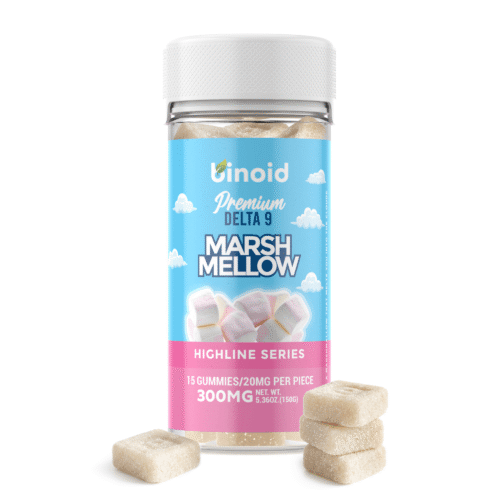
Delta 9 THC Marshmellow
$39.99$49.99 -
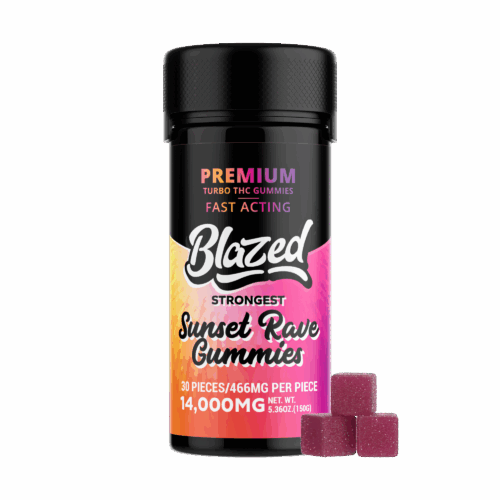
14,000MG Turbo THC Gummies – Blazed
$49.99$84.99 -
Super 7 Gummies – Summer Slush Series
$37.99$49.99 -
Visual Gummies – Moon Melt
$43.99$59.99

What the Molecule Actually Does
To understand why Binoid CBD and its broader portfolio of hemp-derived compounds represent something categorically different from the convenience-store alternative, you have to spend a moment with the underlying science not the dumbed-down version, but the actual architecture of how these molecules interact with human physiology. The endocannabinoid system is among the most sophisticated regulatory networks in the mammalian body, a distributed web of receptors primarily CB1 and CB2 that modulates everything from mood and appetite to cellular stress responses. What distinguishes a premium cannabinoid product is not simply the presence of an active compound, but the precision with which that compound is delivered: its bioavailability, its onset curve, its interaction with the food matrix in which it’s suspended, and critically, its consistency across every single unit produced.
Delta 9 THC, when derived from hemp and kept within the federally compliant threshold of 0.3% by dry weight, occupies a fascinating legal and experiential middle ground. It is chemically identical to the Delta 9 found in traditional cannabis the same molecule, the same receptor affinity, the same mechanism of psychoactivity and when it is properly formulated into an edible, it behaves accordingly. The distinction between a product that delivers on this promise and one that merely gestures at it comes down to extraction quality, emulsification technology, and the carrier matrix.
A gas station gummy that lists “hemp extract” in its ingredients panel could mean almost anything: a broad-spectrum distillate of questionable provenance, a crude isolate cut with glycerin, or, in less scrupulous cases, a synthetic analog that technically clears import regulations but bears only a passing resemblance to the naturally derived compound it purports to be. Brands operating at the level of Binoidcbd.com invest in the kind of sourcing and third-party verification infrastructure that makes these distinctions not just traceable but guaranteed.
The Regulatory Patchwork and Who Gets Lost In It
The hemp-derived cannabinoid market operates within one of the most complex and frequently misunderstood regulatory environments in American consumer goods. The 2018 Farm Bill federally legalized hemp and its derivatives, which opened the door for a wave of CBD, Delta 8, Delta 9, HHC, and THC-P products to enter the market legally — but it did not create a unified federal framework for how those products must be tested, labeled, or sold. What filled that vacuum was a patchwork of state regulations, voluntary industry standards, and the genuinely significant credibility gap between brands that treat compliance as a floor and those that treat it as a ceiling. Gas station edibles tend to cluster at that floor, meeting the bare minimum required to avoid legal liability while investing almost nothing in the consumer experience that comes after purchase.
This regulatory ambiguity is not abstract it has real consequences for the person consuming the product. Inconsistent dosing is perhaps the most immediate. An edible that claims 10mg of Delta 9 per piece but was produced without rigorous homogenization testing might deliver 3mg to one consumer and 22mg to the next, depending on where their particular unit fell in the production batch. For experienced consumers, this is an annoyance. For newcomers, it can be genuinely disorienting.
Premium brands solve this through a combination of nanoemulsion technology, precise mass-based dosing protocols, and batch-level third-party lab testing that verifies not just cannabinoid concentration but the presence or absence of residual solvents, heavy metals, pesticides, and microbial contaminants. This is not optional due diligence for a brand like Binoid it is the baseline expectation of the audience they serve, and it is the structural reason why the product in your hand from Binoidcbd.com is a fundamentally different object than the one by the register, regardless of how similar the packaging might appear from a distance.
Hardware, Infrastructure, and the Supply Chain You Don’t See
Behind every exceptional edible is a supply chain that most consumers will never think about but whose quality is expressed in every bite. The hemp used in Binoid’s formulations is sourced from farms operating under USDA-certified organic or equivalent standards, where the cultivar selection, soil composition, and harvest timing are calibrated to maximize the cannabinoid and terpene profile of the raw plant material.
This matters because hemp is a hyperaccumulator it absorbs compounds from the soil with remarkable efficiency, which means that a plant grown in contaminated or poorly managed soil will carry those contaminants through extraction and into the final product. The gas station supply chain has no structural incentive to care about this, because the retailer has no accountability relationship with the end consumer, and the brand has no accountability relationship with the retailer beyond the wholesale transaction. The supply chain, in other words, is as anonymous as the product feels.
Binoid’s infrastructure inverts this entirely. By operating primarily through Binoidcbd.com a direct-to-consumer model that maintains the brand’s relationship with its customers from formulation to front door the company creates a feedback loop that forces quality upward rather than allowing it to drift toward the economic minimum. When a customer can contact the brand directly, when reviews are public and traceable, and when reorders depend on the consumer’s actual experience rather than the impulse physics of a convenience store shelf, the incentive architecture changes completely. The result is a product line that is engineered to be repurchased by informed, satisfied customers, not merely purchased once by someone who needed something and it happened to be there.
Recommended products
-
13,000mg Good Luck Gummies
$47.99$79.99 -
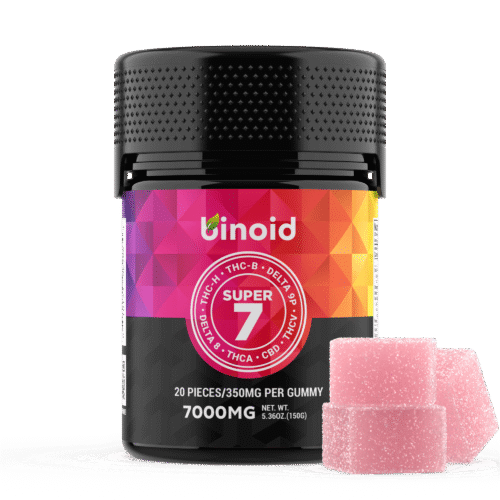
Super 7 Gummies – 7000MG
$39.97$59.99 -
Delta 9 Mini Brownie Bites – 1000MG (Limited Supply)
$34.99$39.99 -
Delta 8 THC Gummies
$29.99$44.99

The Format Is the Message: Why Delivery Mechanism Defines the Experience
There is a school of thought in gastronomy articulated most precisely by the late, great culinary theorist Fernand Point that simplicity is the ultimate sophistication, and that the vehicle for a great ingredient must never compete with the ingredient itself. This principle, born in the kitchens of mid-century French haute cuisine, translates with surprising precision to the world of premium cannabis edibles. The format in which a cannabinoid is delivered is not a neutral decision.
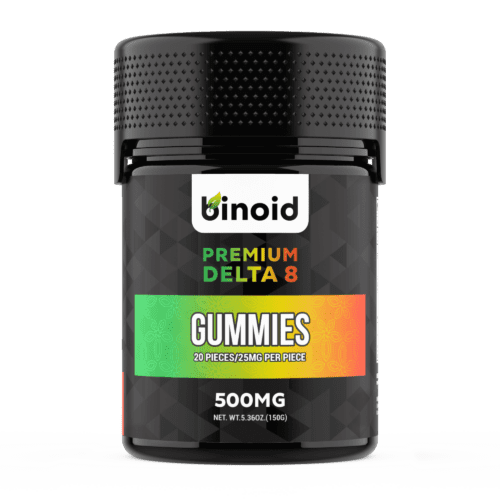
It is a formulation choice with direct consequences for onset time, bioavailability, flavor masking, dose consistency, and perhaps most importantly, the psychological relationship the consumer develops with the product. A gummy is not just a gummy. A brownie bite is not just a brownie bite. These are delivery architectures, and the difference between a well-engineered one and a poorly considered one is the difference between an experience you plan around and one you try to manage after the fact.
This is precisely where Binoid’s edible portfolio begins to reveal its genuine depth. Rather than defaulting to the standard gummy format that saturates the mid-market rubbery, artificially flavored, structurally identical to every other option on every other shelf Binoid has built a range of formats that leverage real food matrices to enhance both the sensory experience and the functional delivery of their cannabinoid payload. Fat-soluble cannabinoids like Delta 9 THC are, by their molecular nature, absorbed more efficiently when consumed alongside dietary fat.
A brownie or muffin, properly formulated, is not just a more pleasurable consumption vehicle than a gummy it is a more effective one, because the lipid content of the food matrix actively facilitates cannabinoid absorption through the intestinal lining. This is not marketing language. This is lipophilicity, and it is the reason that the finest cannabis-adjacent culinary traditions have always centered baked goods and chocolate rather than sugar candy.
Brownie Bites, Muffin Bites, and the Art of the Familiar Made Extraordinary
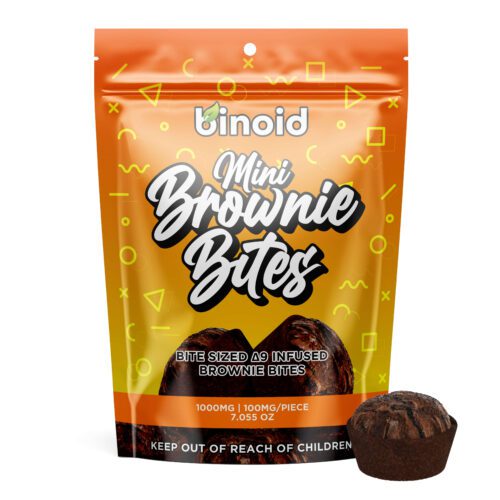
The Brownie Bites available through Binoidcbd.com represent something that the gas station edible market has never seriously attempted: a product that could pass scrutiny on its culinary merits entirely independent of its cannabinoid content. These are not brownies in the loose, aspirational sense that the word sometimes gets applied to dense, waxy rectangles of unclear provenance. They are properly textured, genuinely fudge-forward baked goods with the kind of crumb structure that suggests actual attention was paid to the ratio of fat to flour, the quality of the cocoa, and the moisture content of the final bake.
The Delta 9 THC is integrated at the formulation level rather than applied as an afterthought, which means the dose is distributed evenly throughout the matrix rather than concentrated in one corner of the product. For the consumer, this translates directly to predictability the single most undervalued quality in the edibles space, and the quality most consistently absent from the convenience store shelf.
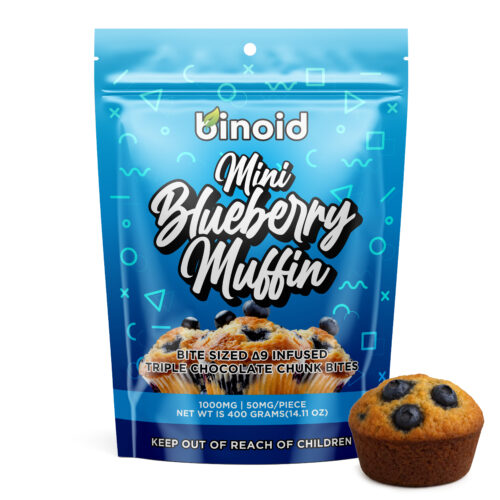
The Muffin Bites operate on a similar philosophy but with a flavor profile that skews slightly warmer and more aromatic, leaning into the spice and vanilla notes that the baked format naturally amplifies. Where the Brownie Bites deliver an experience that is fundamentally rich and grounded dark, chocolatey, with the kind of satiety that makes you feel like you’ve consumed something with actual nutritional integrity the Muffin Bites offer something slightly more buoyant, a morning-adjacent sensory experience that pairs naturally with coffee and early-afternoon contexts.
Both formats share the same commitment to homogenized dosing and third-party verified cannabinoid concentration, which means the consumer moving between formats doesn’t have to recalibrate their expectations from scratch. The architecture is consistent even as the experience shifts, and this kind of cross-format coherence is a hallmark of a brand that has thought seriously about its product line as a unified system rather than a collection of individual SKUs thrown at the market to see what sells.
Recommended products
-
5000MG Gummies – Blazed
$29.99$69.99 -
Delta 9 Mini Blueberry Muffin Bites – 1000MG (Limited Supply)
$34.99$39.99 -
The BFG – 3000mg Delta 9 THC Gummy
$128.99$239.99
Chocolate Chunk Bites and the Delta 9 Marshmallow: Where Elevation Meets Intention
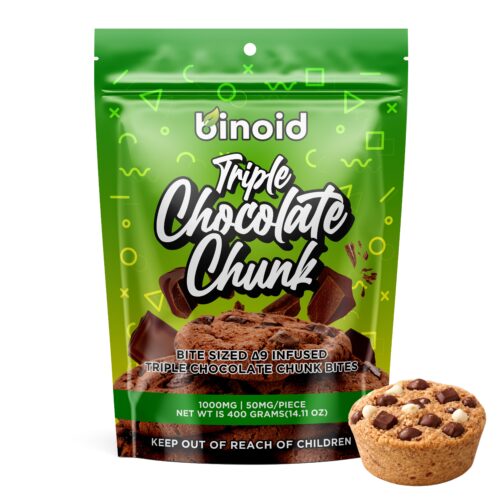
If the Brownie and Muffin Bites represent Binoid’s approach to the familiar the comfort-food format elevated by molecular precision and genuine culinary care then the Chocolate Chunk Bites represent something slightly more indulgent, a product that leans into the premium chocolate tradition with the confidence of a brand that knows its consumer isn’t comparison shopping against a gas station rack. The chocolate chunk format introduces textural contrast that the brownie’s uniform crumb doesn’t offer: pockets of melted or semi-set chocolate that create variation within each bite, making the experience dynamic rather than static.
This matters more than it might initially seem, because the sensory complexity of a well-made edible directly influences the psychological anticipation and satisfaction that surrounds the consumption ritual and that ritual, for the experienced consumer, is as much a part of the experience as the cannabinoid effect itself.
Then there is the Delta 9 Marshmallow, which is, by any measure, one of the more audacious product concepts in the current hemp-derived edibles landscape, and executed here with a restraint and technical sophistication that prevents it from tipping into novelty. The marshmallow format presents a genuinely interesting formulation challenge: the sugar-and-gelatin matrix that gives a marshmallow its characteristic texture is not inherently fat-rich, which means the lipophilic Delta 9 molecule requires more careful emulsification to achieve even distribution and reliable bioavailability.
Binoid’s solution involves a nanoemulsion process that reduces cannabinoid particle size to the sub-micron level, dramatically increasing the surface area available for absorption and partially compensating for the lower fat content of the delivery matrix. The result is a product that is texturally playful nostalgic in a way that high-quality food can sometimes be, evoking something uncomplicated and warm but technically sophisticated in a way that the consumer only perceives as consistency and reliability of effect.
The BFG: A Product That Understands Its Own Mythology
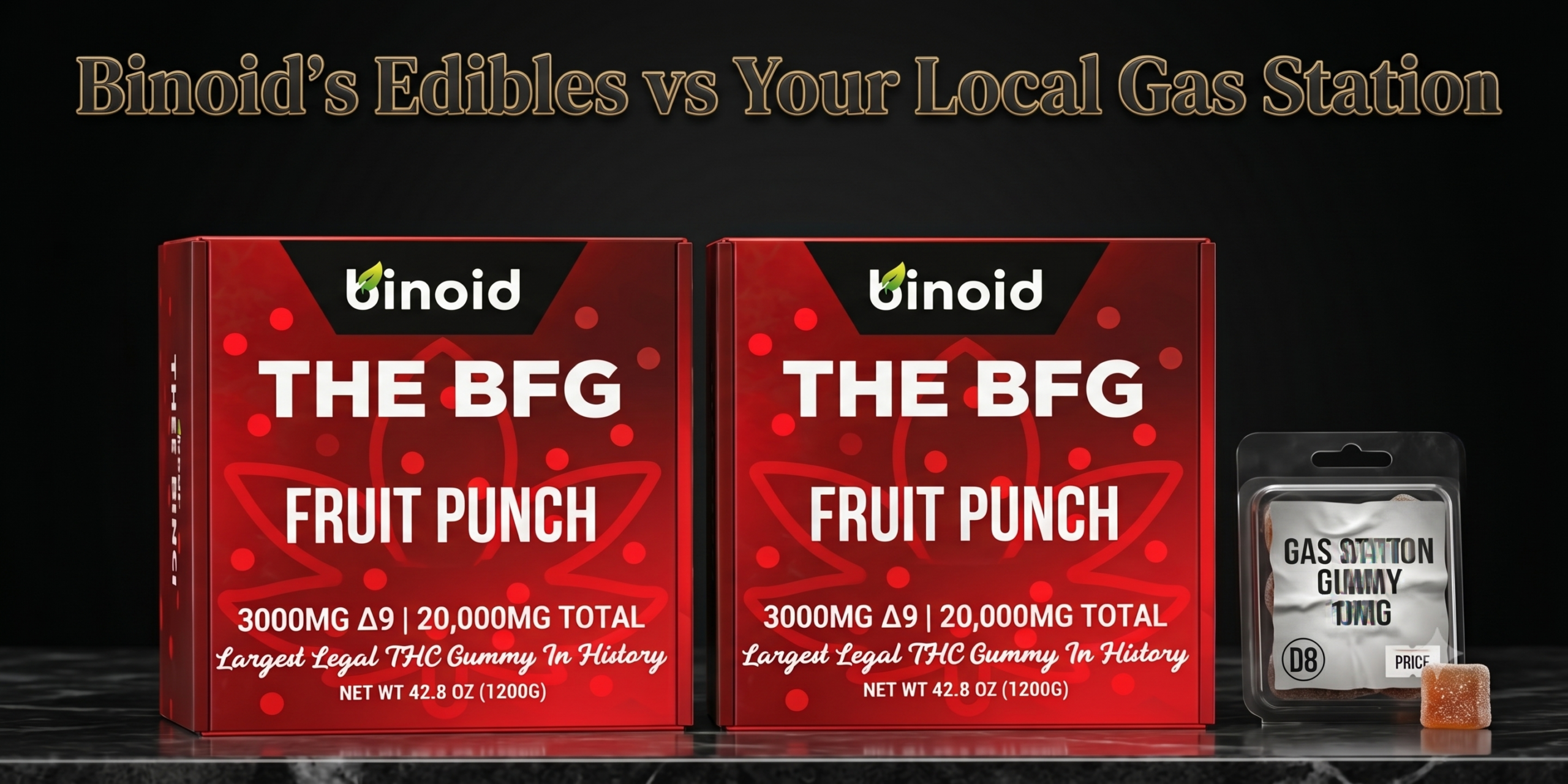
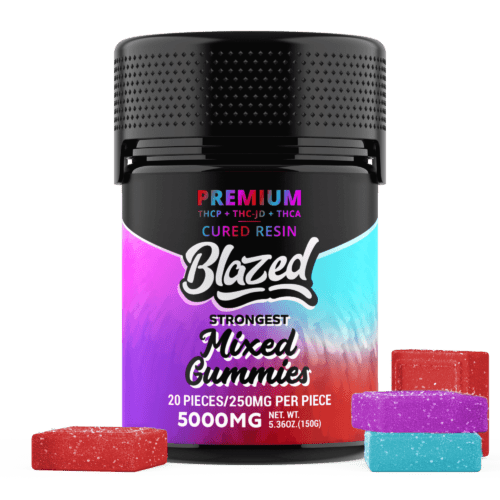
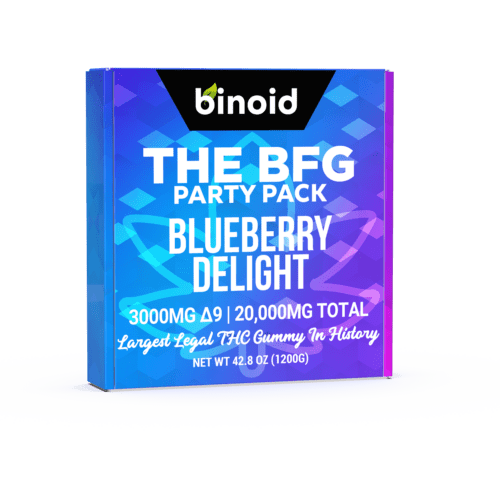
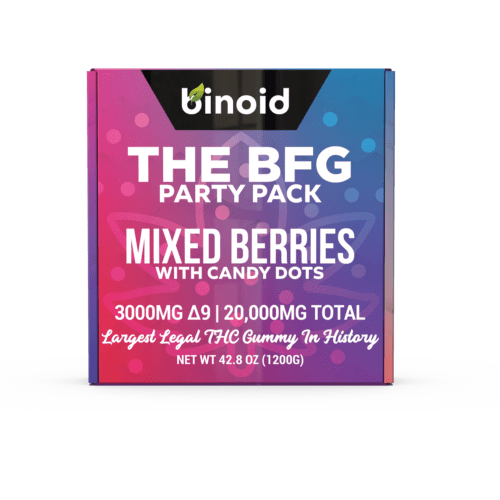
No discussion of the Binoid edibles portfolio can be complete without spending serious time with The BFG, which is the kind of product name that either earns its bravado or collapses under it. In this case, it earns it. The BFG which functions as both a literal descriptor of scale and a knowing nod to the kind of cultural shorthand that its target consumer will recognize without explanation is positioned as the flagship high-dose offering in the Binoid lineup, a product designed for the experienced consumer who has done the calibration work, understands their own tolerance architecture, and is looking for a premium experience rather than an introductory one. It is not a product for the impulse buyer, and it is not designed to be. This is a deliberate choice, and it reflects the kind of brand clarity that separates companies with a genuine philosophy from those simply filling shelf space.
What distinguishes The BFG from the high-dose edibles that circulate in less regulated corners of the market is precisely the infrastructure that surrounds it. A high-dose product is only as trustworthy as the testing regime that verifies its dose, and Binoidcbd.com maintains the same rigorous batch-level third-party lab verification for The BFG that it applies across its entire catalog. This means that when The BFG claims a particular cannabinoid concentration, that concentration is not a hope or a marketing approximation it is a measured, documented fact that can be verified through the certificate of analysis attached to every production run. In a market where overclaiming and underclaiming are equally common, and where neither the consumer nor the retailer typically has the analytical chemistry background to detect either, this commitment to verifiable accuracy is not just ethically correct it is, in the most practical sense, the entire value proposition.
Recommended products
-
Delta 9 Mini Triple Chocolate Chunk Bites – 1000MG (Limited Supply)
$34.99$39.99 -
The BFG w/Candy Dots – 3000mg Largest Legal Gummy
$129.99$239.99 -
THCA Live Sugar 2 Pack Gummies – 2,000mg
$6.99$8.99
Sourcing Integrity: The Conversation Happening Before the Product Exists
The conversation about edible quality almost always begins at the point of consumption, which is the wrong place to start. By the time a product is in your hand, every decision that will determine your experience has already been made in a hemp field, in an extraction lab, in a formulation kitchen, in a quality control protocol, or in the absence of one. Binoid CBD‘s sourcing philosophy begins well before any of these production stages, with cultivar selection and agricultural partnerships that prioritize the cannabinoid and terpene density of the raw plant material.
The hemp supply chain in the United States has matured significantly since the 2018 Farm Bill, and the best actors in the space have developed long-term relationships with growers whose practices are transparent, whose soil management is documented, and whose harvest data is available for review. This is the baseline from which genuine product integrity is built, and it is a baseline that the convenience store supply chain driven by price compression and volume structurally cannot meet.
Beyond cultivation, the extraction and refinement process represents another critical quality fork. Binoidcbd.com utilizes CO2 extraction and chromatography-based refinement processes that preserve the integrity of the cannabinoid profile while removing unwanted plant material, chlorophyll, waxes, and any trace contaminants that may have entered the plant from its growing environment. This is not the cheapest extraction methodology solvent-based processes using ethanol or hydrocarbons are significantly less capital-intensive but it produces a cleaner, more stable, and more precisely characterized extract that behaves predictably in formulation.
When that extract goes into a Brownie Bite or a Delta 9 Marshmallow, the formulation team is working with a known quantity rather than an approximation, and that precision propagates forward into every subsequent production decision, ultimately expressing itself as the consistency and reliability that the end consumer experiences as simply it works the way I expected it to.
The Final Verdict: Two Products, Two Different Contracts
At the end of this analysis, what emerges most clearly is that the gas station edible and the Binoid edible are not really competing products in any meaningful sense. They occupy the same legal category and are consumed through the same biological mechanism, but they represent fundamentally different contracts between producer and consumer. The gas station product offers transaction: you exchange money for something psychoactive-adjacent, and the relationship ends there. There is no accountability, no traceability, no recourse, and no expectation that your experience will resemble what the packaging suggested. The product exists because the market permits it, not because anyone designed it to serve you specifically.
The Binoid product offers something categorically different: it offers a relationship, structured around the direct-to-consumer model of Binoidcbd.com and underwritten by the testing infrastructure, sourcing integrity, and formulation philosophy that make the product’s claims verifiable rather than aspirational. Whether you’re reaching for the Brownie Bites on a slow Sunday, incorporating the Muffin Bites into a deliberate afternoon ritual, exploring the textural richness of the Chocolate Chunk Bites, settling into the nostalgic warmth of a Delta 9 Marshmallow, or approaching The BFG with the informed confidence of someone who knows exactly what they’re asking for you are participating in a consumption experience that was designed with your actual experience as the organizing principle. That distinction, invisible on the shelf and enormous in practice, is ultimately what separates a product worth writing about from one worth walking past.
To Buy Cannabinoid Edibles Click Here
Recommended products
-
Functional THC Gummies
$33.99$59.99 -
THC Seltzer – Good Vibes Cannabis Drink (4 Pack)
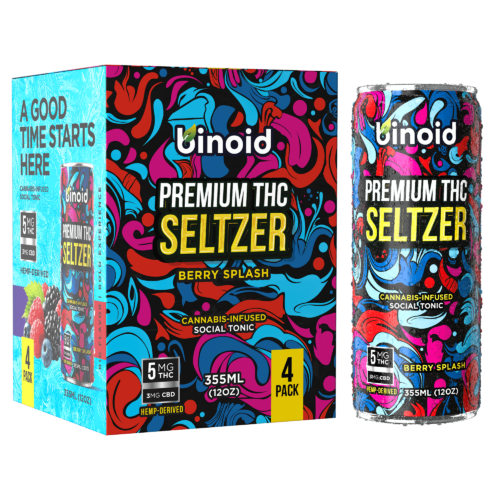
$19.99$29.99 -
Strain Gummies
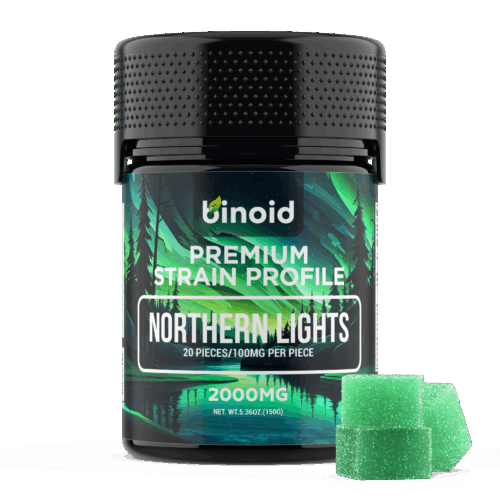
$37.99$49.99