The Origin Question Nobody Is Asking Loudly Enough
Walk through the digital aisles of the hemp-derived cannabinoid market in 2026 and you will encounter an almost overwhelming abundance of choice. Thousands of brands. Tens of thousands of SKUs. Gummies in every flavor and formulation. Tinctures with concentration levels ranging from beginner-friendly to aggressively potent. Vape cartridges and disposables featuring cannabinoid profiles that would have seemed exotic just three years ago. The visual design of the packaging is increasingly sophisticated, the marketing language increasingly fluent in the vocabulary of wellness and molecular science, and the price points distributed across a range that suggests correctly that not all of these products are made the same way or to the same standard.
What is conspicuously absent from most of this commercial landscape is a rigorous, honest conversation about where the hemp comes from. Not the flavor of the gummy or the potency of the cartridge or the elegance of the tincture bottle the actual agricultural and industrial origin of the raw material from which every one of these products is derived. In a category where the starting material determines the ceiling of what any finished product can be, this silence is not an oversight. It is a deliberate omission by brands that would prefer their customers not look too carefully at the supply chain sitting behind the attractive label. Binoid CBD has made a different choice and understanding why that choice matters is the most useful thing a serious cannabinoid consumer can do in 2026.
TO BUY THC PRODUCTS CLICK HERE
Recommended products
-
Live Sugar THCA + THC-P Disposable Vape – Pure 50/50
$39.99$69.99 -
14,000MG Turbo THC Gummies – Blazed
$49.99$84.99 -
THCA Diamonds 1500mg – Live Rosin
$30.99$59.99 -
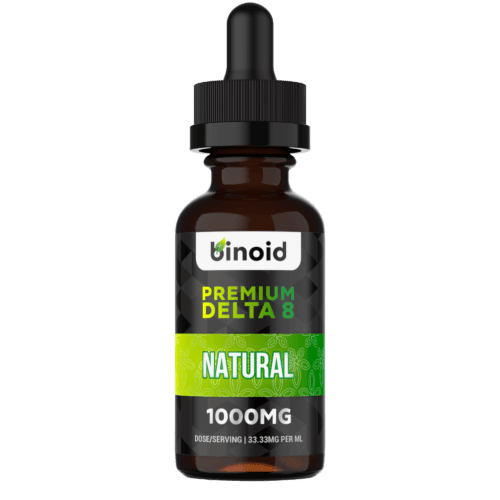
Delta 8 THC Tincture (1000mg, 2500mg, 5000mg)
$25.99$44.99
Hemp Is an Agricultural Product Before It Is Anything Else
This seems obvious stated plainly, but its implications are consistently underappreciated by consumers who encounter cannabinoid products in their finished, processed form. Every tincture, every gummy, every disposable vape, every cartridge filled with distillate begins as a plant specifically, as industrial hemp cultivated in a specific piece of soil, under specific atmospheric conditions, with specific inputs and agricultural practices applied throughout the growth cycle.
Hemp is what botanists call a bioaccumulator: a plant with a remarkable capacity to absorb compounds from its growing environment, including not just the nutrients that support healthy growth but also heavy metals, pesticides, industrial pollutants, and whatever else happens to be present in the soil and water supply feeding the crop. This characteristic made hemp useful for decades as a phytoremediation tool planted deliberately in contaminated sites to pull toxins from the ground which is, to put it gently, a property that has complicated implications for the use of hemp biomass as a raw material for human consumption products.
The soil in which hemp is grown, the water with which it is irrigated, the pesticides and herbicides applied to manage pests and weeds, the fertilizer protocols used to drive yield all of these factors leave molecular signatures in the plant that extraction processes may or may not fully remove. A hemp crop grown in certified-organic American soil, subject to the agricultural oversight frameworks that govern domestic farming, irrigated with water that meets established quality standards, and harvested at optimal cannabinoid maturity is a fundamentally different starting material than biomass produced under less regulated conditions, regardless of what the finished product’s label says about potency or purity. Binoid CBD’s commitment to sourcing exclusively from USA-made domestic hemp farms is not a nationalistic marketing gesture it is a foundational quality decision rooted in exactly these agricultural realities.
What Domestic Sourcing Actually Guarantees
The regulatory architecture surrounding domestic hemp cultivation in the United States is, for all its imperfections and ongoing evolution, genuinely substantive. The 2018 Farm Bill established the federal framework for legal hemp production, but the actual enforcement of cultivation standards is distributed through a system of state agricultural departments and USDA oversight that creates meaningful accountability for domestic growers. Licensed American hemp farmers operate under requirements governing pesticide use, soil testing, crop testing for THC compliance, and record-keeping that have no equivalent in many international hemp-producing regions. This doesn’t mean every domestic farm is perfect it means there is a regulatory infrastructure that creates accountability and provides a mechanism for enforcement when standards are violated.
Contrast this with the situation facing brands that source hemp biomass or extract from international suppliers, particularly from regions where agricultural regulations are less rigorous, where testing infrastructure is less developed, or where the economic incentives for yield maximization routinely override quality considerations. The consumer purchasing a product made from imported hemp has no reliable way of knowing what agricultural practices produced that biomass, what the soil conditions were, whether the crop was tested for contaminants at any point in the supply chain, or whether the extract that arrived at the manufacturing facility accurately represents what the supplier claimed it to be.
These are not hypothetical risks they are documented realities in an import market that has produced, on multiple occasions, batches of hemp extract containing elevated heavy metal concentrations, undisclosed pesticide residues, and cannabinoid profiles that diverged significantly from stated specifications.
For Binoid CBD, the decision to build their entire product ecosystem tinctures, gummies, vape cartridges, disposables, and the full spectrum of hemp-derived cannabinoid formulations available through Binoidcbd.com on a foundation of domestically sourced hemp is both a quality commitment and an accountability commitment. When a brand controls or closely monitors the agricultural origin of its starting material, it can speak to the purity of its products with a specificity that sourcing opacity makes impossible. When that starting material comes from American farms operating under established regulatory frameworks, there is a documented chain of custody that supports rather than undermines the brand’s quality claims.
Recommended products
-
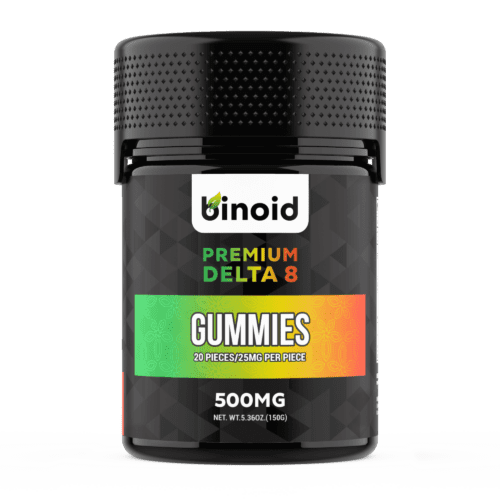
Delta 8 THC Gummies
$29.99$44.99 -
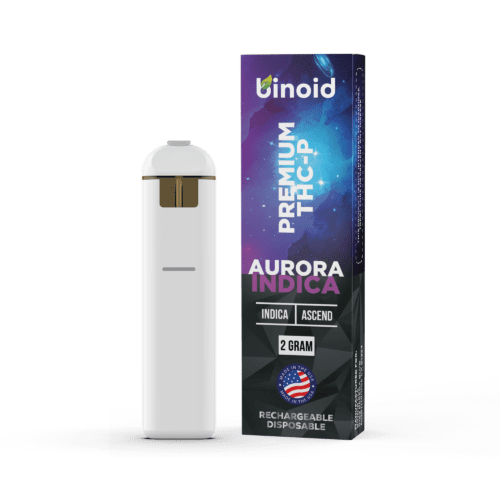
THC-P Rechargeable Disposable – 2 Gram
$31.00$59.99 -
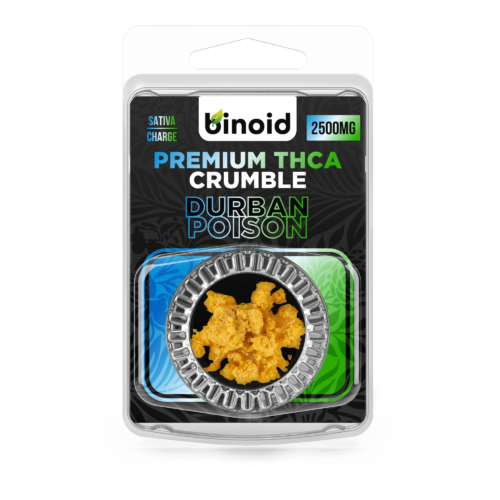
THCA Crumble – 2500mg
$37.99$59.99 -
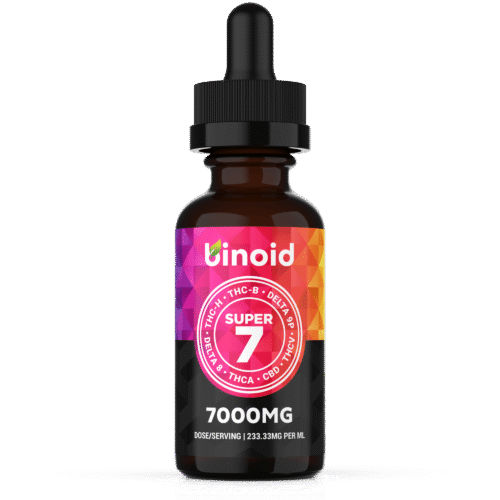
Super 7 Tincture – 7000mg
$39.99$59.99
The Processing Chain: Where Domestic Advantage Compounds
The agricultural origin of hemp is the first chapter in the quality story, but it is not the only one. From farm to finished product, hemp-derived cannabinoids pass through a series of processing and manufacturing stages that each represent opportunities for quality to be preserved, enhanced, or compromised. Extraction the process by which cannabinoids are separated from the plant biomass is perhaps the most consequential of these stages, and it is one where the relationship between starting material quality and extraction methodology matters enormously.
Supercritical CO2 extraction, the gold standard approach used by serious manufacturers, produces a clean, precise extract that preserves the full spectrum of cannabinoids and terpenes while leaving behind unwanted plant material and allowing for tight control over the resulting distillate’s composition. This approach requires significant capital investment in equipment and expertise investment that is more likely to be present in the established domestic manufacturing ecosystem than in lower-cost international alternatives.
The isomerization processes used to convert CBD into novel cannabinoids like Delta 8 THC, Delta 10 THC, PHC, THC-P, and related compounds the chemistry that has made the modern hemp-derived cannabinoid market possible similarly demand high-purity starting material and precise process control to produce distillates free of reaction byproducts and residual catalysts. When the CBD isolate entering the isomerization reaction is derived from contaminated biomass or imprecise extraction, the impurities propagate forward through the process, and no amount of post-conversion purification can fully recover the molecular integrity that was absent in the starting material.
The laboratories and manufacturing facilities operating within the domestic USA-made cannabinoid ecosystem are subject to state and federal oversight frameworks, professional liability, and reputational accountability that create structural incentives for process integrity that are simply not present in unregulated offshore manufacturing.
Binoid CBD has built its manufacturing approach around this understanding, integrating quality controls at every stage of the processing chain rather than treating third-party laboratory testing as a retrospective safety net. The result visible across the brand’s full product catalog at Binoidcbd.com is a consistency of experience from batch to batch that experienced cannabinoid consumers immediately recognize as the signature of a brand that has its process under control rather than simply hoping for the best.
Reading a COA: The Document That Tells the Full Story
No conversation about cannabinoid product quality in 2026 is complete without a serious engagement with the Certificate of Analysis the third-party laboratory document that represents the closest thing the hemp-derived cannabinoid market has to an objective quality verification system. A COA from an ISO-accredited, independent laboratory provides a detailed molecular inventory of a specific product batch: the exact concentrations of each cannabinoid present, the results of heavy metal screening, the findings of pesticide and residual solvent analysis, and the microbiological testing that confirms the product is free of harmful biological contaminants. For the consumer who understands how to read one, a COA is an extraordinarily informative document a detailed biography of the product’s molecular composition that either supports or undermines every quality claim the brand has made.
The critical questions to ask of any COA are not just what it shows but who produced it and when. A certificate from a laboratory that is ISO 17025 accredited carries considerably more weight than one from an unaccredited facility, because accreditation requires demonstrated technical competence, equipment calibration standards, and interlaboratory comparison participation that validate the accuracy of the reported results. A COA that is current reflecting a batch produced within a reasonable recent window is more relevant than an old certificate being applied to new production runs that may have different characteristics. And a COA that is readily accessible, searchable by batch number directly on the brand’s website, and written in a format that a non-specialist can navigate, signals that the brand is using laboratory transparency as a genuine consumer resource rather than a box-checking compliance exercise.
Binoid CBD makes their COAs fully accessible on Binoidcbd.com, with batch-specific documentation available across their complete product range from their tinctures and gummies to their vape cartridges and disposables. This accessibility is not accidental. It reflects a brand philosophy that treats consumer intelligence as an asset to be engaged rather than a liability to be managed. The consumer who takes fifteen minutes to review a Binoid COA before purchasing a product leaves that exercise with specific, verifiable knowledge about what they’re about to put in their body which is exactly the relationship between brand and consumer that a maturing market should be building.
Recommended products
-
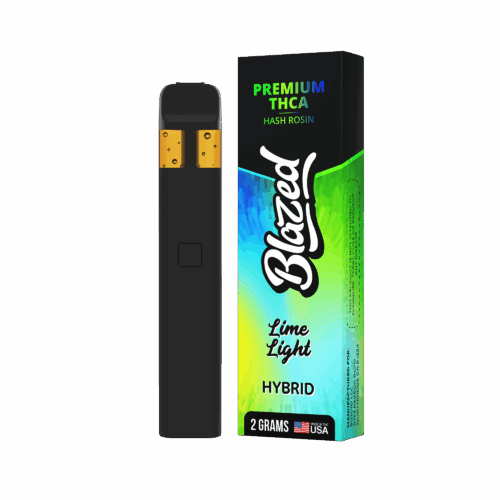
2 Gram THCA Disposable Hash Rosin – Blazed
$37.99$59.99 -
13,000mg Good Luck Gummies
$47.99$79.99 -
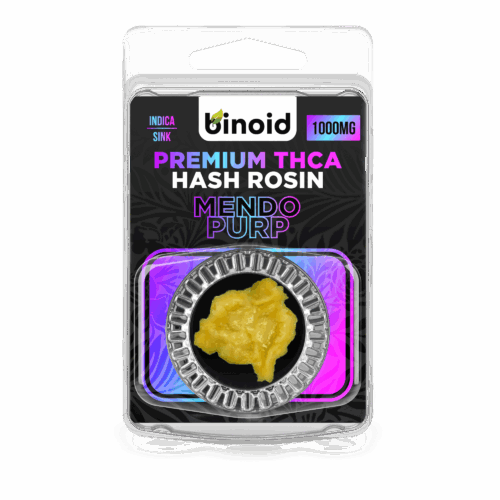
THCA Hash Rosin Dabs – 1000mg
$33.99$59.99 -
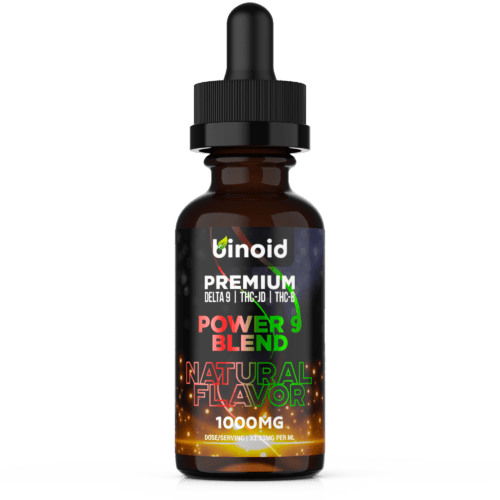
Power 9 Blend Tincture – 1000mg
$34.99$59.99

The International Sourcing Problem in Concrete Terms
It would be easy to frame the domestic-versus-international sourcing debate as abstract and speculative a theoretical risk rather than a documented reality. The record, however, is not ambiguous. Industry watchdog organizations, academic researchers, and investigative journalists covering the hemp-derived cannabinoid space have repeatedly documented specific, concrete quality failures in products sourced from unregulated or under-regulated international supply chains.
Independent laboratory testing of hemp products purchased from online retailers has found, across multiple published studies, a consistent pattern of mislabeling: products claiming a stated potency that deviates significantly from the actual measured concentration, in both directions. Products marketed as broad-spectrum or full-spectrum that contain none of the minor cannabinoids the labeling implies. Products from unverified international sources carrying pesticide residues at concentrations that exceed established safe exposure thresholds.
The USA-made THC hemp products ecosystem is not immune to quality failures the domestic market has produced its own documented instances of mislabeling, contamination, and manufacturing irregularity, and the consumer who assumes that domestic origin alone is sufficient quality assurance is making an incomplete argument. What domestic sourcing provides is not a guarantee but a framework: a regulatory infrastructure that creates accountability, a professional ecosystem with established standards of practice, and a supply chain short enough that a brand with genuine quality commitments can exercise meaningful oversight.
The difference between a brand that sources domestically and then verifies rigorously as Binoid CBD does through their third-party testing program and transparent COA publication and one that sources internationally with minimal verification is not a marginal quality distinction. It is, in many cases, the difference between a product you can trust and one you are simply hoping won’t cause a problem.
The Full Product Ecosystem: Why Consistency Across Categories Matters
For a brand like Binoid CBD that offers a genuinely comprehensive range of hemp-derived cannabinoid products tinctures, gummies, vape cartridges, disposables, and a continually expanding portfolio of novel cannabinoid formulations the sourcing and manufacturing standards applied to one category are not separable from the standards applied to the others. A consumer who discovers Binoid through their Delta 8 gummies and subsequently explores their THC-H disposables or their THC-P cartridges is carrying an expectation established by the first experience an expectation of a specific quality level, a specific transparency standard, and a specific relationship between stated characteristics and actual molecular reality. This expectation is only manageable if the underlying sourcing and manufacturing infrastructure is consistent across categories rather than varying based on cost considerations or supplier relationships that differ by product type.
This cross-category consistency is one of the more underappreciated dimensions of what makes USA-made THC hemp products from a vertically attentive brand different from the fragmented sourcing strategies of brands that are essentially assembling finished products from whatever distillates and raw materials are available at attractive price points. When Binoid CBD produces a tincture, the CBD or Delta 8 distillate going into that tincture comes from the same quality-controlled domestic supply chain as the distillate going into their vape cartridges.
The MCT carrier oil and the flavoring system in the tincture are subject to the same ingredient quality standards as the gummy matrix and natural colorants in their edibles. The result is a portfolio in which the consumer who has built trust with one product category can extend that trust to another with legitimate confidence not wishful thinking, but earned assurance based on demonstrated consistency.
Browsing the full catalog at Binoidcbd.com makes this portfolio coherence immediately visible. The product descriptions reference specific cannabinoid profiles with the specificity of a brand that knows exactly what’s in its formulations. The terpene information in the cartridge and disposable descriptions reflects genuine knowledge of the aromatic compound profiles being used and why. The concentration and potency information in the tincture and gummy listings is backed by accessible COA documentation rather than presented as an unsupported claim. This is what a mature, accountable brand looks like and it is a standard that the best consumers in this market are increasingly sophisticated enough to demand.
Recommended products
-
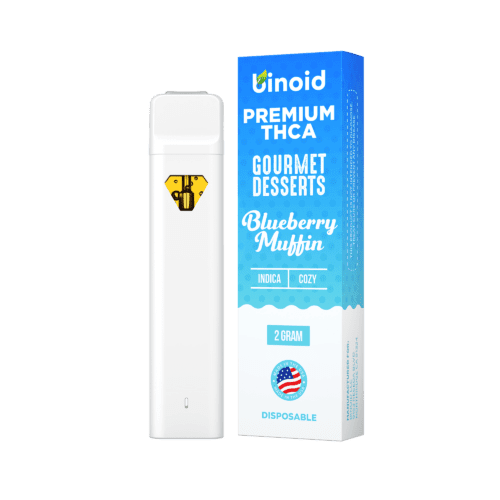
THCA Disposable 2 Gram – Gourmet Desserts
$37.99$73.00 -
Super 7 Gummies – Summer Slush Series
$37.99$49.99 -
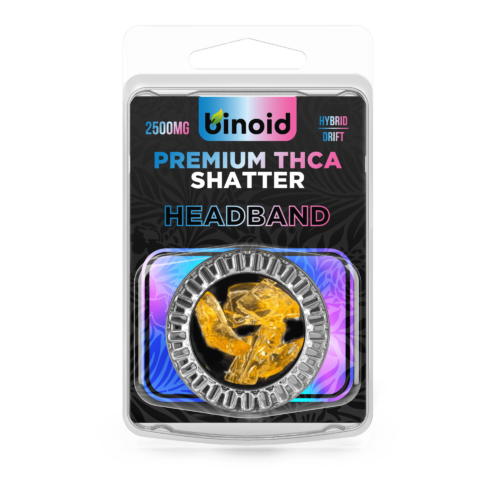
THCA Shatter – 2500mg
$37.99$59.99 -
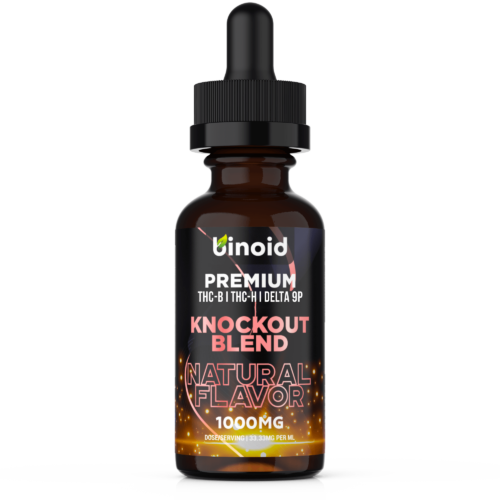
Knockout Blend Tincture – 1000mg
$34.99$59.99

Making the Choice That Reflects Your Standards
The cannabinoid consumer in 2026 is operating in a market that has, in many ways, outpaced the regulatory frameworks designed to govern it and the consumer education infrastructure needed to navigate it intelligently. The abundance of choice that defines the current landscape is genuinely exciting the diversity of cannabinoid formulations, delivery formats, and experiential profiles available through premium domestic brands like Binoid CBD represents a remarkable expansion of what the hemp plant can offer a curious, intentional consumer. But abundance without discernment is just noise, and the consumer who treats all products as equivalent because they share a label “hemp-derived,” “THC-infused,” “lab-tested” is not exercising the intelligence that this category rewards.
The question of where your hemp comes from is not a secondary concern to be addressed after evaluating flavor profiles and price points. It is the foundational question from which every meaningful quality assessment descends, because it determines the molecular integrity of the raw material from which every product in your hands has been derived.
USA-made THC hemp products from domestic farms operating under established agricultural frameworks, processed through manufacturing infrastructure subject to professional and regulatory accountability, and verified through independent third-party testing with publicly accessible results represent the defensible quality floor that a serious consumer should set for themselves. Binoid CBD has built its entire brand architecture on exactly this foundation from the farms supplying their hemp to the laboratories verifying their finished products to the transparency with which they publish that verification at Binoidcbd.com.
In a market where opacity is the default and accountability is the exception, that commitment is not just a competitive differentiator. It is the reason the conversation about which brand to trust has a clear answer.
TO BUY THC PRODUCTS CLICK HERE
Recommended products
-
7 Gram THCA + High THC-P Disposable Vape – Limited Series
$67.99$109.99 -
Slush Series 7 Gram THCA Disposable Vape – Grape Slush
$79.99$109.99 -
Strain Series 7 Gram Disposable Vape
$63.99$109.99 -
Blazed 7 Gram THCA + Delta 9P Disposable Vape
$65.99$109.99