The Spectrum Problem Nobody Warns You About
There is a particular kind of confusion that descends on a first-time CBD shopper somewhere around the third product page the moment when the terms “full-spectrum,” “broad-spectrum,” and “isolate” begin appearing on every label with the cheerful ubiquity of a marketing department that has discovered a vocabulary without bothering to provide a dictionary. These three designations are not interchangeable. They are not merely different points on a single sliding scale of potency.
They describe fundamentally different molecular architectures different casts of chemical characters, different biochemical conversations, different experiential outcomes and treating them as synonymous is roughly equivalent to treating a symphony orchestra, a jazz quartet, and a solo pianist as equivalent simply because all three produce music. The analogy is apt, and not accidental. Understanding the distinction between full-spectrum vs. broad-spectrum CBD is ultimately an exercise in understanding complexity: what it costs, what it contributes, and why the most sophisticated consumers in the hemp space have developed very specific opinions about which version they trust.
The CBD market has grown with remarkable speed into one of the most commercially dense categories in the wellness industry, and that growth has outpaced consumer education at nearly every turn. Brands have found it far easier to print “full-spectrum” on a label than to explain what that label actually means, and the regulatory vacuum governing hemp-derived products has created no external pressure to change this dynamic. The result is a marketplace where identical-sounding claims can describe wildly different products, and where the consumer who hasn’t done the underlying biochemistry homework is navigating essentially on brand aesthetics and price point alone.
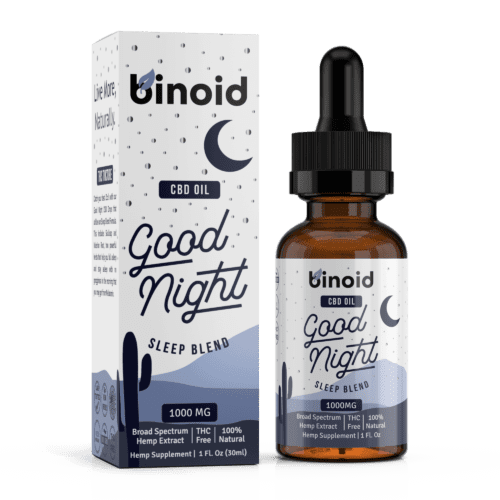
This article is, in part, a corrective to that situation a rigorous, honest, and experience-grounded examination of what each spectrum designation actually means at the molecular level, what it delivers in practice, and what it signals about the quality standards of the brand producing it. The CBD collection at BinoidCBD.com represents a useful benchmark throughout this conversation, not merely as a commercial reference but as an example of what thoughtful, transparent spectrum-conscious formulation actually looks like when a brand takes these distinctions seriously.
TO BUY CANNABINOID PRODUCTS CLICK HERE
The Cannabis Plant as a Chemical Ecosystem
Before the spectrum distinctions make any real sense, you need a working model of what the hemp plant actually produces because the entire framework of full-spectrum, broad-spectrum, and isolate is, at its core, a set of answers to a single question: how much of the plant’s natural chemical complexity do you want to preserve in your finished product?
Hemp Cannabis sativa L., in its federally compliant hemp expression is an extraordinarily productive chemical factory. Its trichomes, the crystalline glandular structures visible to the naked eye on high-quality flower, synthesize somewhere in the neighborhood of over 100 distinct cannabinoids, each with its own binding affinity profile, its own interaction with the endocannabinoid system’s receptor architecture, and its own contribution to the overall experiential character of the plant. CBD cannabidiol is the dominant cannabinoid in hemp by concentration, but it exists alongside CBG (cannabigerol), CBN (cannabinol), CBC (cannabichromene), CBDV (cannabidivarin), trace amounts of THC, and dozens of minor cannabinoids whose research profiles are still emerging from the laboratory literature.
Layered beneath this cannabinoid matrix is an equally complex world of terpenes the aromatic volatile compounds that give different hemp cultivars their distinctive olfactory signatures along with flavonoids, phenolic acids, and a range of other phytocompounds that interact with the human body through mechanisms that researchers are still working to fully characterize. The spectrum designations are, ultimately, a taxonomy of how much of this complexity survives the journey from living plant to finished product.
Full-Spectrum CBD: The Whole Orchestra
Full-spectrum CBD is the designation that preserves the most complete representation of the hemp plant’s native chemical profile in the finished extract. A genuine full-spectrum product contains CBD at its primary concentration alongside the full supporting cast of minor cannabinoids, the complete terpene profile captured at or near the point of extraction, flavonoids, and critically trace amounts of THC at concentrations at or below the federally mandated 0.3% threshold. That last component is the one that generates the most consumer anxiety and, simultaneously, the one that is most central to understanding why full-spectrum products occupy the position they do among experienced CBD consumers.
The scientific framework underlying the premium placed on full-spectrum formulations is the entourage effect a term coined by Israeli researcher Raphael Mechoulam and expanded significantly by subsequent research which proposes that cannabinoids, terpenes, and other hemp-derived phytocompounds produce synergistic effects when consumed together that neither CBD nor any other individual compound achieves in isolation. The precise mechanisms remain an active area of investigation, but the working model is compelling: terpenes like myrcene, linalool, and beta-caryophyllene appear to modulate CB1 and CB2 receptor activity directly, while also influencing the permeability of cell membranes in ways that may affect cannabinoid uptake.
Minor cannabinoids like CBG and CBC interact with receptor systems and enzymatic pathways that CBD’s primary mechanism of action doesn’t fully engage, potentially broadening the overall biochemical response in ways that matter to the end consumer even if they’re difficult to quantify precisely. The trace THC content, far below any psychoactive threshold, is nonetheless pharmacologically active at the receptor level and contributes to the full-spectrum dynamic in ways that its near-absence in other extract types consistently underscores by comparison.
What this means experientially is that a well-formulated full-spectrum CBD product from a source like BinoidCBD.com tends to feel qualitatively different from its broad-spectrum or isolate counterparts in ways that consumers who have spent time with all three categories report with consistent reliability. The onset has a more rounded quality, the overall character feels less singularly focused and more dimensionally complex, and the duration of the experience often extends in ways that single-compound products don’t quite replicate. None of this constitutes a medical claim it is a phenomenological observation about experiential character, the same kind of observation a wine enthusiast makes when distinguishing a complex, terroir-expressive Burgundy from a technically competent but ultimately one-dimensional table red. The molecular complexity is the point.
The extraction methodology matters enormously in preserving this complexity, which is why supercritical CO2 extraction has become the gold standard for full-spectrum production among serious manufacturers. This approach operates at precisely controlled temperature and pressure gradients that selectively capture the full cannabinoid and terpene payload without the thermal degradation that compromises volatile compounds and the residual solvent risk that haunts lower-cost hydrocarbon extraction approaches. BinoidCBD.com’s CBD collection is built on this foundation a commitment to extraction methodology that treats the plant’s chemical complexity as an asset to be preserved rather than a processing challenge to be simplified away.
Broad-Spectrum CBD: The Edited Ensemble
Broad-spectrum CBD occupies the middle position in the spectrum taxonomy, and it is a position defined primarily by a single deliberate subtraction: the removal of THC from an otherwise full-spectrum extract. The goal is to deliver something meaningfully more complex than isolated CBD to preserve a reasonable representation of the plant’s minor cannabinoid and terpene richness while producing a product that tests at non-detectable THC levels and can therefore be used with confidence by consumers for whom any THC exposure is a practical concern.
The motivations for choosing broad-spectrum are real and legitimate. Athletes subject to competitive drug testing, professionals in workplace environments with zero-tolerance substance policies, individuals with heightened sensitivity to THC’s psychoactive properties, and consumers in states with particularly strict hemp-derived THC regulations all represent genuine use cases where the compromise position of broad-spectrum makes considerable sense. The question is what is actually lost in the subtraction, and the honest answer is: something, though how much depends on the quality of the source extract and the sophistication of the THC remediation process applied to it.
THC remediation the technical process by which THC is selectively removed from a full-spectrum extract is not a perfectly precise surgical procedure. The most common approaches, including chromatographic separation and selective crystallization, can be performed with varying degrees of care and technical precision, and the collateral impact on the remaining terpene and minor cannabinoid profile varies accordingly. A broad-spectrum extract produced from exceptional full-spectrum starting material, remediated by an operator with both the equipment and the expertise to execute the process cleanly, can preserve a genuinely impressive degree of phytochemical complexity.
A broad-spectrum product produced by a brand primarily motivated to hit a price point with adequate shelf appeal is a different proposition entirely and one that consumers relying on marketing language alone have no reliable way to distinguish from its better-executed counterpart. This is precisely the context in which independent, ISO 17025-accredited third-party lab testing and transparent certificate of analysis documentation become not merely best practices but essential consumer protection infrastructure. BinoidCBD.com’s approach to COA transparency across its CBD collection is a meaningful differentiator in this regard, giving consumers actual batch-specific evidence of the cannabinoid and terpene profiles they’re purchasing rather than the abstract promise of a label designation.
CBD Isolate: The Solo Instrument
CBD isolate is exactly what its name suggests: cannabidiol in its pure, isolated molecular form, separated from every other compound in the hemp plant through a refining process that produces either a white crystalline powder or a colorless liquid testing at 99% or greater CBD concentration. There is no THC. There are no minor cannabinoids. There are no terpenes. There is no entourage effect, because there is no ensemble only the single molecule, performing alone, with nothing to contextualize or complement its activity.
This characterization should not be read as dismissive. CBD isolate has genuine utility, and it occupies an important position in the broader product ecosystem for reasons that go beyond the merely acceptable. For consumers who require absolute certainty about THC content not just non-detectable levels, but the structural impossibility of THC’s presence isolate provides that certainty in a way that no other format can match. For product formulators, isolate’s flavor neutrality and precise concentration control make it an ideal ingredient in contexts where the extract’s native terpene profile would conflict with a desired flavor architecture. For researchers studying CBD’s pharmacological activity in isolation from confounding phytocompounds, isolate is, self-evidently, the only scientifically coherent choice of test material.
The consumer experience of CBD isolate, however, is a topic that tends to generate remarkable consistency across the anecdotal literature. Isolate products are frequently described as functional but flat effective in a straightforward, mechanical sense, but lacking the textured, nuanced quality that full-spectrum and even well-produced broad-spectrum products deliver.
The scientific explanation for this observation connects back to the entourage effect framework: without the terpene-driven modulation of receptor activity, without the minor cannabinoid contributions to adjacent biochemical pathways, and without the trace THC that appears to contribute meaningfully to the overall pharmacodynamic profile even at sub-psychoactive concentrations, CBD in isolation is working with a reduced toolkit. It is not without value. It is simply not the full expression of what the hemp plant can offer a consumer who wants the complete conversation rather than a single sentence.
Reading the Label, Reading the Brand
The practical implications of the full-spectrum vs. broad-spectrum CBD conversation crystallize most sharply at the point of purchase, and the single most important principle to carry into that moment is this: the designation on the label is only as meaningful as the documentation supporting it. Full-spectrum, broad-spectrum, and isolate are industry terms, not federally regulated classifications, which means a brand can apply them with whatever degree of accuracy or inaccuracy they choose, and the consumer has no external authority to appeal to for adjudication. The COA is the adjudication. A batch-specific certificate of analysis from an accredited independent laboratory showing the complete cannabinoid profile, the terpene panel where applicable, and the THC concentration is the only document that transforms a label claim into a verifiable fact.
This is the standard that separates BinoidCBD.com’s CBD collection from the undifferentiated mass of the market. Every product in that catalog is accompanied by lab documentation that allows a consumer to verify, with actual molecular data, that the full-spectrum product contains the minor cannabinoids and trace THC that full-spectrum status implies, that the broad-spectrum product has been remediated to non-detectable THC while preserving meaningful phytochemical complexity, and that the isolate products deliver the purity concentration their designation promises.
This is not a baseline standard across the industry it is, unfortunately, a distinguishing characteristic of brands that have chosen accountability over convenience. The consumer who brings this expectation to their purchasing decisions has effectively filtered out the majority of the market’s less rigorous operators before they’ve even examined a single product.
Making the Choice That Matches Your Intentions
The full-spectrum vs. broad-spectrum CBD decision, properly understood, is not a question with a universal right answer it is a question about your specific priorities, your biochemical goals, your professional and lifestyle context, and the degree to which you want the full chemical conversation the hemp plant is capable of having with the human endocannabinoid system. Full-spectrum offers the most complete expression of that conversation, with all the molecular richness the entourage effect framework suggests and the trace THC that consumer experience and emerging research both indicate matters more than its concentration might imply. Broad-spectrum offers a meaningfully complex alternative for those whose circumstances make THC non-negotiable, with the critical caveat that the quality of execution varies dramatically and COA verification is not optional. Isolate provides certainty, precision, and molecular simplicity for the specific use cases where those properties genuinely outweigh the value of phytochemical complexity.
What ties all three together, from the perspective of a consumer making an intelligent decision in a market that has not always rewarded intelligence, is the insistence on sourcing from brands that treat these distinctions with the scientific seriousness they deserve. The full breadth of BinoidCBD.com‘s CBD collection spanning full-spectrum, broad-spectrum, and isolate expressions across tinctures, gummies, capsules, and topicals reflects exactly that seriousness: products formulated with explicit awareness of what each spectrum designation means, documented with lab data that makes those designations verifiable rather than rhetorical, and positioned within a brand architecture that has staked its reputation on the principle that the consumer who understands the science should be able to confirm that the product matches the promise. In a marketplace crowded with impressively packaged ambiguity, that commitment is both relatively rare and entirely worth seeking out.