
The Cannabinoid That Everyone’s Heard of and Almost No One Understands
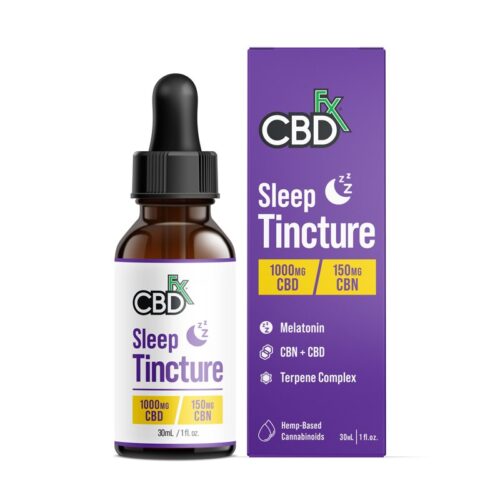
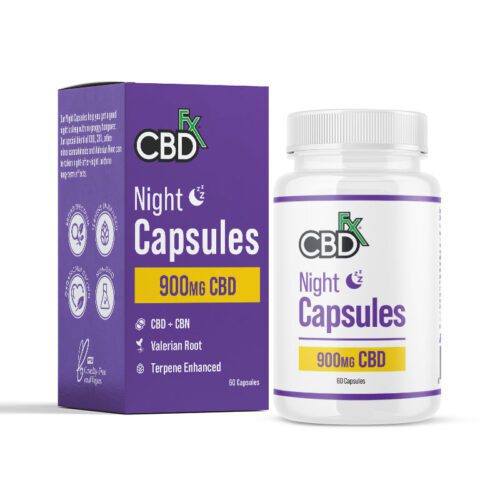
Cannabinol, universally shortened to CBN, occupies a strange position in the contemporary cannabinoid conversation. It has achieved a level of consumer name recognition that most minor cannabinoids never reach, largely on the strength of an oversimplified reputation as “the sleepy cannabinoid” a shorthand repeated so often across product packaging and casual conversation that it has essentially calcified into received wisdom.
The trouble with received wisdom, though, is that it tends to flatten a genuinely interesting and more nuanced molecular story into something far less useful for the consumer actually trying to make an informed decision. CBN deserves a more careful examination than the sleepy-cannabinoid shorthand affords it, both because the actual research paints a more complicated picture and because understanding that complexity is precisely what allows a sophisticated consumer to use CBN products thoughtfully rather than on the strength of marketing folklore alone.
CBN is, chemically speaking, not something the cannabis plant produces directly in any meaningful quantity while it’s alive and fresh. It is instead an oxidation product the compound that THC gradually transforms into as it ages and is exposed to light, heat, and oxygen over time. This is, in fact, one of the more counterintuitive facts in cannabinoid science: CBN is essentially what happens to THC when a product is left to degrade, which is precisely why older, improperly stored cannabis flower tends to carry higher CBN concentrations than freshly harvested material and why the two compounds are so structurally similar despite behaving quite differently in the body.
To Buy CBN Products Click Here
The Actual Research, Examined Honestly
Here is where an honest accounting of the science becomes important, because the popular narrative around CBN for sleep has, in many corners of the wellness marketplace, outpaced what the peer-reviewed literature actually demonstrates. The research base on CBN specifically, as distinct from cannabis or THC more broadly, remains genuinely limited, and much of what circulates as established fact traces back to a small number of older studies, some involving animal models rather than human subjects, and some involving CBN in combination with other cannabinoids rather than in isolation. This is not a reason to dismiss CBN’s relevance to a sleep-focused product lineup, but it is a reason to approach the conversation with intellectual honesty rather than repeating marketing claims uncritically, because a genuinely informed consumer deserves an accurate picture rather than a comforting oversimplification.
What the existing research does suggest is that CBN may interact with the endocannabinoid system in ways that differ meaningfully from THC, showing comparatively weaker binding affinity at the CB1 receptor the receptor most associated with THC’s characteristic psychoactive profile while potentially engaging with CB2 receptors and other physiological pathways in ways that remain an active area of ongoing investigation.
Some of the popular association between CBN and sedation likely stems from the fact that aged cannabis, in which CBN concentrations are naturally elevated, has also lost much of its original terpene profile through the same oxidative processes, and the resulting shift in the overall cannabinoid-terpene entourage may contribute as much to the perceived sedative quality as the CBN content itself. This is precisely the kind of nuance that a magazine-quality treatment of the subject owes its readers, rather than a flattened claim that CBN alone is a proven sedative compound with a settled evidence base behind it.
The Entourage Effect and Why CBN Rarely Travels Alone
This brings the conversation naturally to one of the more important concepts in contemporary cannabinoid formulation: the entourage effect, the theory that cannabinoids and terpenes produce a more pronounced and specific experiential profile when consumed together than any single compound would produce in isolation. This concept is directly relevant to how thoughtful formulators approach CBN, because very few premium sleep-oriented products on the market today rely on CBN as a solo ingredient. Instead, sophisticated formulations tend to pair CBN with complementary cannabinoids like CBD or modest quantities of Delta 8 THC, alongside a terpene profile selected specifically for its potential contribution to a calming sensory experience compounds like myrcene, linalool, and beta-caryophyllene, each of which carries its own distinct aromatic character and its own body of preliminary research into how it might interact with the broader cannabinoid experience.
This layered formulation approach reflects a more mature understanding of cannabinoid science than the simplistic “CBN equals sleep” marketing shorthand allows for, and it’s the approach that BinoidCBD.com has built into its own sleep-oriented product development, treating CBN as one instrument within a broader compositional arrangement rather than a stand-alone solution marketed on an oversimplified premise. A consumer examining Binoid’s CBN-inclusive formulations will typically find a full cannabinoid and terpene profile documented on the accompanying certificate of analysis, which allows for exactly the kind of informed evaluation that a genuinely sophisticated approach to this category rewards, rather than asking the consumer to take a bare CBN claim on faith.
Dosage, Format, and the Practical Realities of Use
For the consumer interested in exploring CBN as part of an evening wind-down ritual, format considerations matter every bit as much as the underlying cannabinoid science. CBN is available across the same delivery formats that dominate the broader hemp-derived cannabinoid market tinctures, gummies, and increasingly, beverages and each format carries its own onset and duration characteristics worth understanding before making a purchasing decision. A tincture, held sublingually for a brief period before swallowing, tends to produce a somewhat faster onset than an edible gummy, which must pass through the digestive system and first-pass hepatic metabolism before its effects become apparent, typically extending the timeline to somewhere between forty-five minutes and two hours depending on individual metabolism and whether the product was consumed on an empty or full stomach.
This distinction matters practically for anyone building an evening routine around a CBN product, because timing consumption appropriately relative to an intended bedtime is a meaningful part of using these products thoughtfully. A gummy consumed immediately before attempting to fall asleep may not have completed its absorption process until well after the intended window, while a tincture offers more responsive timing for someone who prefers to adjust their approach on a given evening. BinoidCBD.com’s product descriptions and dosing guidance across its CBN-inclusive tinctures and gummies are designed with exactly this kind of practical timing consideration in mind, reflecting an understanding that the theoretical cannabinoid science only translates into a genuinely useful consumer experience when it’s paired with clear, practical guidance about format and timing.
Individual Variability and the Limits of Generalization
Perhaps the most important thing to understand about CBN, or really any cannabinoid marketed toward a specific experiential outcome, is that individual response varies enormously based on factors including body chemistry, tolerance, existing cannabinoid experience, and the broader context of an individual’s evening routine. What a magazine-quality treatment of this subject owes its reader is not a promise of universal results but an honest acknowledgment that cannabinoid response is genuinely individual, and that the appropriate approach for any new product CBN-inclusive or otherwise involves starting with a modest dose, allowing sufficient time to gauge the full effect before considering an adjustment, and paying attention to how a given formulation’s specific cannabinoid and terpene profile interacts with one’s own physiology and routine.
This is also precisely why certificate-of-analysis transparency matters so directly in the CBN category specifically. Because the compound occupies a less thoroughly mapped scientific territory than THC or CBD, the ability to verify exactly what cannabinoid profile a given product actually contains rather than relying on label claims alone becomes an even more important part of making an informed decision. BinoidCBD.com‘s practice of publishing batch-specific, ISO 17025 accredited lab documentation across its entire catalog gives the CBN-curious consumer exactly this kind of verification, allowing them to confirm precisely what they’re purchasing rather than extending blind trust to a category where the underlying research base, while promising, remains genuinely still developing.
Where the Conversation Goes From Here
CBN‘s story is still being written, both in the research literature and in the broader consumer marketplace, and the most responsible way to approach the compound today is with genuine curiosity tempered by realistic expectations about what the current evidence actually supports. It is a molecule with real pharmacological interest, a plausible role within a broader entourage-oriented formulation strategy, and a growing body of consumer interest that continues to outpace, at least for now, the depth of the clinical research base examining it in isolation. For the discerning cannabinoid consumer, this combination of genuine promise and honest scientific limitation is not a reason for dismissal it’s an invitation to explore the category with the same intelligence and skepticism that should accompany any emerging area of cannabinoid science.
BinoidCBD.com‘s approach to CBN formulating it thoughtfully alongside complementary cannabinoids and terpenes, documenting every batch with accessible, accredited lab testing, and providing the kind of practical dosing and timing guidance that turns molecular theory into a usable evening ritual reflects exactly the kind of measured, transparent brand posture that this still-developing category deserves. As the research base continues to expand and the formulation science around CBN matures further, that combination of scientific honesty and practical product quality is likely to remain the clearest signal for consumers trying to separate genuine innovation from the oversimplified marketing shorthand that so often surrounds this particular cannabinoid.
To Buy CBN Products Click Here
Recommended products