The Alphabet Soup Problem, and Why It’s Worth Solving
There is a particular kind of fatigue that sets in when a curious cannabis consumer starts reading ingredient panels and product descriptions with any real attention. THCA. THCV. Delta 8. Delta 9. Delta 10. THC-P. THC-B. The letters multiply faster than most people have the patience to track, and the natural response understandable, if ultimately self-defeating is to wave the whole taxonomy away and default to whatever product happens to be on sale or recommended by a friend.
But two of these compounds, THCA and THCV, deserve a more deliberate pause, because they represent something genuinely unusual in the cannabinoid landscape: two molecules that share a nearly identical starting letter sequence and a common botanical origin, yet diverge so dramatically in their pharmacology and their experiential character that confusing one for the other isn’t a minor labeling slip. It’s the difference between ordering an espresso and ordering a decaf and being surprised when only one of them keeps you up past midnight.
The confusion is compounded by the fact that both compounds occupy a kind of “specialty” tier in the cannabinoid market neither is as mainstream as delta 9 THC or as ubiquitous as CBD, and both require a slightly more educated shopper to seek out intentionally. That’s precisely why this comparison matters. Understanding THCA vs THCV isn’t an academic exercise for chemistry enthusiasts; it’s a practical filter that determines whether the product landing in your cart will deliver a familiar cannabis high, a completely different and far more subtle experience, or something in between. BinoidCBD.com has built out dedicated, lab-documented lines for both compounds precisely because the two attract fundamentally different kinds of consumers with fundamentally different goals.
To Buy THCA Products Click Here
Recommended products
-
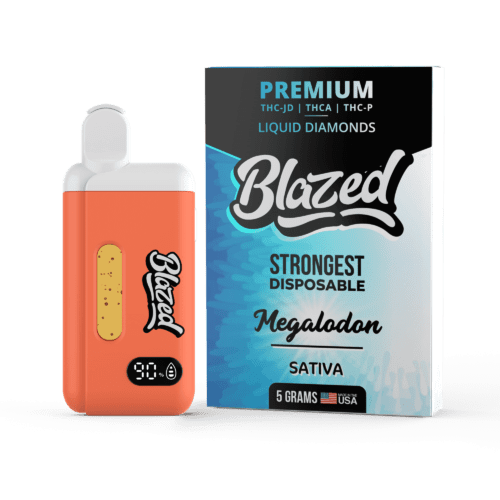
5 Gram Disposable – Blazed
$51.99$79.99 -
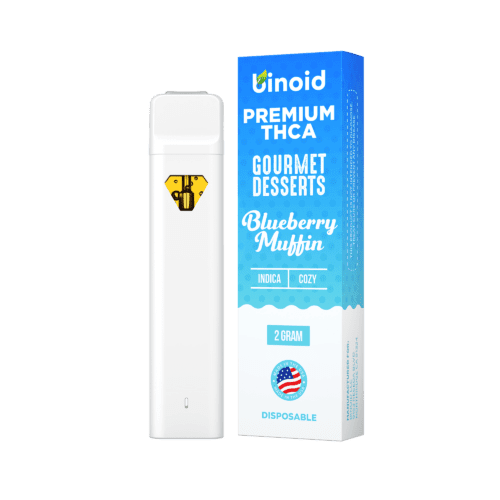
THCA Disposable 2 Gram – Gourmet Desserts
$37.99$73.00 -
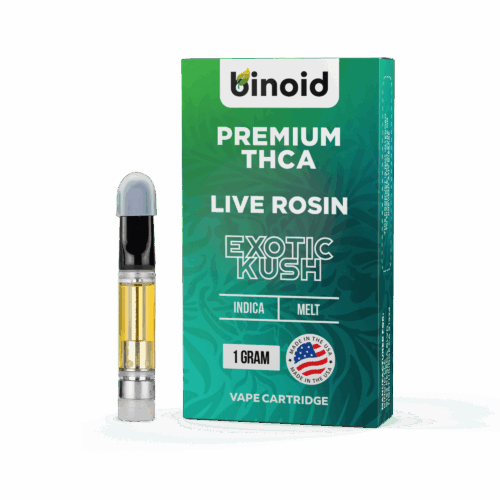
THCA Vape Cartridge – Live Rosin
$30.99$59.99 -
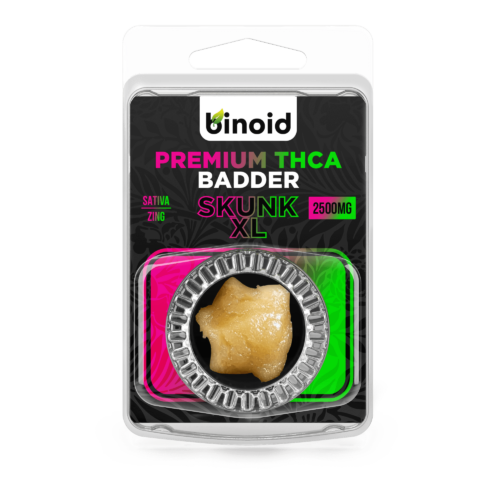
THCA Badder – 2500mg
$37.99$59.99
THCA: The Precursor That Becomes Everything Once It Meets Heat
Tetrahydrocannabinolic acid (THCA), is not itself an intoxicating compound. It is the raw, acidic form in which the cannabis plant naturally produces its most famous cannabinoid, existing abundantly in freshly harvested, unprocessed flower. The molecule carries an extra carboxyl group bonded to its structure a small addition, chemically speaking, but one with outsized consequences. That carboxyl group creates a steric bulkiness that prevents THCA from binding efficiently to the CB1 receptor, the primary site of psychoactive activity in the central nervous system. This is why raw cannabis, chewed or juiced straight off the plant, produces no discernible high. The molecule simply isn’t shaped correctly yet to do the job most people associate with cannabis.
What changes everything is heat. Through a process called decarboxylation, applying temperatures above roughly 220°F cleaves that carboxyl group away, releasing carbon dioxide and leaving behind streamlined delta 9 THC the compound responsible for the cerebral, sensory-amplifying experience most people think of when they picture cannabis intoxication. This is the chemistry happening every time THCA flower is smoked, vaporized, or baked into an edible. The transformation is instantaneous under an open flame, more gradual in an oven, and somewhere in between inside a vaporizer’s heating chamber. It’s worth being explicit about this because it’s the single most important thing to understand about THCA products: what you’re purchasing is, functionally, a legally structured delivery vehicle for a delta 9 experience, activated at the moment of consumption rather than baked into the product beforehand.
This legal structuring matters enormously. The 2018 Farm Bill defined hemp as cannabis containing no more than 0.3% delta 9 THC by dry weight, and because that threshold applies specifically to delta 9 in its already-decarboxylated form, hemp flower can legally carry substantial THCA percentages sometimes 20% or higher, comparable to potent dispensary cannabis while remaining federally compliant. This is the loophole, so to speak, that gave rise to an entire THCA flower and concentrate market operating outside the traditional dispensary system. For consumers without access to state-licensed retail, or those who simply prefer the convenience and pricing of online ordering, THCA products sourced through operations like Binoid CBD offer an experience that is chemically and experientially equivalent to traditional cannabis, provided the sourcing and lab documentation behind them are legitimate.
THCV: The Cannabinoid That Plays by Different Rules Entirely
THCV, or tetrahydrocannabivarin, could not be more different in its behavior, despite sharing a superficially similar name and a common cannabis-plant origin. Structurally, THCV has a shorter alkyl side chain than delta 9 THC a propyl chain rather than the pentyl chain found in conventional THC and that seemingly small structural variation changes the molecule’s entire relationship with the endocannabinoid system. At lower doses, THCV actually behaves as a CB1 receptor antagonist, meaning it can partially block or dampen the receptor activity that delta 9 THC relies on to produce its effects. At higher doses, THCV’s behavior shifts and it can begin to exhibit CB1 agonist properties similar to conventional THC, but with a character that consumers and researchers alike consistently describe as more clear-headed, more energizing, and shorter in duration than the classic delta 9 experience.
This dose-dependent duality is part of what makes THCV such a fascinating outlier in the cannabinoid family. It doesn’t fit neatly into the “psychoactive” or “non-psychoactive” binary that governs how most people categorize cannabis compounds. Anecdotal consumer reporting the kind that has driven enormous interest in THCV formulations across the hemp industry consistently describes a distinct absence of the sedating, appetite-stimulating qualities associated with delta 9 THC, replaced instead by a lighter, more upbeat sensation that some describe as functional or “daytime-appropriate.” This is a meaningfully different experiential category from what THCA delivers post-decarboxylation, and it’s precisely why the two compounds attract different shopper intentions even when they end up sitting on adjacent shelves of the same website.
The other defining characteristic of THCV is its scarcity. Unlike THCA, which exists abundantly in raw cannabis biomass, THCV occurs naturally in only trace concentrations in most cannabis cultivars, with certain African landrace strains carrying comparatively elevated levels. This natural scarcity means that commercially viable THCV products typically rely on more sophisticated extraction and isolation techniques, or on isomerization processes that convert more abundant cannabinoids into THCV through controlled chemical reactions. Either pathway demands a level of manufacturing precision and quality control that separates serious formulators from brands simply chasing a trending compound name. BinoidCBD.com’s approach to THCV formulation reflects this reality, with batch-specific certificate of analysis documentation confirming both potency and purity for a compound where sourcing shortcuts are unfortunately common across the broader market.
Recommended products
-
13,000mg Good Luck Gummies
$47.99$79.99 -
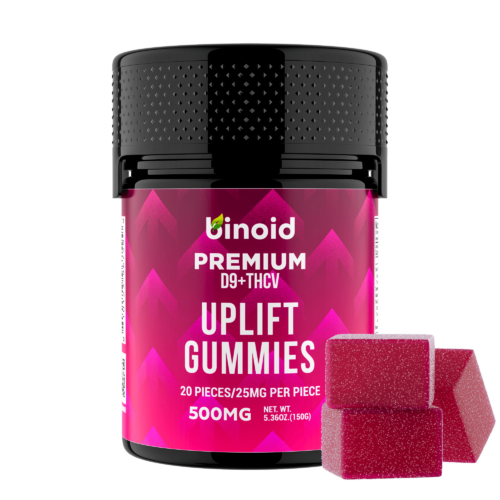
Delta 9 +THCV Gummies- Uplift/Unwind
$29.99$49.99 -
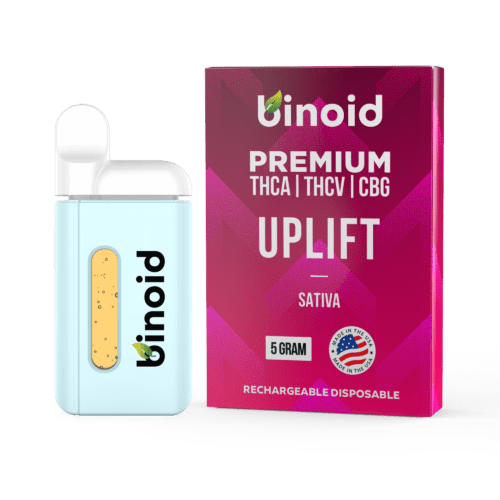
THCV 5 Gram Disposable Vape – Uplift/Unwind
$53.99$69.99

Side by Side: Where the Molecules Actually Diverge
Laid directly against each other, the practical distinctions between THCA and THCV become sharper. THCA is, in its raw form, non-intoxicating it only becomes psychoactive after heat exposure converts it into delta 9 THC, at which point it produces the full, familiar spectrum of cannabis intoxication: altered time perception, heightened sensory input, mood elevation, and at higher doses, a more sedative and introspective quality. THCV, by contrast, is a molecule whose psychoactivity is dose-dependent and qualitatively distinct even when it does register, typically described as clearer, more energizing, and notably briefer in duration than a conventional THC experience. Where THCA is essentially a chemical stand-in for delta 9 THC, THCV is its own compound entirely, with its own receptor behavior and its own experiential signature that doesn’t map cleanly onto anything else in the cannabinoid family.
The entourage effect the well-documented phenomenon in which cannabinoids and terpenes appear to modulate one another’s effects when consumed together rather than in isolation plays out differently across the two compounds as well. THCA flower, because it retains the plant’s full and complex terpene and cannabinoid profile prior to decarboxylation, tends to produce the broad, layered experience associated with full-spectrum cannabis once smoked or vaporized. THCV formulations, particularly isolated or concentrated versions designed for tincture or capsule delivery, often present a more singular, focused effect precisely because the product has been engineered around that one specific molecule’s unique pharmacology rather than the full plant matrix. Neither approach is inherently superior; they simply serve different consumer intentions, and understanding that distinction is the entire point of this comparison.
Consumption format matters differently for each compound too. THCA is overwhelmingly sold as flower, pre-rolls, diamonds, and vape products formats that rely on heat application to trigger the psychoactive conversion. THCV, by contrast, shows up more frequently in tinctures, capsules, and increasingly in beverage and gummy formulations, since its effects don’t depend on a decarboxylation step and can be dosed with more precision in a shelf-stable format. This means the shopping experience itself looks different depending on which compound a consumer is pursuing, and it’s worth navigating a retailer’s catalog with that distinction in mind rather than assuming every “THC” product on the page behaves the same way.
Reading the Certificate of Analysis for Either Compound
Regardless of which molecule a consumer is pursuing, the certificate of analysis remains the single most important piece of documentation standing between an informed purchase and an expensive guess. For THCA products, a COA should clearly report both the THCA concentration and the existing delta 9 THC concentration in the raw, undecarboxylated state, since federal compliance hinges on that pre-conversion delta 9 figure remaining under the 0.3% dry-weight threshold. For THCV products, given the compound’s natural scarcity and the more involved extraction or isomerization processes typically required to concentrate it, a COA should transparently report THCV potency alongside a full residual solvent and reaction byproduct panel, since impurities from an imprecise isomerization process can carry forward into the finished product in ways that no amount of flavoring or packaging can disguise.
This is where ISO 17025 accreditation becomes a meaningful differentiator rather than a checkbox. Accredited laboratories are subject to interlaboratory comparison standards and calibration requirements that unaccredited testing facilities simply aren’t held to, and a brand that routes its products through accredited testing with batch-specific documentation searchable and accessible rather than buried or outdated is signaling a level of operational seriousness that matters enormously in a category where mislabeling has been documented repeatedly across less rigorous corners of the market. Binoid CBD’s approach to both its THCA and THCV catalogs reflects this standard consistently, treating lab transparency as an ongoing practice rather than a one-time compliance formality.
Making the Choice That Actually Fits What You Want
The decision between THCA and THCV products ultimately isn’t a question of which cannabinoid is objectively “better” it’s a question of which experience a given consumer is actually seeking on a given occasion. A consumer chasing the full, familiar depth of a traditional cannabis high, delivered through flower, concentrate, or vape formats and activated through the well-understood chemistry of decarboxylation, is going to find THCA products the more direct and satisfying path. A consumer looking for something lighter, more energizing, shorter in duration, and less likely to carry the heavier sedative qualities sometimes associated with delta 9 THC particularly for daytime use or social contexts where full intoxication isn’t the goal is better served exploring THCV formulations instead.
What both paths share is a dependence on sourcing integrity that shouldn’t be treated as optional. THCA’s abundance in raw hemp biomass makes it easy for lower-quality operators to flood the market with inconsistently cured, poorly tested flower, while THCV’s scarcity creates its own temptation toward shortcuts in extraction and isomerization that a rigorous COA is designed to catch. Whichever compound ends up matching your intention, the decision framework is the same: confirm the lab documentation, understand the mechanism of action you’re actually purchasing, and choose a retailer whose transparency extends across its entire catalog rather than existing only where it’s convenient. That combination of molecular literacy and sourcing discipline is what separates an informed cannabinoid purchase from a guess dressed up in attractive packaging and it’s the standard against which every THCA and THCV products on BinoidCBD is built to be measured.
To Buy THCV Products Click Here
Recommended products
-
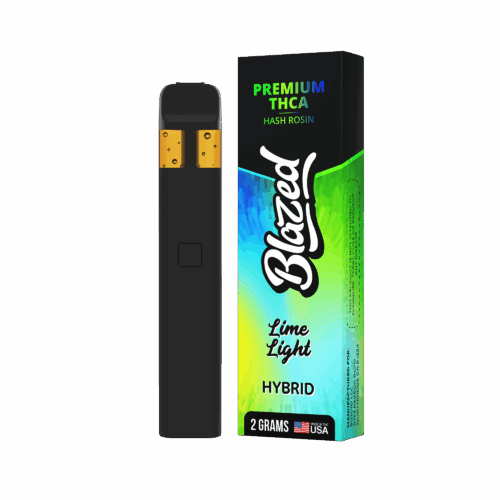
2 Gram THCA Disposable Hash Rosin – Blazed
$37.99$59.99 -
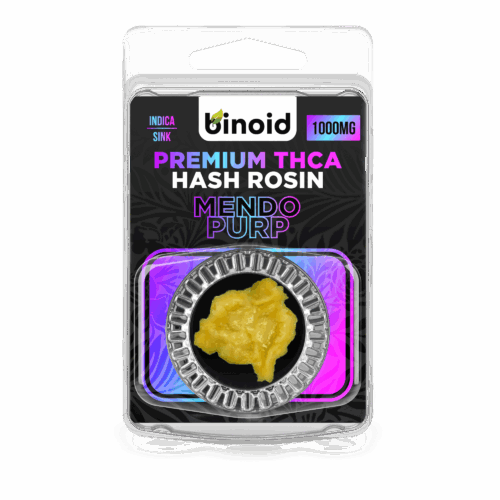
THCA Hash Rosin Dabs – 1000mg
$33.99$59.99 -
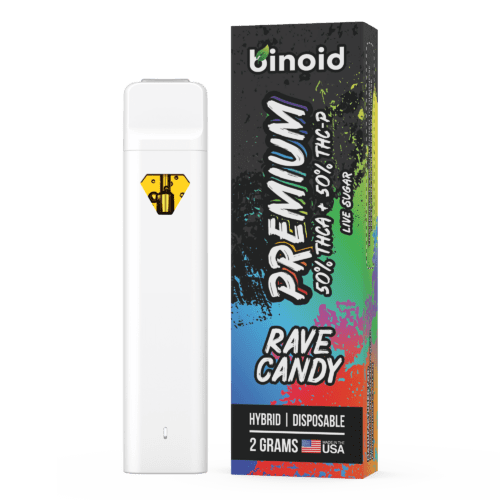
Live Sugar THCA + THC-P Disposable Vape – Pure 50/50
$39.99$69.99 -
Super 7 Gummies – Summer Slush Series
$37.99$49.99