The Arms Race Nobody Saw Coming
Every few months, the hemp-derived cannabinoid market produces a compound that seems engineered specifically to make last year’s most exciting discovery feel quaint by comparison. That is precisely the dynamic now playing out between THC-B and THC-P, two minor cannabinoids that have spent the past several years migrating from academic curiosities buried in obscure phytochemistry papers to the featured shelf position at forward-thinking retailers like Binoid CBD. Neither compound occurs in cannabis in anything close to significant quantities naturally. Both require sophisticated isomerization chemistry to produce at commercially viable concentrations. And both, in their own distinct ways, represent an answer to a question the cannabinoid market has been quietly asking since Delta 9 THC became a commodity: what happens when you start manipulating molecular architecture not just to replicate the traditional cannabis experience, but to exceed it?
The comparison between these two compounds is not merely an academic exercise in nomenclature. THC-B and THC-P occupy genuinely different positions in the potency and experience spectrum, and understanding what separates them is the difference between a consumer who makes an informed purchasing decision and one who is simply gambling on unfamiliar letters and numbers. This is a conversation about alkyl side chains, receptor binding affinity, and the increasingly precise science of cannabinoid engineering — and it deserves to be treated with the same rigor that a serious enthusiast would bring to comparing two single-barrel bourbons rather than two flavors of seltzer.
To Buy THC-B Products Click Here
The Chain That Changes Everything: Understanding Molecular Structure
To understand why THC-B and THC-P behave so differently from ordinary Delta 9 THC — and from each other — you have to start with a piece of organic chemistry that sounds abstract until you see what it actually does. Every THC-family cannabinoid shares a common structural backbone, but the length of the alkyl side chain attached to that backbone determines, to a remarkable degree, how tightly the molecule binds to the CB1 receptors that mediate psychoactive effects. Standard Delta 9 THC carries a five-carbon side chain, sometimes referred to by chemists using the shorthand pentyl. That five-carbon configuration has effectively become the reference point against which every other cannabinoid in the THC family is measured.
THC-P, short for tetrahydrocannabiphorol, breaks from that reference point in a genuinely dramatic way. Its side chain extends to seven carbons rather than five, and that seemingly small structural difference produces an outsized effect on receptor binding. Early pharmacological research, most notably a widely cited 2019 Italian study, found that THC-P demonstrated binding affinity for CB1 receptors dramatically higher than standard Delta 9 THC in laboratory conditions — a finding that sent ripples through the cannabinoid science community and effectively launched THC-P from theoretical curiosity into commercial product category almost overnight. THC-B, or tetrahydrocannabutol, takes a different structural path. Rather than extending the side chain, THC-B modifies it to four carbons, described chemically as a butyl configuration. This shorter chain length produces its own distinct receptor interaction profile — one that early formulators and experienced consumers alike have described as more grounded, more full-bodied, and less prone to the sometimes-overwhelming intensity that can accompany THC-P at higher doses.
The Experience Divide: Ceiling vs. Character
If you were to ask a room full of experienced cannabinoid consumers to describe the practical difference between THC-B and THC-P, you would likely hear two very different vocabularies emerge. THC-P is almost universally discussed in terms of intensity and ceiling — the sheer magnitude of what the compound is capable of delivering, particularly at doses that would be considered moderate or even conservative for standard Delta 9 THC products. Consumers who have explored THC-P disposables or THC-P-infused gummies frequently describe an onset that feels faster and more forceful than they anticipated, followed by an experience that some characterize as more cerebral, more intensely euphoric, and occasionally more disorienting than a comparable dose of ordinary THC. This is not a compound built for casual, low-stakes experimentation. It rewards respect for dosing and a working knowledge of one’s own tolerance.
THC-B, by contrast, tends to be described in terms of character rather than ceiling. Early anecdotal reports and the limited formal research available suggest that THC-B produces effects that are qualitatively closer to traditional Delta 9 THC than THC-P does, but with what many consumers describe as a warmer, more full-spectrum quality — a rounded, body-forward sensation layered underneath the more familiar cerebral effects associated with THC intoxication. Some formulators have theorized that this stems from THC-B’s structural similarity to CBN, a cannabinoid long associated with relaxation and sedative qualities, though the pharmacological picture here remains considerably less studied than that of its more famous seven-carbon cousin.
What is consistent across both compounds is the absence of any separate, exotic experience unique to the raw or unconverted molecule — as is true throughout the cannabinoid family, the psychoactive effect only manifests once the compound has properly engaged the endocannabinoid system, and that engagement is shaped as much by formulation quality, dosing precision, and individual biochemistry as by the underlying molecule itself.
The Formulation Challenge: Why Not All THC-B and THC-P Products Are Equal
Here is where the conversation moves from academic interest to genuinely practical consumer guidance, because THC-B and THC-P are considerably more difficult to formulate correctly than their better-established cannabinoid predecessors. Both compounds are typically produced through isomerization — a controlled chemical process that converts CBD isolate into the target cannabinoid structure — and that process demands significant precision. An imprecise or poorly controlled isomerization reaction does not simply fail to produce the desired compound efficiently; it can generate a cocktail of unintended byproducts, some of which have not been extensively studied for safety and none of which any responsible consumer wants entering their body without disclosure.
This is precisely the reason that sourcing discipline matters more with THC-B and THC-P than it does with almost any other category in the modern hemp market. A brand cutting corners on reaction control, post-processing purification, or third-party verification is not simply offering a marginally inferior product — it is potentially offering something chemically different from what the label claims. Binoid CBD has approached this challenge by treating novel cannabinoid formulation as a discipline requiring the same rigor applied to its more established product lines, pairing every THC-B and THC-P release with comprehensive third-party lab testing conducted by ISO 17025-accredited laboratories.
That documentation covers not just the target cannabinoid’s concentration but a full contaminant panel, giving consumers the ability to verify exactly what they are purchasing rather than trusting a label alone. In a category this new and this chemically demanding, that verification is not a luxury. It is the baseline requirement for responsible participation in the market.
Reading the Compliance Landscape
Both THC-B and THC-P exist within the same federal framework that governs the broader hemp-derived cannabinoid market: the 2018 Farm Bill, which defines legal hemp as cannabis containing no more than 0.3% Delta 9 THC by dry weight, measured at the point of testing rather than after any subsequent chemical conversion. Because THC-B and THC-P are synthesized from hemp-derived CBD through isomerization rather than extracted directly as significant natural constituents of the plant, products built around these cannabinoids have generally been marketed within that same compliance structure.
That said, the regulatory conversation around novel and isomerized cannabinoids continues to evolve at the state level, with some jurisdictions taking a more restrictive posture toward compounds they consider synthetically modified regardless of their hemp origin. A consumer exploring THC-B or THC-P products should treat compliance as a live and evolving conversation rather than a settled fact, and should favor brands that actively monitor and disclose shipping restrictions rather than ones that simply ship everywhere and let the consumer sort out the legal implications after the fact.
Format Considerations: Vapes, Edibles, and the Delivery Question
The delivery format through which a consumer experiences THC-B or THC-P meaningfully shapes the resulting experience, and this is a consideration that deserves more attention than it typically receives in casual product discussions. Vaporized formats deliver both compounds with a speed of onset that edibles simply cannot replicate, which matters enormously for a compound like THC-P where the intensity of the eventual peak benefits from a consumer’s ability to gauge effects in real time rather than waiting the ninety minutes or more that an edible’s digestive metabolism requires.
This is particularly relevant given that oral consumption routes THC through first-pass hepatic metabolism, a process that converts a portion of the compound into 11-hydroxy-THC — a metabolite generally associated with a more intense, longer-lasting, and less easily moderated experience. For a molecule already noted for its potency, that metabolic amplification is a variable worth understanding before committing to an edible format at anything beyond a cautious starting dose.
Edible formats, meanwhile, offer their own distinct advantages for THC-B in particular, where the compound’s more grounded, full-bodied character can translate beautifully into a gummy or tincture format designed for sustained, unhurried effects rather than the rapid onset-and-taper curve of vaporization. Binoid CBD’s approach to formulating across both delivery categories reflects an understanding that the ideal format is not universal but compound-specific, and the brand’s product descriptions and lab documentation are structured to help consumers make that connection rather than treating every cannabinoid as interchangeable across every format.
The Verdict: Two Molecules, Two Distinct Propositions
The THC-B versus THC-P comparison ultimately resolves into a question of what kind of experience a consumer is seeking rather than which compound is objectively superior. THC-P stakes its claim on sheer potency and intensity — a compound for the experienced consumer who has built a working understanding of their own tolerance and who approaches a new dose with appropriate caution and respect for what the seven-carbon side chain is capable of delivering. THC-B occupies a different, arguably more approachable niche, offering a fuller, more rounded character that many consumers describe as closer in spirit to traditional THC while still carrying its own distinctive identity within the broader cannabinoid family.
What both compounds share, and what should anchor any consumer’s approach to exploring them, is an absolute dependence on formulation quality and testing transparency that exceeds what more established cannabinoids require. The chemistry involved is more demanding, the research base is thinner, and the margin for manufacturing error is narrower than in categories the market has had more time to mature around. Consumers who approach THC-B and THC-P with genuine curiosity rather than reflexive potency-chasing, who prioritize brands publishing accessible, current, ISO-accredited lab documentation, and who calibrate their dosing with the same intentionality a spirits enthusiast brings to a cask-strength pour, are the consumers this category rewards. For those ready to explore either compound, Binoid CBD‘s continued investment in formulation precision and testing transparency represents exactly the kind of sourcing discipline that this frontier of cannabinoid science demands.
To Buy THC-P Products Click Here
Recommended products
-
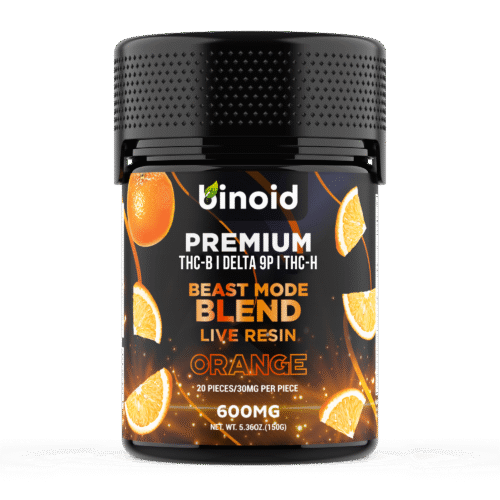
Beast Mode Blend Gummies
$32.99$59.99 -
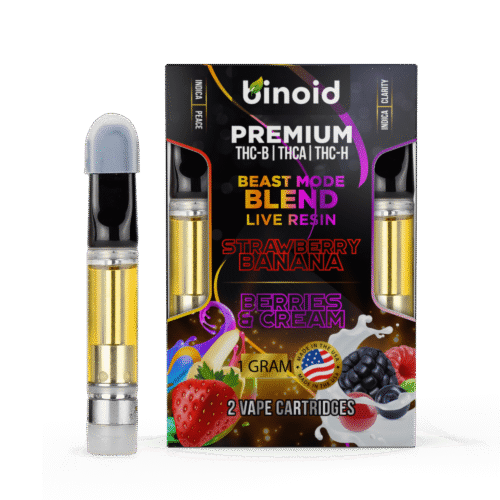
Beast Mode Blend Live Resin Cartridge – 2 Pack Combo (Limited Time Sale)
$40.99$89.99 -
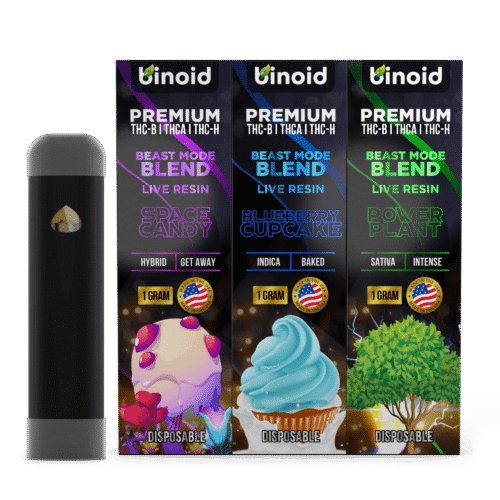
Beast Mode Blend Live Resin Disposable – 3 Pack Combo
$65.99$89.99 -
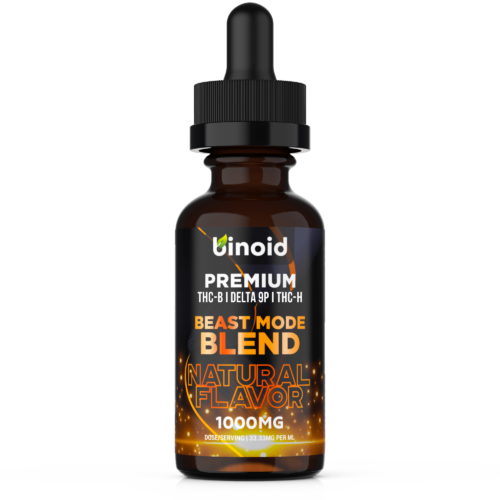
Beast Mode Blend Tincture – 1000mg
$34.99$59.99