The Math That Dispensaries Would Rather You Not Do
There is a conversation happening in living rooms, group chats, and increasingly in the comment sections of cannabis review channels that the traditional dispensary industry has been slow to acknowledge: hemp-derived THC brands selling directly online are, in a growing number of cases, delivering a comparable or superior product experience at a fraction of the price a licensed dispensary charges for essentially the same molecule.
This is not a fringe observation or a talking point manufactured by the hemp industry’s marketing departments. It is an arithmetic reality rooted in structural differences between two supply chains that, despite both ultimately delivering THC to a consumer, could not be more different in how they are taxed, licensed, distributed, and priced. Understanding why requires looking past the surface-level comparison of a gummy jar sitting on a dispensary shelf next to one sitting in a shopping cart on Binoid CBD, and into the actual cost architecture that determines what a consumer ultimately pays.
The price gap is not subtle. Depending on the state and the specific product category, consumers routinely report paying thirty to sixty percent less for a comparable hemp-derived THC product purchased online than they would for its state-licensed dispensary equivalent. That is not a rounding error. For a regular consumer, it is the difference between a sustainable, long-term relationship with a product category and a habit that quietly strains a monthly budget. The question worth asking is not whether this price gap exists, because it demonstrably does, but why it exists, and whether the savings come at the cost of something a discerning consumer should actually care about.
To Buy THC Products Click Here
The Licensing Tax: What a Dispensary Actually Pays Before You Walk In
A state-licensed cannabis dispensary operates inside one of the most heavily regulated retail environments in American commerce, and every layer of that regulation carries a cost that ultimately lands on the consumer’s receipt. Dispensary licenses themselves are often expensive and scarce, frequently running into the hundreds of thousands of dollars in application and renewal fees depending on the state, with some jurisdictions imposing additional local licensing requirements on top of state mandates. That cost has to be recovered somewhere, and it is recovered through pricing. Beyond the license itself, dispensaries typically operate under mandatory seed-to-sale tracking systems, security requirements that can include everything from armed guards to vault-grade storage, and compliance staffing dedicated entirely to navigating a regulatory environment that changes with real frequency.
Then there is taxation, which represents perhaps the single largest structural disadvantage facing traditional dispensaries. Cannabis sold through state-licensed channels is frequently subject to a stacked tax structure: standard state and local sales tax, plus a cannabis-specific excise tax that in many states runs anywhere from fifteen to thirty seven percent, plus in some jurisdictions an additional cultivation tax assessed earlier in the supply chain that gets baked into wholesale pricing before the product ever reaches a dispensary shelf.
Section 280E of the federal tax code compounds this further, prohibiting state-licensed cannabis businesses from deducting many ordinary business expenses because cannabis remains federally scheduled, which pushes effective tax rates for dispensary operators dramatically higher than almost any other retail category in the country. None of these costs are hidden or improper. They are the legitimate price of operating within the state-licensed cannabis framework. But they are costs that a hemp-derived THC brand operating under a fundamentally different federal framework simply does not carry in the same way.
The Farm Bill Advantage: A Different Regulatory Universe Entirely
Hemp-derived THC brands like Binoid CBD operate under the legal architecture established by the 2018 Farm Bill, which federally legalized hemp and hemp-derived cannabinoid products containing no more than 0.3% Delta 9 THC by dry weight. This distinction is not a technicality. It places hemp-derived THC products in an entirely separate regulatory and tax category from state-licensed cannabis, one that is not subject to cannabis-specific excise taxes, does not require the same category of specialized retail licensing, and, critically, is not subject to the Section 280E deduction restrictions that inflate dispensary operating costs so dramatically. A hemp-derived THC brand can deduct ordinary business expenses the way any other retailer can, structure its supply chain around efficient e-commerce distribution rather than expensive brick-and-mortar retail footprints in licensed zones, and pass a meaningful portion of those structural savings directly to the consumer.
This does not mean hemp-derived THC brands operate without oversight or cost. Reputable brands still invest heavily in the infrastructure that responsible cannabinoid commerce requires: sourcing verification, manufacturing quality control, and, critically, third-party laboratory testing. What it means is that the specific costs a hemp-derived brand carries are weighted differently, and the absence of dispensary-style excise taxation and 280E tax drag represents genuine savings rather than a corner being cut. Binoid CBD‘s pricing reflects this structural reality rather than a race-to-the-bottom strategy that sacrifices quality for margin, and that distinction matters enormously for a consumer trying to understand whether a lower price signals a compromise or simply a more efficient supply chain.
The Distribution Question: Why Direct-to-Consumer Changes Everything
Beyond taxation and licensing, the distribution model itself represents a second major driver of the price gap. A traditional dispensary product typically passes through multiple intermediary markups before it reaches the shelf: a cultivator sells to a processor, a processor sells to a distributor, a distributor sells to the dispensary, and the dispensary applies its own retail markup on top of all the accumulated cost from every prior link in that chain. Each of those transitions adds margin, and by the time a product reaches a dispensary shelf, its price often reflects four or five layers of markup stacked on top of the actual production cost.
Hemp-derived THC brands selling directly to consumers through their own websites collapse much of that chain. A brand like Binoid CBD that controls its own formulation, manufacturing relationships, and direct e-commerce distribution is able to eliminate several of those intermediary markups entirely, capturing efficiency that gets reflected in the final price a consumer pays. This is the same structural logic that has reshaped retail across dozens of consumer categories over the past two decades, from mattresses to eyewear to razors, where direct-to-consumer brands have consistently undercut traditional retail pricing by removing layers of distribution markup rather than by compromising on the underlying product.
The Quality Question: Does Cheaper Mean Worse?
This is the question that separates a genuinely useful price comparison from a superficial one, and it deserves a direct answer rather than a dodge. The honest reality is that price alone tells a consumer very little about quality in either direction, in either the dispensary or hemp-derived market. A dispensary price tag does not guarantee superior formulation, just as a lower hemp-derived price does not inherently indicate a compromised product. What actually determines quality is testing rigor, sourcing transparency, and manufacturing discipline, factors that exist independently of which regulatory category a product falls under.
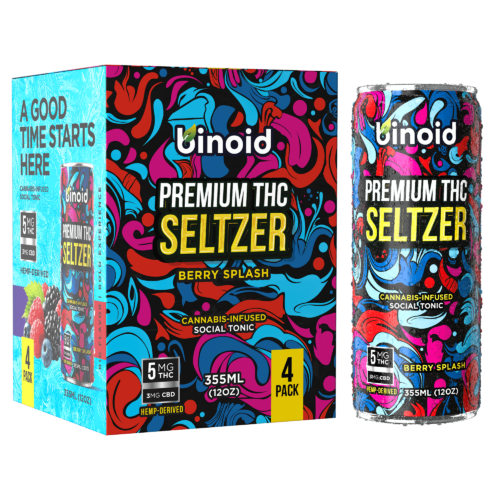
This is precisely where the sourcing conversation becomes essential for any consumer evaluating hemp-derived THC products as a genuine dispensary alternative rather than a cheaper but riskier substitute. A Certificate of Analysis from an ISO 17025-accredited independent laboratory represents the objective evidence a consumer needs to verify that a lower price has not come at the expense of purity, accurate potency labeling, or contaminant screening. Binoid CBD publishes batch-specific COA documentation across its product catalog precisely because structural cost savings and rigorous testing are not mutually exclusive, they are two entirely separate variables that a well-run brand manages simultaneously. The consumer who takes a few minutes to review that documentation before purchasing is positioned to capture the genuine savings that the hemp-derived model offers without gambling on the quality corners that some opportunistic brands do, unfortunately, cut.
The Convenience Multiplier: What Dispensary Shopping Actually Costs
There is a cost dimension to dispensary shopping that rarely appears on a price tag but factors meaningfully into any honest comparison: the time, travel, and friction involved in the transaction itself. Dispensary shopping requires physical proximity to a licensed retail location, often means navigating limited operating hours, frequently involves identification checks and purchase limits, and in many states requires the consumer to physically travel to a specific jurisdiction where cannabis retail happens to be legal at all. For consumers in states without any licensed dispensary access whatsoever, this is not an inconvenience, it is a complete barrier to entry that hemp-derived THC brands operating nationally simply do not present.
Online ordering through a platform like Binoid CBD removes essentially all of that friction. Products arrive at a consumer’s door, purchase history and product education are available at any hour, and the entire transaction happens without geographic restriction in the vast majority of states. When a consumer factors in the value of their own time, the gas or rideshare cost of a dispensary trip, and the simple convenience of asynchronous shopping, the effective price gap between dispensary and hemp-derived THC products widens even further beyond what the sticker prices alone suggest.
The Bottom Line: A Structural Advantage, Not a Shortcut
The price advantage that hemp-derived THC brands hold over traditional dispensaries is not a mystery, a loophole exploited at the expense of consumer safety, or a temporary market inefficiency waiting to be corrected. It is the direct, logical consequence of a fundamentally different regulatory and tax framework, a leaner distribution model, and a direct-to-consumer sales structure that eliminates layers of markup baked into the traditional dispensary supply chain. None of this requires a consumer to sacrifice quality, provided they apply the same sourcing scrutiny to a hemp-derived purchase that a careful shopper would apply anywhere else, prioritizing brands that publish current, accredited lab documentation and maintain transparent manufacturing standards.
For the consumer who has done that homework, the choice between a dispensary product and a hemp-derived alternative from a brand like Binoid CBD is not a trade-off between price and quality at all. It is simply a recognition that the underlying molecule can arrive through a more efficient, less tax-burdened supply chain without becoming a lesser product along the way, and that the savings reflected in that lower price tag are a structural feature of the hemp market rather than a warning sign to be viewed with suspicion.