
The Cannabinoid Frontier Keeps Expanding
There was a time, not so long ago, when the hemp-derived cannabinoid conversation began and ended with a handful of familiar names — CBD, Delta 8, maybe Delta 10 if you were talking to someone genuinely plugged into the space. That era is over. What has replaced it is a landscape of continuous molecular discovery, where cannabinoid chemists are working through the plant’s vast biosynthetic potential one isomer and one alkyl chain modification at a time, uncovering compounds that occupy new and often surprising positions on the potency and experience spectrum. THC-H — tetrahydrocannabihexol — is one of the more compelling entries in this ongoing exploration, and understanding what it is, where it comes from, and why serious cannabinoid consumers have started paying attention to it requires a genuine engagement with both the chemistry and the culture surrounding it.
THC-H belongs to a family of THC homologs distinguished from one another by the length of their alkyl side chain — the carbon tail attached to the core cannabinoid structure that, in ways researchers are still working to fully map, appears to influence how efficiently a given molecule binds to the body’s CB1 and CB2 receptors. Delta 9 THC carries a five-carbon pentyl chain. THC-H extends that chain to seven carbons, a structural variation that places it in the same homolog family as THC-P, another hexahydrocannabinol-adjacent compound that generated considerable industry buzz for its reported receptor affinity. The chemistry here is not incidental trivia. It is the entire explanation for why a molecule that shares so much structural DNA with delta 9 THC can present such a differentiated experiential profile once it reaches the consumer.
TO BUY THC-H PRODUCTS CLICK HERE
The Alkyl Chain Theory: Why Length Matters
To understand THC-H‘s position in the broader cannabinoid universe, you have to spend a moment with the science of receptor binding affinity — the degree to which a given molecule fits snugly into the CB1 receptor’s binding pocket and triggers the downstream cellular signaling that produces cannabis’s characteristic effects. Researchers studying the relationship between alkyl chain length and receptor affinity have observed a pattern that seems almost too elegant to be true: as the carbon chain lengthens from the three-carbon propyl configuration through the five-carbon pentyl standard and onward, binding affinity appears to shift in ways that don’t follow a simple linear progression, but that consistently mark the heptyl-chain compounds like THC-H and THC-P as structurally distinct from their more familiar pentyl-chain cousins.
This is the molecular mechanism that underlies the reports — largely anecdotal at this stage, since rigorous clinical research on novel cannabinoids remains in its early stages — that heptyl-chain THC analogs produce a notably different subjective experience than delta 9 THC at comparable doses.
What makes this genuinely interesting rather than merely academic is that the difference isn’t purely a matter of potency multiplication, though potency is certainly part of the conversation. Consumers who have spent time with THC-H products often describe an experience with a distinct textural quality — a different onset curve, a different peak character, a different way the experience resolves — rather than simply a stronger version of what delta 9 THC delivers.
This aligns with what cannabinoid researchers understand about receptor pharmacology more broadly: a molecule’s shape doesn’t just determine whether it binds, it can influence how the resulting cellular signal cascades, which downstream effects get emphasized, and how the overall experience is subjectively organized. This is speculative territory in the current research literature, but it’s speculation grounded in structural chemistry that has held up reasonably well as more novel cannabinoids enter the market and more consumer experience accumulates around them.
From Biomass to Bottle: How THC-H Actually Gets Made
Unlike delta 9 THC, which the cannabis plant produces in meaningful native quantities, THC-H exists in raw hemp biomass only in trace amounts — far too little to make direct extraction commercially viable. This is true of most of the novel cannabinoid category, and it’s a fact that responsible brands are transparent about rather than obscuring behind vague “hemp-derived” language that implies a simpler agricultural story than what’s actually happening. THC-H is produced through a chemical conversion process that begins with CBD isolate extracted from federally compliant hemp biomass, which is then subjected to a controlled isomerization reaction — a process that rearranges the molecule’s atomic structure without changing its fundamental atomic composition, converting it into the target cannabinoid through a series of catalyzed reaction steps.
This is precisely the stage in the supply chain where quality control separates the brands worth trusting from the ones worth avoiding entirely. Isomerization reactions, when improperly controlled, can leave behind residual reaction byproducts, unreacted starting material, or unwanted isomers that never fully convert to the target compound — and because the hemp-derived novel cannabinoid market operates without the kind of mandatory pre-market testing regime that governs pharmaceutical manufacturing, the burden of catching these issues falls almost entirely on post-production laboratory verification.
This is exactly why Binoid CBD treats third-party, ISO 17025-accredited certificate of analysis documentation as a non-negotiable component of every novel cannabinoid product it brings to market, rather than an optional add-on for the products that happen to test well. A THC-H product without a current, accessible, batch-specific COA is not a product with a minor documentation gap — it’s a product whose actual molecular contents are, functionally, unknown to the person about to consume it.
The starting material matters just as much as the conversion process. CBD isolate derived from domestically grown, properly tested hemp biomass carries a fundamentally different risk profile than isolate sourced from unverified international supply chains, and that difference propagates forward through every subsequent processing step. A contaminated or imprecisely extracted CBD isolate entering an isomerization reaction produces a compromised THC-H distillate no matter how carefully the conversion chemistry itself is executed — there is no purification step downstream capable of fully correcting for molecular integrity problems introduced upstream. This is the layered, cascading nature of quality in the novel cannabinoid space, and it’s why sourcing transparency has to extend backward through the entire production chain rather than stopping at the finished product’s lab report.
The 2018 Farm Bill and Where THC-H Fits Legally
The legal foundation supporting the entire novel cannabinoid category — THC-H included — traces back to the same statutory language that made THCA flower, Delta 8, and Delta 10 commercially viable: the 2018 Farm Bill’s definition of hemp as cannabis containing no more than 0.3% delta 9 THC by dry weight, measured at the point of testing. THC-H is not delta 9 THC. It is a structurally distinct isomer synthesized from hemp-derived CBD, and products formulated around it are federally compliant provided they meet that dry-weight threshold and are sourced from properly licensed hemp cultivation and processing operations.
This is the same legal architecture that has enabled the broader isomerized cannabinoid market to flourish over the past several years, and it remains, as of this writing, the operative framework — though as with every compound in this category, informed consumers should understand that state-level regulation varies considerably, and some states have moved to restrict or explicitly ban specific novel cannabinoids even where federal compliance is technically satisfied.
This regulatory patchwork is precisely why responsible national retailers maintain active compliance monitoring rather than treating a single point-in-time legal analysis as permanently settled. Binoid CBD‘s approach to geo-restricted shipping and state-by-state compliance verification reflects an understanding that operating in this category requires ongoing diligence, not a one-time legal opinion filed away and forgotten. For the consumer, the practical takeaway is straightforward: verify that any THC-H product you’re considering is being sold by a brand that demonstrates active awareness of where it can and cannot legally ship, rather than a storefront that simply lists every SKU as available everywhere and leaves compliance as an afterthought.
What the Experience Actually Involves
Speaking to the lived experience of THC-H requires some intellectual honesty about the limits of current research. Formal pharmacokinetic studies on THC-H in human subjects remain limited compared to the decades of research behind delta 9 THC, and the picture that exists today is assembled primarily from structural chemistry, comparative analysis with better-studied homologs like THC-P, and the accumulated anecdotal experience of a consumer base that has been exploring this category in real time.
What that accumulated experience consistently points toward is a cannabinoid that experienced consumers — people who already have a clear sense of their own tolerance and response patterns with delta 9 THC — describe as delivering a notably different and often more intense subjective profile at comparable milligram doses, with an onset and resolution curve that many describe as somewhat slower and more gradual than what they’re accustomed to from conventional delta 9 formats.
This is not a category for the cannabinoid-curious newcomer looking for a gentle introduction to hemp-derived products. It’s a category for the consumer who has already built a working knowledge of their own response to delta 9 THC and its close relatives, and who is approaching THC-H with the same measured, start-low-and-assess approach that any responsible exploration of a less-studied compound demands. The products available through Binoid CBD’s novel cannabinoid lineup are formulated with this consumer specifically in mind — clearly labeled, dosed with precision, and accompanied by the kind of educational product copy that treats the reader as someone capable of making an informed decision rather than someone to be sold to with vague superlatives.
Format Considerations: Where THC-H Shows Up in the Market
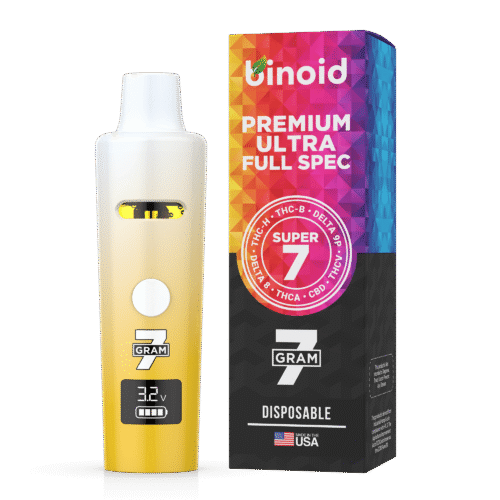
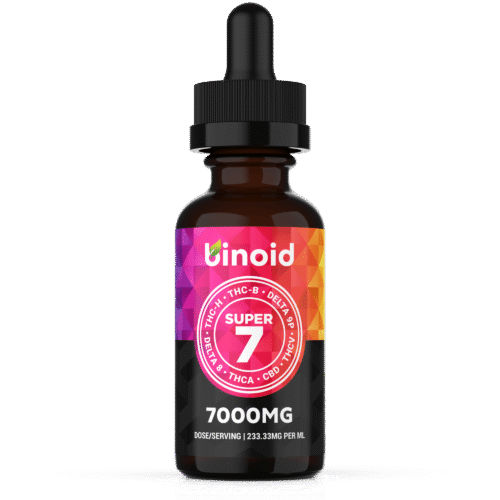
THC-H has begun appearing across several of the standard novel cannabinoid delivery formats, though its market presence remains more concentrated than the ubiquity that Delta 8 and Delta 10 have achieved. Vape cartridges and disposables represent the most common format, largely because vaporization offers the fastest onset and the most direct way for consumers to titrate their experience in real time — taking a single measured inhalation, waiting to assess the effect, and adjusting from there in a way that oral formats simply don’t allow. The distillate itself, when properly formulated, integrates cleanly with standard vape hardware, and the terpene profiles used to round out the flavor experience can be selected to either complement or contrast with the underlying cannabinoid’s characteristics, depending on the formulation philosophy a given brand brings to the product.
THC-H has also begun appearing in concentrate and flower-adjacent formats, generally infused onto a THCA or CBG flower base to create a combined product that delivers the immediate, decarboxylation-triggered effects of the base flower alongside the distinct profile THC-H contributes. This kind of layered formulation requires real formulation expertise to execute well — infusion needs to be applied evenly, the flower base needs to be independently lab-verified before infusion even begins, and the finished product needs its own comprehensive COA reflecting the combined cannabinoid profile rather than simply inheriting the base flower’s original testing documentation. It’s a more technically demanding format than a straightforward vape cartridge, and it’s a useful test case for evaluating how seriously a given brand takes the manufacturing discipline this category actually requires.
Reading the Room: Why Sourcing Discipline Matters More Here Than Anywhere Else
If there’s a single principle that should govern how experienced consumers approach THC-H and the broader category of novel, lab-converted cannabinoids, it’s this: the more removed a compound is from the plant’s native biosynthetic pathway, the more the burden of quality assurance shifts onto the manufacturing process and away from anything nature does automatically. Delta 9 THC exists in the plant already, produced by enzymes that evolution has spent millions of years refining. THC-H does not — it exists because a chemist ran a controlled reaction and verified the output, and every step of that process is a place where things can go right or go wrong depending on the rigor of the operation running it.
This is the framework that should guide every purchasing decision in this category, and it’s the framework Binoid CBD has built its novel cannabinoid program around from the outset — domestic sourcing for the CBD isolate that serves as the conversion starting material, controlled and monitored isomerization processes, and comprehensive, accessible, batch-specific COA documentation for every finished product that reaches the catalog. The cannabinoid frontier is going to keep expanding; THC-H is unlikely to be the last heptyl-chain homolog to generate serious consumer interest, and the compounds that come after it will demand exactly the same scrutiny. For the consumer paying attention, that scrutiny isn’t a barrier to enjoying what this category has to offer — it’s the precondition for enjoying it with genuine confidence.
TO BUY THC-H PRODUCTS CLICK HERE
Recommended products
-
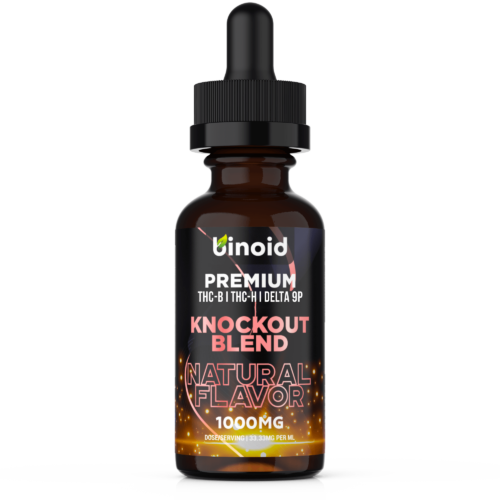
Knockout Blend Tincture – 1000mg
$34.99$59.99 -
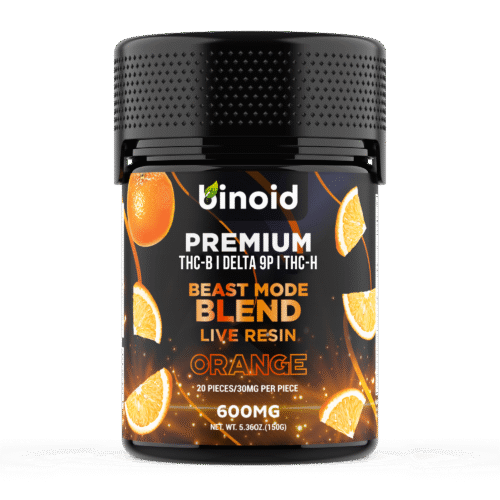
Beast Mode Blend Gummies
$32.99$59.99 -
Knockout Blend Live Resin Disposable Bundle – 2 Gram
$59.99$99.99 -
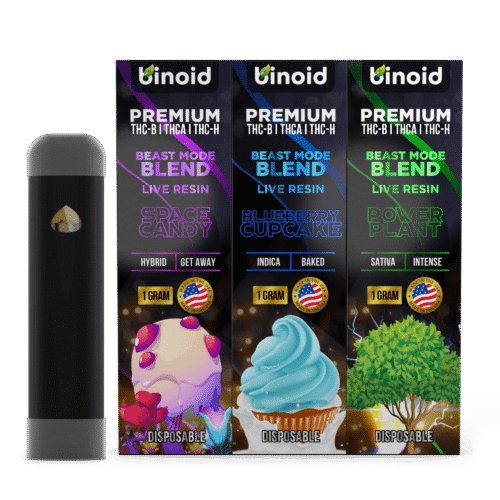
Beast Mode Blend Live Resin Disposable – 3 Pack Combo
$65.99$89.99