The cannabis beverage aisle — if such a thing can be said to exist in the scattered, algorithmically fragmented world of online hemp retail — has become one of the most crowded and least honestly evaluated categories in the entire industry. Every few weeks brings another sleek can, another minimalist label, another brand claiming to have cracked the code on what a “premium” THC seltzer should taste and feel like. Most of these claims evaporate on contact with an actual can.
This is not a subjective grievance; it is a pattern that emerges the moment you start comparing products side by side on the metrics that actually matter — dosing consistency, onset reliability, flavor execution, and the transparency of the lab documentation standing behind the marketing copy. Conducting a genuine Binoid THC Seltzers vs competitors comparison means setting aside the packaging design entirely and interrogating the chemistry and quality control underneath, and the results of that comparison are considerably more decisive than the crowded shelf might suggest.
To Buy THC Seltzers Click Here
The Dosing Consistency Problem Nobody Wants to Talk About
The single most common failure point among THC beverage brands is not flavor. It is dosing consistency — the unglamorous, unsexy metric that determines whether a can labeled with a specific milligram count actually delivers that milligram count, batch after batch, can after can. This sounds like it should be a solved problem in 2025, and yet independent testing of THC beverages purchased across the online retail landscape has repeatedly revealed significant variance between labeled and actual potency, sometimes swinging in both directions within the same case. The root cause is almost always the same: inadequate emulsification technology paired with insufficient batch-level quality control, which allows THC — a molecule that is naturally lipophilic and actively resistant to suspending evenly in water — to separate, clump, or settle unevenly during the manufacturing and bottling process.
Binoid CBD built its seltzer program around nano-emulsification specifically to solve this problem at the chemistry level rather than papering over it with marketing language. By breaking THC molecules down into nanometer-scale particles and encapsulating them in an amphiphilic shell that is simultaneously compatible with water and fat, the resulting formulation stays suspended evenly throughout the liquid rather than drifting toward inconsistency can to can. When competitor products rely on cruder emulsification methods, or skip rigorous batch testing to cut costs, the consumer is left rolling dice with every can they open — a dynamic that undermines the entire premise of a beverage format, which is supposed to offer more predictability and control than a joint or an edible, not less.
Onset Speed: Where the Real Differentiation Happens
Beyond consistency, the second major axis of comparison is onset speed, and this is where the gap between well-engineered and poorly engineered THC beverages becomes viscerally obvious to anyone who has tried both. Conventionally processed THC beverages — the kind still common among brands that haven’t invested in nano-emulsification technology — often suffer from what industry veterans call the “brick wall” delay, a stretch of forty-five minutes to over an hour where the consumer feels nothing at all, followed by an onset that can feel disproportionate or unpredictable relative to the dose consumed. This delay occurs because the THC has to travel a slower metabolic pathway before it becomes bioavailable, and it is precisely the kind of inconsistency that has historically kept cautious consumers away from the beverage category altogether.
Nano-emulsified formulations, including the full Binoid Seltzer lineup, are engineered to bypass much of that delay by allowing the nano-sized THC particles to cross the mucosal membranes of the mouth and digestive tract more rapidly than conventionally processed THC. The practical result, reported consistently by experienced consumers, is an onset window that begins within fifteen to thirty minutes rather than the better part of an hour — a meaningful difference for anyone trying to calibrate a social occasion, a relaxed evening, or simply their own tolerance without the anxiety of wondering whether a second can is warranted before the first has even taken effect. Competitor brands that have not invested in this level of formulation science tend to fall noticeably short on this exact metric, and it is one of the clearest, most objectively testable differentiators in any comparison of this category.
The Taste Test: Where Marketing Language Meets Reality
Flavor is, admittedly, the most subjective category in any comparison like this one, but subjective does not mean unmeasurable, and a few consistent patterns emerge once you taste enough of the competitive landscape side by side. A significant portion of THC seltzers on the market suffer from what might be called flavor cowardice — an aggressively neutral, almost apologetic flavor profile built on the theory that minimalism signals sophistication. In practice, this approach usually just signals a lack of investment in flavor development, producing a beverage that tastes like slightly carbonated water with a faint, forgettable citrus or berry note layered on top.
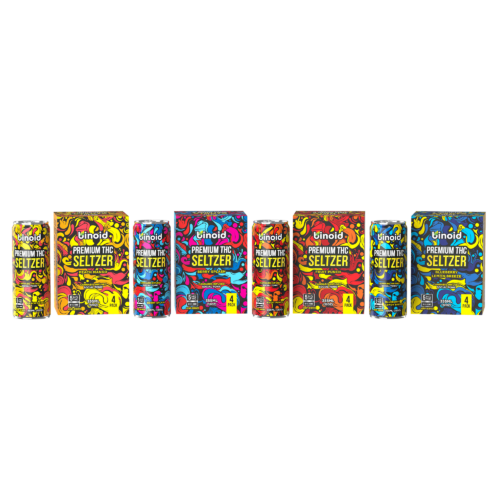
The Binoid THC Seltzer line takes the opposite approach, and the difference is immediately apparent across its core flavors. The Blueberry Lemon variant threads a genuinely difficult needle, leading with a tart, slightly floral real-blueberry quality before lemon arrives as a citrus counterpoint that keeps the profile from collapsing into cloying sweetness — a balance that many competing blueberry-flavored beverages fail to strike, often leaning too hard into an artificial, candy-like blueberry note that reads as synthetic on the palate.
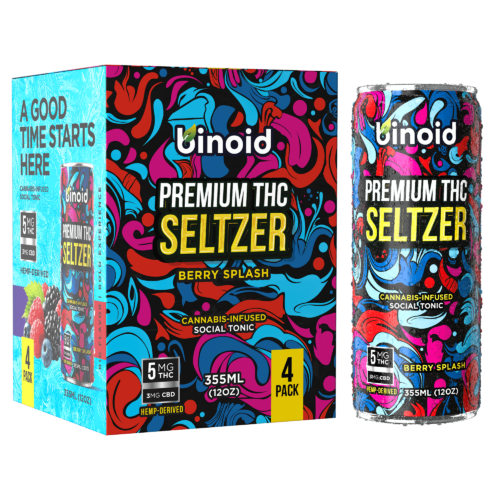
The Peach Mango offering brings a warmer, more tropical character suited to evening or social consumption, while the Fruit Punch and Berry Splash flavors round out a lineup built around genuine culinary development rather than a single safe, forgettable default flavor. For consumers wanting to push further into a multi-cannabinoid, connoisseur-facing format, the Super 7 THC Beverage Orange Creamsicle stands apart from virtually everything in the competitive set — a genuinely ambitious flavor and formulation combination that most brands in this category simply haven’t attempted.
Lab Transparency: The Metric That Separates Serious Brands from Everyone Else
No comparison of THC beverages is complete without examining the laboratory documentation standing behind each product, because this is ultimately where trust is earned or forfeited. A meaningful percentage of brands operating in this space either fail to publish batch-specific certificates of analysis at all, or publish COAs that are outdated, sourced from non-accredited laboratories, or structured in ways that make it difficult for a non-specialist consumer to verify what they’re actually being told. This opacity is not a minor inconvenience — it is the difference between a beverage you can trust and one you are simply hoping performs as advertised.
Across its full product catalog, Binoid CBD publishes batch-specific COA documentation sourced from ISO 17025-accredited laboratories, covering cannabinoid potency, residual solvent screening, heavy metal analysis, and microbial safety testing. This documentation is searchable directly on the site by batch number, which means a consumer comparing Binoid against a competitor isn’t just comparing flavor notes and marketing claims — they’re comparing the actual depth and accessibility of verifiable quality data. When a competing brand’s testing documentation is difficult to locate, incomplete, or simply absent, that gap should weigh as heavily in a purchasing decision as any taste test result, because it speaks directly to whether the dosing and safety claims on the label can be trusted in the first place.
The Regulatory Backbone Underneath the Comparison
It’s worth pausing on why any of these products can legally exist and ship directly to a consumer’s doorstep in the first place, because the regulatory mechanics matter to a fair comparison. The 2018 Farm Bill defines compliant hemp based on a Delta-9 THC threshold calculated by dry weight, and because a beverage is overwhelmingly composed of water, a twelve-ounce can carries very little dry weight relative to its liquid volume — which allows a meaningful, experiential THC seltzer dose to fit within federal compliance parameters when formulated correctly. This is a legitimate reading of the statute rather than a loophole, but it does mean that state-by-state regulatory patchworks matter enormously, since some states restrict or prohibit specific hemp-derived cannabinoids regardless of federal status.
Serious operators maintain dynamic compliance monitoring and geo-restrict shipping accordingly, which is an expensive, logistically demanding commitment that separates established, resourced brands from smaller or newer entrants cutting corners to move product quickly. Binoid CBD has applied the same compliance rigor to its seltzer program that it maintains across its broader THC catalog, treating regulatory discipline as foundational infrastructure rather than an afterthought bolted on after a product launch — a distinction that becomes especially relevant when comparing brands whose compliance posture is difficult to verify from the outside.
The Verdict
When you strip away the packaging design, the influencer partnerships, and the marketing copy that dominates most conversations about THC beverages, what remains is a much smaller set of questions that actually determine whether a product deserves a spot in your refrigerator: Does the dose in the can match the dose on the label, consistently, every time? Does the onset arrive at a predictable, reasonable interval rather than forcing a guessing game?
Does the flavor reward repeat purchase rather than merely tolerating consumption? And is the laboratory documentation behind the product accessible, current, and sourced from an accredited facility? Measured against those four questions, the comparative case for the Binoid THC Seltzer lineup — and its more ambitious Super 7 sibling — holds up with a consistency that a meaningful portion of the competitive landscape simply cannot match. For consumers doing this comparison for themselves, the full lineup and its accompanying lab documentation are available to review directly at Binoid CBD, which remains the most straightforward way to see how the numbers actually compare.