
There is a particular anxiety that visits every first-time cannabis consumer in the seconds before they take that first inhale or swallow that first gummy — a low hum of uncertainty about what happens next, how strong it will be, and whether they have somehow miscalculated their way into an evening they didn’t sign up for. This anxiety is not irrational. It is, in fact, the entirely reasonable response of a person navigating a THC product category that has historically done a poor job of communicating dosage information with any real precision.
Unlike alcohol, where a “standard drink” has been calibrated and culturally understood for generations, THC arrived into the mainstream consumer market with no equivalent shorthand — no universally agreed-upon unit that tells a newcomer, in plain terms, what a reasonable starting point actually looks like. Building that framework, and understanding the molecular logic behind it, is the single most useful thing a first-time or early-stage consumer can do before their next purchase.
To Buy THC Products Click Here
Recommended products
-
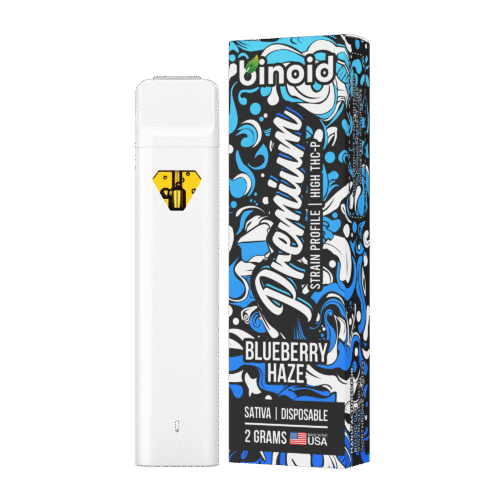
High THC-P 2 Gram Disposable Vape – Strain Series
$41.99$73.99 -
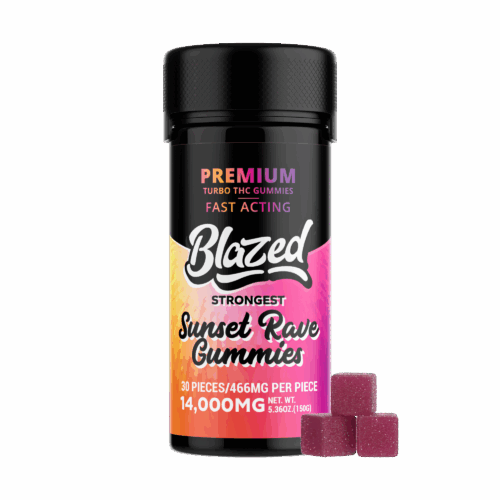
14,000MG Turbo THC Gummies – Blazed
$49.99$84.99 -
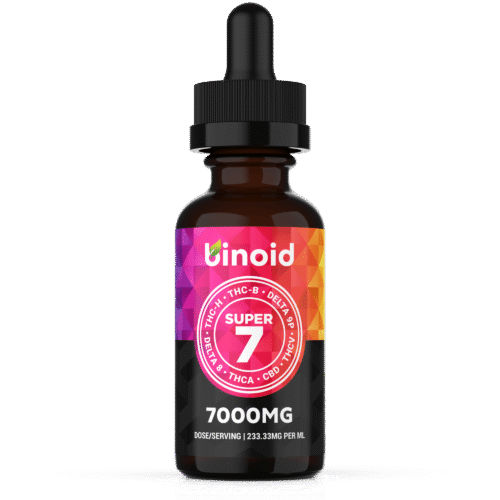
Super 7 Tincture – 7000mg
$39.99$59.99 -
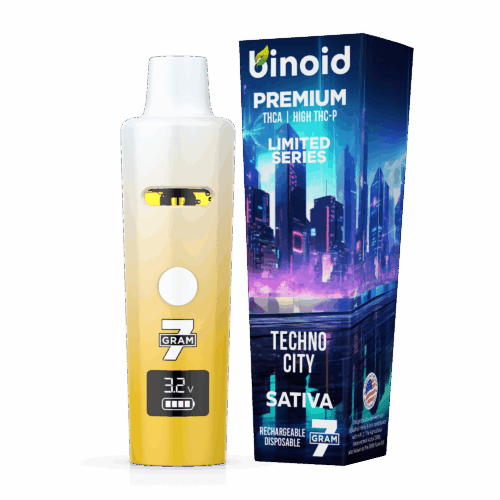
7 Gram THCA + High THC-P Disposable Vape – Limited Series
$67.99$109.99
The Milligram Is Not a Universal Language
The most persistent myth in cannabis dosing is the idea that a milligram of THC means the same thing across every product, every consumer, and every consumption method — and almost nothing about that assumption survives contact with the actual pharmacology involved. Bioavailability, the percentage of a compound that actually reaches the bloodstream and produces an effect, varies dramatically depending on how THC enters the body. Inhaled THC, whether from flower or a vape cartridge, reaches the bloodstream through the lungs in a matter of minutes, with bioavailability typically landing somewhere in the range of ten to thirty-five percent depending on inhalation technique and product formulation.
Edible THC, by contrast, must first survive the digestive tract and then pass through the liver, where enzymes convert a portion of it into 11-hydroxy-THC, a metabolite that is widely reported by researchers and consumers alike to produce a more intense and longer-lasting effect than the parent compound. This single difference in metabolic pathway is why five milligrams of inhaled THC and five milligrams of edible THC can produce experiences that feel, to the same consumer, almost unrelated to one another.
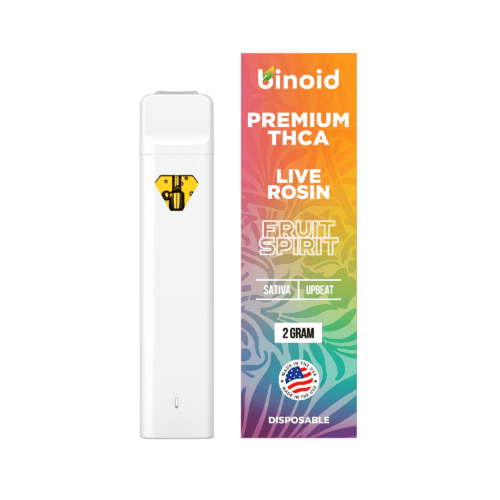
This is precisely why the format matters as much as the number on the label, and why a beginner working through the THC vape, THC gummy, and THC tincture options available at Binoid CBD should think about dosing as a conversation between milligram count and delivery method rather than treating the number in isolation. A tincture, held sublingually for thirty to sixty seconds before swallowing, splits the difference between these two pathways — some absorption happens directly through the mucous membranes beneath the tongue, bypassing first-pass liver metabolism, while the remainder follows the slower digestive route. Understanding which pathway a given product uses is not a technicality. It is the foundation of predicting, with any real confidence, what an experience is likely to feel like before it begins.
The Case for Starting Absurdly Low
If there is one piece of received wisdom in the cannabis space that has earned its status as gospel, it is the principle of starting low and moving slowly — and the reason it has achieved near-universal endorsement among experienced consumers, budtenders, and formulators alike is that it is simply, empirically, the approach least likely to produce an experience the consumer regrets. For a true beginner with no prior cannabis tolerance, industry convention generally points toward an inhaled starting dose in the range of two to five milligrams, delivered through a single measured inhalation from a vape cartridge rather than a full session of consumption. For edibles and tinctures, where onset is delayed and the intensity curve is steeper once it arrives, the equivalent starting range typically sits between two and five milligrams as well, though the delayed onset means the temptation to “double up” before the first dose has fully landed is the single most common mistake new consumers make.
The delayed-onset problem deserves its own moment of attention, because it is responsible for more uncomfortable first experiences than any other variable in the dosing equation. Edible and tincture -based THC can take anywhere from thirty minutes to two full hours to produce a noticeable effect, depending on individual metabolism, stomach contents, and the specific formulation involved. A beginner who consumes a five-milligram gummy, feels nothing after twenty minutes, and decides to consume a second gummy is not making an unreasonable decision given the information available to them in that moment — they are making a decision based on incomplete information about how the product works. This is why patience, in the cannabis dosing context, is not simply good advice. It is the single highest-leverage behavior a new consumer can adopt, and it costs nothing beyond the willingness to wait.
Building a Personal Tolerance Map
Beyond the first experience, the more sophisticated version of beginner dosing involves treating each subsequent session as a data point in a personal tolerance map rather than a repeat of the same experiment. Body weight, metabolism, prior cannabis experience, the presence or absence of food in the stomach, hydration levels, and even genetic variation in CYP2C9 and CYP3A4 liver enzyme expression all influence how a given milligram count translates into a subjective experience for a specific individual. This is precisely why generic dosing charts — the kind that assign a single universal number to categories like “beginner,” “intermediate,” and “experienced” — can only ever function as a starting orientation rather than a precise prescription. The consumer who pays attention across three or four low-dose sessions, noting how their body responded to a given product, format, and milligram count, will develop a far more useful and individualized understanding than any chart could provide.
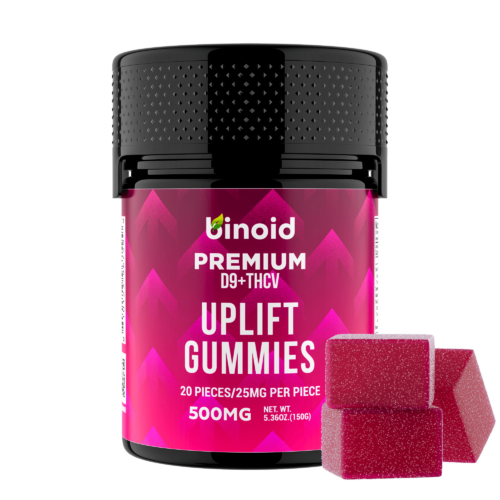
This is also where product consistency becomes a genuinely practical concern rather than an abstract quality preference. A tolerance map built from inconsistent products — where a five-milligram gummy from one batch delivers a noticeably different experience than a five-milligram gummy from the next — is a map built on unreliable coordinates, and the consumer trying to calibrate their own response ends up chasing a moving target. This is one of the more underappreciated arguments for prioritizing rigorously tested products: a five-milligram THC gummy from Binoid CBD should deliver a five-milligram THC gummy experience, batch after batch, because the entire value of a personal dosing framework depends on that consistency holding true.
Reading the Label Like an Instrument Panel
A THC product label, read correctly, functions less like packaging copy and more like an instrument panel — a dense but decodable set of information that tells the attentive consumer everything they need to know before consumption begins. The total milligram count per package is the most obvious figure, but the per-serving milligram count is the number that actually matters for dosing purposes, and the gap between these two figures is where many beginners run into trouble.
A tincture bottle containing 600 total milligrams across a 30-milliliter volume delivers 20 milligrams per full milliliter, or roughly 10 milligrams per half-dropper — and a beginner working from the total figure alone, without doing that division, is at meaningful risk of significantly overshooting their intended dose. Products sold through Binoid CBD are labeled with this per-serving clarity specifically because it is the number that translates directly into a real-world dosing decision, and a brand genuinely invested in a positive beginner experience treats that clarity as a baseline obligation rather than an optional nicety.
The certificate of analysis, or COA, extends this same instrument-panel logic one level deeper, confirming that the milligram count printed on the label actually reflects what independent laboratory testing found in that specific product batch. This matters enormously for dosing precision, because a label claiming 5 milligrams per gummy is only useful information if that number has been verified against reality by an accredited third party rather than simply asserted by the manufacturer. Every product across Binoid’s catalog is accompanied by batch-specific COA documentation precisely because dosing confidence depends entirely on label accuracy — a beginner cannot build a reliable tolerance map on top of a label that might be off by a meaningful margin in either direction.
The Environment Variable Nobody Puts on the Label
No dosing framework is complete without acknowledging the role that setting and mindset play in shaping how a given milligram count is actually experienced — a variable that no label, no matter how well designed, can capture. A five-milligram dose consumed in a calm, familiar environment with no pressing obligations tends to produce a markedly different subjective experience than the identical dose consumed in an unfamiliar setting, under social pressure, or against a backdrop of unresolved stress.
This is not a mystical claim about cannabis; it is a well-documented feature of how psychoactive experiences generally unfold, and it is precisely why experienced consumers consistently advise beginners to choose their first sessions carefully, with adequate time, a comfortable setting, and no obligations requiring sharp cognitive performance in the hours that follow. Hydration and light food intake beforehand tend to support a more even experience, while consuming on a completely empty stomach or in a state of dehydration can occasionally intensify or unpredictably alter the onset curve.
The Decision Framework: Matching Format, Dose, and Intention
Bringing this all together, the beginner standing in front of the THC gummy, vape, and tincture selections at Binoid CBD is best served by working through three questions in sequence rather than defaulting to whatever product looks most appealing on the shelf. The first question is one of format: does the desired experience call for the rapid onset and shorter duration of an inhaled product, or the delayed onset and extended duration that edibles and tinctures provide, with tinctures offering a useful middle path for consumers who want more control than an edible but more duration than a vape session typically delivers.
The second question is one of dose: starting at the low end of the two-to-five-milligram range regardless of format, and resisting the urge to redose before the full onset window — up to two hours for edibles — has had time to play out. The third question is one of documentation: choosing products from a brand whose COA transparency and batch consistency, the standard that Binoid CBD has built its reputation around, ensures that the milligram figure on the label is a number the consumer can actually plan around rather than a rough estimate dressed up as precision. Dosing, approached this way, stops being a source of first-time anxiety and becomes what it was always meant to be: a straightforward, personal calibration exercise, built one well-documented, well-paced session at a time.
To Buy THC Products Click Here
Recommended products
-
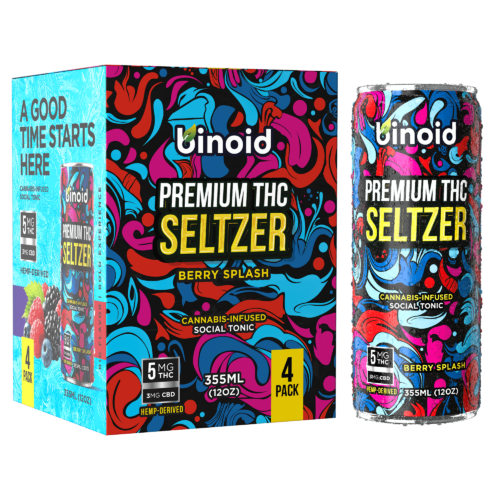
THC Seltzer – Good Vibes Cannabis Drink (4 Pack)
$19.99$29.99 -
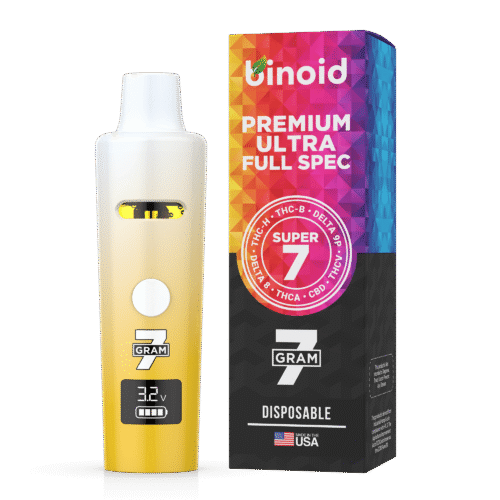
Super 7 UFS Disposable Vape – 7 Gram
$63.99$89.99 -
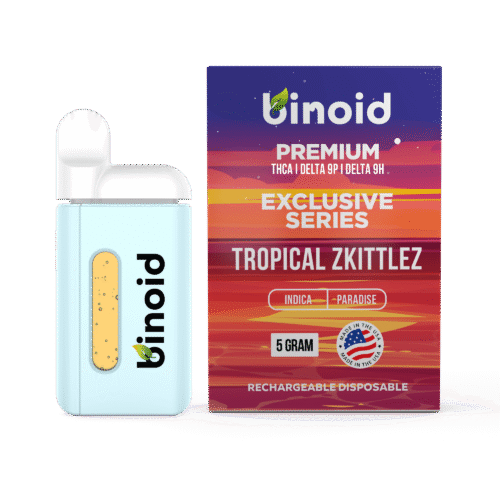
Exclusive Series 5 Gram Disposable Vape – Tropical Zkittlez
$55.99$89.99 -
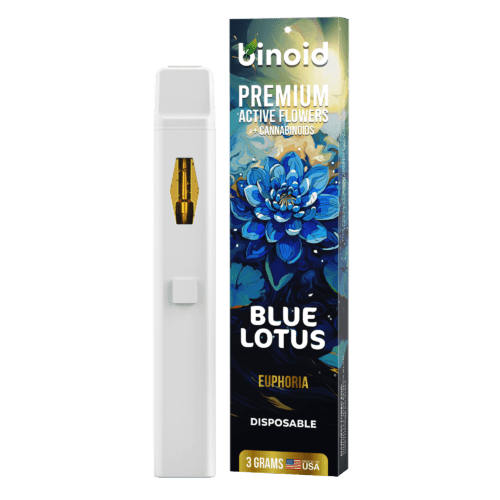
Active Flowers 3 Gram Disposable
$35.99$69.99