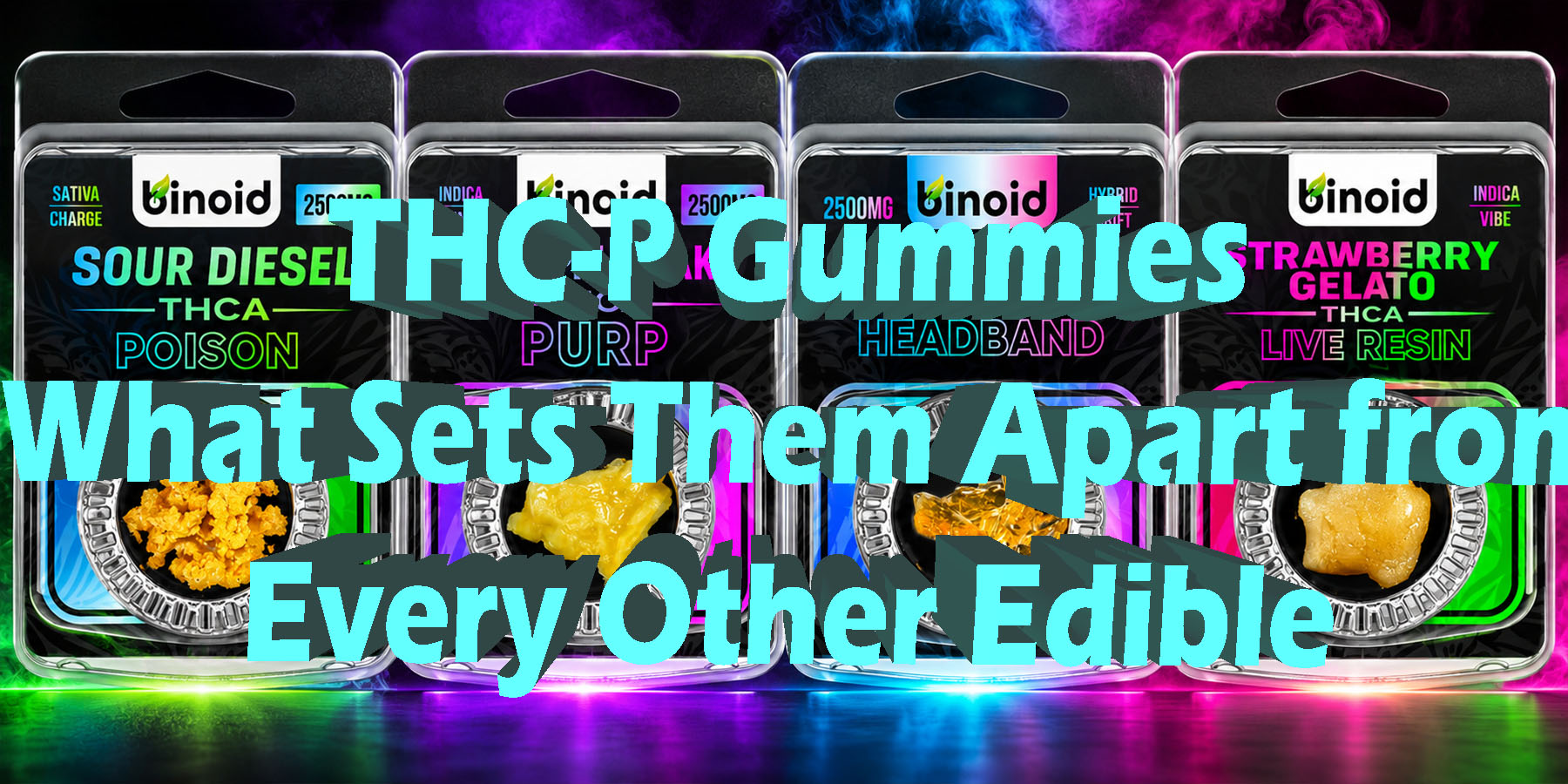
There is a particular kind of confidence that comes from understanding exactly what you are consuming, and in the hemp-derived cannabinoid space, few compounds reward that understanding more generously than THC-P. Most consumers arrive at THC-P gummies having already worked their way through Delta 8, maybe Delta 9, perhaps a THC-H or THC-B formulation along the way, and what they discover when they finally sit down with a properly dosed THC-P gummy is that the compound occupies a category unto itself — not simply a stronger version of something familiar, but a structurally distinct molecule whose behavior at the receptor level explains why the experience feels so different from the moment it begins.
Understanding that distinction is not academic trivia. It is the difference between an informed purchase and a gamble, and it is exactly the kind of clarity that separates a serious THC-P gummies guide from the vague marketing copy that dominates so much of this market.
To Buy THC-P Gummies Click Here
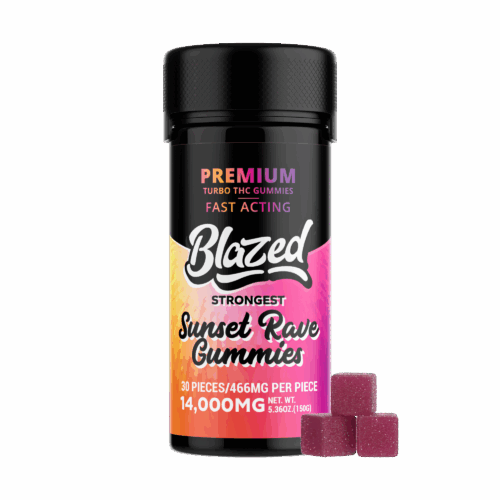
The Side Chain That Changes Everything
To understand why THC-P behaves so differently from its better-known cannabinoid relatives, you have to look past the label and into the molecular architecture itself. THC-P, or tetrahydrocannabiphorol, shares the same core structure as Delta 9 THC with one critical difference: its alkyl side chain is seven carbon atoms long rather than the five-carbon chain found in traditional THC. That difference sounds minor on paper, but in the language of receptor binding, it is enormous.
Research conducted by the Italian scientists who first isolated THC-P found that this extended side chain dramatically increases the molecule’s binding affinity for the CB1 receptor — the primary site of cannabinoid psychoactivity in the central nervous system — compared to conventional Delta 9 THC. The longer chain allows the molecule to nestle into the receptor’s binding pocket with a snugness that shorter-chain cannabinoids simply cannot replicate, and that structural fit is the entire story behind why THC-P has earned its reputation as one of the more potent cannabinoids available in the legal hemp market.
This is worth dwelling on, because the alkyl side chain principle extends well beyond THC-P specifically — it is one of the foundational concepts that separates an educated cannabinoid consumer from someone simply chasing whatever product carries the boldest marketing claim. Cannabinoid potency is not a mystery or a matter of brand hype; it is, in large part, a function of molecular geometry and how efficiently a given compound occupies the CB1 receptor.
THC-P’s extended chain length places it at the more potent end of that spectrum, which is precisely why formulation and dosing discipline matter so much more here than they do with a standard Delta 9 or Delta 8 gummy. A brand that understands this chemistry approaches THC-P formulation with genuine respect for what the molecule is capable of, and that respect shows up in every stage of production, from the isomerization process to the final milligram count on the label.

What the Experience Actually Feels Like
Setting the chemistry aside for a moment, the lived experience of a well-formulated THC-P gummy is where the molecule’s reputation is either earned or squandered. Consumers who have spent time with THC-P products consistently describe an onset that feels more immediate and a peak that arrives with greater intensity than they anticipated from a standard edible dose, which is exactly what the receptor-binding science would predict. The cerebral quality of the experience tends to be pronounced — a heightened, almost architectural clarity of thought in the early phase that can shift, at higher doses, toward something more physically grounding and introspective.
This is not a linear or predictable curve for every consumer; individual tolerance, metabolism, and prior cannabinoid experience all shape how a given dose translates into a given experience, which is precisely why dosing conservatively and waiting out the full onset window before considering more product is the operating principle every serious THC-P consumer eventually adopts.
The edible format itself introduces its own layer of complexity to this equation, and it is one that any credible THC-P gummies guide has to address directly. Because gummies are metabolized through the digestive system and processed by the liver before entering systemic circulation, THC-P — like any THC-family cannabinoid consumed orally — undergoes first-pass hepatic metabolism, a process that converts a portion of the compound into 11-hydroxy-THC-P, a metabolite that itself carries notable activity at the CB1 receptor.
This is part of why edibles in general, and high-potency edibles like THC-P gummies in particular, tend to produce a slower onset but a longer, more sustained experiential arc than inhaled formats. The wait — often ninety minutes or more before full effects are apparent — is not a flaw in the product; it is simply the pharmacokinetic reality of oral cannabinoid metabolism, and it is exactly why patience is the single most important variable a THC-P gummy consumer controls.

Formulation Is Where Good THC-P Gummies Become Great Ones
Not all THC-P gummies are created with equal care, and the gap between a mediocre product and an exceptional one shows up in details that are easy to overlook if you are not specifically looking for them. The isomerization process used to produce THC-P from CBD isolate is chemically demanding, requiring precise control over reaction conditions, catalyst selection, and purification steps to avoid leaving behind residual byproducts that a lower-quality manufacturer might not bother removing. This is exactly the kind of process discipline that Binoid CBD has built its THC-P formulations around, sourcing distillate from a domestic supply chain and subjecting every batch to third-party laboratory verification before it ever reaches the gummy matrix — a level of rigor that matters enormously given how potent the underlying compound is.
Dosing precision is the second pillar of quality that separates the serious formulators from the opportunistic ones. Because THC-P‘s enhanced receptor affinity means that a smaller milligram count can produce a proportionally larger effect than the equivalent dose of Delta 9 or Delta 8, accurate homogenization of the cannabinoid distillate throughout the gummy batch becomes critically important. A poorly mixed batch can produce wildly inconsistent gummies from the same production run — some underdosed, some dramatically overdosed — which is precisely the kind of variability that erodes consumer trust and, more importantly, undermines the ability of a consumer to make an informed decision about their own consumption. Products available through Binoid CBD are manufactured with homogenization protocols specifically designed to prevent this inconsistency, and every batch carries a certificate of analysis that verifies the milligram count printed on the label actually reflects what is inside each individual gummy.
The flavor and texture engineering that goes into a premium THC-P gummy is its own quiet art form, and it deserves more credit than it typically receives. Because THC-P is often formulated at lower overall milligram counts than Delta 8 or standard Delta 9 products — a direct consequence of its heightened potency — the gummy base itself has to be built to deliver a satisfying, full-bodied confection experience without relying on an overwhelming cannabinoid payload to carry the product. The best THC-P gummies achieve a chewy, well-balanced texture and a clean fruit-forward flavor profile that holds up on its own merits, independent of the psychoactive content, which is a genuine formulation achievement given how much smaller the working margin is compared to lower-potency cannabinoid categories.
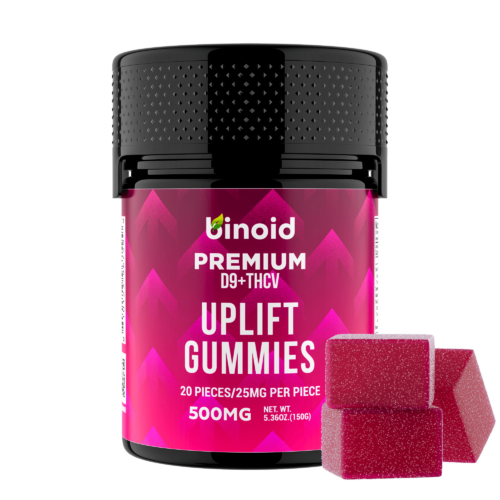
Reading the Label Like Someone Who Actually Understands It
The proliferation of THC-P products across the hemp-derived market has created a genuine information gap, and the consumer who wants to shop this category intelligently needs to know what to actually look for on a product label and its accompanying documentation. The milligram count per gummy is the obvious starting point, but given THC-P’s potency profile, that number needs to be evaluated in context rather than compared directly against a Delta 8 or Delta 9 gummy’s dosage — a 5-milligram THC-P gummy is not remotely equivalent in experiential intensity to a 5-milligram Delta 8 gummy, and treating them as comparable is one of the more common and consequential mistakes new consumers make in this category.
Beyond the dosage figure, the certificate of analysis is where the real due diligence happens. A legitimate COA for a THC-P product should come from an ISO 17025-accredited laboratory and should report not just the cannabinoid potency panel but also residual solvent screening, heavy metal analysis, and microbial testing — the full safety profile that any product entering the body through oral consumption deserves. Binoid CBD publishes batch-specific COAs across its entire THC-P product line, searchable directly on Binoid, which allows a consumer to verify the exact composition of the specific batch they are holding rather than relying on a generic potency claim printed on the packaging. This level of transparency is still the exception rather than the rule in a hemp-derived cannabinoid market that remains largely self-regulated, and it is one of the clearest signals available to a consumer trying to distinguish a serious formulator from a brand simply capitalizing on THC-P’s rising popularity.
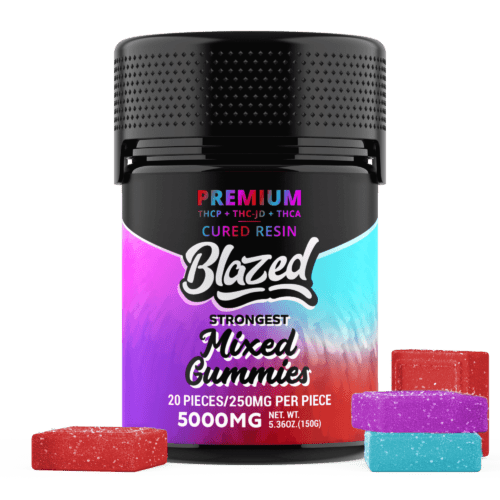
Where THC-P Gummies Fit in a Thoughtful Cannabinoid Rotation
For the consumer who has already built some familiarity with hemp-derived THC products, THC-P gummies occupy a specific and valuable niche rather than serving as a universal replacement for lower-potency options. Their intensity makes them well suited to occasions and moods that call for a more pronounced, more immersive experience — an evening with no obligations ahead, a setting where a deeper, more settled state is exactly what is wanted. They are less suited to situations calling for a lighter, more functional experience, where a Delta 8 or standard Delta 9 gummy remains the more appropriate choice. Building a genuine understanding of where THC-P fits within a broader personal rotation — rather than defaulting to it as the automatic choice simply because it carries the highest potency reputation — is the mark of a consumer who has moved past novelty-chasing and into the kind of intentional, informed consumption that this category rewards.
The THC-P category is still relatively young within the broader hemp-derived cannabinoid landscape, and the formulation science around it continues to evolve as manufacturers refine their isomerization processes and dosing protocols. What has not changed, and will not change, is the underlying principle that potency without precision is a liability rather than an advantage. A THC-P gummy that has been formulated with rigorous process control, verified through independent laboratory testing, and dosed with genuine respect for the compound’s receptor-binding profile offers something meaningfully different from a product that simply chases the THC-P label without the manufacturing discipline to back it up. Shopping this category with that distinction in mind — and sourcing from brands like Binoid CBD that have demonstrated the process rigor this particular cannabinoid demands — is how an informed consumer turns a potentially unpredictable product category into one of the more rewarding additions to their cannabinoid experience.
To Buy THC-P Gummies Click Here
Recommended products
-
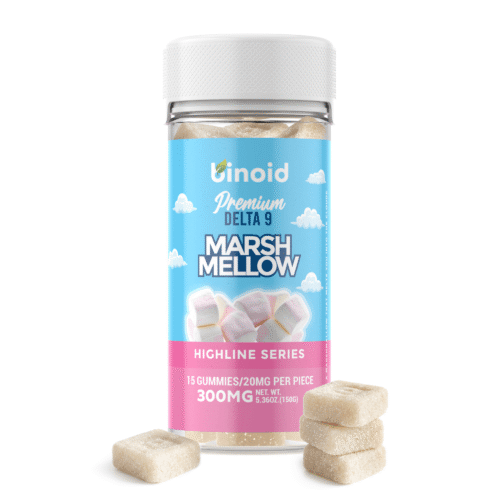
Delta 9 THC Marshmellow
$39.99$49.99 -
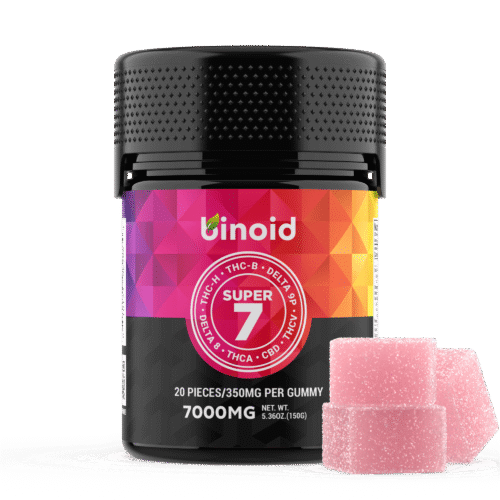
Super 7 Gummies – 7000MG
$39.97$59.99 -
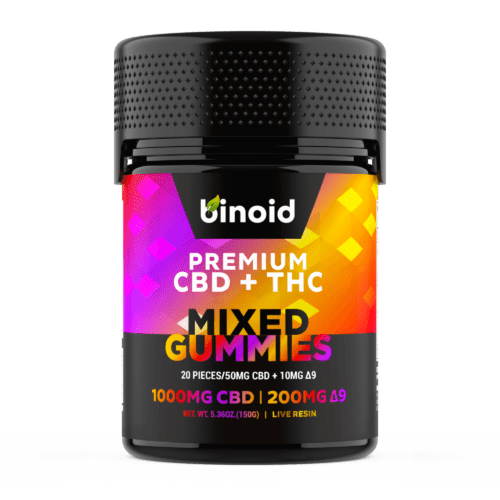
Delta 9 THC Gummies
$30.99$54.99 -
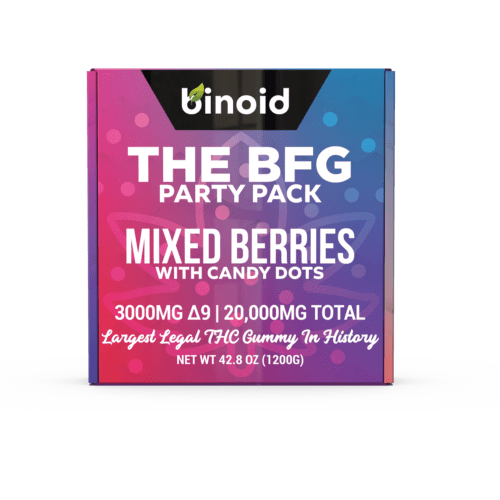
The BFG w/Candy Dots – 3000mg Largest Legal Gummy
$129.99$239.99