Every era of social drinking culture eventually meets a moment when the old rules stop making sense, and there is a reasonable argument to be made that we are living through exactly that moment right now. Not because anyone has declared alcohol obsolete — it hasn’t been, and won’t be anytime soon — but because an entire generation of social drinkers has started asking a question that would have seemed strange a decade ago: what if the can in my hand didn’t have to come with a hangover attached? Hemp beverages are the answer that has emerged from that question, and the speed with which they have moved from curiosity to fixture in backyard gatherings, dinner parties, and rooftop happy hours says something significant about where social consumption culture is actually headed.
To Buy THC Beverages Click Here
The Cultural Shift Behind the Can
The rise of hemp-derived THC beverages did not happen in a vacuum, and understanding the cultural forces behind it explains why the category has gained traction as quickly as it has. A meaningful and well-documented portion of younger consumers — particularly those in their twenties and thirties — report drinking less alcohol than previous generations did at the same age, driven by a combination of health consciousness, a more skeptical relationship with hangovers and their downstream effects on productivity, and a broader cultural shift toward moderation that has reshaped everything from bar menus to dating app bios. This is not a rejection of social drinking as a ritual. It is a rejection of alcohol specifically as the only vehicle through which that ritual can be experienced, and hemp beverages have stepped directly into the space that shift has created.
What makes this cultural moment particularly interesting is that it is not simply about subtraction — about consumers looking to drink less and therefore reaching for something with fewer calories or less intensity. It is equally about addition, about a consumer base that has grown increasingly curious about cannabis as a category and increasingly comfortable exploring it in a format that fits naturally into existing social rituals rather than requiring an entirely separate occasion. A can of hemp-derived THC seltzer pulled from the same cooler as the beer and the sparkling water does something quietly radical: it normalizes cannabis consumption within the exact same social architecture that alcohol has occupied for generations, without demanding that anyone explain themselves, step outside, or treat the moment as fundamentally different from reaching for any other beverage.
Why the Format Itself Matters So Much
There is a temptation to treat the rise of hemp beverages as simply a story about changing attitudes, but that framing undersells how much of this shift has been made possible by genuine technical progress in cannabinoid science. THC is a fundamentally lipophilic compound — it binds readily to fat and resists dissolving in water, which for years made a genuinely satisfying, fast-acting cannabis beverage a much harder engineering problem than it might sound. Early attempts at cannabis drinks were plagued by inconsistent potency, unpleasant separation in the can, and an onset delay that could stretch past an hour, making the format frustrating enough that many consumers simply gave up on it and returned to more established consumption methods.
Nano-emulsification technology changed that equation entirely, and it is the single most important reason hemp beverages have become credible competitors to alcohol in social settings rather than a novelty confined to enthusiast circles. By breaking THC down into nanoscale particles and encapsulating them in a shell that is compatible with both water and fat, formulators can suspend cannabinoids evenly throughout a beverage without separation, while dramatically improving how quickly and predictably the compound is absorbed once consumed. Brands like Binoid CBD have built their beverage programs around this technology specifically because it solves the two problems that mattered most to skeptical alcohol-alternative shoppers: consistency from can to can, and an onset window — often in the fifteen-to-thirty-minute range — that feels much closer to the pacing consumers already associate with a cocktail or a beer, rather than the unpredictable hour-plus wait that defined earlier cannabis beverage formats.
The Ritual Infrastructure Alcohol Has Owned for So Long
To understand why hemp beverages represent such a meaningful shift rather than a passing trend, it helps to think carefully about what alcohol has actually provided socially for the better part of recorded history — and it is not merely the chemical effect. Alcohol built an entire ritual infrastructure around itself: the shared bottle passed around a table, the clink of glasses before a toast, the specific choreography of ordering a round and buying the next one, the way a shared drink lowers the social temperature of a first meeting or a difficult conversation. Cannabis, in its traditional smoked and vaporized formats, developed its own ritual language over time, but one that carried inherent friction in many social contexts — it required stepping outside, using specific equipment, and often signaled something more deliberate and separate from the flow of a gathering than simply reaching for another drink.
The hemp beverage format dissolves that friction almost entirely, and this is arguably the most underappreciated part of the entire category’s rise. A can of hemp-derived THC seltzer participates in the exact same ritual language that alcohol has owned for generations — the reach into the cooler, the pop of the tab, the shared moment of refreshment among friends — without requiring anyone to leave the room, without producing smoke or vapor, and without announcing itself as anything other than another beverage option sitting in the same ice as everything else. This matters enormously for how the category has been able to insert itself into existing social occasions rather than needing to create entirely new ones. The barbecue, the backyard hangout, the low-key dinner party — these are occasions built around alcohol’s ritual infrastructure, and hemp beverages have found a way to participate in that infrastructure on its own terms rather than asking consumers to abandon it.
What Moderation Actually Looks Like in Practice
One of the more genuinely appealing qualities of the hemp beverage format, from a purely experiential standpoint, is the degree of control it offers a consumer who wants to calibrate their evening deliberately. A single can of a well-formulated hemp-derived THC seltzer delivers a specific, known dose — information printed directly on the label and verifiable through a batch-specific certificate of analysis — which stands in fairly stark contrast to the more variable and cumulative experience of tracking alcohol consumption across a series of pours that are rarely measured with any real precision. This predictability appeals strongly to a consumer demographic that has grown accustomed to quantifying and optimizing other aspects of their wellness routines and that finds genuine value in a social beverage they can reason about with the same clarity they bring to everything else in their lives.
This is not to suggest that hemp beverages are inherently a “lighter” choice than alcohol in some universal sense — that would oversimplify a genuinely individual and variable experience that depends heavily on formulation, dose, and personal tolerance. What can be said with more confidence is that the format offers a level of dose transparency and batch consistency that pour-based alcohol service structurally cannot match, and that transparency is precisely what a growing segment of socially engaged consumers are actively seeking when they reach for a can instead of a bottle. Products available through Binoid CBD are formulated with this consumer specifically in mind, with milligram counts, flavor development, and lab verification all built around the idea that a hemp beverage should be something a consumer can trust and understand fully, rather than something they simply hope works out.
Flavor Development as a Category-Defining Battleground
No conversation about why hemp beverages have found traction in social settings is complete without acknowledging that flavor is doing an enormous amount of the category’s heavy lifting, and the brands that have taken this seriously are the ones actually winning consumer loyalty. A hemp beverage competing for a spot in the cooler alongside craft beer, sparkling water, and canned cocktails cannot simply function as a vehicle for cannabinoid delivery — it has to earn its place as a genuinely enjoyable drink on its own sensory merits, because the modern beverage consumer has been trained by the broader craft beverage renaissance to expect real flavor complexity rather than an afterthought.
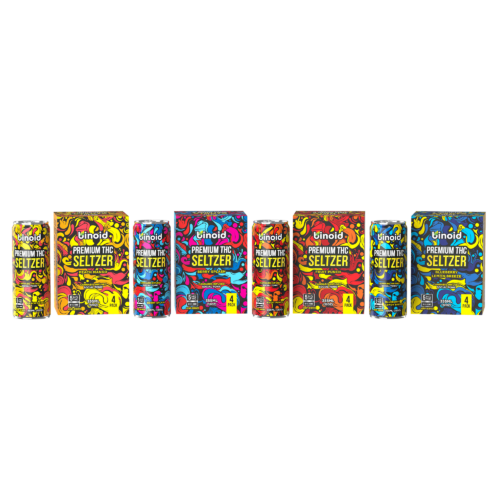
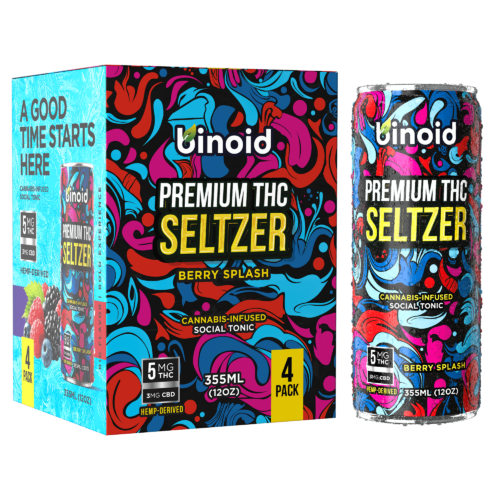
Binoid’s approach to its seltzer line — spanning profiles like Berry Splash, Fruit Punch, Blueberry Lemon, and Peach Mango, alongside the more elevated multi-cannabinoid Super 7 Orange Creamsicle formulation — reflects an understanding that flavor development is not a secondary consideration layered on top of the cannabinoid science, but a co-equal priority that determines whether a consumer reaches for the same can a second time.
This flavor-forward approach also does quiet cultural work that is easy to underestimate: it makes the hemp beverage legible to social contexts that have nothing to do with cannabis enthusiasm specifically. A guest at a gathering who has never explored hemp-derived products before is far more likely to try a beverage described in terms of its blueberry-lemon brightness or its creamsicle warmth than one described primarily by its cannabinoid content, and that low-friction entry point is exactly how the category continues to expand its reach beyond its original enthusiast base and into the broader social drinking population that alcohol has dominated for so long.
A Coexistence, Not a Coup
It would be an overstatement, and an inaccurate one, to frame the rise of hemp beverages as alcohol’s imminent downfall — the two categories are more likely headed toward a genuine coexistence than a decisive changing of the guard, with many social drinkers moving fluidly between both depending on the occasion, their mood, and who they are with. What has changed, decisively and probably permanently, is the assumption that alcohol is the only serious option available when a beverage is the vehicle for a social, recreational experience. Hemp-derived THC beverages, powered by genuine advances in nano-emulsification science and increasingly sophisticated flavor development, have carved out a legitimate and rapidly growing lane within that space — one defined by dose transparency, format familiarity, and a ritual language borrowed deliberately from the beverage culture it now shares the cooler with.
For the consumer curious about where this category is headed, the current moment represents an unusually good time to explore it, with formulation quality, flavor sophistication, and lab transparency all having matured considerably since the category’s earlier, rougher years. Binoid CBD’s beverage lineup, available across Binoidcbd.com, reflects exactly that maturation — a portfolio built on precise nano-emulsification technology, genuinely developed flavor profiles, and the kind of batch-verified transparency that lets a consumer approach a hemp beverage with the same confidence they’d bring to any other carefully chosen drink. The alcohol-dominated social gathering is not disappearing. It is simply making room, can by can, for a genuine alternative that has finally caught up to what consumers have been asking for.