There is a phrase that shows up on nearly every hemp product label in America, printed with the confident, understated authority of a term everyone is assumed to already understand: full-spectrum. Its counterpart, broad-spectrum, appears almost as frequently, often on adjacent shelves, sometimes on products that otherwise look nearly identical. Most consumers absorb these terms the way they absorb “natural flavors” or “premium quality” — as a kind of ambient reassurance rather than a piece of information with real chemical substance behind it.
This is a mistake, and not a small one, because the full-spectrum versus broad-spectrum distinction is not marketing language. It is a precise description of molecular composition that has direct, tangible consequences for how a product feels, how it interacts with your body, and — critically, in the hemp-derived THC market — how it behaves relative to federal compliance thresholds. Understanding this distinction is the difference between shopping as an informed consumer and shopping on faith.
TO BUY THC PRODUCTS CLICK HERE
Recommended products
-
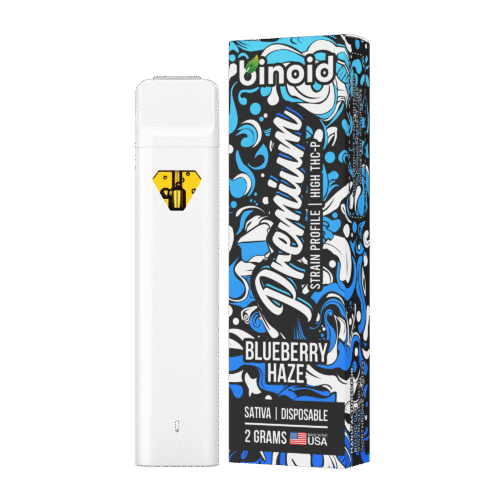
High THC-P 2 Gram Disposable Vape – Strain Series
$41.99$73.99 -
Super 7 Gummies – Summer Slush Series
$37.99$49.99 -
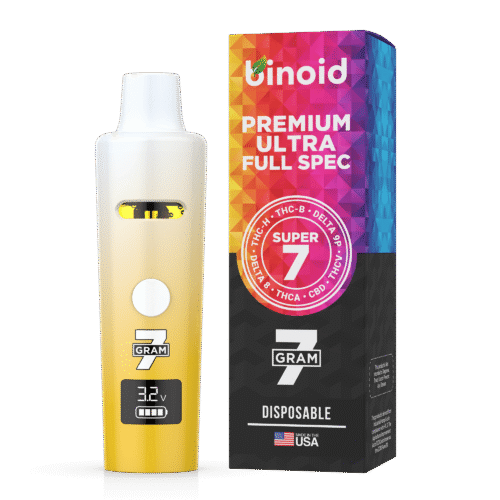
Super 7 UFS Disposable Vape – 7 Gram
$63.99$89.99 -
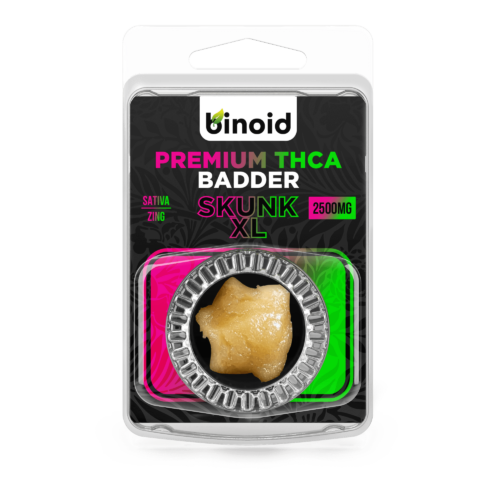
THCA Badder – 2500mg
$37.99$59.99

What “Spectrum” Actually Means at the Molecular Level
To understand the difference between full-spectrum and broad-spectrum products, you first have to understand what an extract looks like immediately after it leaves the plant, before any refinement decisions have been made. Raw hemp extract, pulled from the plant through methods like supercritical CO2 extraction, is a chemically crowded environment. It contains not just the cannabinoids most consumers recognize by name — THC, CBD, CBG, CBN — but dozens of minor cannabinoids present in trace amounts, alongside a rich terpene profile, flavonoids, and residual plant lipids and waxes. This unrefined mixture is the starting material from which every finished hemp product, regardless of category, is ultimately derived, and the choices a formulator makes about what to keep, what to remove, and what to isolate from that starting material are what create the categories consumers encounter on a product page.
A full-spectrum product is one that retains this broad chemical population largely intact. The cannabinoids remain in something close to their natural ratio, the terpene profile is preserved rather than stripped and reconstructed, and — this is the detail that matters most for the hemp-derived THC conversation — trace amounts of Delta 9 THC remain present in the final formulation, provided the total concentration stays under the 0.3 percent by dry weight threshold established by the 2018 Farm Bill. This is not an oversight or a loophole; it is the entire premise of full-spectrum formulation.
The theory, and it has a reasonable body of anecdotal and preliminary scientific support behind it, is that cannabinoids and terpenes work more effectively in concert than any single compound does in isolation, a phenomenon the industry has labeled the entourage effect. A full-spectrum gummy or tincture is, in this sense, an attempt to replicate something closer to the plant’s original chemical architecture rather than engineering a single molecule for maximum isolated potency.
Broad-spectrum occupies a deliberate middle position between full-spectrum and pure isolate. It begins from the same chemically rich starting material, and it retains the same commitment to preserving a wide range of minor cannabinoids and terpenes — this is what separates it from an isolate product, which strips everything down to a single, purified compound. Where broad-spectrum diverges is in its treatment of Delta 9 THC specifically. Through additional refinement, typically a secondary chromatography or distillation pass targeting THC molecules specifically, formulators remove Delta 9 THC down to a non-detectable or functionally negligible level, while leaving the rest of the cannabinoid and terpene population largely intact. The result is a product that retains much of the chemical complexity — and, proponents argue, much of the experiential nuance — of full-spectrum extract, without carrying any measurable trace of Delta 9 THC.
Recommended products
Why This Distinction Exists in the First Place
The full-spectrum versus broad-spectrum split did not emerge from abstract chemistry curiosity. It emerged directly from the practical realities of a hemp market operating under federal law that draws its entire legal boundary around a single molecule. The 2018 Farm Bill’s 0.3 percent Delta 9 THC threshold created a market where the presence or absence of that one specific cannabinoid, even in trace amounts, has outsized consequences — for shipping logistics, for employer drug testing policy, for state-by-state regulatory variance, and for individual consumer risk tolerance. Broad-spectrum formulation exists as a direct response to this reality, engineered specifically for the consumer population that wants the layered chemical complexity of a full-spectrum product without the trace THC content that comes attached to it.
This matters most acutely in the context of drug testing. A full-spectrum product, even one that is scrupulously compliant with the 0.3 percent threshold, can in some cases contribute to a positive result on a THC metabolite screen, particularly with frequent or high-volume use, because standard workplace drug tests are calibrated to detect the presence of THC metabolites rather than to distinguish between “federally compliant trace amounts” and “recreational-level consumption.” This is not a hypothetical risk cooked up by cautious marketing copywriters — it is a documented reality that has ended careers and complicated custody arrangements for consumers who assumed that “hemp-derived” and “drug-test safe” were synonymous.
Broad-spectrum products, formulated to eliminate detectable Delta 9 THC while preserving the surrounding cannabinoid and terpene matrix, exist specifically to serve consumers for whom this risk is unacceptable: the commercial driver operating under DOT testing requirements, the federal employee, the parent navigating a custody agreement with drug-testing stipulations, the athlete subject to a testing regime that has not caught up with the nuances of hemp-derived cannabinoid law.
It is worth pausing here to note what neither category promises. Neither full-spectrum nor broad-spectrum classification is a claim about treating, curing, or diagnosing any condition, and no reputable formulator or retailer should frame it that way. These are chemistry and experience categories, not medical ones, and the honest conversation about them stays firmly in the territory of composition, sensation, and compliance rather than therapeutic promises.
The Experiential Question: Does the Trace THC Actually Change Anything?
Here is where the conversation gets genuinely interesting, and where a lot of consumer confusion tends to live. The trace amount of Delta 9 THC present in a compliant full-spectrum product — capped at 0.3 percent by dry weight — is, in most finished consumer products, a genuinely small quantity relative to the kind of Delta 9 dosing that produces a pronounced, unmistakable intoxicating effect on its own. A full-spectrum CBD tincture, for instance, is not going to deliver a dispensary-grade high off its trace THC content alone; the mathematics of the concentration simply don’t support that outcome at typical serving sizes. What the trace THC is believed to contribute, according to entourage effect theory, is something more subtle: a kind of chemical scaffolding that may influence how the other cannabinoids and terpenes present in the formulation are experienced, potentially shaping the character of an effect — more grounding, more full-bodied, more layered — without necessarily being the dominant psychoactive driver on its own.
This is precisely the terrain where full-spectrum and broad-spectrum products tend to diverge most noticeably in consumer-reported experience, even though the underlying science is still an active and somewhat unsettled area of research rather than a closed case. Consumers who have tried both formats side by side, using otherwise comparable products, frequently describe full-spectrum options as feeling slightly more rounded or complete, while broad-spectrum options are often described as cleaner, more isolated in their sensory character, and in some cases marginally less potent at an equivalent cannabinoid dose.
Whether this difference stems genuinely from entourage effect dynamics or from the psychological expectation baked into knowing a product contains trace THC is not a question current research has fully resolved, and any honest treatment of this topic should resist overstating the certainty of the science in either direction. What can be said with confidence is that the terpene and minor-cannabinoid profile — present in both formats, absent only in true isolates — is doing substantial experiential work regardless of which spectrum category a given product falls into, which is why terpene-conscious formulation and processing matter as much as the spectrum label itself.
Reading the Label Like You Mean It
Given how much rides on this distinction, the practical skill worth developing is knowing how to verify spectrum claims rather than taking them at face value. This is where the certificate of analysis stops being a compliance footnote and becomes the single most useful document available to a hemp consumer. A COA from an accredited, ISO 17025-certified laboratory will list a full cannabinoid panel for the specific batch in question, showing not just the headline cannabinoid the product is marketed around but the complete profile — including the exact Delta 9 THC concentration, reported either as a percentage or in milligrams, depending on the lab’s reporting convention.
A genuine broad-spectrum product should show Delta 9 THC as non-detectable or reported at a level the lab explicitly flags as below its limit of quantification. A full-spectrum product should show trace Delta 9 THC present, quantified, and comfortably under the 0.3 percent federal threshold. If a product marketed as broad-spectrum shows a measurable, non-trivial THC figure on its own COA, that is a labeling inconsistency worth taking seriously, and it is exactly the kind of detail that separates brands treating lab transparency as a genuine consumer resource from brands treating it as a box to check.
This is the standard that the catalog at Binoid is built around, with batch-specific COAs published across both full-spectrum and broad-spectrum product lines, allowing a consumer to verify exactly which category a given tincture, gummy, or vape formulation actually falls into rather than relying on label language alone. The distinction matters enough, and the consequences of getting it wrong are significant enough — particularly for anyone with drug-testing exposure — that this kind of batch-level verification should be treated as a non-negotiable step in the purchasing process, not an optional exercise reserved for the unusually diligent.
Recommended products
Product Categories Where the Distinction Shows Up Most
The full-spectrum versus broad-spectrum choice is not evenly distributed across every hemp product category, and understanding where it matters most helps focus the decision. Tinctures and capsules are where the distinction is most commonly foregrounded, since these formats are frequently marketed toward consumers specifically weighing daily-use considerations against testing exposure, making the spectrum label one of the first pieces of information presented on the product page. Gummies and other edibles follow closely behind, particularly as broad-spectrum formulations have matured to the point where they can deliver a genuinely satisfying, layered experience without relying on trace THC to carry the sensory complexity.
Vape cartridges and disposables occupy slightly different territory, since the inhalation format tends to foreground terpene expression regardless of spectrum classification, meaning the practical experiential gap between full-spectrum and broad-spectrum vape options is often narrower than in oral formats — though the drug-testing consideration remains identical regardless of consumption method, since any detectable THC metabolite matters equally whether it arrived by mouth or by lung.
Across its own catalog, Binoid CBD maintains this category distinction deliberately rather than treating spectrum labeling as an afterthought, offering both full-spectrum and broad-spectrum formulations within comparable product lines so that a consumer prioritizing testing safety is not forced to sacrifice product quality or formulation sophistication to get it. This kind of parallel product architecture — rather than treating broad-spectrum as a stripped-down, lesser alternative to a “real” full-spectrum product — reflects a more honest understanding of what these categories actually represent: two legitimate answers to two different sets of consumer priorities, not a hierarchy with one correct choice at the top.
Making the Decision That Fits Your Life
The choice between full-spectrum and broad-spectrum ultimately depends on a single, deeply personal risk calculation rather than any universal answer about which format is objectively superior. A consumer with no drug-testing exposure, genuinely curious about whether the entourage effect delivers a more complete or satisfying experience, has every reason to explore full-spectrum options and form their own judgment about whether the trace THC content changes the character of the effect in a way they find meaningful.
A consumer operating under any form of regular drug screening — professional, legal, or personal — has an equally clear answer pointing toward broad-spectrum formulations, verified batch by batch through a current, accredited certificate of analysis showing non-detectable Delta 9 THC. Neither path requires compromise on quality, terpene complexity, or formulation sophistication, provided the sourcing brand treats lab transparency as seriously as the ingredients themselves. What matters most is arriving at that choice deliberately, with the actual chemistry in hand, rather than defaulting to whichever label happens to carry more premium-sounding language on a given afternoon. That is the entire value of understanding this distinction in the first place — not to crown a winner, but to make sure the winner you pick is actually the right one for your life.
TO BUY THC PRODUCTS CLICK HERE
Recommended products
-
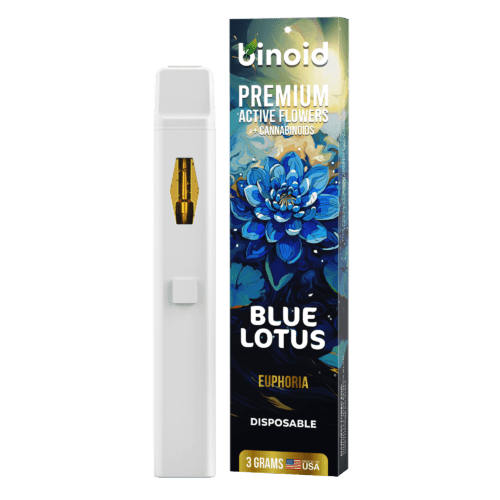
Active Flowers 3 Gram Disposable
$35.99$69.99 -
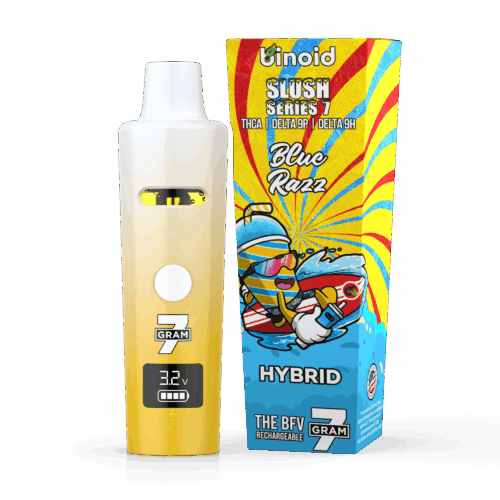
7 Gram THCA Disposable Vape – Slush Series
$59.99$99.99 -
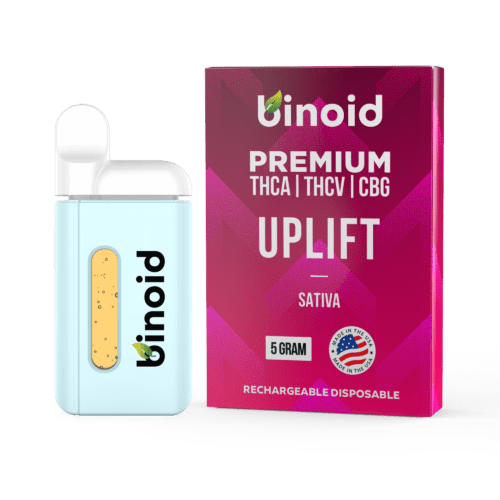
THCV 5 Gram Disposable Vape – Uplift/Unwind
$53.99$69.99 -
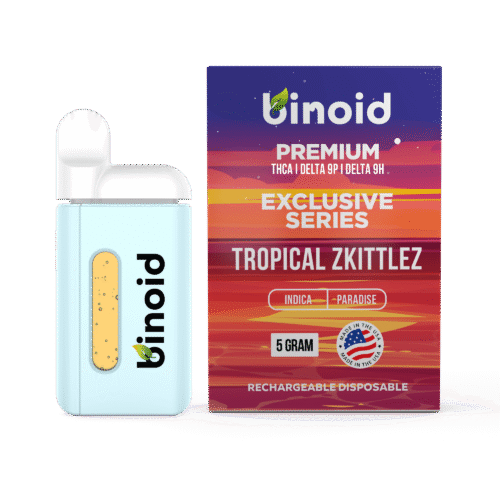
Exclusive Series 5 Gram Disposable Vape – Tropical Zkittlez
$55.99$89.99