What “Shelf Life” Actually Means
Shelf life is not the moment a product becomes dangerous or useless. It is the period during which a manufacturer can demonstrate, through testing, that a product stays within its stated specifications, meaning the active ingredient remains at roughly the labeled concentration, unwanted degradation products stay below defined limits, and the physical qualities of the product remain acceptable. In the pharmaceutical world, that determination comes from formal stability studies in which samples are stored under controlled conditions and measured at intervals, sometimes under deliberately harsh conditions to accelerate the process. The result is an expiration date that rests on evidence.
Most of the hemp-derived cannabinoid market operates without anything resembling that rigor. Dates on labels may reflect conservative convention, a manufacturer’s informal experience, or simply the date a product was made, and the absence of a mandatory, standardized federal testing regime for hemp-derived products means the burden of verification falls on the consumer and the brands they choose to trust. For a well-studied molecule like THC, decades of research give a rough picture of how it degrades. For a semi-synthetic compound with an unpublished structure, there is no such picture, which means a printed date, if there is one, is only as meaningful as the testing behind it.
TO BUY CANNABINOID PRODUCTS CLICK HERE
Why a New Molecule Is a Stability Question Mark
A compound’s stability depends on its molecular structure, and EPN’s structure has not been published. The only structural clue is a chemical name given in one supplier document, “tetrahydromethylisopentyl-ethylcannabinol,” which suggests a THC-style scaffold with altered side-chain groups, though that is an inference from the name and not a confirmed diagram. Cannabinoids as a class are known to be sensitive to light, heat, and oxygen, and THC in particular can drift toward CBN over time, but how any specific modified molecule responds depends on exactly which groups are attached where. Small structural changes can make a compound more resilient or more fragile, and until someone measures it, the difference is invisible.
Semi-synthetic origin adds a second layer of uncertainty. A converted compound inherits the quality of its starting hemp, the precision of its reaction chemistry, and the thoroughness of its purification, and impurities, residual catalysts, and byproducts tend to carry forward through each step. Those leftovers can influence how a product ages, sometimes accelerating degradation in ways the active compound alone would not. Hemp is a bioaccumulator that absorbs what its soil and water contain, so the agricultural origin matters too. A product’s shelf life is therefore a property of the entire supply chain, not only of the molecule, which is why provenance and shelf life are more connected than they first appear.
The Vape Format and What It Means for Longevity
In the materials I reviewed, Euphorinol appears primarily in vape formulations, and that format has its own aging characteristics separate from the active compound. A cartridge is a system, combining the oil, the terpenes and flavoring, the heating element, the housing, and the seals. Effective formulations are reportedly built around only about 1.5 to 2% of the active ingredient, which means the bulk of the product is other components, and those components age too. Volatile terpenes are usually the first casualty of warmth and time, so a product may lose flavor and aroma long before its active content changes meaningfully.
Hardware matters as well. Ceramic or glass housings can develop micro-fractures under thermal stress, seals can loosen, and oil can thin or thicken in ways that alter how it wicks. A cartridge can therefore fail as a device while the oil inside is still chemically fine, or the oil can degrade while the device looks perfect. For a buyer, the practical implication is that “shelf life” for a vape has at least three clocks running at once: the active compound, the aromatic profile, and the mechanical integrity of the device. None of those clocks has been documented for Euphorinol.
Why You Can’t Judge Potency by Looking
A tempting shortcut is to inspect a product and decide it still seems fine, and it is a shortcut worth resisting. Change in a product’s appearance can signal a problem, but the absence of visible change does not mean the content is intact. A well-known illustration comes from an unrelated field: a study of epinephrine auto-injectors found that the drug’s content declined over time even when the liquid’s color did not change, a reminder that degradation can proceed quietly. That is a pharmaceutical analogy, not a statement about cannabinoids, and I offer it only to make a general point. Looks are a poor proxy for chemistry.
For a compound described as active at small amounts, that point carries extra weight. If a cartridge has lost some of its active content, the experience may be weaker than expected, which is a manageable annoyance. If it has changed in some other way, for example through oxidation or the formation of degradation products, the consequences are unknown, because nobody has studied them. A buyer who cannot measure the product has no reliable way to tell the difference, and that is the core reason to favor products whose makers have tested stability and can show their work.
The Certificate of Analysis Is a Snapshot, Not a Timeline
Many consumers treat a certificate of analysis as a guarantee, and it deserves a more precise reading. A COA reports what a laboratory measured in a specific batch at a specific moment, and it says nothing by itself about how that batch holds up over the following months. The certificate circulated for Euphorinol by one reseller reports 40.42% CBD and 28.50% CBG with no detectable THC. That describes the hemp material but does not quantify EPN itself, and I found no public document explaining how an accredited laboratory identified the compound against a verified reference standard. Without a standard, a laboratory cannot reliably measure the compound today, let alone track how its concentration changes over time.
That makes the reference standard the hidden prerequisite for any shelf-life claim. A stability study works by measuring the active compound repeatedly and comparing the results, and each measurement depends on being able to recognize and quantify the target. A manufacturer that has such a method can generate real stability data, and one that does not cannot. When evaluating any product, check the testing date on the certificate, make sure it matches the batch in your hands, and recognize that an old certificate applied to a new production run tells you little. The standard at Binoid CBD, batch-specific results from independent, ISO-accredited laboratories, is precisely the kind of documentation that makes shelf-life questions answerable.
What Storage Can and Cannot Do
Good storage slows degradation, and it is the one variable a consumer controls. Keeping a product in darkness, at a steady moderate temperature, upright if it is a vape, and protected from fresh air and moisture follows the well-established principles of cannabinoid preservation, and those principles are the reasonable default for a compound whose behavior is undocumented. A cartridge left in a hot car can lose a meaningful share of its volatile aromatic compounds, and heat can also thin the oil enough to cause flooding around the heating element, so the simplest rule is to treat a product like fine chocolate and keep it somewhere cool, dark, and stable.
Storage cannot, however, repair a THC product that was compromised before it reached you, and it cannot extend a shelf life beyond what the chemistry allows. It also cannot substitute for information. If a seller cannot say when a batch was made, how it was tested, and what stability data supports the stated date, no storage routine will fill that gap. The most important shelf-life decisions are made before purchase, in choosing a product with a clear production date and credible documentation, and not after, in choosing a drawer.
Signs That Something Has Changed
Without a documented shelf life, a buyer has to rely on observation, and observation can at least catch some problems. Visible changes worth taking seriously include a noticeable shift in color, cloudiness or separation that does not clear up, crystals or sediment, an unusual smell, a change in flavor that goes beyond mild fading, leaking, or a device that behaves differently, such as gurgling, burning sensations, or inconsistent draws. For gummies and similar products, mold, stickiness, or an off odor are clear stop signs, although those formats are not the focus here.
The conservative rule is that a product showing any of these signs should not be used, and the same goes for a product whose provenance you can no longer confirm. Because the shelf life of EPN is undocumented, there is no reliable way for a consumer to judge whether a changed THC product is safe, and no reason to experiment. Follow local guidance for disposing of vape hardware, which contains batteries and electronics that should not go into ordinary trash. Anyone concerned about a possible accidental ingestion by a child or pet should seek appropriate medical or veterinary help promptly, and products should always be kept locked away from both.
When the Law Sets the Expiration Date
For this particular compound, a different clock may matter more than any chemical one. Sellers describe Euphorinol as unscheduled under federal law and legal in most states, an argument built on the 2018 Farm Bill’s definition of hemp. Congress rewrote that definition in November 2025, adopting a total-THC standard, excluding cannabinoids not naturally derived from the plant, and capping finished products at 0.4 milligrams of total THC per container. Recent coverage reports that a funding bill signed in early September moved most of the new restrictions to December 11, 2026, while cannabinoids the plant cannot naturally produce remain tied to the original November 12 date, though sources disagree on how lab-converted compounds are sequenced.
A semi-synthetic compound appears to be the kind of product those exclusions target, and the Congressional Research Service notes that excluded products would be regulated under the Controlled Substances Act as marijuana. That means a product’s practical shelf life could end on a legal date, weeks away, long before its chemistry gives out. This is not legal advice, and anyone buying, selling, or holding a novel cannabinoid should confirm its current status with qualified counsel and check their state’s rules. The sensible habit is to buy only what you intend to use within a short, defined window, and to avoid stockpiling a product whose availability and legality may change on short notice.
Questions to Put to Any Seller
Since the compound itself offers no answers, the seller has to. A reasonable buyer can ask for the manufacture date and testing date of the specific batch, the full certificate of analysis from an accredited, independent laboratory, and confirmation that the certificate quantifies the headline compound and not only its neighbors. It is fair to ask whether any stability testing has been done, what conditions it covered, and how the stated date was determined, and to ask where the hemp was grown and how the compound was produced. A brand with real answers will provide them promptly, and a brand without them will deflect, which is itself an answer.
Pay attention to how the seller handles the question. Specific, documented responses signal a business that has thought about longevity, while vague assurances, recycled marketing language, or pressure to buy quickly suggest the opposite. The standard at Binoid CBD is to treat documentation as part of the product, with batch-specific results accessible to anyone who wants to read them, and that expectation is a fair benchmark for any brand asking for your trust. A product’s shelf life is ultimately a claim, and claims deserve evidence.
A Decision Framework for a Product Without a Known Shelf Life
For anyone holding or considering a product like this, a short set of principles turns uncertainty into a manageable routine. Assume the shelf life is short until someone shows otherwise, buy small quantities from a source that provides a production date and a batch-specific certificate, and use the product within a modest window. Store it in the dark at a steady moderate temperature, keep vapes upright, keep everything locked away from children and pets, and note the purchase and opening dates so you can trace what you have.
Retire anything that looks, smells, or behaves differently than it did when you bought it, and do not try to rescue a questionable product. Check the legal status where you live, remembering that the federal definition of hemp is changing within weeks, and avoid stockpiling. The deepest lesson of the shelf-life question is that longevity cannot be separated from verification. A compound whose identity, potency, and purity are documented can be tracked over time, and one whose paperwork is thin cannot, which is exactly why a brand like Binoid CBD, committed to carrying only what it can verify, has left Euphorinol off the shelf for now.
TO BUY CANNABINOID PRODUCTS CLICK HERE
Recommended products
-
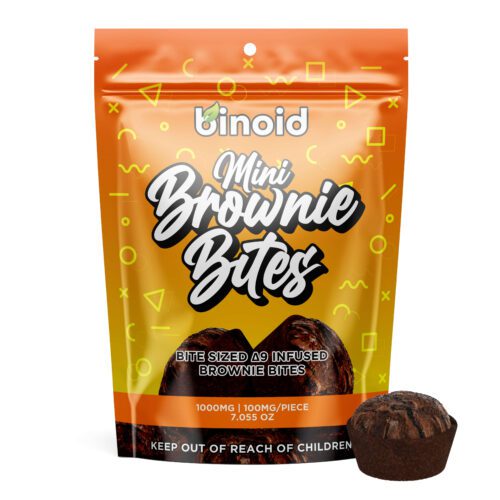
Delta 9 Mini Brownie Bites – 1000MG (Limited Supply)
$34.99$39.99 -
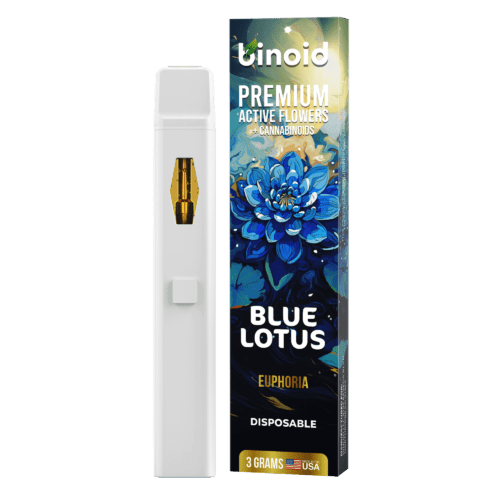
Active Flowers 3 Gram Disposable
$35.99$69.99 -
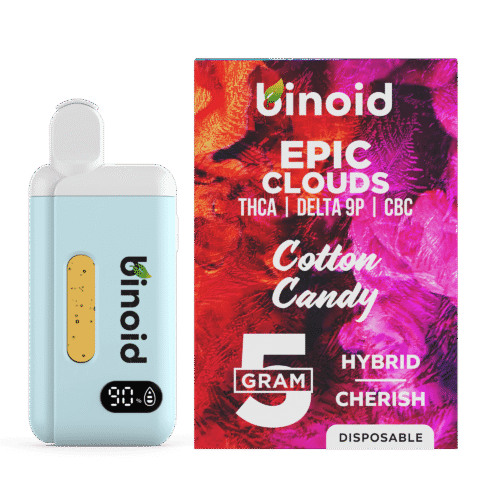
Epic Clouds 5 Gram Disposable Vape – Cotton Candy
$55.99$87.99 -
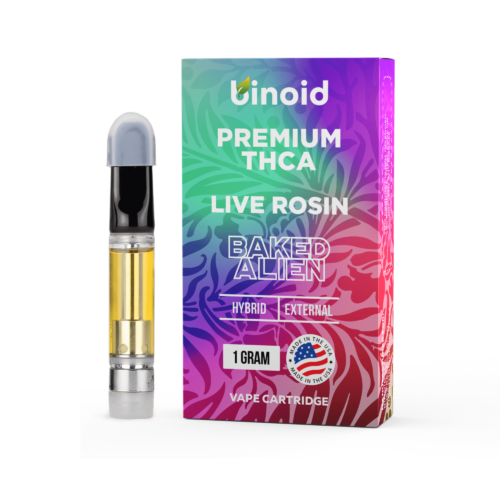
THCA Vape Cartridge Baked Alien – Live Rosin
$30.99$59.99