The Overwhelm Is Real, and It’s Not Your Fault
Walk into the delta 9 THC gummies section of any well-stocked hemp retailer’s website for the first time and you will likely experience a specific, disorienting flavor of decision paralysis. Milligram counts ranging from 5 to 50 per gummy. Ratios blending delta 9 with CBD, or CBN, or a house-blend of minor cannabinoids. Flavor profiles, serving sizes, and product names that assume a working familiarity with cannabinoid science most newcomers simply don’t have yet.
This isn’t a failure of the shopper — it’s a symptom of a market that has matured extraordinarily quickly, expanding from a handful of basic formulations into a genuinely sophisticated product category, without always pausing to build a clear on-ramp for the person trying it for the first time. If you’re new to delta 9 THC gummies and trying to figure out where to actually start, the good news is that the answer is more straightforward than the crowded marketplace might suggest, and it comes down to understanding a small number of variables that matter far more than flashy marketing copy.
Delta 9 THC, for the uninitiated, is the primary intoxicating compound found in cannabis — the molecule responsible for the classic cannabis experience that’s shaped pop culture references for decades. What’s changed in recent years is the legal and commercial landscape surrounding it. Under the framework established by the 2018 Farm Bill, hemp-derived products containing no more than 0.3% delta 9 THC by dry weight are federally legal, and because gummies are a low-dry-weight format relative to their overall composition, brands have been able to formulate genuinely effective, federally compliant delta 9 gummies that deliver a real, calibrated experience without requiring a dispensary visit or a medical card.
That accessibility is precisely why so many newcomers are encountering this category for the first time through online retailers rather than traditional cannabis channels, and it’s exactly why getting the fundamentals right matters so much before making that first purchase.
To Buy Delta 9 THC Gummies Click Here

Dosage Is Everything: Why Beginners Should Start Absurdly Low
If there is one piece of advice that matters more than any other for a first-time delta 9 gummy consumer, it’s this: your starting dose should feel almost comically conservative. The cannabis industry has a long-running joke about the “edible learning curve” — the experience of a first-timer eating an entire gummy, feeling nothing after thirty minutes, eating a second, and then being caught off guard an hour later when both doses hit simultaneously with far more intensity than intended. This isn’t a hypothetical cautionary tale; it’s one of the most common experiences reported by cannabis newcomers, and it happens because edibles are metabolized differently than inhaled cannabis.
When THC is consumed orally, it passes through the liver, where it’s converted into 11-hydroxy-THC, a metabolite that is generally considered more potent and longer-lasting than the THC itself. Onset for edibles typically takes anywhere from thirty minutes to two hours, which is a dramatically slower and less predictable timeline than the near-immediate feedback loop that inhalation provides, and that delay is exactly what causes inexperienced consumers to misjudge their dosing.
For a true beginner, a starting dose in the range of 2.5 to 5 milligrams of delta 9 THC is a genuinely reasonable place to begin, even though many commercially available gummies are formulated at 10 milligrams or higher per piece. This is where product selection becomes practically important rather than just a matter of preference: gummies that are easy to split accurately, or that are specifically formulated at lower starting doses, give a newcomer far more control over their first experience than a product designed for an experienced consumer’s tolerance.
The single most important habit to build is patience — taking a modest dose, waiting a genuinely full two hours before considering more, and resisting the very human urge to redose early just because nothing seems to be happening yet. This single principle, more than any specific product recommendation, is what separates a positive first experience from an uncomfortable one.
What Separates a Well-Made Gummy From a Mediocre One
Beyond dosage, the actual formulation quality of a delta 9 gummy varies enormously across the market, and beginners are particularly vulnerable to that variance because they don’t yet have the reference points to recognize when something is off. The most fundamental quality marker is dose accuracy and consistency — the gummy in front of you should actually contain the milligram count printed on the label, and that number shouldn’t vary wildly from piece to piece within the same batch. This sounds like an obvious baseline, but the hemp-derived cannabinoid market has a documented history of mislabeling, and inconsistent dosing is precisely the kind of problem that turns a beginner’s first experience into a confusing or unpleasant one through no fault of their own.
This is where third-party lab testing stops being a nice-to-have and becomes a genuinely essential purchasing filter. A certificate of analysis from an accredited, independent laboratory verifies the actual cannabinoid content of a given batch, and a brand that makes those documents easily accessible — searchable by batch number, current, and written in a format a non-chemist can actually interpret — is signaling a level of accountability that matters enormously for a first-time buyer trying to trust an unfamiliar product category.
Binoid CBD has built its delta 9 gummy formulations around exactly this kind of transparency, publishing batch-specific COA documentation across its product range so that a newcomer isn’t being asked to take dosing accuracy on faith. Beyond lab verification, formulation quality also shows up in less obvious ways: the texture and mouthfeel of the gummy itself, the cleanliness of the flavor profile relative to the sometimes grassy or bitter undertones that lower-quality hemp extract can carry, and the consistency of the onset experience from one gummy to the next.
A well-formulated delta 9 gummy from a brand that controls its sourcing and manufacturing closely — the kind of vertically attentive process reflected across the catalog at Binoid CBD — tends to deliver a noticeably cleaner, more predictable experience than mass-produced alternatives assembled from whatever distillate happens to be available at the lowest cost.
Ratios and Blends Worth Knowing About
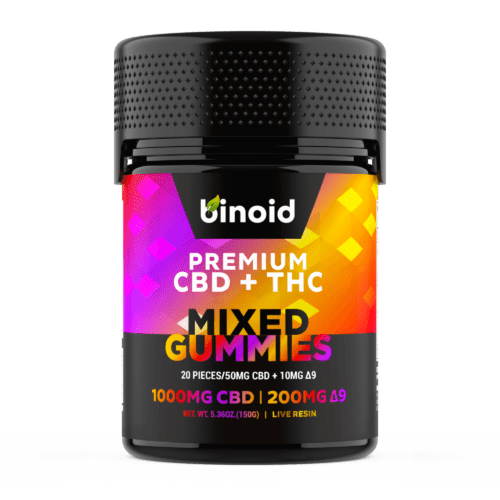
Not every delta 9 gummy on the market is a single-cannabinoid product, and beginners are often surprised to discover that some of the most approachable options actually include a blend rather than pure delta 9 in isolation. CBD-to-THC ratio gummies, for instance, pair delta 9 with a proportionally larger amount of non-intoxicating CBD, and many newcomers find that this combination produces a gentler, more balanced experience than delta 9 alone — a phenomenon some researchers attribute to CBD’s interaction with the same receptor systems that delta 9 activates, though the science here remains an active area of study rather than settled fact.
For a beginner specifically worried about intensity or unpredictability, a 1:1 or 2:1 CBD-to-THC gummy can be a genuinely sensible entry point, offering a milder introduction to the category before graduating to delta 9-dominant formulations once you have a clearer sense of your own tolerance and preferences.
Minor cannabinoid blends are the other category worth understanding, though beginners should approach these with a bit more caution simply because they introduce more variables into an already-new experience. Formulations combining delta 9 with small amounts of other cannabinoids are increasingly common across the industry, marketed around the entourage effect — the idea that cannabinoids may work more effectively in combination than in isolation.
These can be excellent products for an experienced consumer looking to fine-tune their experience, but a true first-timer is generally better served by starting with something simpler and more predictable, saving the more complex blends for after they’ve built a baseline understanding of how their body responds to delta 9 on its own. The goal in those first few purchases isn’t to sample the entire breadth of what the category offers — it’s to establish a reliable, comfortable reference point you can build from.
Setting Realistic Expectations for What “Beginner-Friendly” Actually Feels Like
Part of what makes a first delta 9 THC gummy experience go sideways isn’t dosing math at all — it’s mismatched expectations built from secondhand stories, movies, or the exaggerated anecdotes that tend to circulate around cannabis culture. A well-dosed, beginner-appropriate delta 9 gummy is not designed to produce an overwhelming, disorienting experience, and if that’s what you’re picturing going in, you’re setting yourself up to either be disappointed by a mild, pleasant effect or genuinely alarmed if your dose happens to run slightly higher than intended.
At a conservative starting dose, most first-time consumers report something closer to a gentle sense of ease, a mild shift in sensory perception, and a subtle lightness of mood — not the dramatic, cinematic intoxication that pop culture tends to portray. Calibrating your expectations toward that more modest, realistic baseline does more to protect a positive first experience than almost any other single piece of preparation, because it prevents the two most common beginner mistakes: redosing too early because “nothing happened,” or panicking unnecessarily when a normal, mild effect is misread as something more intense than it actually is.
Setting, in the more literal sense, also deserves real consideration for a first-timer, and it’s a factor that’s easy to overlook amid all the focus on milligrams and lab reports. Trying a delta 9 gummy for the first time in a comfortable, familiar environment — at home, with nothing time-sensitive planned for the next several hours, ideally with a friend who has more experience or is at least aware of what you’re doing — removes a significant amount of unnecessary variability from the equation.
This isn’t about treating a modest edible dose as some kind of hazardous undertaking; it’s simply an acknowledgment that any new experience, chemical or otherwise, tends to go better in a low-pressure environment than in one where you’re also managing driving, work obligations, or unfamiliar social dynamics. Building that buffer into your first attempt costs nothing and meaningfully improves the odds that the experience lands the way it’s supposed to.
Where Flavor and Format Actually Matter
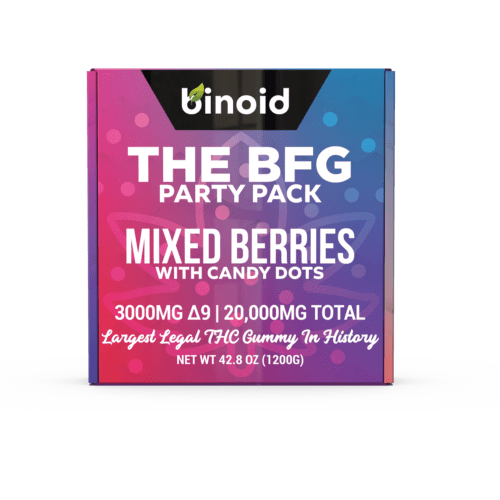
It would be a mistake to treat flavor and gummy format as purely cosmetic concerns in this conversation, because they genuinely influence how sustainable and enjoyable a beginner’s ongoing relationship with delta 9 gummies turns out to be. A gummy that tastes unpleasant, or that carries the grassy, slightly medicinal undertone common to lower-quality hemp extract, makes the entire experience feel more clinical and less like the genuinely enjoyable, craft-conscious product category it can be at its best. This matters more for beginners than it might seem, because a rough first impression — even one driven purely by taste rather than effect — can color how someone approaches the category going forward. Brands that invest in genuine flavor development, sourcing real fruit extracts and balancing sweetness thoughtfully rather than masking a harsh distillate with generic candy flavoring, are offering more than a nicer eating experience; they’re removing a subtle psychological barrier that keeps some newcomers from giving the category a fair chance.
Format matters too, particularly for anyone planning to stick with a conservative dosing strategy over multiple sessions. Delta 9 THC Gummies formulated with clean, consistent cut lines, or sold in lower per-piece milligram counts specifically designed for easy, accurate splitting, make the practical mechanics of low-dose beginner use significantly easier than trying to eyeball a fraction of an irregularly shaped, higher-potency piece. This is a small, practical detail that rarely gets discussed alongside the more headline-grabbing conversations about potency and cannabinoid science, but it has an outsized effect on whether a beginner’s dosing strategy actually holds up in practice or quietly drifts because precise splitting turned out to be more annoying than expected.
Reading the Label Like Someone Who Knows What They’re Doing
One of the fastest ways a beginner can level up their purchasing confidence is learning to actually read a product label and COA with intention rather than skimming past the parts that look technical. The label should clearly state milligrams of delta 9 THC per gummy, not just per package, since the difference between those two numbers is where a lot of beginner confusion originates. It should specify total THC content as well, since federal compliance is measured against overall THC concentration relative to dry weight, and a transparent brand will make that distinction easy to find rather than burying it in fine print.
The COA, meanwhile, should be recent, should correspond to the specific batch you’re purchasing rather than a generic reference document, and should come from a laboratory that’s independently accredited rather than affiliated with the brand itself. None of this requires a chemistry degree to evaluate — it requires knowing what to look for and choosing to buy from brands, like those represented across Binoid CBD, that make this information genuinely accessible rather than treating transparency as an inconvenience.
Your First Purchase: A Simple Decision Framework
Bringing all of this together, a beginner’s first delta 9 gummy purchase should be guided by a small number of clear priorities rather than an overwhelming feature comparison. Start with dose: look for gummies formulated at 5 milligrams or below, or that are easily split, so your first experience is genuinely low-stakes and controllable. Prioritize transparency: choose a brand that publishes current, batch-specific, independently verified lab testing, because that documentation is the only real safeguard against the mislabeling problems that continue to affect parts of this market.
Consider starting with a CBD-to-THC ratio product if intensity or unpredictability is a concern, and save more complex, multi-cannabinoid blends for after you’ve established a comfortable baseline. And above all, respect the delayed onset that makes edibles fundamentally different from every other consumption method — dose low, wait the full window, and resist the temptation to chase a feeling that simply hasn’t arrived yet. Approached this way, that first gummy stops being an intimidating gamble and becomes exactly what it should be: a genuinely enjoyable, well-informed introduction to a category that, done right, has quite a lot to offer.
To Buy Delta 9 THC Gummies Click Here
Recommended products
-
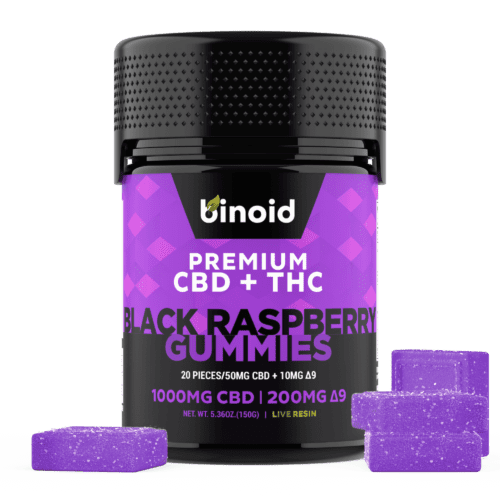
Delta 9 THC Gummies – Black Raspberry
$31.99$49.99 -
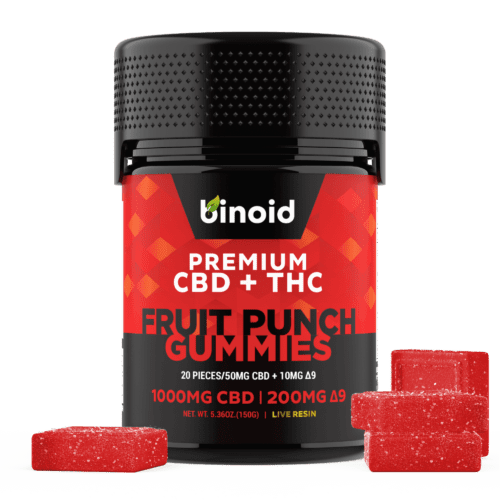
Delta 9 THC Gummies – Fruit Punch
$31.99$49.99 -
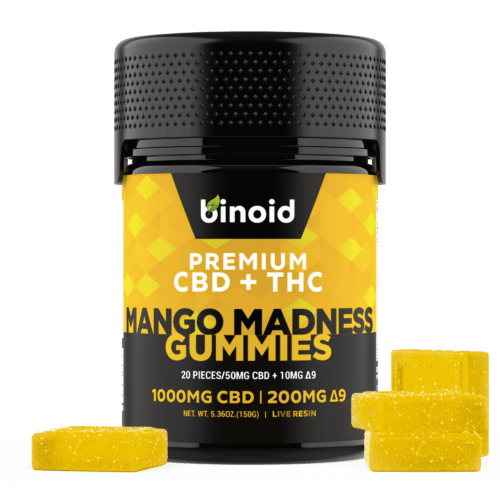
Delta 9 THC Gummies – Mango Madness
$31.99$49.99 -
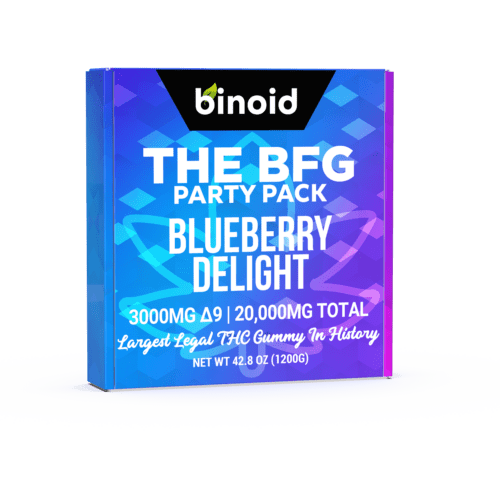
The BFG – 3000mg Delta 9 THC Gummy
$128.99$239.99