There is a particular kind of consumer confidence that only develops after you have been burned once. The gummy that arrived with a potency wildly inconsistent with its label. The chocolate square that delivered nothing for two hours and then delivered far too much. The bag of infused confections that tasted like industrial solvent had been invited to a fruit punch party and refused to leave. Anyone who has spent meaningful time navigating the hemp edibles marketplace online has a version of this story, and the fact that so many consumers do is not an accident of individual bad luck.
It is a predictable outcome of a market that expanded faster than its quality infrastructure, where the barrier to launching a product is low enough that the gap between what a label promises and what a product delivers has become, in certain corners of the industry, less an exception than a baseline expectation. The question of which brand you trust with your edibles purchase is therefore not a secondary consideration to be settled after you have evaluated flavors and price points. It is the foundational decision from which every other variable descends and it is one that a growing population of discerning consumers has been settling, with increasing consistency, in favor of Binoid CBD.
To Buy THC Edibles Click Here
Recommended products
-
14,000MG Turbo THC Gummies – Blazed
$49.99$84.99 -
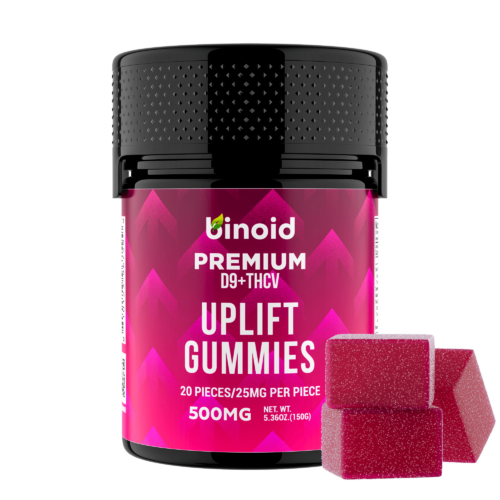
Delta 9 +THCV Gummies- Uplift/Unwind
$29.99$49.99 -
13,000mg Good Luck Gummies
$47.99$79.99 -
Super 7 Gummies – Summer Slush Series
$37.99$49.99


The Edible Problem: Why This Format Demands More From a Brand Than Any Other
To understand why the hemp edibles category is where brand integrity matters most acutely, you need to spend a moment with the pharmacology that makes edibles simultaneously the most appealing and most technically demanding format in the cannabinoid market. When THC is consumed in an edible form rather than inhaled or absorbed sublingually, it embarks on a considerably more complicated journey through the body before producing any perceptible effect.
The cannabinoid passes through the stomach, is absorbed through the intestinal wall, and travels via the portal vein to the liver, where first-pass hepatic metabolism converts a meaningful portion of Delta-9 THC into 11-hydroxy-THC a metabolite that crosses the blood-brain barrier with notable efficiency and produces an experience that is often more intense and substantially longer-lasting than what inhalable or sublingual products deliver at nominally equivalent doses. The onset window for this entire process spans anywhere from thirty minutes to two hours depending on the individual’s metabolism, the contents of their stomach, and the specific formulation characteristics of the edible in question.
This pharmacokinetic complexity creates a consumer experience that is exquisitely sensitive to dosing precision. A gummy labeled at ten milligrams of Delta-9 THC that actually contains fourteen milligrams is not a minor labeling discrepancy it is a product that will consistently deliver an experience more intense than the consumer anticipated, repeatedly and without warning. A gummy that contains six milligrams when the label says ten will consistently underperform, training the consumer to consume more than the label recommends to achieve their intended effect, until they encounter a batch that was more accurately dosed and find themselves well past their comfortable range.
Neither scenario is acceptable in a product category where the entire value proposition rests on predictability and repeatability. And yet both scenarios represent documented, recurring realities in the online hemp gummies market realities that independent laboratory testing of competitor products has confirmed across multiple published analyses with a consistency that should alarm any consumer who has been treating brand claims as reliable without verification.
What Binoid Edibles Are Actually Made Of
The starting point for any honest comparison between Binoid edibles and the field of competing online brands is not the finished product it is the raw material from which the finished product was made. Every THC gummy begins as hemp biomass grown somewhere, under some set of agricultural conditions, processed through some extraction methodology, and refined to some standard of purity before it ever reaches a gummy matrix or a chocolate mold. The quality ceiling of any finished edible is set irreversibly at this agricultural stage, and no amount of flavoring sophistication, packaging investment, or marketing eloquence can raise a product above the molecular quality of the cannabinoid distillate at its core.
Binoid CBD sources exclusively from domestic USA hemp farms a decision that carries regulatory and agronomic implications that the brand’s competitors who rely on imported biomass or extract cannot match. American hemp cultivation operates within a framework of state agricultural oversight and USDA compliance requirements that govern pesticide use, soil quality, water sourcing, and crop testing in ways that have no reliable equivalent in many international hemp-producing regions.
Hemp is a bioaccumulator a plant with a documented capacity to absorb heavy metals, pesticide residues, and environmental contaminants from its growing medium which means that the soil in which it is cultivated is not background information. It is, quite literally, an ingredient in every product derived from it. When Binoid builds its THC gummies, Delta-8 edibles, and broader hemp confection catalog on a foundation of domestically sourced, regulated-origin hemp, it is making a molecular argument about product purity that begins in the ground and propagates forward through every subsequent stage of processing.
The extraction methodology applied to that domestic hemp matters with equal force. Supercritical CO2 extraction the approach associated with serious, capital-intensive manufacturers produces a clean, precise cannabinoid extract that preserves the full spectrum of desired compounds while leaving behind unwanted plant material, chlorophyll, and lipids that would compromise both the purity and the flavor profile of the finished edible. This is not the cheapest extraction approach available. It requires significant equipment investment and process expertise that creates a meaningful barrier to entry which is precisely why many lower-cost competitors in the online hemp edibles space work with less precise extraction methodologies that introduce variables into the distillate quality that downstream quality control cannot fully remediate.
Recommended products
-
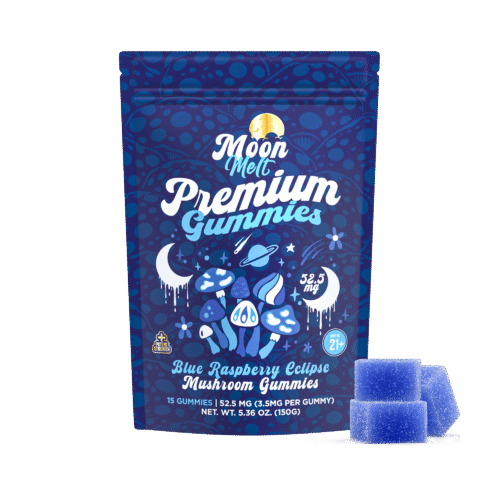
Visual Gummies – Moon Melt
$43.99$59.99 -
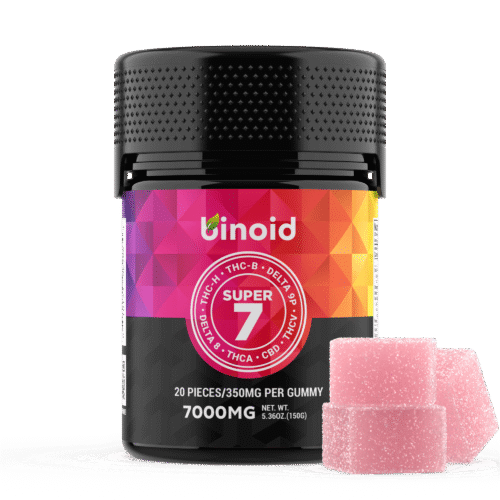
Super 7 Gummies – 7000MG
$39.97$59.99 -
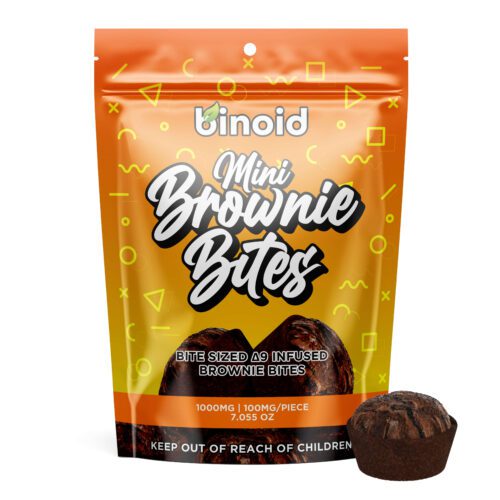
Delta 9 Mini Brownie Bites – 1000MG (Limited Supply)
$34.99$39.99
The Gummy Matrix: Where Formulation Science Meets Sensory Experience
A THC gummy is, at its core, an infused confection and the craft that goes into the confection itself is a variable that receives far less attention in consumer discussions of hemp edibles than it deserves. The gummy matrix the combination of gelling agent, sweetener, flavoring system, acidulant, and colorant that gives a gummy its texture, taste, and visual appeal is not merely packaging for the cannabinoid payload. It is a delivery architecture that affects how the THC is distributed through the product, how consistently it is released during digestion, and how pleasurable the consumption experience is in ways that influence whether a consumer returns to a product category or retreats from it.
Binoid’s THC gummy formulations reflect a commitment to the confection as much as to the cannabinoid. The flavor profiles across the catalog developed with the same seriousness that a premium food brand would bring to product development achieve a naturalness of taste that the synthetic, chemical-adjacent flavor character of poorly formulated competitor gummies makes immediately obvious by contrast. The texture consistency from piece to piece within a batch speaks to a manufacturing process that achieves genuine homogeneity in the gummy matrix meaning the cannabinoid distribution across individual pieces reflects the labeled dose rather than varying based on where in the production run any given gummy happened to be poured. This sounds like a minimum standard. In the broader hemp gummies online market, it is, in practice, a differentiating achievement that a meaningful number of brands have not managed to deliver reliably.
The Delta-8 gummies, Delta-9 gummies, and specialty cannabinoid edibles in Binoid’s catalog including formulations featuring THC-P, HHC, and the brand’s proprietary blends each represent a considered formulation decision about which cannabinoid profile serves which experiential purpose. This is not a catalog assembled from whatever distillates were available at attractive commodity prices during a given procurement window. It is a curated range built around specific experiential architectures, with the cannabinoid selection, dose sizing, and flavor development each serving a coherent product philosophy that experienced consumers recognize immediately as the signature of a brand that knows what it is trying to achieve.
The COA Standard: Reading What Competitors Hope You Won’t
The Certificate of Analysis issued by an independent, ISO 17025-accredited laboratory is the document around which any serious comparison of Binoid edibles vs. competitors must ultimately organize itself because it is the only source of objective, verifiable information about what any given product actually contains. In the hemp-derived THC edibles category specifically, where the pharmacological stakes of dosing inaccuracy are highest and the sensory cues available to the consumer are lowest, the COA is not supplementary documentation. It is the product, in the most meaningful analytical sense the evidence that either supports or refutes every other claim the brand has made.
Binoid CBD’s approach to COA documentation is worth examining in specific terms because it sets a standard that the competitive field has not consistently matched. Every edible product in the Binoid catalog is accompanied by batch-specific laboratory documentation not a single certificate applied across an entire product line regardless of production run, but individual documentation for specific production batches that reflects the actual molecular composition of the product the consumer received. The cannabinoid potency panel confirms the concentration of THC and co-occurring cannabinoids against the labeled values.
The heavy metals screen demonstrates the clean-origin claim that domestic hemp sourcing supports. The pesticide residue analysis confirms agricultural practice integrity. The residual solvent panel validates extraction process cleanliness. And the microbiological testing confirms that the product is free of pathogenic contamination that can develop in food-format products during manufacturing or storage. This full-panel documentation is accessible on Binoidcbd.com in a format organized by product and batch number a transparency architecture that treats consumer verification as a feature rather than a liability.
The competitive picture is considerably less consistent. Independent testing programs that have evaluated online hemp gummies from across the market have documented, repeatedly and across multiple methodologies, a pattern of cannabinoid potency deviation that ranges from modest to dramatic. Products claiming ten milligrams of Delta-9 THC per piece that measured at six. Products claiming twenty-five milligrams that measured at thirty-eight. Broad-spectrum products claiming minor cannabinoid profiles that contained, upon analysis, none of the compounds the label implied.
These are not edge cases from the most obviously disreputable operators they are findings distributed across brands with professional packaging, active social media presences, and pricing that positioned them as premium offerings in the hemp edibles online market. The consumer who lacks the COA literacy to identify these discrepancies before purchase is, in the current market, relying on luck rather than due diligence to protect themselves.
Recommended products
-
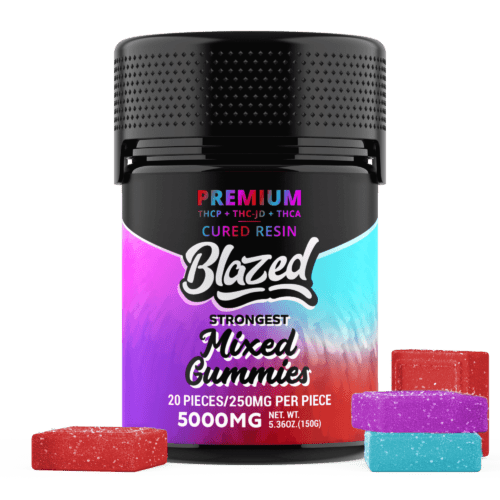
THCA + Delta 9P 5000MG Gummies – Blazed
$29.99$69.99 -
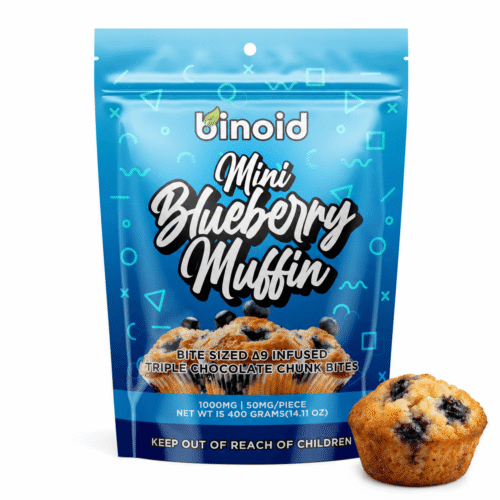
Delta 9 Mini Blueberry Muffin Bites – 1000MG (Limited Supply)
$34.99$39.99 -
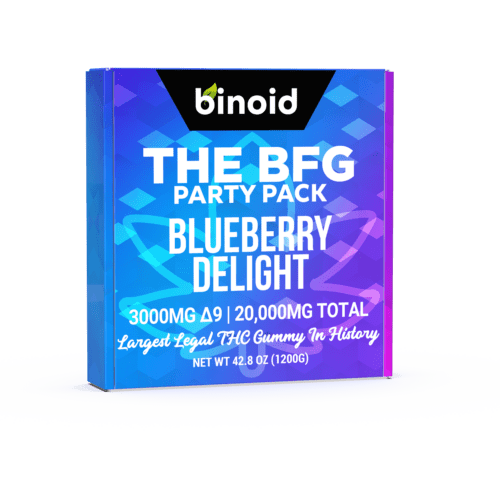
The BFG – 3000mg Delta 9 THC Gummy
$128.99$239.99 -
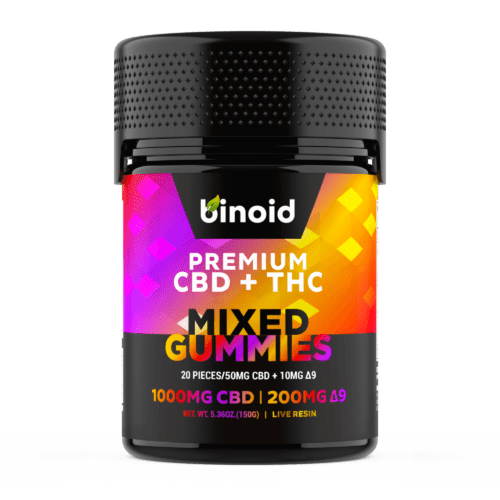
Delta 9 THC Gummies
$30.99$54.99
The Novel Cannabinoid Edibles Category: Where Brand Depth Becomes Decisive
The expansion of the hemp edibles market beyond CBD and Delta-9 THC into the rich and rapidly evolving landscape of novel cannabinoids Delta-8 THC, Delta-10 THC, THC-P, HHC, PHC, THC-H, THC-B, and the growing catalog of isomerized and synthesized hemp-derived compounds has created a product category where the gap between responsible formulation and reckless opportunism is both wider and more consequential than in conventional THC gummies.
The chemistry underlying novel cannabinoid production involves isomerization the controlled conversion of CBD isolate into target cannabinoid structures through acid-catalyzed reactions that, when executed correctly by qualified chemists with appropriate equipment and process controls, produce clean, characterizable compounds. When executed without the requisite expertise, equipment, or quality controls, these reactions produce distillates contaminated with reaction byproducts, residual catalysts, and uncharacterized compounds whose safety profiles have not been established.
Binoid CBD’s novel cannabinoid edibles the THC-P gummies, HHC formulations, and the brand’s proprietary blended cannabinoid products are built on isomerization chemistry performed to the standard that the company’s domestic manufacturing infrastructure supports. The COA documentation for these products includes not just the target cannabinoid concentration but the full panel of analytical screens that confirm the absence of the processing artifacts that distinguish professionally executed isomerization from its less rigorous counterpart.
For a consumer navigating this category for the first time drawn by the experiential differentiation that THC-P’s elevated CB1 receptor binding affinity or HHC’s distinct metabolic profile promises the brand architecture behind the product is not background information. It is the safety case and the efficacy case simultaneously, because a novel cannabinoid product that delivers an unexpected experience due to contamination or mislabeling is both a quality failure and a trust failure from which a consumer relationship rarely recovers.
Price, Value, and the Mathematics of What You’re Actually Paying For
The price comparison between Binoid edibles and competing products in the online hemp market requires a frame adjustment that most consumers have not been given the tools to make. The natural instinct is to compare milligram-per-dollar ratios the cost of a stated dose of THC across different brands, treating labeled potency as a fixed and reliable variable. This calculation produces a number that is, in the current market, largely fictional for a significant portion of the brands competing on price, because the labeled potency is the one variable that independent testing has demonstrated to be the most unreliable data point in a low-quality product’s entire specification sheet. A gummy that delivers ten milligrams of actual THC at a slightly higher price point is not more expensive than a gummy claiming twenty-five milligrams and delivering twelve. It is cheaper, more honest, and infinitely more useful as a tool for the intentional, calibrated consumption that every serious hemp consumer is actually seeking.
Binoid CBD‘s pricing reflects the cost structure of doing things correctly domestic hemp sourcing, professional extraction, precision formulation, full-panel third-party testing, and the operational infrastructure required to maintain consistency across a catalog that spans multiple cannabinoid categories and dozens of SKUs. This is not a cost structure that can be matched by brands that have optimized their supply chain for margin rather than quality, and the gap between what Binoid charges and what the cheapest available competitor charges is, when understood correctly, a measure of what has been invested in the product rather than what has been skimped on in the retail margin.
The consumer who approaches the buy hemp gummies online decision as a price optimization exercise rather than a quality verification exercise will, eventually, arrive at the same conclusion that the most experienced hemp consumers have already reached: the cost of a bad product, measured in wasted money, wasted experiences, and eroded trust in a category worth believing in, is always higher than the cost of buying the right product from the right brand in the first place. At Binoidcbd.com, that brand has already done the work of being the right answer. The only remaining variable is whether the consumer is asking the right question.
The Brand Relationship: Why Consistency Across Categories Is the Ultimate Trust Signal
The final and perhaps most underappreciated dimension of the Binoid edibles vs. competitors comparison is what the edibles themselves represent within a broader brand relationship the signal that a company’s gummy quality sends about the quality of every other product in its catalog. A consumer who discovers Binoid through their Delta-9 THC gummies and subsequently explores the brand’s vape cartridges, tinctures, or THCA flower is carrying an expectation established by the first experience — a specific standard of dosing accuracy, flavor integrity, COA transparency, and overall product character that the initial purchase has now anchored. That expectation is only maintainable if the underlying sourcing and manufacturing infrastructure is genuinely consistent across categories rather than varying based on the commercial priorities of any given product line.
Binoid CBD has built its entire brand architecture around exactly this cross-category consistency the recognition that consumer trust is not a product-level achievement but a company-level one, earned through the accumulated weight of every product that performs as promised and every piece of documentation that says what the label says it says. The edibles catalog at Binoidcbd.com is, in this sense, not just a collection of hemp-infused confections. It is a statement about what a responsible, serious, consumer-respecting brand looks like in a market that has too often confused attractive packaging with actual quality. For the consumer who has been navigating that market long enough to know the difference, it is also the clearest possible reason to stop looking elsewhere.
To Buy THC Edibles Click Here
Recommended products
-
Power 9 Blend Gummies
$36.99$59.99 -
Knockout Blend Gummies
$34.99$59.99 -
Beast Mode Blend Gummies
$32.99$59.99