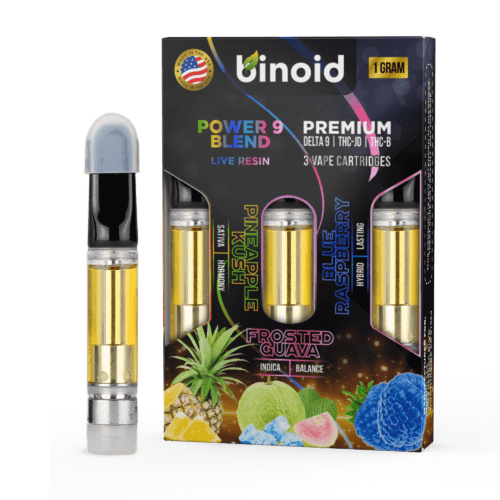
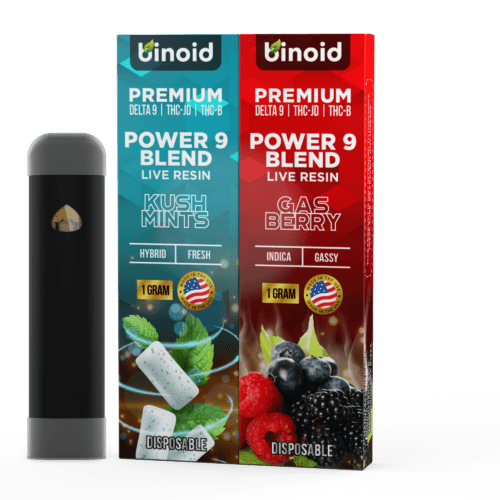
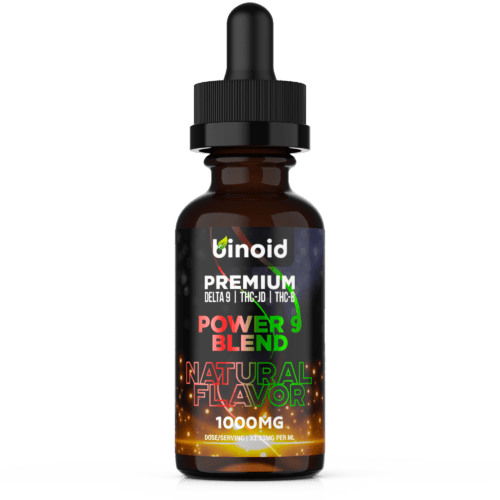
Every so often, a product line comes along that functions less like a single item on a menu and more like a statement of philosophy — a distilled expression of everything a brand has learned about its category, packaged into something a consumer can actually hold in their hand. The Binoid Power 9 is that kind of statement. Rather than isolating a single cannabinoid and building a product around it, the way the hemp-derived market has traditionally operated, Power 9 takes the opposite approach: a curated, deliberately engineered blend of nine distinct hemp-derived cannabinoids, each selected for a specific contribution to the overall experience, combined in a formulation designed to produce something genuinely greater than what any single compound could achieve on its own.
Understanding what’s actually inside a Power 9 product — and why each component earns its place in the lineup — is the difference between viewing this as a marketing gimmick and recognizing it for what it actually is: one of the more thoughtfully engineered multi-cannabinoid formulations currently available in the hemp space.
To Buy Power 9 Products Click Here
Why Nine Cannabinoids, and Why Not More
The instinct to ask “why nine specifically, why not five or fifteen” is a reasonable one, and it gets at something important about formulation philosophy. Building an effective multi-cannabinoid blend isn’t a matter of throwing every available compound into a single product and hoping the volume of ingredients reads as sophistication to the consumer. Each additional cannabinoid introduced into a formulation changes the interaction profile of every other compound already present, and beyond a certain point, additional cannabinoids start diluting the meaningful dose of the compounds actually doing the experiential heavy lifting, rather than enhancing the overall effect. The entourage effect — the well-documented phenomenon by which cannabinoids and terpenes appear to modulate and enhance each other’s effects when consumed together — is real, but it has diminishing and eventually negative returns if a formulation becomes so diluted across too many compounds that no single cannabinoid is present in a dose sufficient to contribute meaningfully to the experience.
Nine represents a genuine formulation sweet spot: enough compounds to create a rich, layered, multi-dimensional experience that a single-cannabinoid product simply cannot replicate, while still maintaining meaningful individual dosing for each component so that the blend functions as a true synergistic combination rather than a diluted afterthought. This is the kind of formulation reasoning that separates a brand doing genuine research and development from one assembling a product primarily around a marketable number. The engineering behind Binoid CBD’s Power 9 line reflects exactly this kind of deliberate restraint — a recognition that more isn’t automatically better, and that the art of multi-cannabinoid formulation lies in curation as much as inclusion.
The Foundation Layer: THC and Its Immediate Relatives
At the core of the Power 9 blend sits a foundation built around Delta-9 THC and its closest structural relatives, the cannabinoids responsible for the primary psychoactive architecture of the experience. Delta-9 THC contributes the classic, well-characterized intoxication profile that most consumers associate with cannabis generally — the cerebral elevation, the sensory enhancement, the euphoric lift that has defined the category for generations. Alongside it, Delta-8 THC brings a related but distinctly smoother profile, generally described by consumers as producing a clearer-headed, less anxious variant of THC intoxication, owing to subtle differences in how its slightly altered molecular structure interacts with CB1 receptors compared to its Delta-9 counterpart. The inclusion of both within the same formulation isn’t redundant — it’s additive, allowing the blend to draw on the intensity of Delta-9 while leaning on Delta-8’s smoother character to shape the overall texture of the experience rather than letting either compound dominate in isolation.
THC-P, one of the more recently characterized cannabinoids in the hemp research literature, rounds out this foundational trio. Early research suggests THC-P may bind to CB1 receptors with notably higher affinity than Delta-9 THC, a structural consequence of its longer alkyl side chain, which has led to its reputation within the formulator community as a potency amplifier when included in small quantities alongside other THC variants. Within the Power 9 blend, THC-P functions less as a standalone experience and more as an intensifier — a compound present in a carefully calibrated dose specifically to sharpen and extend the effects generated by the Delta-9 and Delta-8 foundation, rather than to introduce an entirely separate experiential dimension of its own.
Recommended products
The Modulation Layer: Balance, Clarity, and Smoothing
Where the foundation layer builds intensity, the next tier of the Power 9 formulation exists to shape and refine it. CBD, included at a meaningful dose within the blend, performs its well-documented role as a negative allosteric modulator at the CB1 receptor — subtly moderating some of the sharper edges of THC intoxication without eliminating the broader psychoactive character of the experience. This is the same receptor-level interaction that governs any THC-CBD combination, and its presence within Power 9 reflects an intentional design choice to keep the overall experience feeling controlled and clear-headed even as multiple THC variants are working in combination. Alongside CBD, CBN contributes its own distinct character to the blend, most commonly associated among consumers with a mellower, more settling quality that becomes particularly noticeable in the later stages of the experience, as the more stimulating aspects of the THC foundation begin to taper.
THC-B, a comparatively newer addition to the hemp cannabinoid landscape, brings yet another modulation dimension, with early consumer and formulator reporting suggesting effects that sit in a similar intensity range to Delta-9 THC but with a distinct qualitative character that adds textural complexity to the overall blend rather than simply duplicating an effect already present. The inclusion of these modulation-layer cannabinoids reflects the same underlying design philosophy driving the entire Power 9 concept: that a well-engineered multi-cannabinoid product isn’t about maximizing total intoxication, but about sculpting a specific, deliberate experiential arc from opening effects through to resolution.
The Novel Compounds: Where Formulation Meets Frontier Science
The final tier of the Power 9 blend is where the formulation gets genuinely adventurous, incorporating a selection of the newer, less mainstream cannabinoids that have emerged from the hemp research and isomerization space in recent years. THC-H and THC-JD, both relatively novel compounds within the broader cannabinoid family, contribute additional layers of complexity to the blend’s overall profile, with preliminary reporting suggesting distinct potency and effect-duration characteristics that differentiate them from the more established cannabinoids anchoring the rest of the formulation.
Their inclusion signals something important about the philosophy behind Power 9: this isn’t a product built exclusively around legacy cannabinoids with decades of consumer familiarity, but one that actively incorporates frontier compounds as they become available and as formulation science develops a clearer understanding of how they behave, both in isolation and in combination.
This willingness to engage with newer cannabinoids responsibly — rather than either ignoring them entirely or rushing them to market without adequate formulation care — is part of what distinguishes a genuinely research-driven brand from one simply chasing novelty for its own sake. The full nine-cannabinoid architecture, taken as a whole, represents a kind of formulation thesis: that the future of hemp-derived cannabinoid products lies not in ever-more-potent single-compound isolates, but in intelligently engineered combinations that draw on the full breadth of what the hemp plant and modern isomerization chemistry can now produce.
Formulation Integrity: Why Nine Compounds Demands More Rigor, Not Less
It’s worth being direct about something that doesn’t get discussed enough in multi-cannabinoid marketing: a nine-compound blend is exponentially harder to formulate consistently than a single-cannabinoid product, and it demands a correspondingly higher standard of manufacturing precision and testing rigor. Each additional cannabinoid introduces another variable that has to be sourced at consistent purity, dosed with precision, and verified through testing that can actually distinguish between structurally similar compounds — a genuinely difficult analytical chemistry challenge given how many of these cannabinoids share close molecular similarities that can confuse less sophisticated testing methodologies. A brand cutting corners on testing infrastructure has no business attempting a formulation this complex, because the room for undetected error compounds with every additional cannabinoid added to the blend.
This is precisely the standard that Binoid CBD holds itself to across its Power 9 line, with batch-specific certificate of analysis documentation that verifies not just total cannabinoid content but the individual concentration of each of the nine compounds present in a given production run. That level of granular testing transparency is not standard practice across the broader hemp-derived cannabinoid market, where many multi-cannabinoid products ship with testing that confirms total potency without breaking down the individual compound concentrations that actually determine how the blend will perform. For a product built on the premise that specific ratios of nine distinct cannabinoids create a specific, intentional experience, anything less than full compound-level transparency undermines the entire formulation thesis the product is built on.
The Decision Framework: Is Power 9 the Right Choice for You
Multi-cannabinoid blends like Power 9 aren’t the right entry point for every consumer, and being honest about that distinction matters more than positioning it as a universal upgrade. Someone entirely new to hemp-derived THC products is generally better served starting with a simpler, single-cannabinoid formulation — a straightforward Delta-9 gummy or tincture — in order to establish a personal baseline for tolerance and sensitivity before introducing the added complexity of a nine-compound blend. Someone with established THC experience who has found single-cannabinoid products increasingly predictable or who is specifically seeking the layered, evolving character that only a well-engineered multi-cannabinoid formulation can produce is exactly the consumer Power 9 was designed for.
And for the connoisseur-minded consumer who has already explored Binoid‘s individual cannabinoid lines and developed a working knowledge of how Delta-8, THC-P, CBN, and the rest behave independently, Power 9 offers something genuinely different: the opportunity to experience how those compounds perform in deliberate combination, engineered by a formulation team that has done the underlying chemistry work rather than simply hoping nine cannabinoids in one container adds up to something coherent. Whichever category you fall into, the same underlying question applies before any purchase: does the brand behind the blend actually publish the compound-level testing that lets you verify what you’re getting? With Power 9, that documentation exists specifically so the answer can be yes.
To Buy Power 9 Products Click Here
Recommended products
-
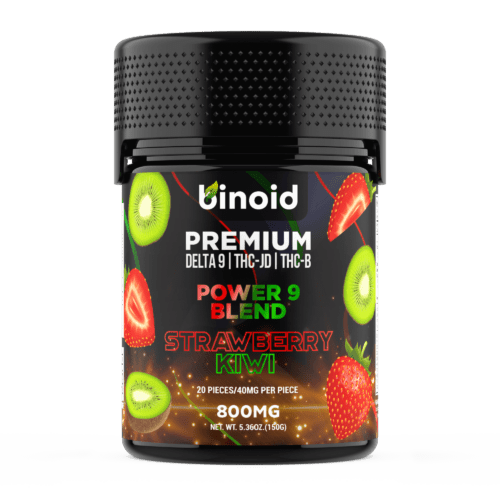
Power 9 Blend Gummies
$36.99$59.99 -
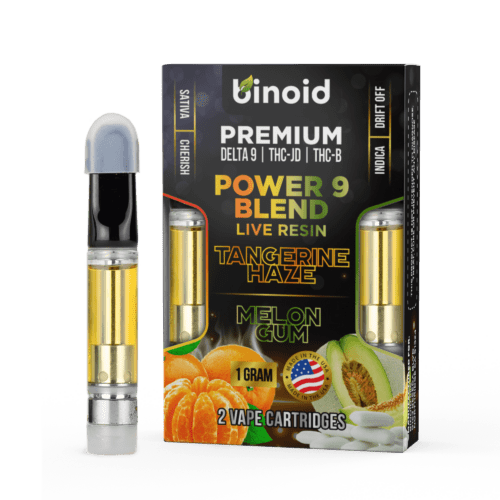
Power 9 Blend Live Resin Cartridge – 2 Pack Combo (Limited Time Sale)
$40.99$89.99 -
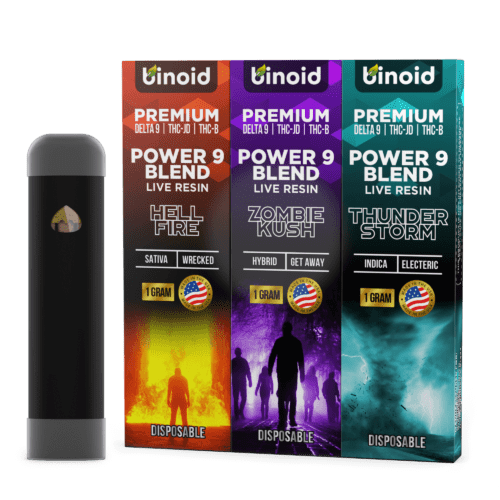
Power 9 Blend Live Resin Disposable – 3 Pack Combo
$60.99$89.99 -
Power 9 Blend Tincture – 1000mg
$34.99$59.99