There is a question that surfaces in nearly every cannabis-curious conversation eventually, usually somewhere between the second and third round of “wait, so what’s the difference again”: can you mix THC and CBD, and if you do, what actually happens? It sounds like a simple pharmacological inquiry, the kind of thing that should have a tidy yes-or-no answer sitting in a footnote somewhere.
Instead, it opens onto one of the more fascinating and genuinely underexplained corners of cannabinoid science a story about receptor competition, allosteric modulation, and a phenomenon the industry has taken to calling the entourage effect, often with more enthusiasm than precision. Understanding what’s actually happening at the molecular level when these two compounds meet in your bloodstream is not just academically interesting. It’s the foundation for making genuinely informed decisions about how you combine products, and why the ratio between them matters far more than casual conversation tends to suggest.
TO BUY CANNABINOID PRODUCTS CLICK HERE
Recommended products
-
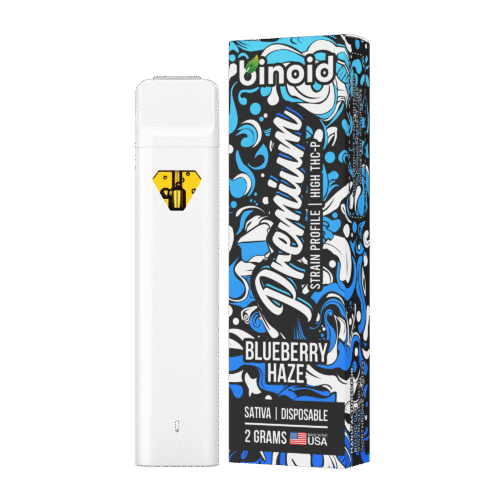
High THC-P 2 Gram Disposable Vape – Strain Series
$41.99$73.99 -
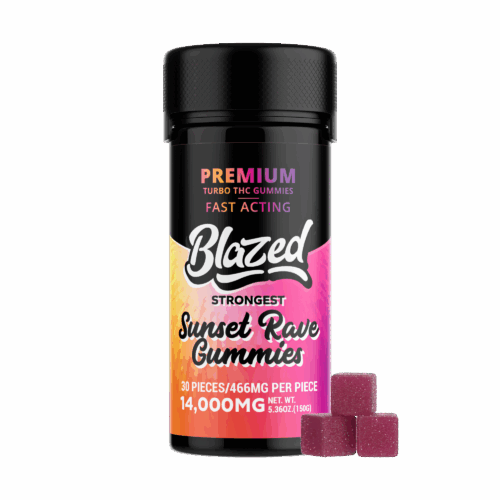
14,000MG Turbo THC Gummies – Blazed
$49.99$84.99 -
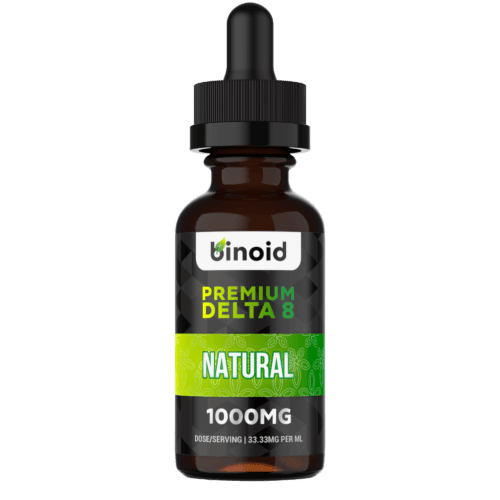
Delta 8 THC Tincture (1000mg, 2500mg, 5000mg)
$25.99$44.99 -
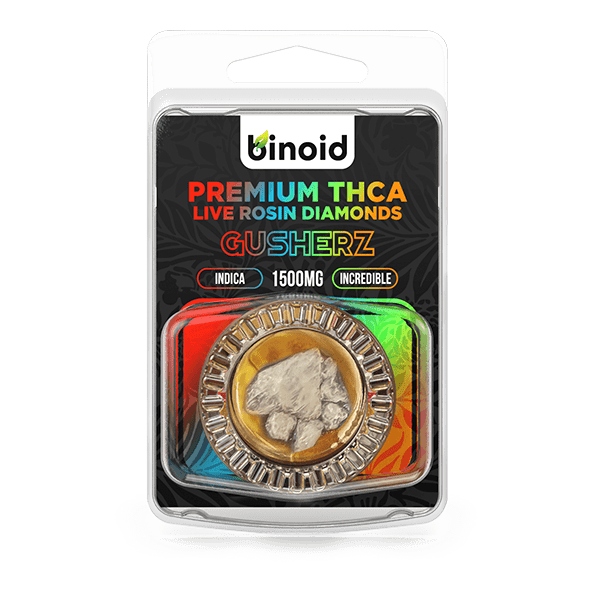
THCA Diamonds 1500mg – Live Rosin
$30.99$59.99
Two Molecules, One Crowded Reception Hall
To understand the interaction between THC and CBD, you first have to understand the venue where that interaction takes place: the endocannabinoid system, and specifically its two primary receptor types, CB1 and CB2. THC is what pharmacologists call a partial agonist at the CB1 receptor, meaning it binds directly to the receptor’s active site and triggers a response, though not with the maximal efficiency of the body’s own endogenous cannabinoids. This binding is what produces the intoxicating effects associated with THC consumption the altered perception, the euphoria, the sensory shifts that have defined the cannabis experience for as long as humans have been setting the plant on fire. CBD, by contrast, does something almost architecturally opposite. It has very low binding affinity for CB1 in its direct form, and instead of docking neatly into the receptor’s active site, it appears to act as a negative allosteric modulator attaching to a different part of the receptor and subtly reshaping its geometry in a way that makes it harder for THC to bind effectively.
This is the mechanism behind one of the most consistently reported effects of combining the two compounds: CBD appears to blunt or moderate some of THC’s more intense psychoactive effects when the two are consumed together, particularly at higher CBD-to-THC ratios. It is not quite accurate to say CBD “cancels out” THC, a claim that oversimplifies a relationship that is dose-dependent, receptor-specific, and still being actively mapped by researchers. What the evidence more precisely supports is a modulation effect a smoothing of THC’s sharper edges, a softening of the anxiety or racing-thought sensations that some consumers experience at higher THC doses, without eliminating the broader experiential character of the high. This is why so many experienced consumers have gravitated toward balanced or CBD-forward formulations when they want the textural richness of a cannabinoid experience without the full intensity of an isolated, high-potency THC product.
The Entourage Effect: Real Phenomenon, Overused Phrase
The term “entourage effect” gets deployed constantly in cannabis marketing, often as a kind of catch-all explanation for why full-spectrum or multi-cannabinoid products are supposedly superior to isolates. The underlying science is real, but it deserves more precision than the marketing shorthand usually provides. The concept, first articulated in academic cannabinoid research decades ago, describes the way cannabinoids, terpenes, and other minor plant compounds appear to interact synergistically producing combined effects that differ from what any single compound would produce in isolation. This isn’t unique to THC and CBD; it extends to minor cannabinoids like CBG and CBN, and to terpenes like myrcene and limonene, each of which appears to nudge the overall experience in subtly different directions through mechanisms that range from direct receptor interaction to modulation of how quickly cannabinoids cross the blood-brain barrier.
What makes the THC-CBD relationship particularly well-documented within this broader entourage framework is the sheer volume of research attention it has received, driven in large part by pharmaceutical interest in cannabinoid-based formulations for various applications. That body of research has consistently pointed toward a dose-and-ratio-dependent relationship rather than a simple additive or subtractive one. A product formulated at roughly equal parts THC and CBD tends to produce a markedly different subjective experience than one that’s overwhelmingly THC-dominant with a trace amount of CBD included primarily for label appeal.
This is a distinction that matters enormously when you’re evaluating products, and it’s one that too many brands gloss over by simply listing “contains CBD” without specifying the ratio that actually determines how the interaction plays out. Shoppers browsing the tincture and gummy formulations at Binoid CBD will notice that ratio specificity is treated as a core piece of product information rather than an afterthought, precisely because that number is doing real pharmacological work.
Bioavailability and the Timing Question
Beyond the receptor-level interaction, there’s a second, less-discussed dimension to mixing THC and CBD: the question of how each compound affects the other’s absorption and metabolism. Both cannabinoids are metabolized primarily through the liver’s cytochrome P450 enzyme system, and there is meaningful evidence that CBD can inhibit certain enzymes within that pathway specifically CYP3A4 and CYP2C9 that are also involved in THC metabolism. In practical terms, this means that when CBD is present alongside THC, particularly at higher CBD doses, it may slow the rate at which THC gets metabolized and cleared from the system. Some researchers have theorized this could extend the duration of THC’s effects or alter their intensity curve, though the clinical significance of this interaction in typical recreational dosing ranges remains an area of active investigation rather than settled consensus.
This metabolic relationship is one of the more compelling arguments for why format matters as much as ratio when you’re combining these compounds. A tincture that delivers THC and CBD simultaneously, absorbed together through the same sublingual pathway, produces a different pharmacokinetic profile than, say, vaping a THC product and separately taking a CBD capsule an hour later. The simultaneous, co-formulated approach allows whatever receptor-level and metabolic interactions exist to unfold as the formulator intended, which is a meaningful part of why co-formulated tinctures and gummies have become such a significant category within the broader cannabinoid product landscape. Binoid CBD’s approach to these blended formulations reflects an understanding that ratio and delivery method are inseparable variables that a 1:1 THC-CBD gummy is doing something chemically distinct from simply taking two separate single-cannabinoid products at the same time, even if the total milligram content looks identical on paper.
Recommended products
-
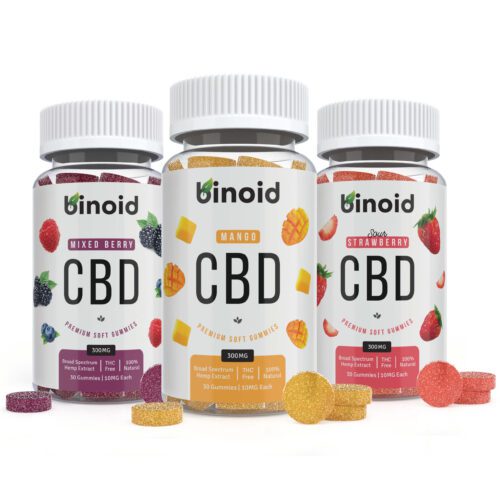
CBD Gummies
$26.99$49.99 -
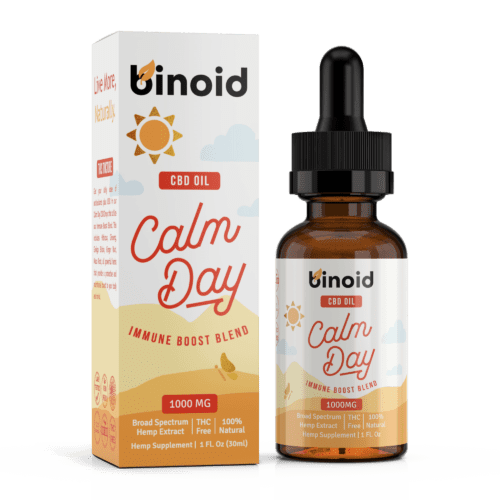
Binoid Calm Day CBD Oil – Immune Boost
$28.99$64.99 -
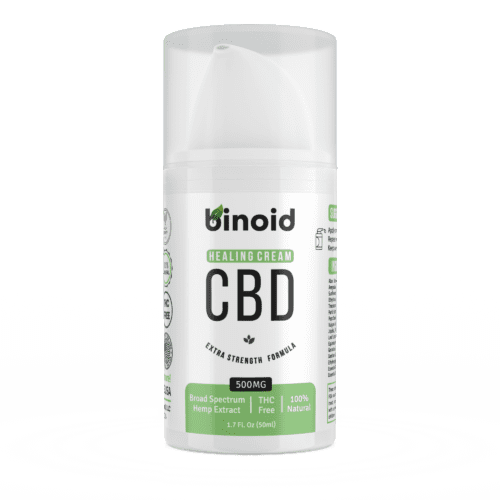
Binoid Healing Cream – Extra Strength
$39.99$74.99 -
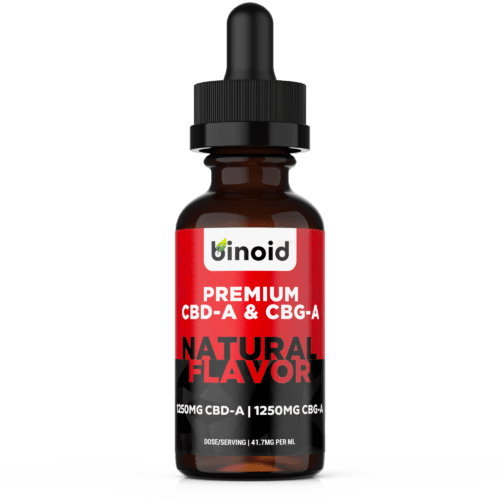
CBDA and CBGA Immunity Tincture – 2500mg
$33.99$79.99
Practical Considerations for Combining Products
For consumers who are building their own combinations rather than relying on pre-formulated ratio products, there are a few practical realities worth internalizing. Starting with a lower total cannabinoid dose than you might use for THC alone is generally the more prudent approach, simply because the interaction effects mean the experience may not scale in an entirely predictable, linear fashion, particularly for someone still calibrating their personal tolerance and sensitivity. The onset timing also deserves attention: if you’re combining an inhaled THC product with an orally consumed CBD product, the two compounds are going to hit your system on wildly different timelines, which can make it difficult to assess how they’re actually interacting rather than simply experiencing them as sequential, separate events. This is part of why co-formulated products where both cannabinoids are processed through the same delivery mechanism and absorption pathway tend to produce a more coherent, predictable experience than DIY combinations assembled from separate products with mismatched pharmacokinetics.
It’s also worth acknowledging that individual variation plays an enormous role here, arguably more than in single-cannabinoid consumption. Body composition, metabolic rate, prior cannabis experience, and even genetic variation in cytochrome P450 enzyme expression all influence how a given person will experience a THC-CBD combination. Two people consuming an identical 10mg THC / 10mg CBD gummy may report meaningfully different subjective experiences, and that variability is a feature of the underlying biology rather than a sign that the product is inconsistent. This is precisely why lab-verified, batch-specific potency documentation matters so much when you’re experimenting with ratios you want to know with confidence exactly what you consumed, so that whatever variability shows up in your experience can be attributed to your own physiology rather than uncertainty about the product itself. The full panel of COA documentation available across Binoidcbd.com‘s blended product lines exists specifically to remove that variable from the equation.
Reading Ratios Like a Formulator
Once you start thinking about THC and CBD combinations through the lens of ratio rather than simply “does this product contain both,” the product landscape starts to look considerably more sophisticated than the average dispensary shelf or online storefront tends to communicate. A 20:1 CBD-dominant tincture is going to deliver an experience defined almost entirely by CBD’s non-intoxicating, modulatory character, with THC present in a quantity too small to produce meaningful psychoactivity on its own but potentially still contributing subtle entourage effects.
A 1:1 ratio product occupies genuinely different territory intoxicating, but with the receptor-level moderation that many consumers find produces a clearer, less anxious, more functional high than a THC-isolate product at an equivalent total dose. A THC-dominant product with a small CBD component, meanwhile, is leaning primarily on THC’s psychoactive profile while using CBD in a supporting role, potentially smoothing certain edges without fundamentally altering the character of the experience.
This is the level of specificity that separates genuinely informed cannabinoid consumption from guesswork, and it’s a level of specificity that requires brands to actually publish and stand behind precise ratio information rather than vague “full spectrum” language that tells you almost nothing about what you’re actually about to consume. The formulation philosophy on display across Binoid CBD combined-cannabinoid product lines treats ratio as a headline specification rather than fine print, which reflects a broader industry shift toward treating cannabinoid consumers as sophisticated enough to want and use that information.
The Decision Framework: Choosing Your Combination
For the consumer trying to decide whether and how to combine THC and CBD, the most useful starting question isn’t “should I mix these” but “what experiential outcome am I actually looking for.” Someone seeking the full intensity of a traditional THC experience with minimal modulation should generally look toward THC-dominant or THC-isolate formulations, where CBD’s receptor-blunting effects aren’t diluting the primary experience they’re after. Someone who has found high-THC products overwhelming, anxiety-inducing, or simply more intense than they’d prefer should experiment with more balanced ratios, working from CBD-forward or 1:1 formulations and adjusting from there based on how their own physiology responds.
And someone entirely new to cannabinoid combination products should treat their first few sessions as genuinely exploratory starting low, keeping notes on ratio and format, and building a personal reference point before assuming any single formulation represents “their” ideal combination. Whatever your starting point, the through-line that matters most is sourcing from a brand willing to tell you exactly what ratio you’re consuming, backed by lab documentation that confirms the label matches the contents because in a combination this dependent on precise dosing relationships, that transparency isn’t a nice-to-have. It’s the entire foundation the experience is built on.
TO BUY CANNABINOID PRODUCTS CLICK HERE
Recommended products
-
THCA Hash Rosin Dabs – 1000mg
$33.99$59.99 -
7 Gram THCA + High THC-P Disposable Vape – Limited Series
$67.99$109.99 -
Knockout Blend Tincture – 1000mg
$34.99$59.99 -
13,000mg Good Luck Gummies
$47.99$79.99