Somewhere inside the human body, right now, there is a signaling network so extensive and so fundamental to daily function that most people go their entire lives without knowing it exists. It has no dedicated organ, no single anatomical home, no place you could point to on a diagram the way you could point to a liver or a heart. It is distributed instead woven through the brain, the immune system, the gut, the skin, and nearly every major physiological system in between.
This is the endocannabinoid system, and at its structural core sit two receptor types whose names have become increasingly familiar to cannabis consumers but whose actual functions remain, for most people, a matter of vague impression rather than genuine understanding. Those receptors are CB1 and CB2, and the distinction between them is not academic trivia. It is the biochemical foundation that explains why different cannabinoids produce such radically different effects, and why understanding that difference makes you a meaningfully more informed consumer.
TO BUY CANNABINOID PRODUCTS CLICK HERE
Recommended products
-
Delta 9 THC Gummies
$30.99$54.99 -
THC-P Wax Dabs
$29.99$57.99 -
Delta 8 THC Vape Cartridge
$26.99$39.99 -
Delta 10 THC Tincture (1000mg, 2500mg, 5000mg)
$27.99$79.99
The Discovery That Rewrote Cannabis Science
The story of CB1 and CB2 begins in the late 1980s and early 1990s, when researchers investigating how THC produced its effects in the body identified a specific receptor in the brain that THC bound to with notable precision a discovery that was, at the time, genuinely surprising, because it implied the existence of a receptor system the body had built for reasons entirely independent of cannabis exposure. This receptor was designated CB1, and its identification triggered a cascade of subsequent research that eventually uncovered the endocannabinoid system in its entirety: the receptors, the enzymes that build and break down cannabinoid-like molecules, and the endogenous compounds anandamide and 2-AG chief among them that the body produces on its own, independent of any plant-derived cannabinoid.
A second receptor, structurally related but functionally distinct, was identified a few years later and designated CB2. The two receptors share a common evolutionary origin and a broadly similar molecular architecture, but they diverge dramatically in where they are located and what they do once activated a divergence that turns out to explain an enormous amount about the cannabis experience.
CB1: The Receptor Behind the High
CB1 receptors are concentrated overwhelmingly in the central nervous system the brain and spinal cord with particularly dense populations in regions associated with memory, coordination, mood regulation, and sensory processing, including the hippocampus, the cerebellum, and the basal ganglia. This anatomical distribution is not incidental; it is the direct explanation for why THC, which binds to CB1 with high affinity, produces the specific cluster of effects associated with cannabis intoxication. Altered short-term memory processing traces back to CB1 activity in the hippocampus. Changes in motor coordination and the sensation of altered body awareness trace back to CB1 density in the cerebellum and basal ganglia.
The euphoric, mood-altering quality of the THC experience relates to CB1 activity in regions governing reward and emotional processing. When delta 9 THC binds to a CB1 receptor, it activates a signaling cascade that modulates neurotransmitter release generally dampening the release of certain neurotransmitters in a way that produces the characteristic psychoactive profile cannabis consumers recognize immediately, even if they have never thought about the receptor biology underlying it.
What makes CB1 particularly interesting from a formulation science perspective is that not all cannabinoids interact with it the same way. THC is what pharmacologists call a partial agonist at CB1 it activates the receptor, but not with maximum efficiency, which is part of why THC’s psychoactive ceiling exists at all rather than scaling infinitely with dose. Other cannabinoids interact with CB1 completely differently.
THCA, the non-intoxicating precursor discussed at length elsewhere in cannabis science literature, does not bind efficiently to CB1 in its raw acidic form a structural quirk related to the carboxyl group that prevents the snug receptor fit necessary for activation, which is precisely why raw cannabis flower is non-intoxicating until heat drives decarboxylation and converts THCA into THC. Meanwhile, compounds like THC-P demonstrate a notably higher binding affinity for CB1 than standard Delta 9 THC, which helps explain why formulations incorporating THC-P including several found across Binoid CBD’s product catalog tend to be described by experienced consumers as more intense at comparable doses.
CB2: The Immune System’s Quiet Regulator
If CB1 is the receptor responsible for the experiential, psychoactive side of cannabinoid interaction, CB2 operates in almost the opposite domain. CB2 receptors are found predominantly outside the central nervous system, concentrated instead in immune system tissue the spleen, tonsils, and various populations of immune cells including macrophages, B-cells, and T-cells along with meaningful populations in peripheral tissues throughout the body. This distribution pattern means that CB2 activation does not produce the psychoactive effects associated with CB1, because CB2 receptors are largely absent from the brain regions where CB1-driven intoxication occurs. Instead, CB2 appears to play a modulating role in immune function and cellular signaling processes throughout peripheral tissue a role that researchers are still actively characterizing, and one that has made CB2 a subject of considerable scientific interest independent of any consumer-facing cannabis product category.
CBD, unlike THC, does not bind directly to either CB1 or CB2 with significant affinity a fact that surprises many consumers who assume CBD’s popularity is rooted in straightforward receptor activation. Instead, CBD appears to interact with the endocannabinoid system indirectly, potentially by influencing how endogenous compounds like anandamide are broken down, or by interacting with entirely separate receptor systems outside the CB1/CB2 framework altogether, including certain serotonin and vanilloid receptor pathways.
This indirect, multi-pathway interaction is part of why CBD‘s effects are so qualitatively different from THC’s despite both compounds originating from the same plant CBD is not weakly activating the same switch THC activates strongly. It is interacting with the broader signaling environment through an entirely different mechanism, which is a distinction worth understanding before assuming that all cannabinoids simply operate on a shared, linear potency scale.
Recommended products
-
CBD Gummies
$26.99$49.99 -
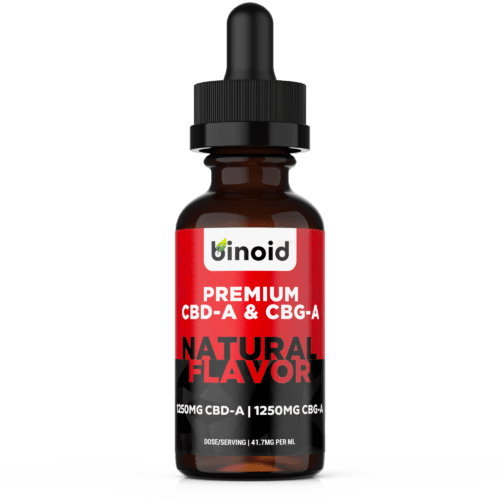
CBDA and CBGA Immunity Tincture – 2500mg
$33.99$79.99 -
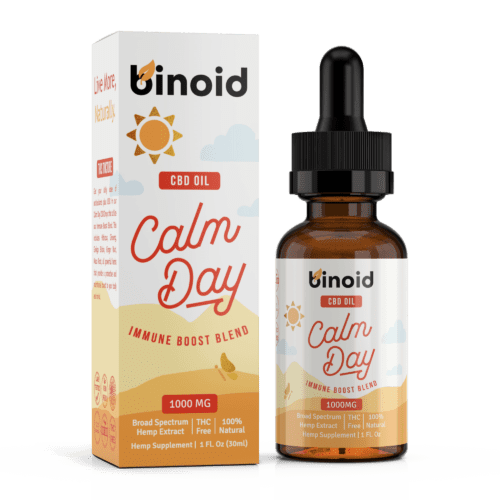
Binoid Calm Day CBD Oil – Immune Boost
$28.99$64.99 -
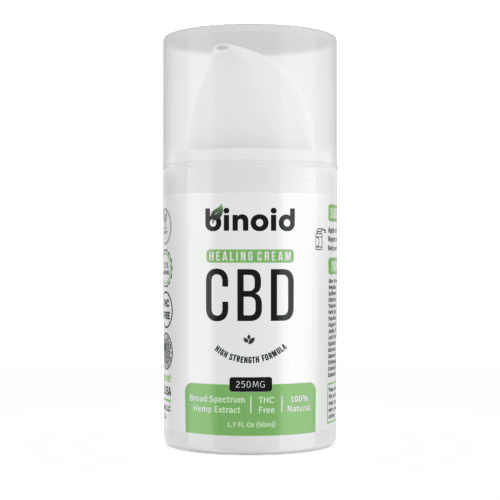
Binoid Healing Cream – High Strength
$29.99$54.99
Why This Distinction Actually Matters for Consumers
Understanding the CB1/CB2 distinction is not merely an exercise in satisfying curiosity it has genuinely practical implications for how a consumer thinks about product selection and formulation. A product formulated around cannabinoids with strong CB1 affinity Delta 9 THC, Delta 8 THC, THC-P is a product built around the central nervous system pathway responsible for the classic cannabis experience, and consumers should expect and evaluate those products on that basis.
A product built around CBD or other non-intoxicating cannabinoids operates through an entirely different, more diffuse signaling mechanism, which explains why consumers routinely describe CBD-forward products in qualitatively different language than they use for THC-forward products, even when both are marketed within the same broad cannabinoid wellness category.
This distinction also explains why formulation blending combining multiple cannabinoids in a single product, a practice discussed extensively across Binoid CBD‘s expanding multi-cannabinoid product lines is genuinely more sophisticated than simply mixing compounds for marketing novelty. A formulator who understands that THC-P amplifies CB1 activity differently than Delta 9 alone, or that CBN’s interaction with CB1 produces a qualitatively heavier character despite weaker binding affinity, is making deliberate pharmacological choices rather than arbitrary ones. This is the level of formulation literacy that separates a brand engaging seriously with cannabinoid science from one simply capitalizing on unfamiliar terminology to create a sense of sophistication the product doesn’t actually possess.
The Ongoing Research Frontier
The scientific understanding of CB1 and CB2 continues to evolve, and researchers have identified additional complexity beyond the original binary framework including evidence that CB1 and CB2 receptors may be present, at lower densities, in tissues outside their primary domains, and that the endocannabinoid system interacts with other physiological signaling networks in ways that are still being mapped. This ongoing research matters for consumers primarily because it underscores how young this field of study genuinely is relative to the speed at which the commercial cannabinoid market has developed. The receptor science provides a genuinely useful framework for understanding why different cannabinoids produce different experiences, but it is a framework still under active construction, and any brand or source claiming complete, settled certainty about the full scope of endocannabinoid signaling is overstating the current state of the science.
Putting the Framework to Use
For the consumer navigating an increasingly crowded and terminology-heavy cannabinoid marketplace, the practical takeaway is straightforward: CB1 governs the central nervous system pathway responsible for the psychoactive cannabis experience, and cannabinoids with strong CB1 affinity THC in its various forms are the compounds responsible for that familiar intoxicating profile. CB2 governs a largely separate, peripheral signaling pathway concentrated in immune tissue, operating through mechanisms unrelated to psychoactivity.
Compounds like CBD interact with the broader endocannabinoid system through pathways that bypass direct CB1/CB2 activation almost entirely. Understanding this framework transforms product labels from an alphabet soup of unfamiliar abbreviations into a coherent map of what a given formulation is actually designed to do a level of literacy that every serious cannabinoid consumer benefits from developing, and one that the most transparent brands in the space, including Binoid CBD, actively support through detailed, accessible product education rather than vague marketing shorthand.
TO BUY CANNABINOID PRODUCTS CLICK HERE
Recommended products
-
13,000mg Good Luck Gummies
$47.99$79.99 -
THCA Hash Rosin Dabs – 1000mg
$33.99$59.99 -
THCA Disposable 2 Gram – Gourmet Desserts
$37.99$73.00 -
Knockout Blend Tincture – 1000mg
$34.99$59.99