The Gummy That Started a Category
There is a specific kind of skepticism that greets anyone’s first encounter with a Delta 8 THC gummy, and it is entirely understandable. The claim sounds almost too convenient: a cannabinoid that delivers a genuine psychoactive experience, ships legally to your door, and arrives disguised as candy. But Delta 8 gummies did not become one of the most searched, most purchased categories in the hemp-derived cannabinoid space through hype alone.
They became a category-defining product because the chemistry actually works, the regulatory pathway is legitimate, and the format itself a precisely dosed, shelf-stable, flavor-forward edible solves nearly every practical objection that kept casual consumers away from cannabis for decades. Understanding what you are actually buying, how it is made, and what separates a well-formulated Delta 8 gummy from a mediocre one is the difference between an experience you’ll want to repeat and one that leaves you wondering what all the noise was about.
Delta 8 THC is a cannabinoid isomer of the more familiar Delta 9 THC, meaning the two molecules share an identical chemical formula but differ in the placement of a single double bond along the carbon chain. That seemingly minor structural distinction is responsible for a meaningfully different binding profile at the CB1 receptor, which is the primary reason consumers consistently describe Delta 8 as producing a milder, clearer-headed variation of the traditional Delta 9 experience.
It is not synthetic in the sense that alarmist headlines sometimes suggest; it occurs naturally in the cannabis plant, albeit in extremely low concentrations, which is why virtually every commercially available Delta 8 product on the market today is produced through an isomerization process that converts hemp-derived CBD into Delta 8 THC at commercially viable scale. This process, done correctly with proper purification and residual solvent removal, produces a clean, consistent distillate. Done poorly, it introduces byproducts and impurities that a rushed or under-capitalized manufacturer has no financial incentive to test for.
To Buy Delta 8 Gummies Click Here
Why the Gummy Format Changed Everything
Before Delta 8 gummies existed at scale, the hemp-derived cannabinoid market was dominated by tinctures and vape cartridges formats that, while effective, both carry friction points for the average consumer. Tinctures require measuring and have an earthy, sometimes bitter flavor profile that isn’t universally appealing. Vape cartridges require hardware, carry the stigma and health considerations associated with inhalation, and intimidate the person who has never held a vape pen in their life. Gummies eliminate nearly all of that friction in one stroke. They require no equipment, carry a flavor profile that is often genuinely delicious rather than merely tolerable, and critically arrive in a format where dosing consistency is baked into the manufacturing process rather than left to the consumer’s estimation.
That consistency, however, is only as good as the manufacturing standard behind it, and this is where the gummy market bifurcates sharply between serious operators and opportunistic ones. A well-made Delta 8 gummy begins with a homogenous distillate that has been evenly distributed throughout the entire gummy batch during the pouring and setting process, which sounds like a simple manufacturing step until you understand how easily it goes wrong.
Distillate is viscous and does not naturally disperse evenly through a gelatin or pectin base; without the right mixing technology and quality control checkpoints, you end up with a batch where some gummies carry double the labeled dose and others carry almost none. This is precisely why batch-specific third-party lab testing, verified through an ISO 17025-accredited facility, matters so much more for edibles than for almost any other cannabinoid format. Binoid CBD publishes exactly this kind of batch-level certificate of analysis for every gummy SKU available on Binoidcbd.com, which means the potency printed on the label is a number a consumer can actually verify rather than simply trust.
Reading the Label Like Someone Who Actually Knows What They’re Looking At
The specific numbers that matter most when evaluating a Delta 8 gummy are the milligram dose per piece, the total milligrams per package, and just as importantly the ratio of Delta 8 THC to any other cannabinoids that might be present in the formulation. Many premium gummies on the market today are not single-cannabinoid products; they incorporate small amounts of CBD, CBN, or other minor cannabinoids specifically to modulate the experience through what the industry refers to as the entourage effect, the theory that cannabinoids interacting together produce a more nuanced and often more balanced experience than any single compound in isolation.
A gummy that lists 25mg of Delta 8 alongside a small supporting dose of CBD is not diluting its potency it is often producing a smoother, more rounded experience that many consumers ultimately prefer to a Delta 8-only formulation, particularly for those newer to the cannabinoid space who want the psychoactive experience without the sharper edges that an unbalanced high dose can sometimes produce.
Ingredient quality deserves the same scrutiny as cannabinoid content. The base of a gummy whether it uses gelatin or a plant-based pectin affects texture, shelf life, and even how quickly the product is absorbed. Natural fruit flavoring and coloring, as opposed to artificial dyes and flavor compounds, is increasingly the standard among premium brands, both because consumers are more ingredient-conscious than they were even three years ago and because natural inputs tend to produce a more sophisticated, less cloying flavor profile. The gummies available through Binoid CBD reflect this shift in consumer expectation, built around clean ingredient panels that a discerning buyer can actually read and understand without a chemistry degree, paired with the kind of flavor development that makes the product genuinely enjoyable independent of its cannabinoid content.
Dosage, Tolerance, and the Art of Starting Low
One of the more persistent misconceptions among first-time Delta 8 gummy buyers is that “milder than Delta 9” means “start wherever you want.” This is a mistake that experienced consumers learn to avoid quickly, usually after learning it the hard way once. Edibles as a category behave differently than inhaled cannabinoids because they pass through the digestive system and undergo first-pass hepatic metabolism, during which the liver converts a portion of the compound into 11-hydroxy-THC a metabolite that is generally understood to produce a more intense and longer-lasting experience than the parent compound. This is true whether you’re consuming Delta 9 or Delta 8, and it’s the primary reason edible onset takes considerably longer than vaping (often ninety minutes or more) while also lasting substantially longer once it arrives.
The practical implication is straightforward: the consumer who takes a full 25mg or 50mg gummy, feels nothing after thirty minutes, and decides to take a second one is setting themselves up for an experience considerably more intense than intended once both doses arrive simultaneously. Patience is the single most valuable piece of equipment a Delta 8 gummy consumer can bring to the experience more valuable, honestly, than any specific product recommendation. Waiting the full window before deciding whether to take more is a discipline that separates consumers who consistently enjoy their experience from those who occasionally have a rough night they didn’t need to have. This guidance applies to lifestyle and recreational use only, and anyone with specific health considerations should approach any cannabinoid product thoughtfully and in consultation with a qualified professional.
The Legal Framework That Makes All of This Possible
Delta 8 THC‘s legal availability traces directly back to the 2018 Farm Bill, which defined hemp as cannabis containing no more than 0.3% Delta 9 THC by dry weight and, in doing so, federally legalized the broader hemp plant and its derivatives without explicitly addressing the dozens of minor cannabinoids that can be produced from hemp-derived CBD.
Delta 8 occupies this same legal space that has allowed the broader hemp cannabinoid market to flourish, though the regulatory picture is not static several states have independently restricted or banned Delta 8 regardless of its federal status, which means shipping compliance and geo-restriction protocols are a genuine operational requirement for any brand operating responsibly in this space. A brand that ships to a restricted state without checking is not cutting a corner in some abstract sense; it is exposing its customers to actual legal risk, which is exactly the kind of operational negligence that separates a brand worth trusting from one that is simply moving product as fast as possible.
Making the Decision That’s Actually Right for You
Choosing a Delta 8 gummy ultimately comes down to matching the product to your own experience level, flavor preferences, and desired intensity, and every one of those variables is easier to navigate correctly when the brand you’re buying from treats transparency as a baseline rather than a marketing angle. Look for a milligram dose that matches your tolerance rather than your curiosity, a certificate of analysis you can actually pull up and read, an ingredient panel free of anything you can’t identify, and a shipping policy that reflects genuine awareness of the state-by-state legal patchwork rather than a blanket disregard for it.
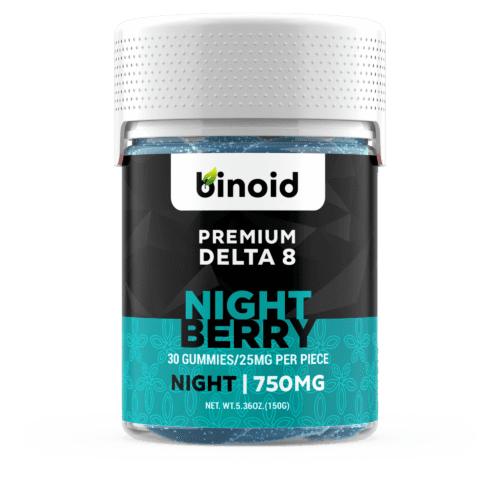
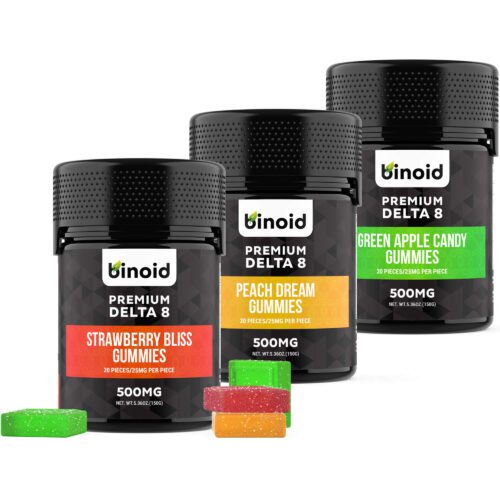
Binoid CBD‘s Delta 8 gummy lineup, available across Binoid, is built around exactly this framework batch-verified potency, clean formulation, and the kind of flavor development that makes the gummy worth eating even before you consider what it does. The gummy itself is simple. The standards behind it are what separate the ones worth buying from the ones that just happen to be for sale.
To Buy Delta 8 Gummies Click Here
Recommended products
-
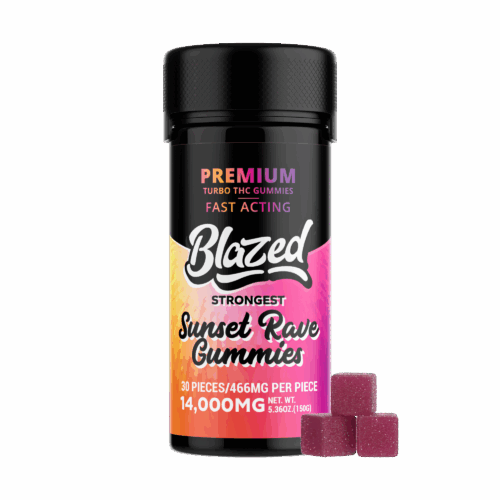
14,000MG Turbo THC Gummies – Blazed
$49.99$84.99 -
13,000mg Good Luck Gummies
$47.99$79.99 -
Delta 8 THC Gummies – Limited Edition
$33.99$38.99 -
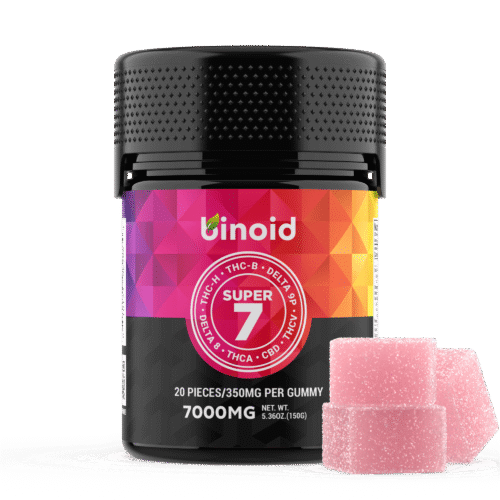
Super 7 Gummies – Summer Slush Series
$37.99$49.99