Somewhere in the last several years, a conversation that used to be entirely about a single molecule — THC, full stop — splintered into something far more granular, and far more interesting. Walk into any hemp retailer’s online catalog now and you’ll find Delta 8 THC and Delta 9 THC sitting side by side, sometimes in nearly identical packaging, priced similarly, marketed with overlapping language, and yet producing experiences that longtime users insist are meaningfully different from one another.
For the newcomer trying to figure out which one actually makes sense for them, the noise can be disorienting. Getting past that noise requires understanding two things: the actual molecular difference between these compounds, and the regulatory quirk that allows one of them to be sold nearly everywhere while the other remains tightly restricted in traditional markets.
To Buy Delta 8 THC Products Click Here
Recommended products
-
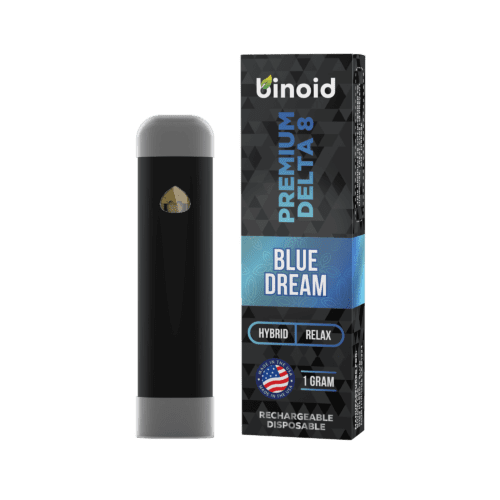
Delta 8 THC Rechargeable Disposable Vape
$26.99$54.99 -
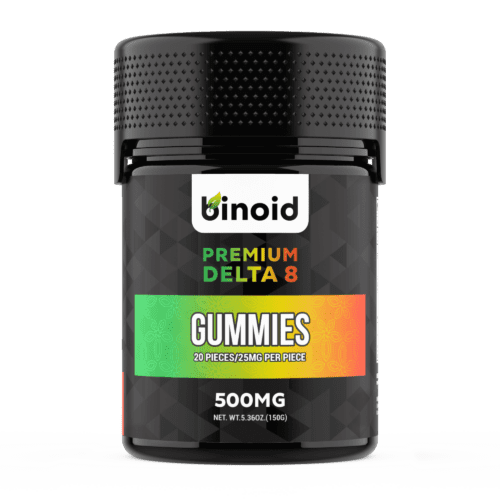
Delta 8 THC Gummies
$29.99$44.99 -
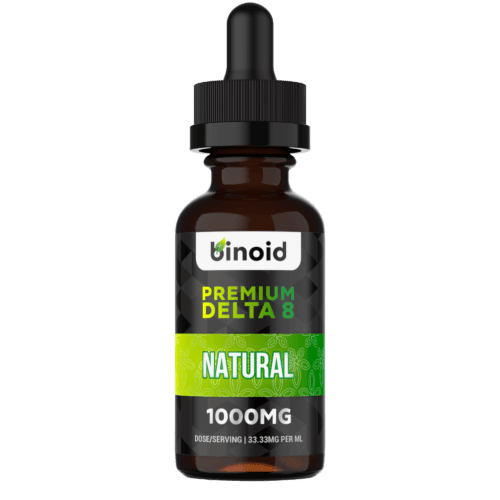
Delta 8 THC Tincture (1000mg, 2500mg, 5000mg)
$25.99$44.99 -
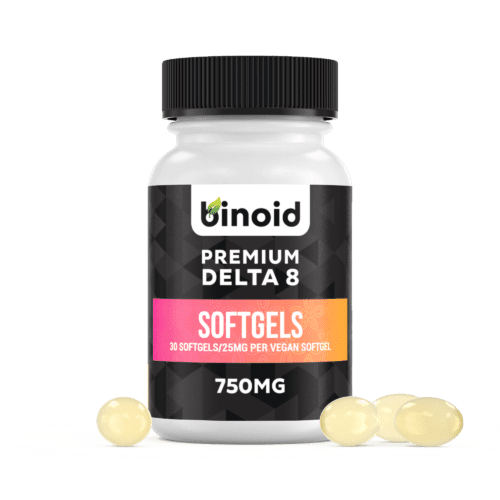
Delta 8 THC Softgel Capsules (300mg, 750mg)
$31.99$59.99
One Letter, One Double Bond, One Very Different Product Category
Delta 9 THC is the molecule most people mean when they say “THC” — it’s the primary intoxicating compound in traditional cannabis, the one dispensaries have built entire product lines around, and the one federal and state cannabis law has spent decades regulating. Delta 8 THC is a close chemical cousin, an isomer of Delta 9 that shares nearly the same molecular formula but differs in the placement of a single double bond along its carbon chain.
Delta 9 carries that bond on the ninth carbon; Delta 8 carries it on the eighth. It sounds like a trivial distinction, and at the level of a chemistry diagram it practically is, but that single positional shift changes how efficiently the molecule binds to CB1 receptors in the central nervous system, which in turn changes the character and intensity of the experience it produces.
Delta 8 occurs naturally in cannabis, but only in trace amounts — nowhere near enough to make large-scale extraction directly from the plant commercially viable. The Delta 8 THC found in the vast majority of hemp-derived products on the market today is produced through isomerization, a chemical process that converts CBD, which hemp produces in abundance, into Delta 8 through controlled reactions involving acid catalysts and precise temperature control.
This process demands a genuinely high-purity starting material and tight process control; sloppy isomerization can leave behind reaction byproducts and residual catalysts that responsible manufacturers are careful to purify out before a product ever reaches a consumer. It’s one of the more consequential production details in this category, and it’s part of why sourcing from a brand with rigorous quality control — the kind Binoid CBD has built into its entire manufacturing chain — actually matters rather than being a marketing footnote.
The Regulatory Fork in the Road
The reason Delta 8 dominates hemp retail shelves in states where Delta 9 THC products largely can’t be sold comes back, again, to the 2018 Farm Bill’s definition of legal hemp: cannabis containing no more than 0.3% Delta 9 THC by dry weight, with no explicit restriction on Delta 8 concentration. This left an opening that the hemp industry moved into quickly, producing Delta 8 products — gummies, vapes, tinctures, disposables — that could be sold and shipped nationally under the federal hemp framework, sidestepping the state-by-state licensing structure that governs traditional Delta 9 cannabis.
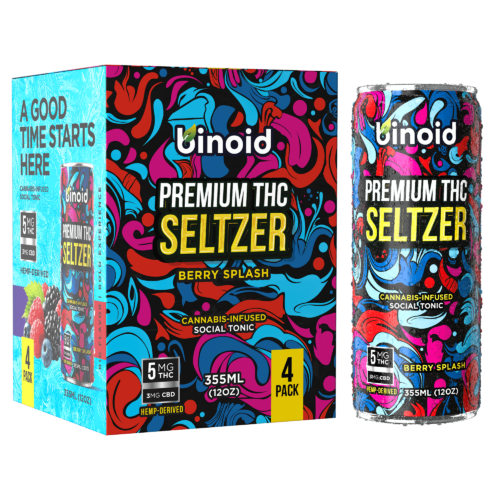
Delta 9 THC products, meanwhile, remain federally restricted above that 0.3% threshold, which is why Delta 9 THC gummies and beverages sold online are typically formulated to stay under that dry-weight limit, often relying on the fact that a beverage’s overwhelming water content keeps its dry-weight THC percentage low even when the beverage delivers a genuinely experiential dose.
This regulatory patchwork has grown more complicated, not less, over time. A number of states have moved to explicitly restrict or ban Delta 8 THC regardless of its federal hemp status, arguing that a synthetically converted intoxicating cannabinoid shouldn’t enjoy a regulatory loophole that traditional cannabis products don’t. Other states have left Delta 8 largely unaddressed, creating a landscape where a product perfectly legal to ship to one address might be legally restricted at another just a few states away. Any brand operating seriously in this space — and this is a standard Binoid CBD has maintained across its Delta 8 and Delta 9 lines — has to maintain dynamic compliance monitoring and geo-restrict shipping accordingly, which is considerably more demanding than it sounds and is exactly the kind of infrastructure investment that separates established operators from fly-by-night sellers.
What the Experience Actually Feels Like
Ask around in online cannabis communities and you’ll find a fairly consistent pattern in how people describe the experiential difference between these two molecules, even though both are, at the end of the day, THC. Delta 9 THC tends to produce what most users would recognize as the classic cannabis experience: a more pronounced cerebral lift, heightened sensory engagement, and — particularly at higher doses — the potential for anxiety or racing thoughts in users who are sensitive to that kind of intensity.
Delta 8, by contrast, is frequently described as gentler and more clear-headed, producing a milder body-forward relaxation with less of the cognitive intensity that sometimes accompanies Delta 9. The generally accepted explanation is that Delta 8’s altered molecular geometry makes it a less efficient CB1 agonist than Delta 9, meaning it takes more of the compound, gram for gram, to produce a comparable level of intoxication — which is part of why Delta 8 products are often formulated at higher milligram doses than their Delta 9 counterparts.
None of this amounts to a claim that one molecule is objectively “better” than the other; it’s genuinely a matter of what a given user is looking for in a given moment. Someone managing a demanding workday who wants a lighter, more functional experience might gravitate toward Delta 8, while someone looking for a more intense, traditional cannabis experience on a Friday night might reach for Delta 9. Factors like individual tolerance, consumption method, and the broader terpene profile of the specific formulation all shape the outcome as well, which is why experienced consumers tend to treat both molecules as tools in a broader toolkit rather than committing exclusively to one or the other.
Format Considerations Worth Knowing
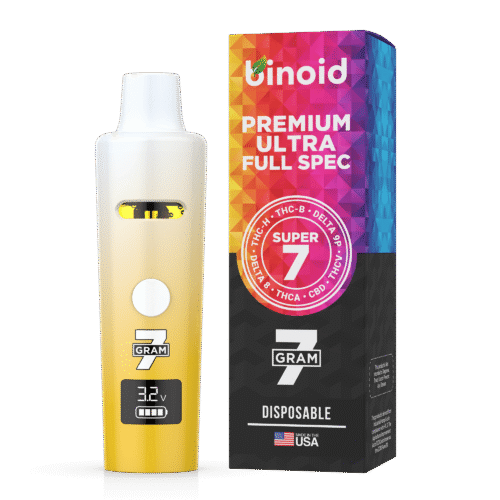
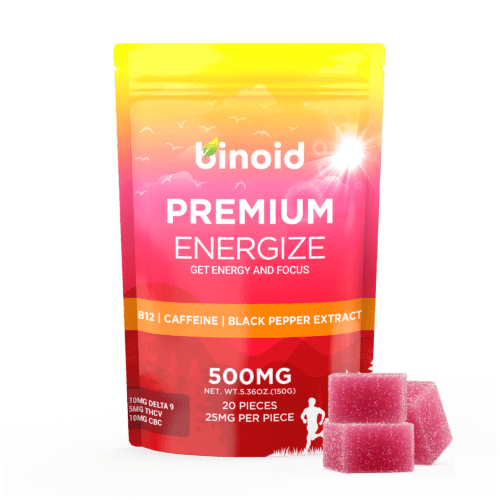
Both cannabinoids show up across the same general product categories — gummies, tinctures, vape cartridges, disposables, and increasingly beverages — but the format you choose interacts meaningfully with which molecule you’re consuming. Edibles processed through first-pass hepatic metabolism convert a portion of ingested THC, whether Delta 8 or Delta 9, into 11-hydroxy-THC, a metabolite that’s more potent and longer-lasting than the parent compound, which is part of why edible onset feels slower but ultimately heavier than inhaled formats. Vape cartridges and disposables, by contrast, bypass that metabolic pathway almost entirely, delivering effects that onset faster and resolve more quickly. This distinction matters regardless of which THC isomer you’re using, but it’s worth understanding before choosing a format, since a Delta 9 edible and a Delta 8 vape can produce meaningfully different timelines even at comparable doses.
Binoid CBD‘s catalog spans both molecules across essentially every major format, which is useful specifically because it lets a consumer compare experiences within a controlled, consistent manufacturing standard rather than trying to judge Delta 8 from one brand against Delta 9 from a completely different one — a comparison that tells you as much about manufacturing quality as it does about the molecules themselves. As with any hemp-derived cannabinoid purchase, checking for a current, batch-specific Certificate of Analysis from an ISO 17025-accredited lab remains the single most reliable way to confirm that a product’s potency claims and purity standards actually hold up.
Making the Call
There’s no universally correct answer to the Delta 8 versus Delta 9 question, because the right choice depends entirely on what kind of experience a given consumer is after, how sensitive they are to THC’s more intense effects, and what’s legally available where they live. What’s genuinely useful is understanding that the difference between these two molecules isn’t marketing spin — it’s a real, measurable structural distinction with real consequences for how each compound behaves at the receptor level.
A consumer who understands that distinction, checks lab documentation before buying, and sources from a brand maintaining consistent quality standards across both product lines — the kind of consistency Binoid CBD has built its reputation on — is in a genuinely strong position to figure out, through direct experience, which molecule actually fits the life they’re trying to build around it.
To Buy Delta 9 THC Products Click Here
Recommended products
-
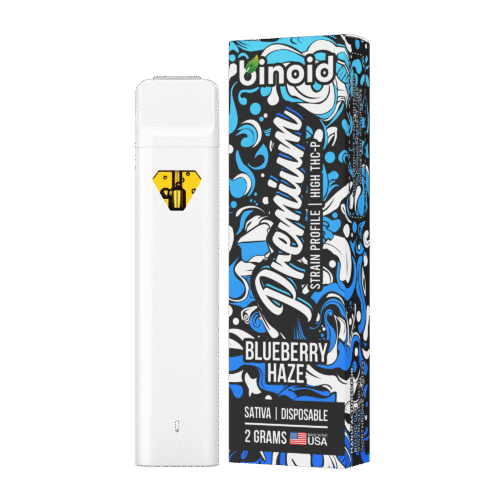
High THC-P 2 Gram Disposable Vape – Strain Series
$41.99$73.99 -
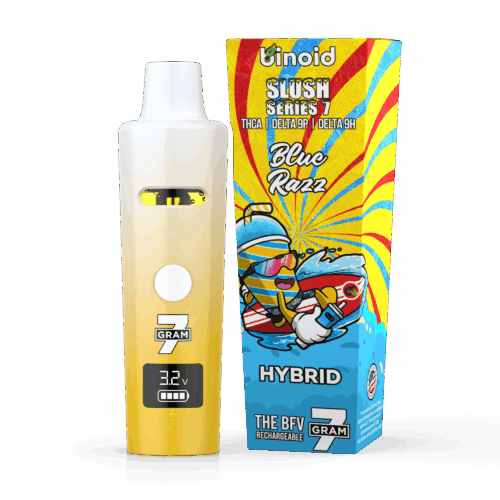
7 Gram THCA Disposable Vape – Slush Series
$59.99$99.99 -
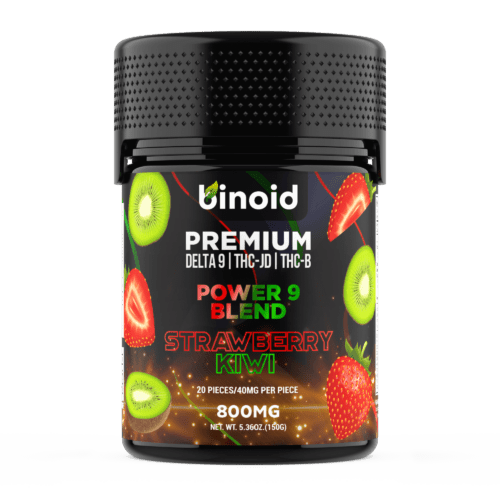
Power 9 Blend Gummies
$36.99$59.99