The Part of the Label Nobody Reads
Every hemp-derived product you have ever held, whether a gummy, a tinctures, a cartridge, or a can, began its life as a plant and then underwent an act of industrial translation. Somewhere between the field and the finished product, the compounds that matter were separated from the green mass that carried them, and the method of that separation quietly determined nearly everything that followed. Consumers fixate on flavor, potency, and packaging, all of which are downstream consequences of that single early decision. The extraction method is the gatekeeper of quality, and it is almost never discussed with the seriousness it deserves.
The reason for the silence is partly practical. Extraction is a loud, expensive, technical process that happens in facilities most customers will never see, and brands have little incentive to explain a step that is difficult to romanticize. Yet among the many ways to pull cannabinoids from hemp biomass, one has earned a reputation as the benchmark for serious manufacturers, and understanding why requires a short tour through some surprisingly elegant physics. That method is supercritical CO2 extraction, and it is the reason a well-made hemp product can taste clean, test clean, and behave consistently from one batch to the next.
This article is a guide to how that process works, why it produces the results it does, and how to recognize the fingerprints of a brand that has invested in doing it properly. We will keep the focus on molecular science and the consumer experience, because the chemistry is more interesting than the marketing and far more useful when you are deciding where to spend your money. By the end, the phrase “CO2 extracted” should read to you less like a sticker and more like a claim you know how to interrogate.
TO BUY THC PRODUCTS CLICK HERE
Recommended products
-
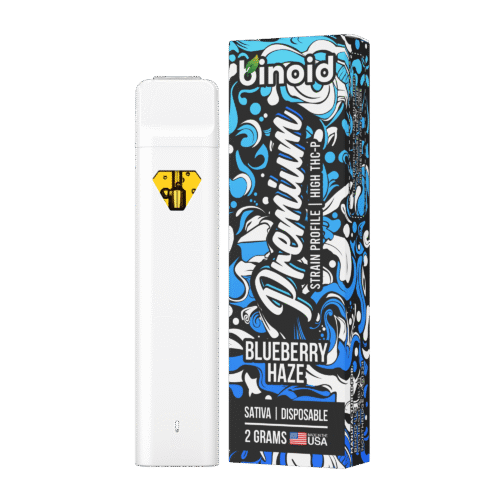
High THC-P 2 Gram Disposable Vape – Strain Series
$41.99$73.99 -
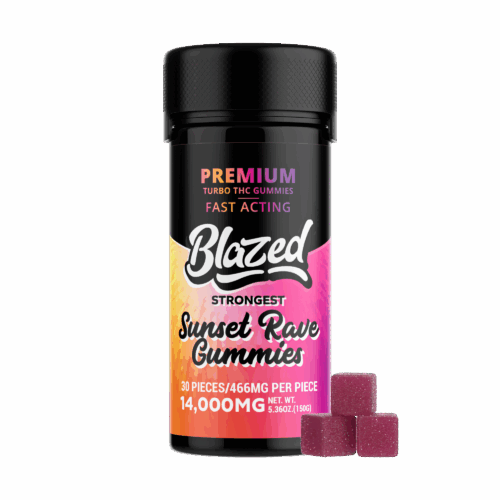
14,000MG Turbo THC Gummies – Blazed
$49.99$84.99 -
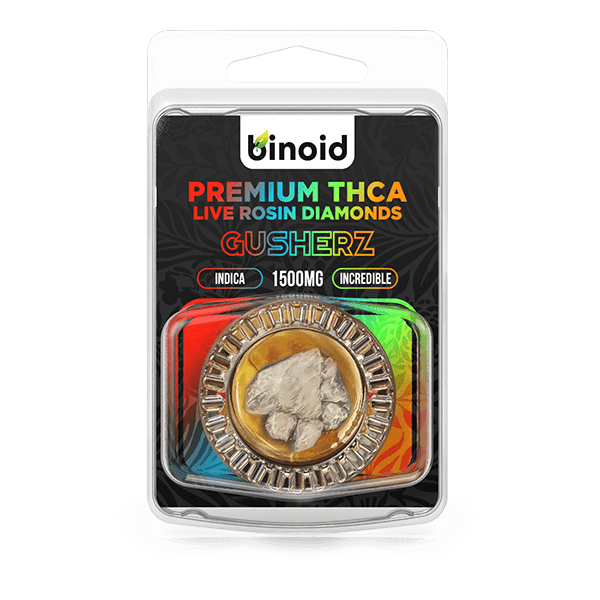
THCA Diamonds 1500mg – Live Rosin
$30.99$59.99 -
Delta 8 THC Tincture (1000mg, 2500mg, 5000mg)
$25.99$44.99
When a Gas Behaves Like a Liquid
Carbon dioxide is familiar to everyone as the fizz in a seltzer and the exhale of every living thing, and it is not an obvious candidate for an industrial solvent. At ordinary temperature and pressure it is simply a gas, drifting away from anything it touches. But push it past its critical point, roughly 31 degrees Celsius and about 74 times atmospheric pressure, and CO2 enters a strange fourth condition that is neither gas nor liquid. In this supercritical state, it moves through solid material with the diffusive ease of a gas while dissolving compounds with the muscle of a liquid, a combination that makes it astonishingly good at pulling delicate molecules out of dense plant matter.
The practical beauty of this state is that it is controllable. A supercritical fluid does not have one fixed personality; its density, and therefore its solvent strength, can be tuned by adjusting pressure and temperature, sometimes within a few degrees or a few dozen pounds per square inch. An operator who lowers the pressure gets a gentle solvent that favors light, volatile aromatics, while an operator who raises it gets a stronger one that coaxes out heavier cannabinoids and waxes. This tunability is what separates the craft from the brute force, because it allows a skilled technician to decide, with real precision, which parts of the plant to harvest and which to leave behind.
It also explains why the equipment is so costly and the expertise so scarce. Containing a fluid at these pressures requires vessels engineered to exacting standards, pumps that run continuously without contamination, and control systems sophisticated enough to hold narrow parameters across a long run. A facility that has made this investment has made a statement about its seriousness, which is why the extraction method is one of the more honest signals a consumer can use to separate a manufacturer from a mere assembler of purchased ingredients.
Inside the Run: From Biomass to Crude Extract
A typical extraction begins with carefully prepared hemp biomass, dried to a specific moisture level and ground to a consistent particle size so that the solvent can move through it evenly. The material is packed into an extraction vessel, and pressurized CO2 is pumped through it at a measured temperature, dissolving cannabinoids and terpenes as it passes. The loaded solvent then travels to a separator, where pressure is released and the CO2 relaxes back into a gas, losing its dissolving power and dropping the extracted compounds as a thick, amber-green crude oil. The gas is then captured, cooled, recompressed, and sent through the loop again, which makes the whole system a closed circuit rather than an open drain.
That closed loop matters for reasons that go beyond efficiency. Because the solvent is recycled inside a sealed system, there is little opportunity for outside contaminants to enter and little waste leaving, which is a cleaner operating profile than methods that depend on flammable liquids and large volumes of venting. Many operators also run multiple stages in sequence, collecting a first fraction rich in terpenes and a second fraction rich in cannabinoids, so that the aromatic compounds can later be returned to a finished formulation. Terpenes are the volatile architecture of flavor, and a process that handles them gently can preserve a great deal of what the plant originally smelled like.
What emerges from this stage is crude extract, which is potent but far from finished. It still carries plant waxes, lipids, and pigments, and it has not yet been decarboxylated, meaning much of its cannabinoid content remains in acidic form. Everything that happens next is refinement, and the quality of that refinement depends heavily on how clean the crude was to begin with, a principle that echoes through the rest of the supply chain.
Recommended products
-
13,000mg Good Luck Gummies
$47.99$79.99 -
THCA Crumble – 2500mg
$37.99$59.99 -
Blazed 7 Gram THCA + Delta 9P Disposable Vape
$65.99$109.99 -
Super 7 Tincture – 7000mg
$39.99$59.99

The Solvent That Leaves Without a Trace
The most compelling argument for CO2 is what it does not leave behind. Other common extraction approaches rely on hydrocarbons such as butane or propane, or on ethanol, and each can produce excellent results in the right hands. But each also introduces a solvent that must be purged afterward, and the purge is never theoretically perfect. Residual solvents are a standard line item on any serious laboratory report precisely because they are a real risk in the category, and a process that begins without them has an inherent advantage.
CO2, by contrast, simply becomes a gas again when pressure is released, and the extract is left essentially free of solvent residue by the nature of the physics rather than by the diligence of a purge step. That does not make it magic, and a careless operator can still make a poor THC product with a perfect solvent. What it does mean is that one entire category of potential failure has been engineered out of the process before the product ever reaches a laboratory, and that is the kind of structural advantage savvy consumers should value.
There is a tradeoff worth acknowledging with intellectual honesty. Supercritical CO2 extraction is slower and more capital-intensive than its alternatives, which is why it tends to appear in the manufacturing of products priced for people who care about quality rather than in the cheapest corners of the market. The investment is substantial, the throughput is measured, and the operators who choose it are making a long bet that discerning customers will notice and reward the difference. In a category crowded with shortcuts, that bet tells you something about the company making it.
From Crude Oil to Finished Distillate
Crude extract becomes a usable ingredient through a sequence of refinement steps that each leave their own mark. Winterization chills the extract in the presence of a solvent to precipitate waxes and lipids, which are then filtered out, leaving a clearer and smoother oil. Decarboxylation applies controlled heat to convert acidic cannabinoids into their active forms, the same reaction that happens in a flame or an oven when raw flower is consumed. The refined oil then passes through short-path distillation, where carefully managed heat and vacuum separate cannabinoids from remaining impurities and yield the pale, viscous distillate that fills cartridges and flavors gummies.
For the newer generation of hemp-derived cannabinoids, there is another chapter. The conversion chemistry used to create compounds such as Delta 8, Delta 10, THC-P, and THC-H from hemp-derived precursors depends on a starting material that is as pure as possible, because reaction chemistry amplifies whatever it is given. Impurities in the source oil can propagate through the reaction and complicate the resulting distillate, and no amount of later polishing fully restores what a clean beginning would have provided. This is why serious manufacturers treat extraction not as an isolated step but as the first domino in a long and unforgiving chain.
The cumulative effect is something consumers feel without being able to name. A distillate built from a clean extraction tends to deliver the flavor, consistency, and smoothness that people describe as quality, while a distillate built from compromised starting material tends to feel flat or harsh. Nobody in a tasting notes conversation says “the extraction was well managed,” but they notice when it was not.
Recommended products
-
Super 7 Gummies – Summer Slush Series
$37.99$49.99 -
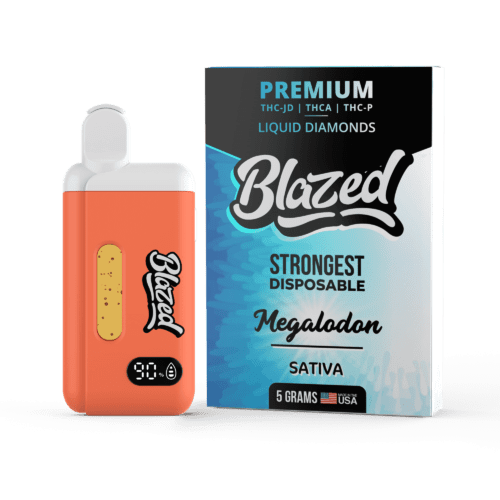
5 Gram Disposable – Blazed
$51.99$79.99 -
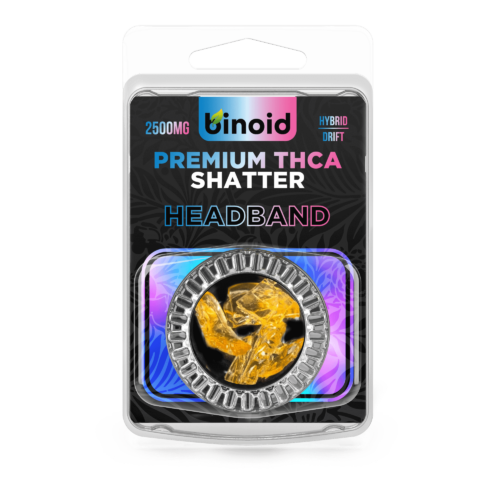
THCA Shatter – 2500mg
$37.99$59.99 -
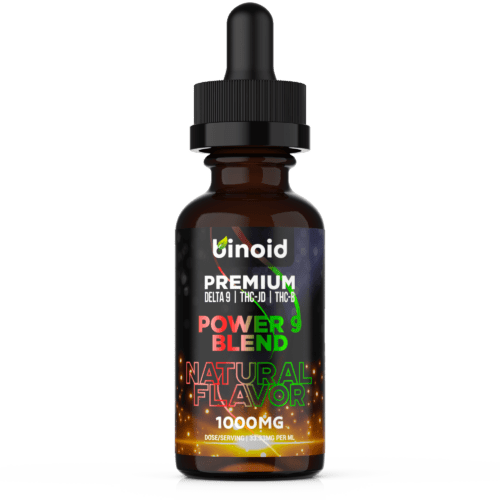
Power 9 Blend Tincture – 1000mg
$34.99$59.99

The Plant Still Matters
It would be convenient if a perfect machine could rescue any biomass, but the physics does not work that way. Hemp is a well-documented bioaccumulator, meaning it absorbs whatever its soil and water offer, including metals and agricultural residues, and an extraction process concentrates the cannabinoids it targets along with some of what travels with them. A brilliant extraction run on poorly grown biomass is still a compromised product, which is why the origin of the hemp and the method of extraction have to be evaluated together rather than as separate virtues.
This is also where the regulatory background becomes relevant. The 2018 Farm Bill established the federal framework for hemp cultivation, and domestic licensed growers operate under state and federal oversight governing testing, record keeping, and compliance. That infrastructure does not guarantee excellence, but it creates accountability, and accountability is the soil in which quality control grows. A manufacturer that sources domestically, extracts with supercritical CO2, and then verifies the result through independent testing has built a chain in which each link supports the next, and that is the architecture BinoidCBD has chosen to build its catalog around.
The inverse is equally instructive. A brand that buys finished extract from a supplier it cannot inspect inherits whatever decisions that supplier made, with no ability to verify them beyond the paperwork. The distance between a company that controls its process and one that merely resells it is invisible on a shelf but unmistakable in a laboratory report.
What a Certificate of Analysis Can Tell You About Extraction
Because you cannot visit the facility, the certificate of analysis becomes your window into the process. A proper COA from an independent laboratory accredited to ISO 17025 lists cannabinoid concentrations, and it also reports the results of residual solvent screening, heavy metal analysis, pesticide testing, and microbial safety panels. Each of those sections is, in effect, a verdict on a specific stage of production, and a clean sweep across all of them is difficult to fake and expensive to achieve.
Reading one with intention means looking at who issued it, when, and for which batch. Reports that are batch-specific, current, and accessible without friction are the mark of a brand that treats testing as a conversation with its customers. Reports that are generic, outdated, or hidden behind a request form suggest the opposite. At Binoidcbd, batch-specific lab documentation is available across the product range, which turns the abstract promise of quality into something a reader can verify in a few minutes.
It is also worth noticing what a COA cannot tell you. It cannot tell you how a product will feel, how a flavor will land, or whether the formulation suits your preferences, and it is not a substitute for sensible, responsible use. What it can do is establish a floor of trust, and in a market where that floor is not guaranteed, establishing it is the most valuable thing a document can do.
A Decision Framework for the Discerning Buyer
When you evaluate a hemp product, begin with the question of process rather than the question of price. Ask how the extract was made, and treat vague answers as answers. A brand that can describe its use of supercritical CO2 extraction, explain why it chose that method, and point to laboratory results that support the claim is operating with a confidence that unprepared competitors cannot imitate. A brand that deflects, or that substitutes adjectives for specifics, has told you what you need to know.
Next, connect the process to the paper trail. Look for batch-specific COAs from accredited laboratories, check that the solvent and contaminant panels are included and clean, and confirm that the cannabinoid content matches the label. This takes minutes and shifts the relationship from faith to evidence. It also teaches you what normal looks like, which makes every future comparison sharper and every marketing claim easier to weigh.
Finally, remember that quality is cumulative. Origin, extraction, refinement, formulation, and testing each contribute, and the strongest brands are the ones that take every link seriously. Shopping with that mindset, and favoring retailers like Binoid CBD that publish their verification openly, is the surest way to turn a confusing marketplace into a navigable one. The pressure cooker does its quiet work long before you ever open a package, and the least you can do is choose products made by people who respect it.
TO BUY THC PRODUCTS CLICK HERE
Recommended products
-
THCA Hash Rosin Dabs – 1000mg
$33.99$59.99 -
Delta 9 +THCV Gummies- Uplift/Unwind
$29.99$49.99 -
7 Gram THCA + High THC-P Disposable Vape – Limited Series
$67.99$109.99 -
Knockout Blend Tincture – 1000mg
$34.99$59.99