There is a particular kind of question that arrives in cannabinoid forums, DM threads, and customer service inboxes with almost ritualistic regularity, and it usually takes some version of this form: which one hits harder? It is a fair question, and also a slightly more complicated one than it first appears, because “stronger” in the context of a multi-cannabinoid blend is not a single number on a label — it is a composite experience shaped by formulation architecture, receptor interaction, onset curve, and the specific way a blend’s ingredients interact with one another. Binoid CBD‘s Knockout Blend and Beast Mode Blend occupy adjacent but distinct positions in this conversation, and understanding what separates them requires a genuine look under the hood rather than a simple potency comparison.
To Buy Knockout Blends Products Click Here
Recommended products
-
Knockout Blend Gummies
$34.99$59.99 -
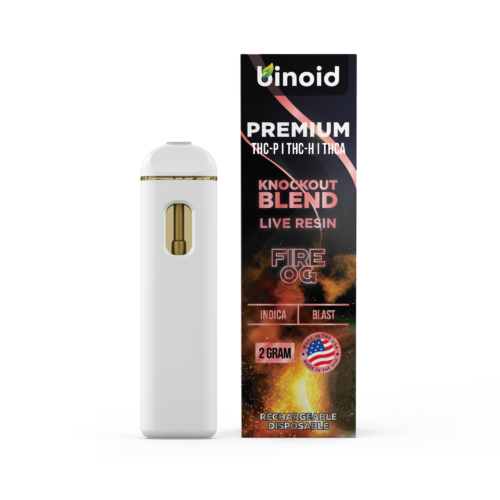
Knockout Blend Live Resin Disposable Bundle – 2 Gram
$59.99$99.99 -
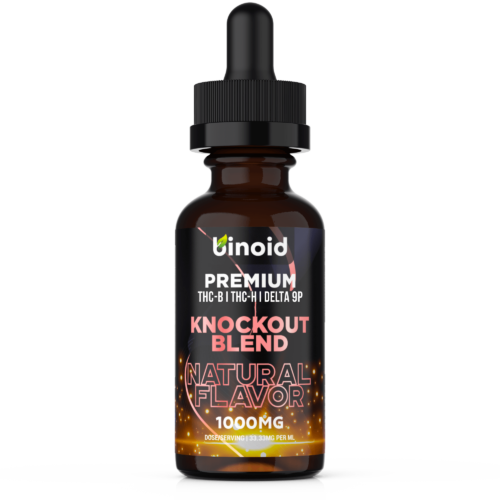
Knockout Blend Tincture – 1000mg
$34.99$59.99 -
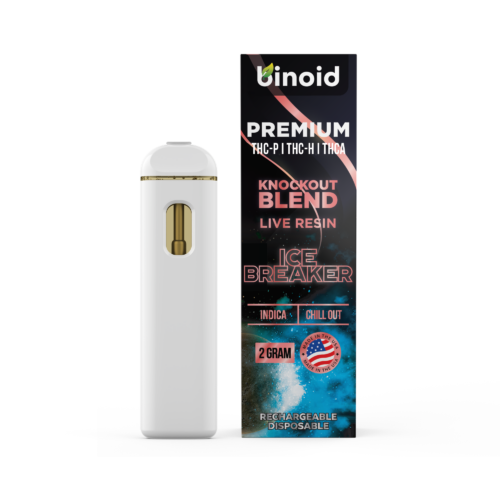
Ice Breaker Knockout Blend Live Resin Disposable – 2 Gram
$33.99$59.99


The Premise Behind Blended Cannabinoid Formulas
Before comparing the two head-to-head, it is worth pausing on why blended cannabinoid formulas exist at all, because the logic behind them is more interesting than “more is more.” A single-cannabinoid product — a pure Delta 9 gummy, say, or an isolated Delta 8 tincture — delivers a relatively predictable, well-mapped experience, because the compound is interacting with the endocannabinoid system in a way that researchers and experienced consumers have documented extensively.
A blended formula, by contrast, is built on the premise of the entourage effect: the theory, increasingly supported by both anecdotal consumer experience and emerging research interest, that cannabinoids and terpenes interact synergistically, modulating and, in some cases, amplifying one another’s effects when consumed together rather than in isolation. This is not simply a matter of stacking potency on top of potency. It is closer to composing a chord rather than playing a single note — the goal is a resonance that a single compound, however potent, cannot achieve alone.
Binoid CBD has built both Knockout Blend and Beast Mode Blend around this compositional philosophy, but with meaningfully different architectures, different target experiences, and — critically for anyone weighing the two — different answers to the question of what “strength” actually means in practice. Getting this comparison right requires resisting the temptation to reduce either product to a single potency figure and instead examining how each formula is constructed and what kind of experience that construction is designed to produce.
Knockout Blend: Precision Engineered for Deep Sedation
Knockout Blend, as its name rather bluntly suggests, is formulated with an emphasis on sedative depth — a blend architecture designed around cannabinoids and complementary compounds selected specifically for their capacity to produce a heavy, body-forward, deeply relaxing experience. The formulation philosophy here leans into compounds and ratios associated with pronounced physical sedation rather than the more cerebral, energetic, or euphoric registers that other blends target. This is a product built for a specific occasion and a specific kind of consumer: the person whose ideal outcome is a profound, unhurried wind-down, the kind of experience that pairs naturally with the end of a long day, a weekend with genuinely nothing on the agenda, or any context where the goal is to be thoroughly, unapologetically horizontal.
What makes Knockout Blend interesting from a formulation standpoint is the deliberate restraint in its complexity relative to a product like Beast Mode. Rather than layering in compounds selected for stimulating or euphoric qualities, the blend concentrates its architecture around achieving a specific sedative depth with consistency and reliability. This specificity is, in its own way, a form of strength — not the loud, multidirectional intensity of a blend trying to do everything at once, but the concentrated potency of a formula that has been engineered toward a single, well-defined outcome and executed with precision. Consumers who gravitate toward Knockout Blend tend to describe the experience in terms of depth and heaviness rather than intensity or euphoria, and that distinction matters enormously when evaluating which product is genuinely “stronger” for a given person’s goals.
Recommended products
Beast Mode: Multi-Directional Intensity Built for Peak Experience
Beast Mode Blend, by contrast, is architected around a broader, more multi-directional intensity — a blend designed to deliver a more expansive, high-octane experience that spans euphoria, energy, and a more cerebral elevation alongside its physical effects. Where Knockout Blend narrows its focus toward a single, deep sedative outcome, Beast Mode widens its ambitions, stacking a more complex cannabinoid architecture designed to produce a fuller-spectrum peak experience — the kind of formula built for a consumer who wants their THC experience to feel expansive rather than narrowing, energizing in certain phases rather than uniformly sedating.
This broader architecture is where the “which one is stronger” question gets genuinely interesting, because Beast Mode’s strength manifests differently than Knockout Blend’s. Rather than a singular, deepening heaviness, Beast Mode tends to produce a more layered, evolving experience — an onset that can feel more immediately noticeable and multidimensional, with effects that shift and develop across the duration of the experience rather than settling into a single steady state. Consumers who have tried both blends often describe Beast Mode as feeling more “loud” in its early effects, with a more pronounced cerebral component, while Knockout Blend feels quieter in onset but ultimately heavier in its resolution. Neither description is more or less “strong” in an objective sense — they represent different vectors of intensity, and the right answer depends entirely on which vector a given consumer is actually seeking.
The Format and Dosing Variable Nobody Talks About Enough
Any honest comparison between Knockout Blend and Beast Mode Blend has to acknowledge a factor that gets consistently underweighted in casual strength comparisons: format and individual dosing matter as much as formulation architecture. A gummy processed through first-pass hepatic metabolism will produce a meaningfully different onset curve and peak intensity than a fast-acting format, even when the underlying cannabinoid blend is identical. The liver’s conversion of THC into 11-hydroxy-THC during digestive metabolism tends to produce a more potent, more sedating metabolite than the parent compound, which means that edible formats of either Knockout Blend or Beast Mode will generally feel heavier and more prolonged than a comparably dosed vape or fast-dissolving format of the same blend.
This is why any strength comparison between the two products needs to control, at least conceptually, for format and dose before drawing conclusions. A first-time consumer trying a modest dose of Beast Mode in vape form and comparing the experience to a full-dose Knockout Blend gummy consumed on an empty stomach is not really comparing the blends themselves — they are comparing two entirely different pharmacokinetic pathways layered on top of the underlying formulations. Binoid CBD‘s own product education, available across the detailed listings at Binoid CBD, consistently emphasizes starting with a modest dose regardless of which blend a consumer chooses, precisely because individual tolerance, metabolism, body composition, and prior cannabinoid experience introduce more variability into the felt experience than the formulation differences between the two blends themselves.
Terpenes, Entourage, and the Parts of the Formula That Don’t Show Up on a Potency Chart
A significant portion of what differentiates the felt experience of Knockout Blend from Beast Mode lives outside the raw cannabinoid percentages entirely, in the terpene profiles each formula is built around. Terpenes are not merely aromatic — they are pharmacologically active compounds in their own right, and the specific terpene architecture layered into a blend meaningfully shapes whether the resulting experience skews sedative or energizing, relaxed or euphoric.
A blend rich in myrcene and linalool, terpenes associated in consumer and preliminary research literature with more sedating, calming profiles, will tend to reinforce a formula’s relaxing qualities, while a terpene profile weighted toward limonene or pinene tends to complement a more energizing, uplifting architecture. This is part of why raw cannabinoids milligram counts alone are a genuinely poor proxy for comparing the strength of two different blends — the terpene supporting cast is doing real work in shaping the final character of the experience, and it is precisely the kind of nuance that separates a thoughtfully engineered blend from one assembled purely around headline potency numbers.
Binoid CBD‘s formulation team has leaned into this reality rather than ignoring it, building both Knockout Blend and Beast Mode around terpene architectures specifically selected to reinforce and complete the intended experience rather than treating terpenes as an afterthought bolted onto a cannabinoid framework designed in isolation. This is the kind of formulation depth that becomes apparent only when you actually use both products side by side rather than comparing them on paper, and it is one of the clearer signals that a brand is engaged in genuine product development rather than simply remixing the same base distillate under different names.
Making the Call: Which Blend Is Actually Right for You
So which one is stronger? The honest answer is that Knockout Blend and Beast Mode are not competing on the same axis, which makes a direct potency ranking somewhat beside the point. Knockout Blend is the more intensely sedating of the two when sedation is the metric that matters — a formula built with focused precision toward deep physical relaxation and a heavy, unhurried resolution. Beast Mode is the more intensely multidimensional of the two when the metric is expansive, energizing, euphoric range — a formula built for consumers seeking a fuller-spectrum peak experience rather than a singular descent into relaxation. Neither is objectively the “stronger” product in a vacuum; each is engineered to dominate a different register of the cannabinoid experience, and the right choice depends entirely on what a given evening, occasion, or mood is actually calling for.
For the consumer trying to decide between the two, the most useful framework is occasion-first rather than potency-first: reach for Knockout Blend when the goal is total, unhurried wind-down and reach for Beast Mode when the goal is a livelier, more expansive experience with room for euphoria and energy alongside relaxation. Both formulas are backed by the same batch-specific certificate of analysis documentation and ISO 17025-accredited lab verification that defines the full Binoid CBD catalog, which means the choice between them can be made purely on experiential preference rather than any lingering uncertainty about quality or consistency. Whichever direction a consumer leans, the deeper lesson here is one worth carrying into every future blend comparison across Binoid CBD’s expanding product lineup: strength is not a single number, and the most sophisticated cannabinoid consumers are the ones who have learned to ask which kind of strength they are actually looking for.
To Buy Beast Mode Blend Products Click Here
Recommended products
-
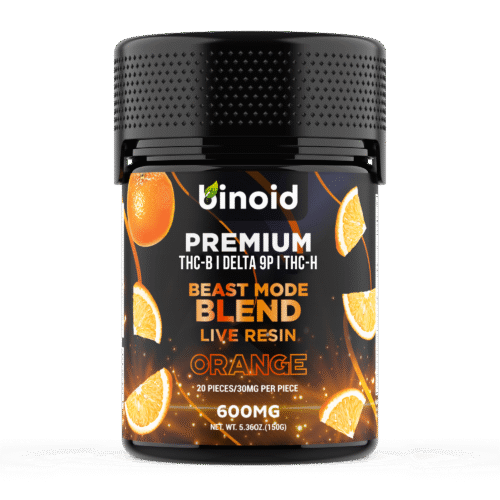
Beast Mode Blend Gummies
$32.99$59.99 -
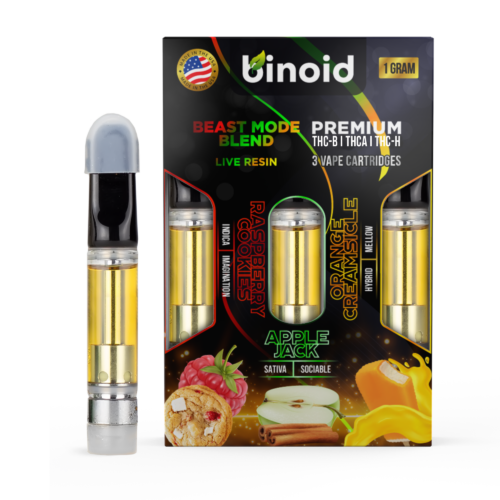
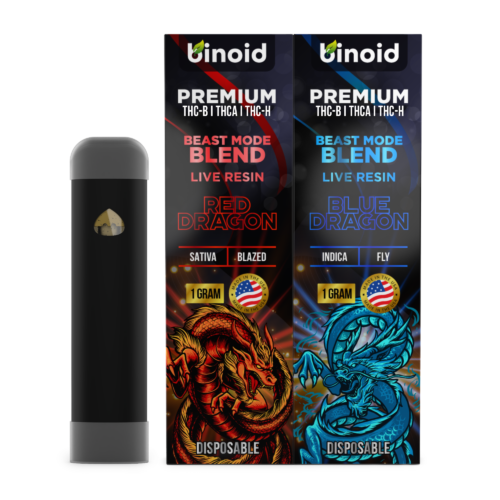
Beast Mode Blend Live Resin Cartridge – 3 Pack Combo
$54.99$89.99 -
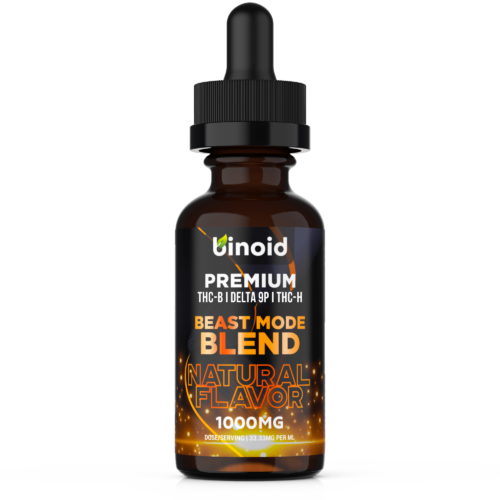
Beast Mode Blend Tincture – 1000mg
$34.99$59.99 -
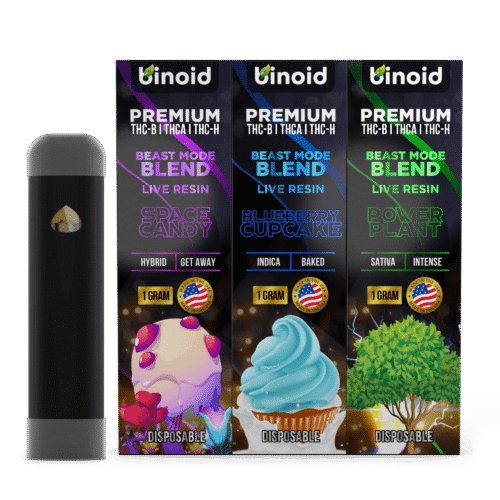
Beast Mode Blend Live Resin Disposable – 3 Pack Combo
$65.99$89.99