There is a particular kind of decision paralysis that sets in when a cannabinoid consumer graduates from single-compound products into the world of proprietary blends, and anyone who has stood in front of their laptop scrolling between two beautifully formulated multi-cannabinoid stacks knows exactly the feeling being described. On one side sits Super 7, Binoid’s flagship blend architecture, built around a philosophy of layered complexity and calibrated intensity. On the other sits Power 9, a newer and more aggressively engineered stack designed for consumers who have already built tolerance and are chasing a different kind of experiential ceiling.
Both are proprietary cannabinoid blends. Both lean on the same underlying pharmacological principle that has quietly reshaped the entire hemp-derived cannabinoid category over the past several years. And both are available, with full batch-specific lab documentation, through Binoid CBD. But they are not interchangeable, and understanding the distinction between them is the difference between a purchase that matches your intentions and one that leaves you either underwhelmed or, worse, in over your head.
To Buy Super 7 Products Click Here
Recommended products
-
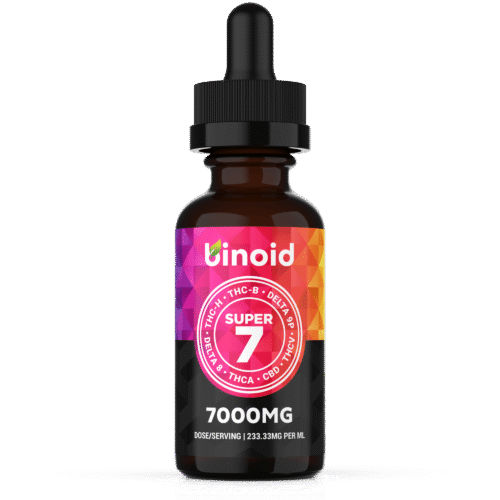
Super 7 Tincture – 7000mg
$39.99$59.99 -
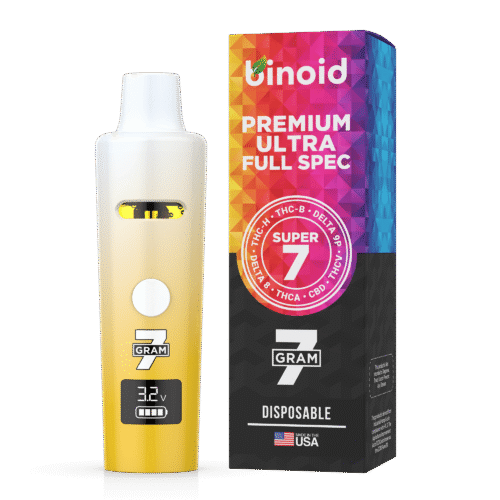
Super 7 UFS Disposable Vape – 7 Gram
$63.99$89.99 -
Super 7 Gummies – Summer Slush Series
$37.99$49.99

The Entourage Effect as Engineering Principle, Not Marketing Buzzword
To understand why a blend stack like Super 7 or Power 9 exists at all, you have to start with the entourage effect — a term that has been so thoroughly absorbed into cannabis marketing copy that it has, unfortunately, lost some of its scientific specificity along the way. In its rigorous form, the entourage effect describes the phenomenon by which multiple cannabinoids, consumed together, appear to modulate one another’s activity at the endocannabinoid system in ways that a single isolated compound cannot replicate. This isn’t simply an additive effect, where two molecules stack their individual impacts linearly. It’s something closer to a chemical conversation, where the presence of one cannabinoid appears to influence how efficiently another engages its receptor targets, how quickly the resulting experience onsets, and how long the overall effect sustains itself before tapering off.
Blend architecture, then, is not a matter of throwing several trending cannabinoids into a gummy or a vape cartridge and hoping something interesting happens. It is a formulation discipline that requires genuine understanding of how compounds like delta 9 THC, THC-P, delta 8 THC, CBG, and CBN interact pharmacologically, and it requires the kind of testing infrastructure that can verify a finished blend actually delivers the intended ratio batch after batch. This is precisely where the gap between serious cannabinoid brands and opportunistic ones becomes most visible, because a blend that looks identical on a label can behave completely differently depending on the precision of the underlying formulation process. Binoid CBD’s approach to both Super 7 and Power 9 treats this precision as the entire point of the product, not an afterthought to be handled after the marketing concept is finalized.
Super 7: The Layered, Conversational Blend
Super 7 is built around the idea of experiential layering — a formulation designed to unfold rather than arrive all at once. The blend draws on a curated selection of cannabinoids anchored by delta 9 THC, with supporting compounds contributing distinct textural qualities to the overall experience: a brighter, more cerebral onset from certain minor cannabinoids, a smoother sustain from others, and a rounded, non-jittery tail end that avoids the abrupt drop-off that consumers sometimes describe with single-compound products. The experience of Super 7, whether encountered through the tincture line or the increasingly popular Super 7 THC Beverage in Orange Creamsicle, is often described by consumers as feeling more like a well-composed piece of music than a single sustained note — there is a beginning, a middle, and a resolution, each phase distinct but connected to what came before it.
This makes Super 7 a particularly compelling option for the consumer who wants a genuinely elevated experience without necessarily chasing the outer edges of potency. It rewards patience and attentiveness. Someone drinking a Super 7 Orange Creamsicle at a low-key evening gathering is likely to notice the experience building in stages, each one worth paying attention to on its own terms, rather than being hit with a single undifferentiated wave of effect. This is also why Super 7 has become something of a signature product line for Binoid CBD — it demonstrates a level of formulation sophistication that separates a brand doing genuine cannabinoid science from one simply stacking trending compounds for the sake of a longer ingredient list on the label.
Power 9: The Escalated, Connoisseur-Facing Stack
Power 9, by contrast, is engineered for a different objective entirely: intensity, efficiency, and a more streamlined path to peak effect. Where Super 7 asks the consumer to appreciate a developing narrative, Power 9 is built for the consumer who already knows their tolerance, has moved past the exploratory phase of their cannabinoid journey, and is specifically seeking a more potent, more immediate experience. The blend architecture leans harder into higher-potency compounds and a tighter ratio structure designed to compress the onset curve and deliver a more pronounced peak. This is not a subtle distinction — it is a fundamentally different design brief, and it shows up clearly in how the two product lines are formulated, dosed, and positioned across Binoid CBD’s catalog.
The consumer profile for Power 9 tends to be someone with meaningful prior experience across Binoid’s broader product ecosystem — someone who has already spent time with THCA flower, delta 9 gummies, or the standard THC seltzer line and has developed a clear sense of their own preferences and limits. This is a product line that rewards familiarity rather than curiosity, and Binoid’s product education around Power 9 reflects that reality directly, with dosing guidance and format-specific information that assumes a baseline of cannabinoid literacy rather than walking a first-time buyer through fundamentals. It is, in the truest sense, a connoisseur-facing formulation, and it occupies a different shelf in the Binoid catalog than the more approachable, broadly accessible Super 7 line.
Format Considerations: Where Each Blend Shows Up Across the Catalog
One of the more practical distinctions between the two stacks involves the delivery formats in which each is available, because format and blend design are not independent variables — they interact with each other in ways that shape the final experience. Super 7‘s layered, developing character translates particularly well into beverage formats, where the gradual absorption curve of a nano-emulsified drink complements the blend’s built-in narrative arc. The nano-emulsification technology that Binoidcbd.com has built its beverage program around allows the THC and supporting cannabinoids in Super 7 to cross mucosal membranes efficiently, producing the kind of clean, predictable onset that lets the blend’s staged effect actually be perceived rather than lost in a fog of inconsistent bioavailability.
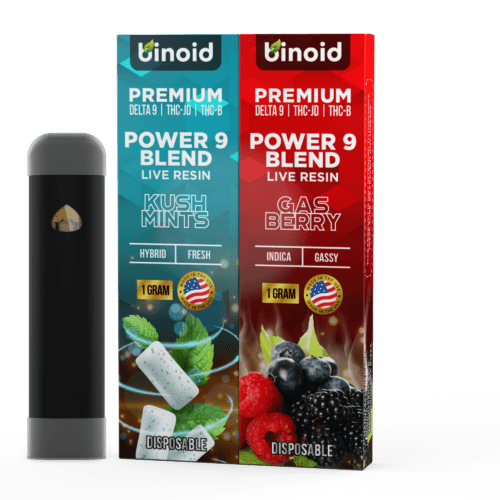
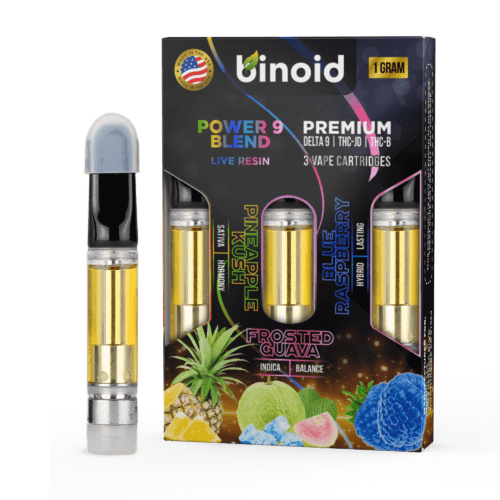
Power 9, given its design objective around intensity and efficiency, tends to show up more prominently in concentrate and vape formats, where the more direct route to peak blood concentration matches the blend’s overall philosophy. A vape cartridge formulated around the Power 9 ratio delivers its effect on a faster timeline than an edible or tincture would, which aligns naturally with a stack that is specifically engineered to compress the distance between consumption and peak experience. This is not to say that format flexibility doesn’t exist for either line — Binoid’s broader catalog reflects considerable format diversity across both blend architectures — but the natural pairing between blend philosophy and delivery mechanism is worth understanding before making a purchasing decision, because it affects the practical experience of the product as much as the underlying cannabinoid ratio does.
Reading the Certificate of Analysis for a Blended Product
Evaluating a proprietary blend product requires a slightly more sophisticated approach to reading a certificate of analysis than evaluating a single-cannabinoid product does, and this is an area where consumer literacy genuinely matters. A COA for a blend should report the individual concentration of each cannabinoid present in the formulation, not simply an aggregate “total cannabinoid” figure that obscures the actual ratio structure. This distinction matters enormously, because two products could report an identical total cannabinoid percentage while representing completely different experiences depending on how that total is distributed across the individual compounds involved. A COA from an ISO 17025-accredited laboratory that itemizes each cannabinoid in a Super 7 or Power 9 formulation gives the consumer the information necessary to actually understand what they’re purchasing, rather than trusting a marketing description of the blend’s character.
Binoid CBD publishes batch-specific COAs for both blend lines directly on Binoidcbd.com, itemized by individual cannabinoid concentration and searchable by batch number printed on the product packaging. This level of transparency is not universal across brands offering proprietary blend products, and it is worth treating as a baseline requirement rather than a bonus feature when evaluating any multi-cannabinoid stack, regardless of which brand is producing it. A blend that cannot or will not itemize its cannabinoid composition on an accessible, current COA is a blend asking for trust it has not earned through documentation.
Making the Call: A Decision Framework
The choice between Super 7 and Power 9 ultimately resolves along two axes: experience level and desired intensity. A consumer newer to multi-cannabinoid formulations, or one who values a developing, layered experience over raw potency, will generally find Super 7 the more satisfying and more forgiving entry point — it delivers genuine sophistication without demanding extensive prior cannabinoid literacy to appreciate or navigate safely. A consumer with substantial prior experience across Binoid‘s product ecosystem, comfortable with their own tolerance and specifically seeking a more compressed, more intense experience, is the natural audience for Power 9, and that consumer should approach the blend with the same self-awareness about dosing and pacing that any higher-potency product warrants.
What both stacks share, regardless of which one matches your particular moment in your cannabinoid journey, is a formulation rigor and testing transparency that reflects Binoid CBD’s broader approach to product development. Neither blend is a marketing concept dressed up as a formulation — both represent genuine investment in understanding how cannabinoids interact, how those interactions can be engineered toward specific experiential goals, and how that engineering can be verified rather than simply asserted. Whether the right answer for you is the conversational unfolding of Super 7 or the escalated intensity of Power 9, the decision is best made with a COA open in one tab and an honest assessment of your own experience level in the other — and Binoidcbd.com is built to support exactly that kind of informed decision-making.
To Buy Power 9 Blends Products Click Here
Recommended products
-
Power 9 Blend Live Resin Disposable – 2 Pack Combo (Limited Time Sale)
$44.99$89.99 -
Power 9 Blend Live Resin Vape Cartridges – 3 Pack Combo
$54.99$89.99 -
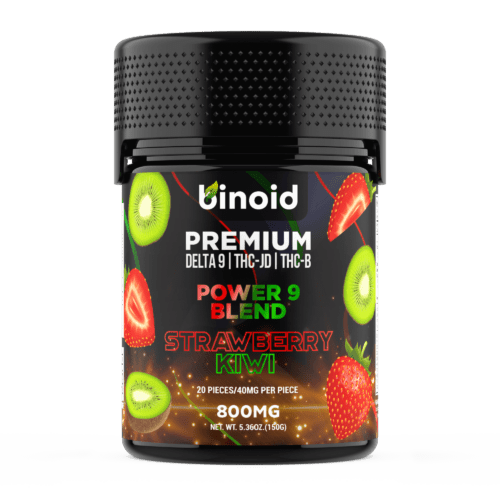
Power 9 Blend Gummies
$36.99$59.99 -
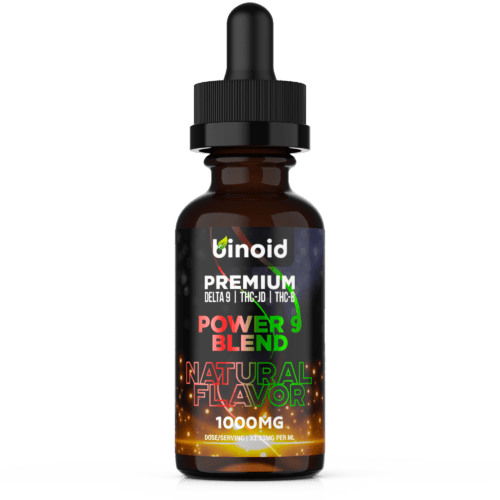
Power 9 Blend Tincture – 1000mg
$34.99$59.99