Every few decades, a new category arrives that asks an entire culture to reconsider one of its most deeply embedded rituals, and the emergence of the premium THC beverage is doing exactly that to the century-old social choreography built around alcohol. This is not a story about one substance being categorically superior to another that framing tends to produce more heat than light, and it flattens what is actually a genuinely nuanced comparison across pharmacology, social function, and lived experience.
It is, instead, a story about two very different molecules, two very different metabolic pathways, and two very different relationships with the human nervous system, all converging on the same cultural real estate: the backyard gathering, the dinner party, the quiet evening on the porch. Understanding the honest differences between reaching for a can of THC Seltzer and reaching for a beer is one of the more useful exercises available to the modern, intentional consumer.
To Buy THC Beverages Click Here
Two Molecules, Two Completely Different Metabolic Stories
Alcohol specifically ethanol is metabolized primarily by the liver through a well-mapped enzymatic pathway involving alcohol dehydrogenase and aldehyde dehydrogenase, a process that converts ethanol first into acetaldehyde, a genuinely toxic intermediate compound, before further breaking it down into acetate. This is, at a molecular level, a detoxification process the body treating ethanol as a substance to be processed and eliminated as efficiently as possible, and the well-documented unpleasantness of a hangover is substantially a story about acetaldehyde accumulation and the downstream inflammatory and dehydrative effects of that processing.
THC follows an entirely different metabolic script. When consumed orally, THC undergoes first-pass hepatic metabolism, converting into 11-hydroxy-THC, a metabolite that is itself psychoactive and, by most accounts, more potent than the parent compound. But this is a bioactivation process, not a detoxification one the liver is transforming THC into something more potent rather than progressively neutralizing a toxic byproduct, which is a fundamentally different physiological relationship than the one alcohol establishes with the same organ.
This distinction matters enormously for how a THC beverage actually feels in practice, particularly one engineered with modern nano-emulsification technology, which breaks THC into extraordinarily small, water-compatible particles capable of absorbing through the mucosal tissue of the mouth and digestive tract far more rapidly than conventional edible THC.
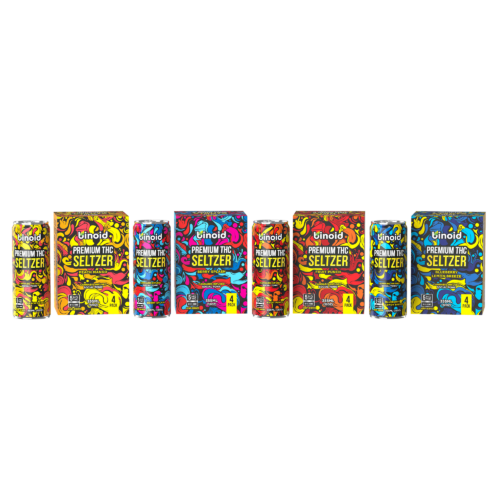
Where a traditional infused edible might carry an onset delay stretching past ninety minutes as the body slowly processes fats and oils, a well-formulated nano-emulsified beverage can produce noticeable effects within fifteen to thirty minutes a timeline that maps far more naturally onto the psychology of a beverage than the historically unpredictable “brick wall” onset that gave early cannabis edibles a reputation for unpredictability. Binoidcbd.com’s THC Seltzer line is built specifically around this technology, engineered to deliver an onset curve and dose consistency that feels less like a lottery ticket and more like the reliable, calibrated experience a beverage format implies.
The Next-Morning Question
Perhaps the most concrete and frequently discussed distinction between the two categories is what happens the day after. Alcohol’s next-morning reputation is not folklore it is a well-documented consequence of acetaldehyde toxicity, the diuretic effect that produces meaningful dehydration, and the disruption of normal sleep architecture that alcohol reliably causes even when it initially seems to promote drowsiness. THC’s metabolic profile is simply different in kind. It does not produce the same dehydrating, inflammatory cascade, and consumers who have transitioned from an alcohol-centric social routine to a THC-beverage-centric one frequently describe the following morning as qualitatively distinct a difference rooted in genuine pharmacological divergence rather than mere consumer perception or marketing narrative.
This is not a claim that THC consumption is without any next-day considerations of its own; individual response varies, and moderation remains exactly as relevant a concept here as it does with any other consumption choice. It is simply an honest acknowledgment that the specific mechanisms responsible for alcohol’s notorious morning-after signature do not have a direct pharmacological analog in THC metabolism.
Caloric and Metabolic Considerations
Alcohol carries roughly seven calories per gram, a caloric density second only to fat among macronutrients, and a standard beer, glass of wine, or mixed cocktail typically arrives with a caloric payload that a health-conscious consumer has to actively account for across a given week or month. A well-formulated THC Seltzer, built on a genuinely low-calorie carbonated water base rather than a sugar-heavy mixer, offers a fundamentally different caloric profile a consideration that resonates strongly with the increasingly health-literate demographic driving cannabis beverage growth. This demographic, broadly speaking, is one that already scrutinizes the nutrition label on its protein powder and its sparkling water, and the caloric transparency of a well-formulated THC beverage aligns naturally with that existing set of consumption values in a way that traditional alcoholic beverages, with their often-opaque caloric and additive profiles, frequently do not.
The Ritual Question: What Are We Actually Reaching For?
Beyond the pharmacology, there is a genuinely interesting cultural question underneath this comparison: what is a beverage actually providing, beyond its physiological effect? Alcohol’s centuries-long dominance of social ritual has never been purely about ethanol’s pharmacological profile it is equally about the shared bottle, the language of toasts, the clink of glasses, the sensory pleasure of a well-crafted cocktail or a complex barrel-aged spirit. A THC beverage that hopes to genuinely compete for occasion share, rather than simply existing as a niche alternative, has to take this ritual dimension as seriously as the pharmacological one. This is precisely where flavor development becomes a legitimate competitive battleground rather than a cosmetic afterthought.
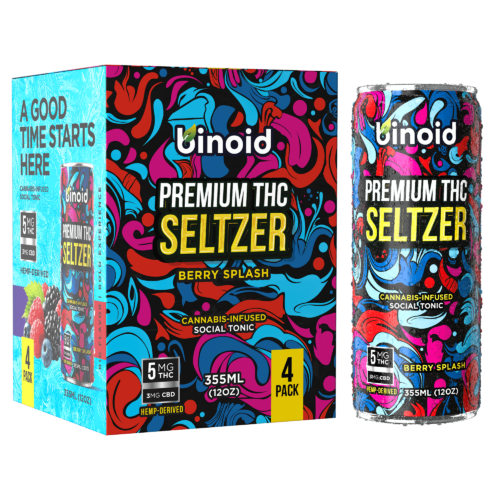
A THC seltzer that tastes thin, medicinal, or apologetically neutral is not offering a genuine alternative to a well-made gin and tonic or a hazy IPA it is offering a compromise, and compromises rarely win converts. Binoid’s approach across its Berry Splash, Fruit Punch, Blueberry Lemon, and Peach Mango THC seltzer line, along with the more ambitious multi-cannabinoid Super 7 Orange Creamsicle formulation, treats flavor as a genuine craft discipline rather than a delivery mechanism afterthought an approach that recognizes a THC beverage has to earn its place in the cooler on sensory merit alone, entirely apart from its cannabinoid content.
There is also something worth saying honestly about the social permission structure each substance carries. Alcohol consumption, despite decades of public health messaging about moderation, still carries a kind of unquestioned cultural default status that allows for consumption well past the point of genuine enjoyment before it registers as socially notable. THC Beverages, still relatively new to mainstream social contexts, tend to be consumed with a more deliberate, self-aware intentionality partly because the format and category are newer and less automatically embedded in ritual, and partly because the demographic gravitating toward them tends to already approach consumption with a more calibrated, curious mindset. Neither pattern is inherently superior, but the difference is real and worth naming honestly rather than glossing over in either direction.
Dose Predictability and the Trust Question
One area where the comparison genuinely favors a well-made THC beverage over its alcoholic counterpart is dose consistency provided, critically, that the product in question is manufactured to a genuinely rigorous standard. A can of beer or a glass of wine carries a reasonably predictable and universally understood alcohol content, but the effect of that alcohol content varies enormously based on individual tolerance, food intake, and metabolic factors that most drinkers have limited ability to calibrate for in the moment. A THC beverage built on properly executed nano-emulsification technology and verified through ISO 17025-accredited third-party lab testing offers a comparable, and arguably more precisely documented, dosing framework assuming the brand behind it treats certificate of analysis transparency as a genuine operating standard rather than a compliance afterthought.
This is not a universal feature of the category; the THC Beverage market, like the broader hemp-derived cannabinoid space, contains no shortage of products with inconsistent emulsification and unreliable dosing from can to can. It is precisely this variability that makes sourcing from a brand with a demonstrated testing infrastructure the kind of batch-specific, publicly accessible COA documentation available across Binoidcbd.com’s full beverage catalog the difference between a genuinely trustworthy dosing experience and an expensive guessing game.
The Legal and Regulatory Backdrop
None of this comparison would be possible without the specific regulatory architecture that makes hemp-derived THC beverages a federally accessible category in the first place. The 2018 Farm Bill defined hemp as cannabis containing no more than 0.3% Delta-9 THC by dry weight, and because a beverage is overwhelmingly composed of water, this dry-weight calculation allows a can containing a genuinely experiential dose of Delta-9 THC to remain compliant with federal hemp law a distinction that has opened an entire product category previously confined to state-licensed dispensary systems.
This is a meaningfully different regulatory position than alcohol occupies, which is governed by an entirely separate and far older licensing framework at both the federal and state level. Navigating the hemp-derived THC beverage space responsibly means choosing brands that treat this compliance framework as a serious operational discipline geo-restricting shipments where state law requires it, maintaining current documentation, and building formulations around the federal definition rather than testing its edges.
Making the Choice That Actually Fits Your Evening
The honest answer to the THC-beverage-versus-alcohol question is not that one categorically replaces the other for every consumer in every context it is that the two now genuinely coexist as legitimate, differentiated options for how an adult chooses to spend a relaxed evening, and the intelligent consumer benefits from understanding the real distinctions rather than defaulting to habit alone. If the after-effects of alcohol have started to outweigh its social value to you, or if the caloric and metabolic profile of a nightly glass of wine no longer aligns with how you want to feel the next morning, a well-formulated THC Seltzer offers a genuinely different physiological relationship worth exploring with intention and moderation.
What matters most, regardless of which category you reach for, is sourcing from a brand willing to document its claims with the same rigor it applies to its flavor development the standard that BinoidCBD.com has built its entire beverage program around, from nano-emulsification technology to batch-specific lab transparency. The choice of what to pour into your glass on a Friday evening is, in the end, a genuinely personal one. But it should be an informed one.
To Buy THC Beverages Click Here
Recommended products
-
THC Seltzer – Good Vibes Bundle
$71.99$159.99 -
THC Seltzer – Good Vibes Cannabis Drink (4 Pack)
$19.99$29.99