Two Formats, One Fundamental Question
Every cannabinoid consumer eventually arrives at a version of the same practical crossroads: given the same underlying THC, delivered through fundamentally different formats, which one actually serves the life they’re trying to live? The debate between THC gummies and tincture is not a question of which product is objectively superior that framing misunderstands what these two formats are actually built to do. It is, instead, a question of fit: which delivery method’s particular blend of onset speed, dosing structure, discretion, and ritual matches a given consumer’s schedule, tolerance, and intentions on any given day. Understanding the genuine mechanical and experiential differences between these two formats rather than relying on vague impressions or marketing shorthand is what allows a consumer to make a choice that actually serves them, rather than defaulting to whichever product happened to be more visible on a shelf or a homepage.
Both formats, when properly sourced, deliver the same underlying cannabinoid payload, whether that’s delta 8, delta 9, or one of the broader THC family compounds available across the modern hemp market. What differs is everything downstream of that shared starting point: how the body processes the dose, how quickly effects arrive, how precisely the amount can be controlled, and how the format integrates or fails to integrate into the actual texture of a consumer’s day. Getting genuinely clear on these mechanics is the difference between choosing a product because of clever packaging and choosing one because it does exactly what you need it to do.
To Buy THC Gummies Click Here
Recommended products
-
14,000MG Turbo THC Gummies – Blazed
$49.99$84.99 -
13,000mg Good Luck Gummies
$47.99$79.99 -
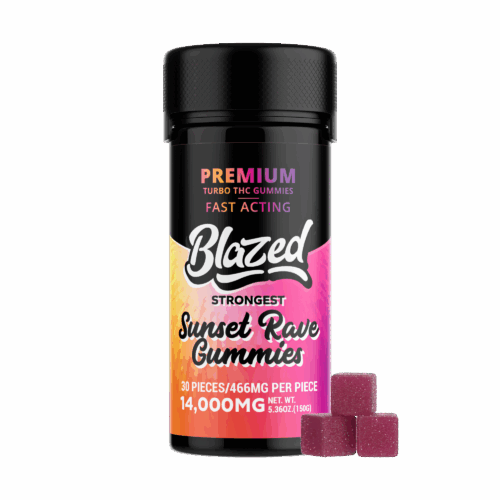
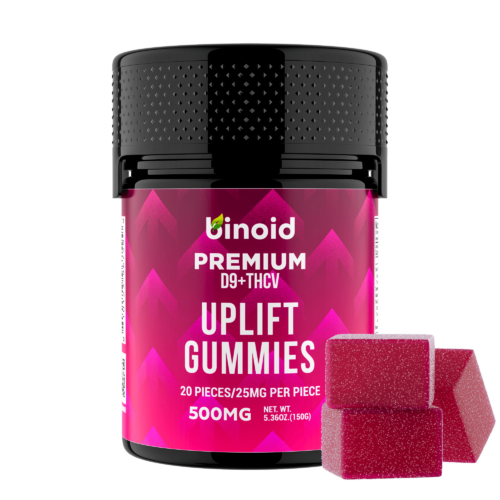
Delta 9 +THCV Gummies- Uplift/Unwind
$29.99$49.99 -
Super 7 Gummies – Summer Slush Series
$37.99$49.99


The Digestive Journey: How Gummies Actually Work
A THC gummy‘s journey through the body begins the moment it’s swallowed, and understanding that journey requires understanding the digestive and hepatic processes that stand between consumption and effect. Once swallowed, a gummy must first be broken down by digestive processes before its cannabinoid payload becomes available for absorption through the intestinal wall into the bloodstream. From there, that absorbed THC travels directly to the liver before reaching general circulation a routing quirk of digestive physiology known as first-pass hepatic metabolism, and it is this specific step that defines the entire character of the edible experience. The liver’s enzymatic processes convert a significant portion of delta 9 THC into 11-hydroxy-THC, a metabolite that crosses the blood-brain barrier with notable efficiency and tends to produce effects that are more intense, more prolonged, and, for many consumers, qualitatively different from the effects of unmetabolized THC.
This digestive routing explains both of the edible format’s most defining characteristics: its delayed onset and its extended duration. Because the gummy must be digested before absorption can occur, effects typically don’t become noticeable for anywhere between forty-five minutes and two hours, a window that varies considerably based on individual metabolism, stomach contents, and the specific formulation of the gummy itself. Once effects do arrive, however, they tend to persist considerably longer than other formats commonly four to eight hours a duration profile that many consumers find genuinely valuable for extended activities, overnight use, or situations where a single dose needs to carry through several hours without requiring redosing. The trade-off is precision at the front end: once a gummy is consumed, that dose is committed, with no opportunity to titrate upward or downward mid-experience the way a tincture allows.
The Sublingual Shortcut: How Tinctures Change the Equation
A tincture operates on a genuinely different physiological pathway, at least in part, and this distinction is the entire foundation of its appeal. When held under the tongue for thirty to ninety seconds before swallowing, a meaningful portion of a tincture’s THC content is absorbed directly through the sublingual mucosa the richly vascularized tissue beneath the tongue entering the bloodstream without first passing through the digestive tract or experiencing the liver’s first-pass conversion into 11-hydroxy-THC. This partial bypass produces a faster onset, typically in the fifteen-to-forty-five-minute range, and many tincture users describe the resulting experience as feeling more moderated and controllable than the sometimes more intense, delayed-arrival sensation associated with edibles.
It’s worth being precise here rather than overselling the mechanism: whatever portion of a tincture dose is eventually swallowed after the sublingual hold still enters the digestive tract and undergoes the same hepatic metabolism that governs gummy absorption, meaning tinctures represent a hybrid absorption pathway rather than a complete bypass of first-pass metabolism. What this hybrid pathway delivers, in practice, is a genuinely useful middle ground faster and more moderated than a pure edible, while still offering more sustained effects than the near-instant, comparatively short-lived experience of inhalation. This positioning is part of what makes tinctures such a versatile tool for consumers who want meaningful onset speed without sacrificing the extended, at-home dosing precision that inhalation formats can’t match.
The Precision Question: Fixed Doses vs. Infinite Granularity
Perhaps the most practically significant difference between these two formats has nothing to do with absorption pathways and everything to do with dosing architecture. A THC gummy arrives as a fixed, discrete unit five milligrams, ten milligrams, whatever the specific formulation delivers and while that gummy can technically be cut into fractions, doing so is imprecise and produces oddly shaped, difficult-to-portion remnants that most consumers eventually abandon in favor of simply taking a whole piece. This fixed-dose structure is a genuine advantage for consumers who know their ideal dose and want the simplicity of grabbing a single, pre-measured unit without any additional calculation or decision-making required.
A tincture, delivered through a graduated dropper, offers the inverse trade-off: near-infinite dosing granularity at the cost of requiring active measurement and decision-making at each use. A consumer can take a quarter-dropper, a half-dropper, a full dropper, or anything in between, scaling their dose with mathematical precision that a gummy simply cannot replicate. This makes tinctures the clearly superior format for consumers who are still calibrating their ideal dose, whose tolerance fluctuates based on context, or who simply value the ability to make real-time adjustments taking a smaller dose on a demanding workday and a larger one on a relaxed weekend evening, all from the same bottle. For the consumer with a well-established, unchanging preferred dose, this granularity matters less; for the consumer still exploring their relationship with THC, it can matter enormously.
Recommended products
-
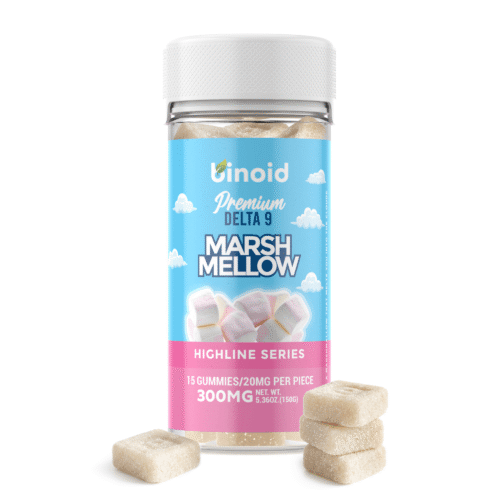
Delta 9 THC Marshmellow
$39.99$49.99 -
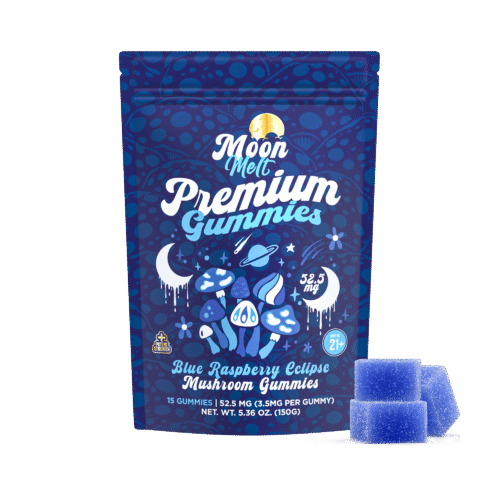
Visual Gummies – Moon Melt
$43.99$59.99 -
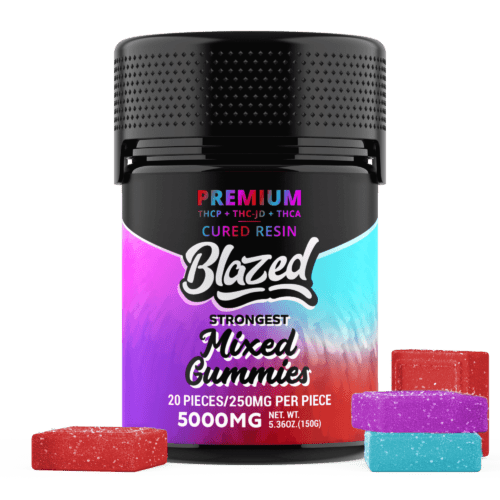
5000MG Gummies – Blazed
$29.99$69.99 -
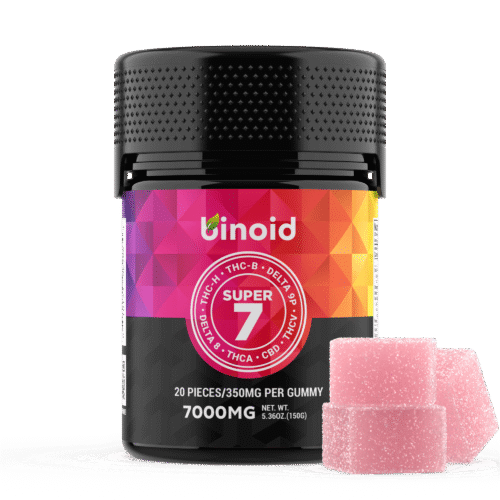
Super 7 Gummies – 7000MG
$39.97$59.99
Discretion, Portability, and the Texture of Daily Use
Beyond the pharmacology, the two formats diverge considerably in how they actually integrate into a consumer’s physical routine. Gummies offer a specific kind of discretion: they look, to any casual observer, exactly like ordinary candy, and consuming one in public or social settings draws essentially no attention. They’re also genuinely grab-and-go, requiring no measurement, no equipment, and no particular ritual beyond opening a bag or bottle and popping one in your mouth. This low-friction convenience is a significant part of why edibles remain the most broadly popular THC format among consumers who want cannabinoid effects without any accompanying complexity.
Tincture ask for slightly more from the consumer a moment of stillness to measure and hold a dose sublingually, ideally in a setting where that thirty-to-ninety-second hold isn’t awkward or rushed. This makes tinctures somewhat better suited to home use, morning or evening routines, or settings where a consumer has a controlled moment to themselves, and somewhat less convenient for spontaneous, on-the-go dosing in public settings. What tinctures offer in exchange for that slightly higher friction is versatility beyond the dropper itself: a measured dose can be added to coffee, stirred into a recipe, or incorporated into virtually any food or beverage, giving the format a flexibility that a pre-formed gummy simply can’t match.
Sourcing Standards That Apply Equally to Both
Regardless of which format a consumer ultimately gravitates toward, the underlying sourcing and verification standards that separate a trustworthy product from a risky one remain identical. Both gummies and tinctures depend on accurately characterized cannabinoid distillate, produced from high-purity starting material and verified through certificate of analysis documentation from an ISO 17025-accredited laboratory confirming not just potency but the absence of residual solvents, heavy metals, and microbial contamination. A gummy with an inaccurate potency claim is just as much of a dosing problem as a mislabeled tincture, and a consumer evaluating either format should apply exactly the same level of scrutiny to the batch-specific lab documentation before making a purchase.
Binoid CBD applies this consistent verification standard across its entire product ecosystem, meaning a consumer choosing between the brand’s gummy and tincture lines isn’t trading away transparency for convenience or precision they’re simply selecting the format whose absorption profile and dosing structure best fits their actual life. Every product across BinoidCBD’s gummy and tincture catalog is backed by accessible, batch-specific COA documentation, giving consumers the ability to verify exactly what they’re purchasing regardless of which format they choose, and every formulation is built on the same domestically sourced hemp foundation that underpins the brand’s broader commitment to supply chain integrity under the compliance framework established by the 2018 Farm Bill.
The Decision Framework: Matching Format to Intention
The choice between THC gummies and tinctures ultimately comes down to matching format mechanics to actual intention rather than defaulting to whichever product feels more familiar. A consumer who wants effortless, grab-and-go convenience, who values a fixed and predictable dose, and who’s comfortable with a longer onset window in exchange for extended duration will generally find that gummies serve them well, particularly for situations like extended social gatherings, travel days, or evenings where redosing isn’t practical. A consumer who wants faster onset, granular dosing control, and the flexibility to titrate their experience in real time particularly one who is still learning their own tolerance or whose ideal dose shifts with context will likely find that a tincture serves them considerably better.
Neither format is the “correct” choice in any universal sense, and many sophisticated consumers ultimately end up using both, reaching for a tincture during the controlled environment of a weekday evening and a gummy for a weekend gathering where convenience and discretion matter more than dosing precision. What matters most, across either choice, is sourcing from a brand whose transparency matches the seriousness with which the consumer is approaching the decision. Exploring both formats through BinoidCBD‘s full catalog with consistent lab verification and formulation standards applied across every product line gives consumers the freedom to actually test which delivery method fits their life, rather than committing to a single format based on assumption alone.
To Buy Cannabinoid Tinctures Click Here
Recommended products
-
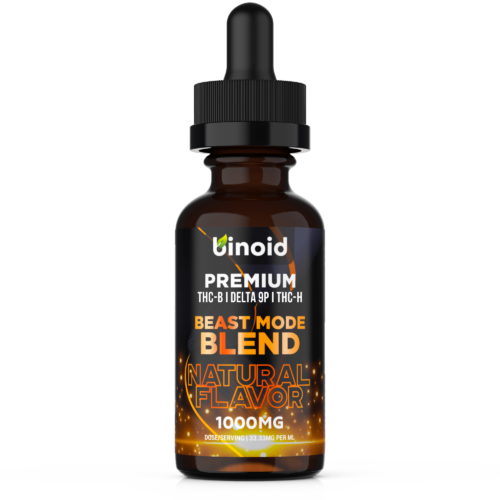
Beast Mode Blend Tincture – 1000mg
$34.99$59.99 -
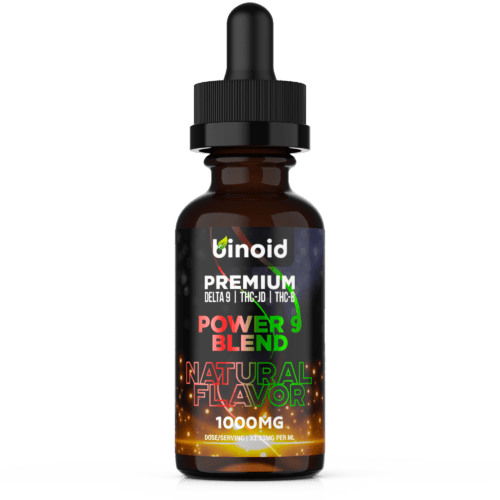
Power 9 Blend Tincture – 1000mg
$34.99$59.99 -
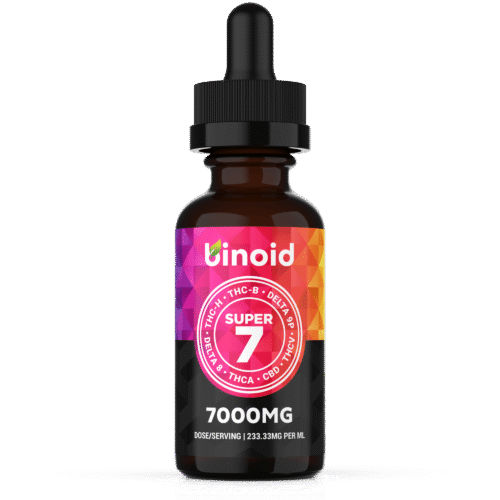
Super 7 Tincture – 7000mg
$39.99$59.99 -
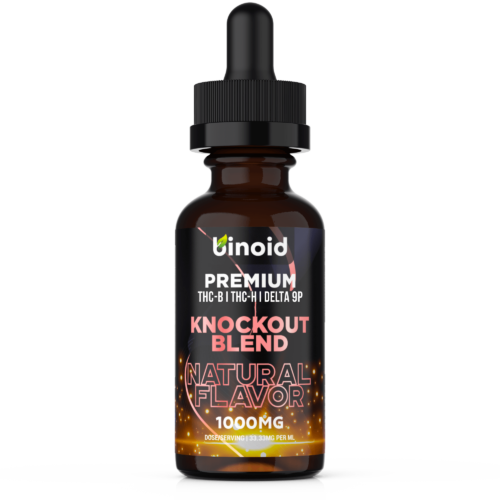
Knockout Blend Tincture – 1000mg
$34.99$59.99