The Arms Race Nobody Saw Coming
Every few months, the hemp-derived cannabinoid market produces a compound that reshuffles the conversation about potency, and right now that conversation is dominated by two molecules that sound almost interchangeable to the uninitiated but behave in genuinely distinct ways once you understand their chemistry. THC-H and THC-P have both emerged from the same broader wave of cannabinoid science that gave the industry Delta 8, Delta 10, and a growing menu of isomers and analogs that did not exist in any meaningful commercial sense a decade ago.
What makes this particular pairing worth examining closely is that both compounds are frequently described, sometimes carelessly, as simply “stronger” than Delta 9 THC, as though potency were a single dial that a chemist could turn up or down at will. The reality is more interesting, more structurally specific, and considerably more relevant to anyone trying to make an informed purchasing decision rather than simply chasing a number on a label.
To have a serious conversation about THC-H versus THC-P, you have to start from the premise that potency in cannabinoid science is not a vague marketing adjective but a measurable consequence of molecular geometry, specifically the way a given compound’s shape interacts with the receptors of the endocannabinoid system. Both of these cannabinoids achieve their outsized effects through a shared mechanism rooted in a very particular structural feature, and understanding that feature is the single most useful piece of knowledge a curious consumer can carry into any conversation about novel cannabinoids. It is also, not incidentally, exactly the kind of technical literacy that separates brands like BinoidCBD.com, which builds its product education around real pharmacology, from the broader flood of hemp retailers content to slap “extra strong” on a label and call it a day.
TO BUY THC-H PRODUCTS CLICK HERE
The Alkyl Side Chain: Where the Real Story Lives
Delta 9 THC, THC-H, and THC-P all share the same fundamental tricyclic cannabinoid backbone, but they diverge at a specific structural location known as the alkyl side chain, a molecular tail extending from the compound’s resorcinol ring. This side chain is not a decorative afterthought; it is the primary determinant of how snugly a given cannabinoid fits into the binding pocket of the CB1 receptor, the site in the central nervous system responsible for the bulk of cannabis’s characteristic psychoactive effects. Delta 9 THC carries a five-carbon pentyl side chain, which has long been treated as something like the baseline configuration against which other cannabinoids are measured. THC-H, or tetrahydrocannabihexol, extends that chain to six carbons, a seemingly modest structural change that nonetheless alters the compound’s receptor affinity in ways that researchers are still working to fully characterize.
THC-P, or tetrahydrocannabiphorol, takes the same underlying logic considerably further, extending its side chain to a full seven carbons. This is the structural detail that generated significant attention when THC-P was first characterized by Italian researchers in 2019, because early laboratory binding studies suggested the compound demonstrated dramatically higher affinity for CB1 receptors compared to Delta 9 THC under controlled experimental conditions.
The mechanism at work is a matter of molecular fit: a longer alkyl chain appears to allow deeper, more complete engagement with the receptor’s binding pocket, in much the same way a longer key can sometimes turn a lock more completely than a shorter one cut for the same mechanism. This is not a claim that potency scales infinitely with chain length, nor that every additional carbon produces a proportional increase in effect, but it does explain why both THC-H and THC-P have earned reputations as unusually potent members of the broader cannabinoid family, and why the alkyl side chain has become one of the most closely watched structural variables in contemporary cannabinoid research.
What the Experience Actually Feels Like
Laboratory binding affinity is a useful starting point for understanding these compounds, but it does not translate in any simple, linear fashion into subjective experience, and this is where the THC-H versus THC-P conversation gets genuinely useful for the consumer rather than merely academically interesting. THC-P, drawing on its exceptionally strong CB1 affinity, is generally described by experienced consumers as producing an intensely cerebral, fast-onset effect that arrives with more immediacy and, at equivalent doses, more overall intensity than most other hemp-derived cannabinoids on the market.
Consumers who have built tolerance through regular Delta 8 or Delta 9 use frequently describe their first encounter with a well-formulated THC-P product as a genuine recalibration of what they thought a hemp-derived cannabinoid could deliver, with effects that can feel more physically grounding and more cognitively immersive than the lighter, more functional experience associated with lower-affinity cannabinoids.
THC-H, by contrast, tends to be described in slightly different experiential language, one that leans toward a euphoric, almost expansive quality alongside its underlying potency. Where THC-P is frequently characterized as intense and somewhat weighty, THC-H is more often described as energetic and cerebral in a way that feels distinct from, rather than merely a milder version of, the THC-P experience.
This distinction matters enormously for anyone shopping with intention rather than simply seeking the highest number on a certificate of analysis, because these are not two flavors of the same effect stacked at different intensities; they are two structurally related but experientially distinct compounds, each suited to different moments, different tolerances, and different consumer goals. This is precisely the kind of nuance that BinoidCBD.com’s product descriptions are built to communicate, treating the THC-H and THC-P categories as genuinely differentiated rather than collapsing them into an undifferentiated “strong stuff” marketing bucket.
Recommended products
-
13,000mg Good Luck Gummies
$47.99$79.99 -
THC-P Vape Cartridge
$29.99$59.99 -
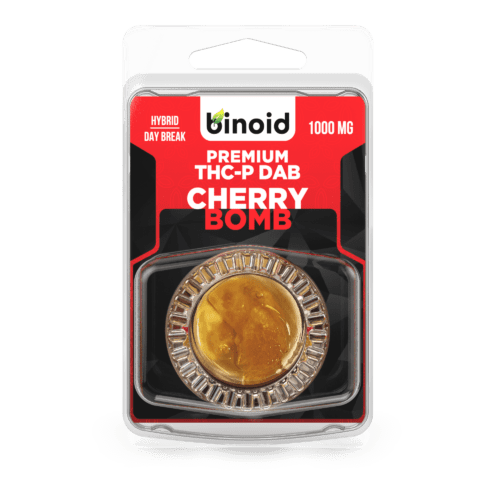
THC-P Wax Dabs
$29.99$57.99 -
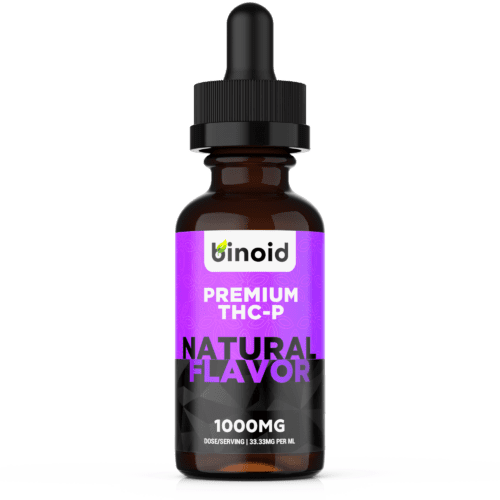
THC-P Tincture – 1000mg
$30.99$79.99

The Legal Architecture Both Compounds Depend On
Neither THC-H nor THC-P would exist as commercially available hemp products without the specific statutory language of the 2018 Farm Bill, which federally legalized hemp defined as cannabis containing no more than 0.3% Delta 9 THC by dry weight. Because THC-H and THC-P are synthesized from CBD extracted from compliant hemp biomass through an isomerization process rather than derived directly from Delta 9 THC itself, they occupy a position within the current regulatory framework that has allowed the hemp-derived cannabinoid market to expand well beyond what most observers anticipated when the Farm Bill was originally drafted. This is not a static legal landscape, however, and informed consumers should understand that state-level regulation of novel cannabinoids varies considerably, with some states restricting or banning specific compounds even as they remain federally permissible under current interpretation.
The isomerization chemistry required to produce THC-H and THC-P at commercial scale is considerably more technically demanding than the processes used for simpler conversions like Delta 8, and this is a point worth dwelling on because it has direct implications for product safety. Producing these compounds cleanly, without residual catalysts, reaction byproducts, or incomplete conversion artifacts, requires precise process control and rigorous post-production purification.
This is exactly the kind of manufacturing detail that separates brands with genuine chemical expertise from those simply chasing a trend, and it is why sourcing THC-H and THC-P products exclusively from operations with transparent, batch-specific certificate of analysis documentation from an ISO 17025-accredited laboratory is not merely a best practice but close to a non-negotiable requirement. BinoidCBD.com has built its novel cannabinoid catalog around exactly this standard, publishing COA documentation that verifies both potency and the absence of problematic residual compounds for every batch of THC-H and THC-P product it releases.
Format Considerations: Where Each Compound Shows Up Best
The delivery format through which a consumer encounters THC-H or THC-P meaningfully shapes the resulting experience, and this is an area where thoughtful formulation makes a measurable difference. Vape formats tend to showcase THC-P’s fast-onset, high-intensity profile particularly well, since inhalation bypasses first-pass hepatic metabolism entirely and delivers the compound to systemic circulation with minimal delay, allowing its exceptional receptor affinity to translate into an experience that arrives quickly and peaks with notable clarity. THC-H, with its more expansive and energetic character, often performs beautifully in vape formats as well, though some consumers report that its particular quality comes through with additional nuance in slower-onset formats like tinctures, where the gradual absorption curve allows the compound’s more euphoric dimensions to unfold rather than arrive all at once.
Edible and gummy formats introduce an additional layer of complexity worth understanding, because oral consumption routes both cannabinoids through first-pass hepatic metabolism, where liver enzymes can alter the compound’s structure before it reaches systemic circulation. This metabolic pathway is well understood in the context of Delta 9 THC, where it produces the more potent 11-hydroxy-THC metabolite responsible for the notably different character of edible highs compared to inhaled ones, and researchers are still working to fully map the equivalent metabolic behavior for THC-H and THC-P specifically.
What this means practically for the consumer is that dosing consistency and formulation quality matter enormously in edible THC-H and THC-P products, since inconsistent manufacturing can produce batch-to-batch variability that undermines the predictability serious consumers rightly expect. BinoidCBD.com’s approach to formulating both compound categories across its Beast Mode Blend and broader novel cannabinoid lineup reflects an understanding of these metabolic nuances, with product-specific guidance that helps consumers calibrate their approach by format rather than assuming a single dosing logic applies universally.
Making the Choice That Fits Your Tolerance and Goals
The THC-H versus THC-P decision ultimately resolves into a question of matching compound to context rather than searching for a single objectively superior option. The consumer with an established cannabinoid tolerance who is specifically seeking the most intense, immediate, and physically substantial experience available in the current hemp market has good reason to gravitate toward THC-P, provided they approach it with appropriate respect for its exceptional receptor affinity and start with a conservative dose regardless of prior experience with other cannabinoids. The consumer drawn to a more euphoric, energetic, cerebrally engaged experience, one that still delivers meaningfully more intensity than standard Delta 8 or Delta 9 products but carries a different qualitative signature, has equally good reason to explore THC-H as their primary novel cannabinoid of interest.
What both paths share is an absolute dependence on sourcing integrity, because the potency that makes these compounds compelling is precisely what makes manufacturing precision and third-party verification non-negotiable rather than optional. A THC-P or THC-H product without current, batch-specific, ISO-accredited laboratory documentation is not a product worth the risk, regardless of how compelling its marketing language might be. This is the standard BinoidCBD.com has built its entire novel cannabinoid catalog around, and it is the standard that any consumer genuinely interested in exploring what these remarkable molecules have to offer should insist on before making a purchase. The chemistry here is extraordinary. The experience, done right, can be too. But both depend entirely on getting the fundamentals of sourcing and verification correct first.
To Buy THC-P Products Click Here
Recommended products
-
THC-P Rechargeable Disposable – 2 Gram
$31.00$59.99 -
Knockout Blend Gummies
$34.99$59.99 -
Knockout Blend Tincture – 1000mg
$34.99$59.99 -
Knockout Blend Live Resin Disposable – 2 Gram
$33.99$59.99