The Question Everyone Asks, and Almost Nobody Answers Well
There is a moment familiar to anyone who has developed a genuine appreciation for vaporized cannabinoids a kind of low-grade existential arithmetic that happens somewhere between the third draw of the evening and the quiet realization that your cartridge feels notably lighter than it did an hour ago. How long, exactly, is this supposed to last? It sounds like a simple question. It is not.
The honest answer requires a working understanding of molecular chemistry, hardware engineering, consumption psychology, and perhaps most critically the sourcing integrity of whoever manufactured the oil inside that slim glass cylinder. The cannabis and hemp industries have spent the better part of a decade producing confident, authoritative-sounding answers to this question that are, at best, rough approximations and, at worst, marketing fictions dressed in the language of precision. What follows is an attempt to do better.
The standard benchmark you will encounter almost everywhere dispensary menus, brand FAQs, Reddit threads populated by people who are very certain about things is that a 500mg cartridge delivers somewhere between 150 and 250 puffs, while a 1000mg (1-gram) cartridge doubles that range. At an average draw of two to three seconds, the math seems clean and satisfying.
The reality is that this figure is derived from idealized laboratory conditions that bear almost no resemblance to how actual humans actually vape. It assumes consistent draw length, consistent temperature, consistent hardware, and a consistent oil viscosity that never changes across the life of the cartridge. None of those assumptions survive contact with the real world, which is why two people can purchase the identical product, use it in ostensibly identical ways, and have experiences that diverge by forty percent or more in terms of longevity. Understanding why that gap exists is the entire project of this article.
To Buy THC Vape Cartridges Click Here
Recommended products
-
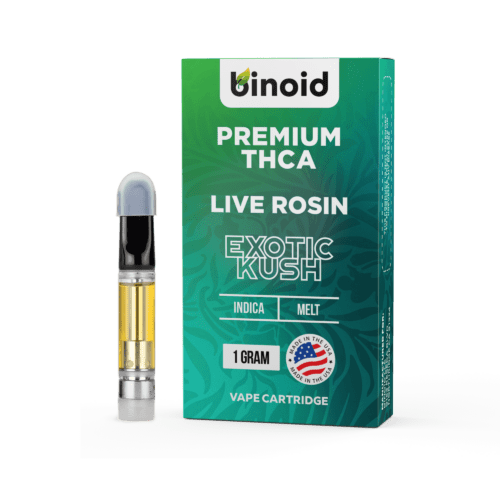
THCA Vape Cartridge Exotic Kush – Live Rosin
$30.99$59.99 -
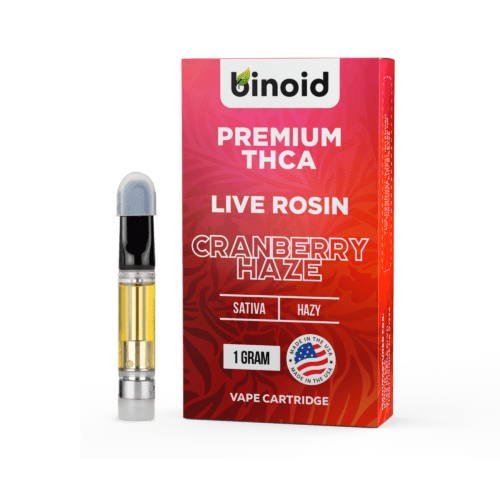
THCA Vape Cartridge Cranberry Haze – Live Rosin
$30.99$59.99 -
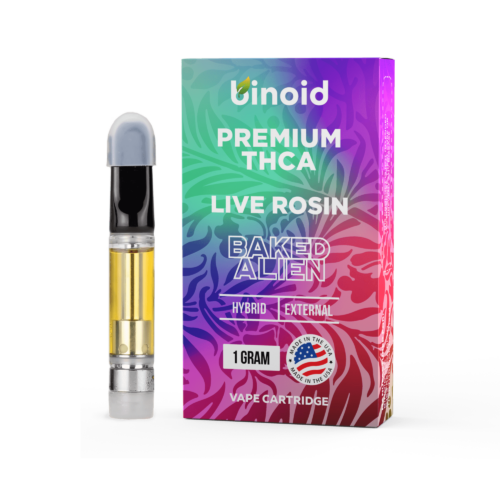
THCA Vape Cartridge Baked Alien – Live Rosin
$30.99$59.99 -
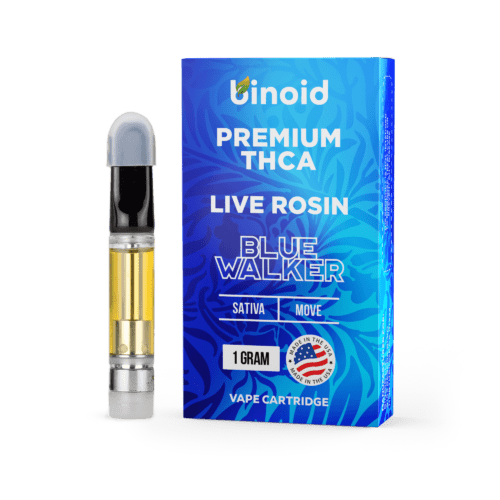
THCA Vape Cartridge Blue Walker – Live Rosin
$30.99$59.99
Molecular Architecture: Why the Cannabinoid Itself Determines Everything
Before you can meaningfully discuss how long a cartridge lasts, you need a baseline literacy in what you are actually vaporizing, because not all hemp derived cannabinoids behave the same way at the molecular level, and those differences have enormous practical consequences for your experience and your consumption rate. The cannabinoid landscape available to consumers today is staggeringly more complex than it was even five years ago. Where the market once offered a fairly binary choice between CBD isolate and THC-dominant products, it now encompasses a rich ecosystem of minor cannabinoids, each with its own pharmacological personality and its own relationship to heat, viscosity, and onset intensity.
Consider Delta 8 THC, the hemp-derived cannabinoid that arguably catalyzed the modern alternative cannabinoid market. Delta 8 is an isomer of Delta 9 THC meaning it shares the same molecular formula but arranges its atoms in a slightly different configuration, specifically around the eighth carbon chain rather than the ninth. That structural difference produces an experience that most consumers describe as smoother, more clear-headed, and substantially less likely to induce the acute anxiety that some people associate with high-potency Delta 9 products. It also affects viscosity.
Delta 8 distillate tends to be thicker than many other cannabinoid oils at room temperature, which means it moves more slowly through a cartridge’s wicking system, which in turn affects how efficiently the hardware can aerosolize it at any given temperature setting. A well-engineered Delta 8 Cartridge the kind you find through a premium source like Binoid CBD accounts for this viscosity profile in its hardware selection, pairing the oil with a coil resistance and airflow system specifically calibrated for thicker distillates. When that engineering is done well, the result is a cartridge that performs consistently from the first draw to the last, without the dreaded burnt-wick flavor that signals a mismatch between oil and hardware.
Then there is THCA, which operates according to an entirely different set of rules. THCA tetrahydrocannabinolic acid is the non-psychoactive precursor to Delta 9 THC that exists naturally in the raw cannabis plant. In its unheated state, it produces no intoxicating effect. But the moment it is subjected to heat the precise thing a vape cartridge is designed to do it undergoes decarboxylation, shedding its carboxyl group and converting into active Delta 9 THC in real time, directly inside the heating chamber. This means a THCA Cartridge is, in practical terms, delivering a Delta 9-equivalent experience while remaining technically compliant under federal hemp regulations, which define hemp products by their Delta 9 THC concentration in their unactivated state.
The implications for consumption rate are significant. Because the experience delivered by a THCA cartridge tends to be more potent per draw than many alternative cannabinoid products, experienced consumers often find themselves taking fewer, shorter draws to achieve their desired effect, which extends cartridge longevity considerably. Newcomers, however, may misjudge the onset and draw more aggressively, consuming the cartridge at a pace that bears no relationship to the manufacturer’s estimated puff count.
The Frontier Molecule: THC-P and the Mathematics of Potency
If Delta 8 is the gateway into the world of hemp derived cannabinoids and THCA is the power user’s choice for a Delta 9-adjacent experience within a compliant framework, then THC-P represents something closer to the frontier a cannabinoid that demands a different relationship with the concept of dosage entirely. THC-P, or tetrahydrocannabiphorol, was formally identified and characterized by Italian researchers in 2019, and what they found was structurally remarkable.
Where Delta 9 THC has a five-carbon alkyl side chain, THC-P has a seven-carbon chain and that additional length appears to dramatically increase its affinity for the body’s CB1 receptors, the primary binding site responsible for the psychoactive effects associated with THC. Early binding affinity studies suggested THC-P may interact with CB1 receptors at a rate roughly 33 times greater than conventional Delta 9 THC, though the subjective human experience is not a simple linear multiplication of that figure. What it does mean, practically, is that a THC-P Cartridge is not a product you approach with the same draw frequency you might apply to a CBD vape or even a standard Delta 8 product.
The consumption mathematics of a THC-P cartridge are therefore inverted relative to almost everything else in the category. Where a 1-gram Delta 8 cartridge might yield 200 or more meaningful sessions depending on individual tolerance and draw habits, a 1-gram THC-P cartridge particularly the kind of high-integrity formulation available from Binoidcbd.com may deliver a significantly greater number of sessions precisely because the potency per draw demands restraint. This is not a flaw in the product; it is a feature of the molecule.
Understanding it is the difference between a consumer who feels that a premium THC-P cartridge is exceptional value and one who overwhelms themselves in the first session and comes away with a skewed impression of the product’s character. The brands that take this seriously Binoid CBD being a consistent example in the hemp derived space invest in clear, honest potency communication and dosage guidance that treats the consumer as an adult capable of calibrating their own experience when given accurate information.
Recommended products
-
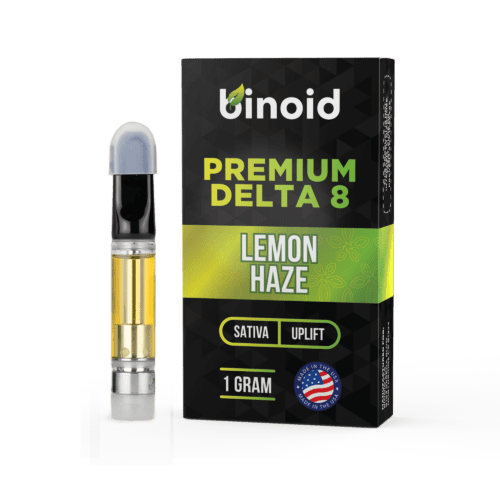
Delta 8 THC Vape Cartridge – Lemon Haze
$26.99$54.99 -
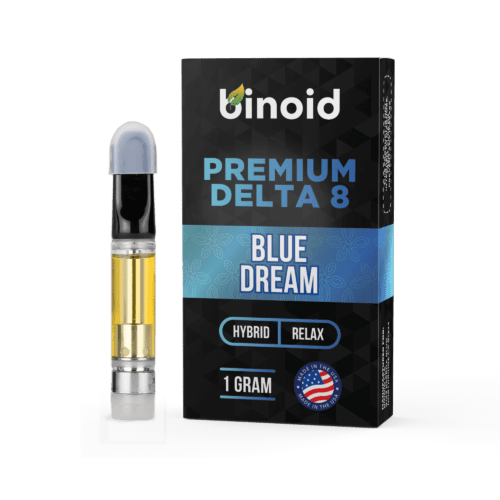
Delta 8 THC Vape Cartridge – Blue Dream
$26.99$54.99 -
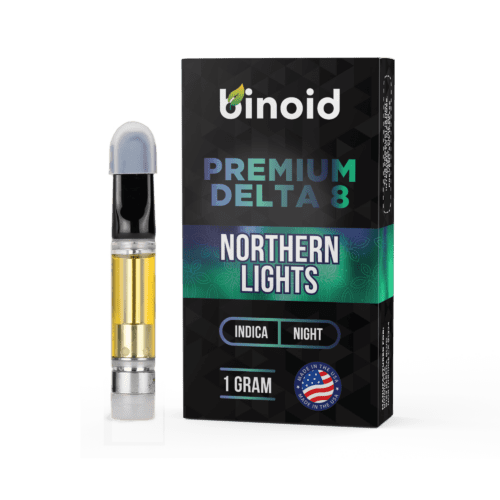
Delta 8 THC Vape Cartridge – Northern Lights
$26.99$59.99 -
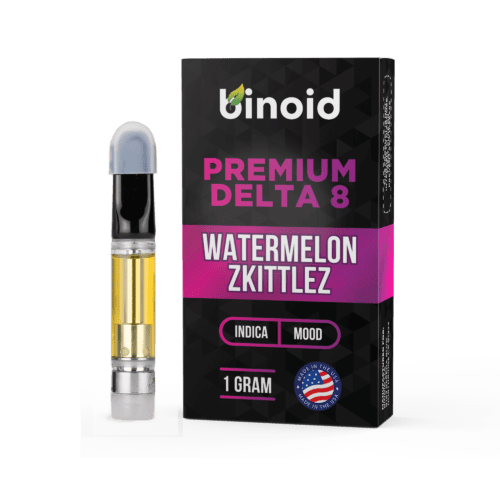
Delta 8 THC Vape Cartridge – Watermelon Zkittlez
$26.99$59.99
Hardware Is Not a Footnote It Is Half the Equation
The oil inside a cartridge receives almost all of the consumer attention and almost all of the marketing investment, which is understandable from a branding perspective and deeply misleading from a performance perspective. The hardware the combination of the cartridge’s coil material, resistance rating, wick composition, chamber design, and airflow architecture is not a passive vessel for delivering the oil. It is an active participant in determining how much oil is consumed per draw, how consistently that consumption occurs across the life of the cartridge, and how faithfully the vaporized output represents the actual cannabinoid profile of the oil inside. A premium oil in a poorly engineered cartridge is a significantly degraded experience. A well-engineered cartridge can make a moderately formulated oil perform substantially above its apparent station.
The dominant coil materials in the current market are ceramic and various forms of metal mesh or resistance wire, most commonly 316L stainless steel or Kanthal. Ceramic coils have become the preferred choice for premium cannabinoid cartridges for several interconnected reasons. Ceramic is chemically inert, meaning it does not introduce any metallic flavor compounds into the vapor stream, even at elevated temperatures. It distributes heat more evenly across its surface area than a wound wire coil, which reduces the likelihood of localized hot spots that can char the oil and produce the harsh, acrid draws that are the signature failure mode of budget hardware.
Ceramic is also more forgiving with thicker distillates the kind associated with Delta 8 and many THCA formulations because its porous structure allows the oil to wick gradually and consistently rather than flooding or running dry depending on the angle of the cartridge. The best cartridges available through Binoid CBD reflect a hardware philosophy that treats the coil and chamber as equal partners with the oil in producing a premium experience a philosophy that is, unfortunately, less universal in the hemp and cannabis hardware market than consumers might hope.
The Human Variable: Why Your Habits Matter More Than the Label
If molecular chemistry is the foundation of cartridge longevity and hardware engineering is the architecture, then human behavior is the weather system chaotic, deeply personal, and capable of rendering every other calculation irrelevant. The number printed on a cartridge’s packaging, whether it suggests 150 puffs or 300, is derived from a hypothetical consumer who does not exist: someone who takes perfectly measured two-second draws at consistent intervals, stores their cartridge at a stable temperature, never lets the battery overheat, and maintains the same tolerance level from the first session to the last. That person is a statistical ghost. Real consumers are far more interesting, and far more variable, which is why two people can purchase the same THCA Cartridge from the same batch on the same day and have one of them finishing it in four days while the other stretches it across three weeks.
Draw length is the single most consequential behavioral variable, and it is also the one that consumers are least likely to consciously monitor. The difference between a two-second draw and a four-second draw is not simply a matter of twice the vapor it is a compounding relationship between heat buildup in the coil, oil viscosity changes as the chamber warms, and the total volume of oil displaced per session. Studies of vaporizer consumption patterns have consistently found that social contexts dramatically increase draw length and frequency, often without the user’s awareness.
A cartridge that lasts a person ten days of solitary evening use may last five days when that same person is sharing sessions with friends, not because they are sharing the cartridge, but because the conversational rhythm of a social setting naturally extends draw duration and shortens the interval between draws. This is not a moral observation about consumption habits it is simply physics and psychology operating in tandem, and any honest accounting of cartridge longevity has to accommodate it.
Battery voltage is the hardware variable that consumers most consistently underestimate. Most cartridges are engineered to perform optimally within a specific voltage range typically between 2.5 and 3.3 volts for standard 510-thread cartridges and the relationship between voltage and oil consumption is not linear. Running a thick Delta 8 Cartridge at 3.8 or 4.0 volts because you want bigger clouds does not simply produce a more intense version of the intended experience.
It superheats the oil, vaporizing it faster than the wick can replenish the chamber, which leads to dry hits, coil degradation, and a consumption rate that can be forty to sixty percent higher than the cartridge‘s rated performance. Premium battery manufacturers have responded to this by building variable voltage devices with preset modes rather than open-ended dials, making it mechanically easier for consumers to stay within the optimal range. But the market is still flooded with cheap, unregulated batteries that will cheerfully destroy a premium cartridge’s performance characteristics in the name of producing a more dramatic visual effect.
Recommended products
-
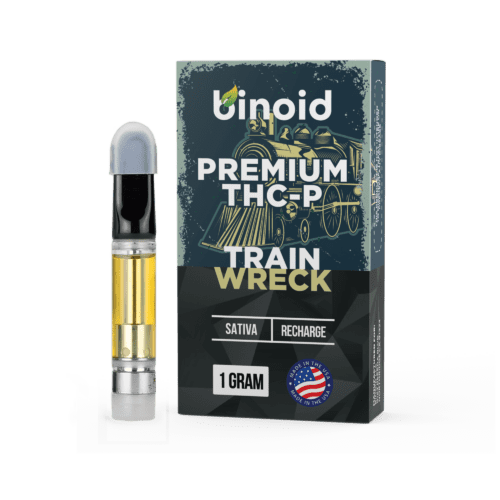
THC-P Vape Cartridge – Trainwreck
$30.99$59.99 -
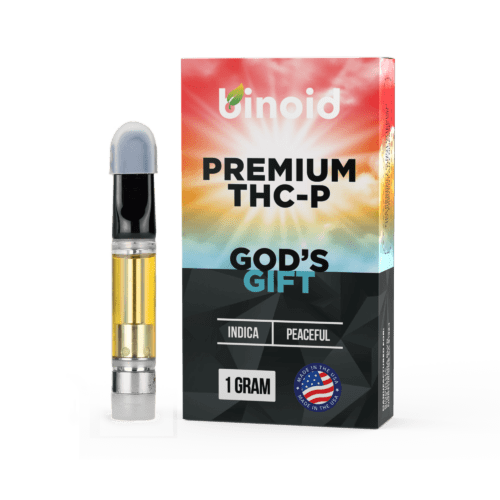
THC-P Vape Cartridge – God’s Gift
$30.99$59.99 -
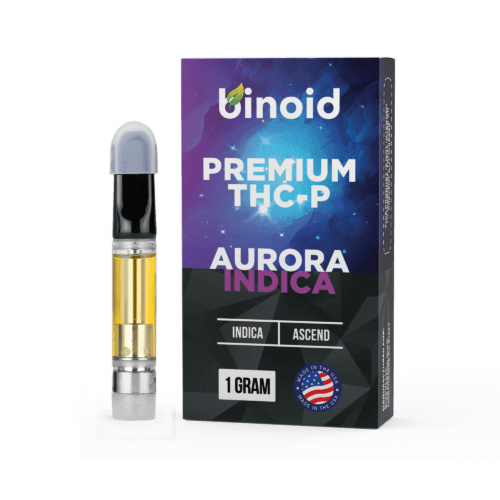
THC-P Vape Cartridge – Aurora Indica
$30.99$59.99 -
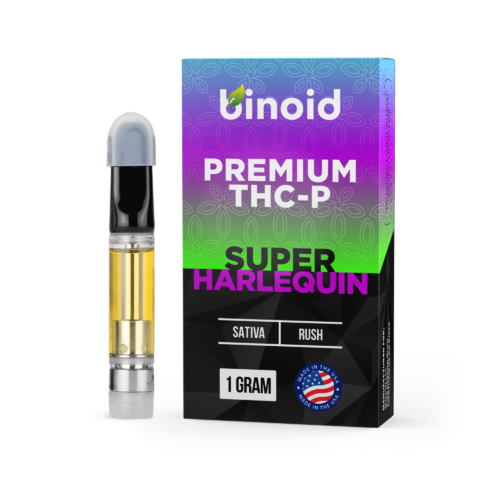
THC-P Vape Cartridge – Super Harlequin
$29.99$59.99
Terpenes: The Overlooked Variable in Longevity and Experience
Any sophisticated conversation about hemp derived cannabinoids and cartridge performance that fails to address terpenes is leaving out a character who turns out to be essential to the plot. Terpenes are the aromatic compounds responsible for the distinctive scent and flavor profiles of different cannabis cultivars the sharp citrus of a Lemon Haze, the earthy musk of an OG Kush, the sweet tropical complexity of a Pineapple Express. They are not merely cosmetic additions to a cannabinoid oil. At the molecular level, terpenes interact with the same endocannabinoid system receptors that cannabinoids engage, and emerging research suggests they modulate and shape the overall experiential character of a cannabinoid product in ways that concentration data alone cannot predict. For the purposes of cartridge longevity, terpenes matter because they are also the primary determinant of oil viscosity and viscosity, as we have established, is the central mechanical variable governing how a cartridge performs across its entire lifespan.
Terpene concentrations in premium vape cartridges typically range from five to fifteen percent by volume, and the specific terpene profile selected by the formulator has profound effects on how the oil flows, how it wicks, and how it vaporizes. High concentrations of myrcene, a terpene common in indica-leaning cultivars, produce a relatively thick, slow-moving oil that pairs well with ceramic coil systems designed for high-viscosity distillates. High concentrations of lighter, more volatile terpenes like limonene or terpinolene produce thinner oils that move more quickly through the wicking system and vaporize at lower temperatures.
A cartridge filled with a limonene-forward formulation run at the same voltage setting as a myrcene-dominant oil will consume itself at a measurably different rate not because either product is superior, but because they are chemically distinct in ways that have real hardware implications. The best brands and Binoid CBD is consistent in this regard select terpene profiles with explicit attention to their interaction with the chosen hardware, treating the formulation as a system rather than a collection of independent ingredients.
Final Verdict: The Discerning Consumer’s Position
The question of how long a THC vape cartridge lasts is, at its core, a question about the relationship between knowledge and experience. Consumers who approach their cartridges with an understanding of what hemp derived cannabinoids actually do at the molecular level, who take the time to read and interpret a COA, who match their hardware to their oil’s viscosity requirements, and who develop conscious awareness of their own consumption habits will reliably extract more value experiential and economic from every cartridge they purchase. Those who treat the cartridge as a black box, trusting the label’s puff count and the brand’s marketing language without scrutiny, will continue to find the math never quite works out in their favor.
The market has never offered more sophisticated options for the educated consumer. The diversity of hemp derived cannabinoids available today from the smooth familiarity of a premium Delta 8 Cartridge to the decarboxylation elegance of a THCA Cartridge to the frontier intensity of a THC-P Cartridge represents a genuine expansion of what vaporized cannabinoid experiences can be. Navigating that landscape well requires exactly the kind of formulation transparency, testing rigor, and hardware integrity that Binoidcbd.com has built its reputation on delivering. The cartridge that lasts longest is not always the one with the most oil it is the one where every decision, from molecular selection to hardware pairing to honest labeling, has been made with the consumer’s actual experience as the governing priority. That cartridge exists. You simply have to know where to look.
To Buy THC Vape Cartridges Click Here
Recommended products
-
THC-P Vape Cartridge – Fruit Loops
$30.99$59.99 -
THC-P Vape Cartridge – White Runtz
$29.99$59.99 -
THC-P Vape Cartridge – Maui Wowie
$29.99$59.99