There is a particular kind of consumer who has moved past the flower stage of their cannabinoid education who has smoked enough THCA flower to understand its rhythms, its terpene expression, its limitations and who is now standing in front of a digital shelf full of unfamiliar words. Wax. Badder. Crumble. Diamonds. These are not flavors or brand names.
They are textures, and each texture represents a distinct set of extraction decisions, a distinct molecular outcome, and a distinct experience waiting on the other side of a dab rig or a vape coil. Understanding THCA concentrates is really an exercise in understanding what happens when you take a plant’s most potent compounds and manipulate the conditions under which they solidify, crystallize, or refuse to do either. It is chemistry performing as craft, and the differences between formats are not cosmetic. They are structural, and they matter enormously to anyone serious about the category.
To Buy THCA Concentrates Click Here
The Common Origin: What All THCA Concentrates Share
Every concentrate on this spectrum begins in roughly the same place: a supercritical CO2 extraction or hydrocarbon extraction process that pulls the full cannabinoid and terpene profile out of raw hemp biomass, leaving behind plant matter, chlorophyll, and the structural bulk that defines flower as a category. What emerges from that initial extraction is a crude oil, rich in THCA but also carrying waxes, lipids, and residual compounds that need to be refined away before the concentrate can be considered finished.
This refinement stage winterization, filtration, and further purification is where quality separates dramatically between producers, and it is also where the eventual texture of the final product begins to be determined. The variables that follow, primarily temperature, agitation, and purging time, are what push a single crude extract toward becoming wax, badder, crumble, or diamonds. It is a bit like watching the same base ingredients produce fudge, caramel, or rock candy depending on how a confectioner manages heat and time the chemistry is nearly identical, but the handling changes everything about the result.
The purity of that starting material is not a footnote. A concentrate is, by definition, an intensified version of whatever went into it, which means any deficiency in the original biomass pesticide residue, inconsistent cannabinoid ratios, degraded terpenes becomes magnified rather than diluted during the concentration process. This is precisely why BinoidCBD.com treats sourcing and lab verification as inseparable from the concentrate production process itself, rather than as a compliance step tacked on at the end. A THCA diamond that tests at 95% purity is only meaningful if the underlying biomass and extraction methodology were rigorous enough to support that number honestly, and the certificate of analysis accompanying each batch is the only real evidence a consumer has that the number on the label reflects the reality inside the jar.
Wax: The Malleable Middle Ground
Wax is often the entry point into the concentrate world, and it earns that position through its approachable, forgiving texture. Structurally, wax sits in a middle zone between a fully crystalline concentrate and a liquid oil it has a soft, opaque, somewhat sticky consistency that makes it easy to handle with a dab tool without the brittleness of crumble or the technical precision diamonds demand. This texture results from an agitation process applied during purging, where the extract is whipped or stirred as it loses residual solvent, introducing air and breaking up the crystalline structure that would otherwise form. The result is a product with a lower relative THCA percentage compared to diamonds, typically because the whipping process retains more of the terpene and lipid content that diamonds are specifically engineered to exclude.
What wax sacrifices in raw potency, it often gains back in flavor and ease of use. Because more of the original terpene profile survives the process, a well-made batch of wax can deliver a more aromatically complex dabbing experience than a purer, more clinical concentrate. This makes it a favorite among consumers who value flavor as much as strength, and it is why premium wax formulations, like those found across Binoid’s concentrate lineup, are often positioned as the connoisseur’s entry point rather than an inferior alternative to flashier formats. The forgiving consistency also means wax tends to be more stable at room temperature than some of its crystalline cousins, which is a meaningful practical consideration for anyone who does not want to babysit their concentrate’s storage conditions.
Badder: Where Whipping Becomes an Art Form
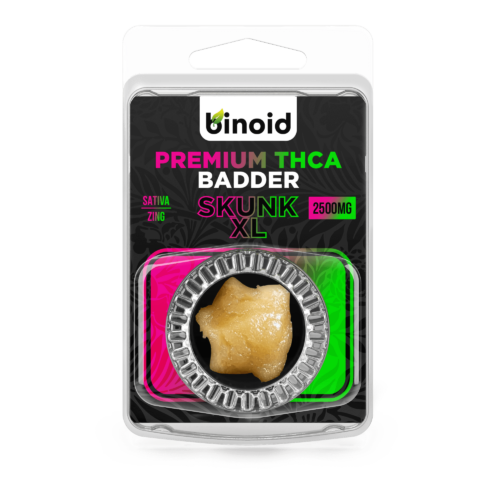
Badder, sometimes styled as “budder,” takes the same whipping principle behind wax and pushes it further, resulting in a texture that genuinely resembles cake batter smooth, creamy, and almost spreadable rather than sticky. This consistency comes from an even more aggressive and controlled agitation process during the purge, one that requires the extraction artist to monitor temperature and moisture with real precision. Too much heat during whipping and the terpenes volatilize away, leaving a flavorless, harsh product. Too little agitation and the batch never achieves the smooth homogeneity that defines badder as a category. The narrow window between these failure modes is exactly why high-quality badder commands respect among concentrate enthusiasts it represents a level of technical control that separates serious extraction labs from operations simply trying to hit a potency number.
The appeal of badder lies in its usability as much as its texture. Its smooth, homogenous consistency makes it exceptionally easy to portion and load, whether into a dab rig, a vaporizer designed for concentrates, or as an addition to THCA flower for an elevated smoking experience. Because the whipping process is generally gentler than what produces wax, badder often preserves an even richer terpene signature, translating into a more vivid and layered flavor profile at the moment of consumption. For the consumer exploring THCA concentrate types, badder frequently represents the sweet spot between potency, flavor, and ease of handling a format that rewards attention without demanding technical dabbing expertise.
Crumble: The Driest, Most Delicate Format
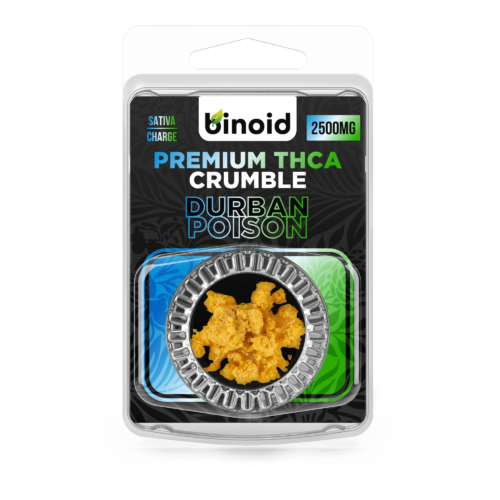
Crumble occupies the opposite end of the moisture spectrum from wax and badder. Where those formats are whipped to retain a degree of pliability, crumble is purged for an extended period at slightly higher temperatures, driving off more of the residual solvent and moisture until the concentrate takes on a dry, honeycomb-like structure that genuinely crumbles apart when handled, much like a dry cheese or a piece of stale cornbread. This extended purge process, while effective at achieving a very clean final product with minimal residual solvent, comes with a real trade-off: the same heat and time that dries the material out also volatilizes a larger percentage of the delicate terpene compounds responsible for aroma and flavor complexity.
What crumble loses in flavor nuance, it often makes up for in stability and ease of storage. Its low moisture content makes it less prone to degradation from humidity compared to stickier formats, and its dry, granular structure makes it simple to portion precisely without the mess that wax or badder can introduce. Crumble also tends to load cleanly into vaporizers designed for concentrate use, since its structure breaks apart evenly rather than clumping around a heating element. For consumers who prioritize a clean, no-fuss dabbing experience over maximal aromatic complexity, and who value knowing exactly how much they are portioning each session, crumble remains a genuinely compelling format one that BinoidCBD.com continues to refine as extraction technology and terpene-reintroduction techniques improve across the industry.
Diamonds: The Crystalline Pinnacle of Purity
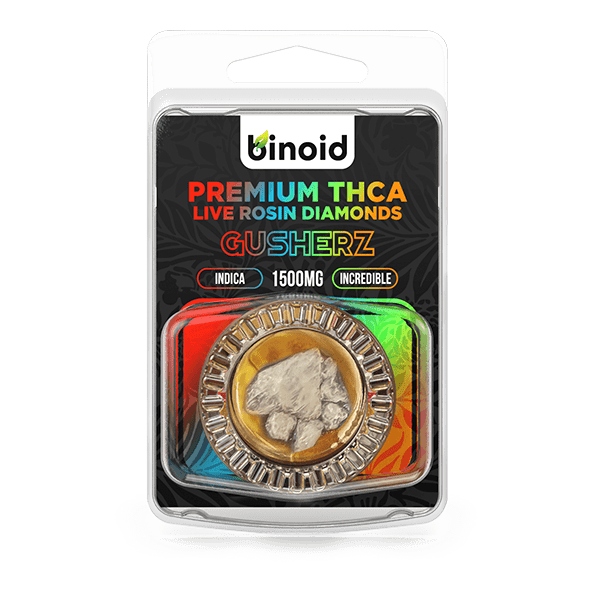
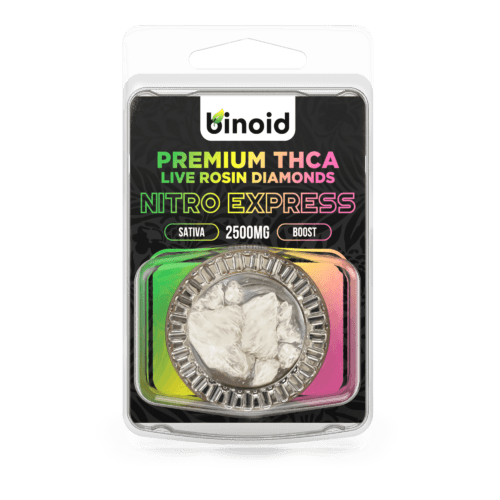
THCA diamonds represent the far end of the purity spectrum, and their name is not a marketing flourish the crystalline structures that form during a controlled, slow crystallization process genuinely resemble small, translucent gemstones. This structure emerges through a nucleation process in which THCA molecules, isolated from the surrounding terpene and lipid content of a crude extract, are given time and specific temperature conditions to organize themselves into a repeating crystal lattice. The process is slow, deliberate, and technically demanding, often taking days or weeks rather than the hours required to whip a batch of wax or badder. The reward for that patience is a concentrate that can test above 95% THCA, representing one of the purest cannabinoid products available anywhere in the legal hemp market.
Because the crystallization process specifically excludes terpenes to achieve that purity, diamonds are almost always sold alongside a separately preserved terpene sauce, reintroducing aromatic complexity in a controlled and intentional way rather than relying on whatever survived the extraction. This combination a nearly pure cannabinoid crystal paired with a terpene-rich liquid allows consumers to experience both the maximal potency of decarboxylated THCA and a curated flavor profile that a producer has specifically engineered rather than left to chance.
Diamonds are, unambiguously, a product for the experienced consumer. Upon decarboxylation, the sheer concentration of cannabinoid content delivers an intensity that demands genuine tolerance awareness, and it is a format where BinoidCBD.com‘s commitment to batch-specific, ISO 17025-accredited lab testing becomes especially critical, since even small variances in a near-pure product translate into meaningfully different dosing outcomes.
Choosing Your Format: A Consumer Decision Framework
The decision among wax, badder, crumble, and diamonds ultimately comes down to a personal calculation involving tolerance, flavor priorities, and the practical realities of how you intend to consume. A newer concentrate consumer, or one who values terpene complexity as much as raw strength, will likely find more satisfaction in a well-made wax or badder, where the whipping process preserves aromatic richness alongside a still-substantial potency profile. A consumer who prioritizes clean, precise dosing and doesn’t mind a more austere flavor experience may gravitate toward crumble, appreciating its stability and straightforward handling above all else. And the experienced connoisseur, the one who has already built a working knowledge of their own tolerance and wants to engage with the most concentrated, architecturally pure expression of the cannabinoid available, will find that diamonds paired with a quality terpene sauce deliver an experience that no other format can quite replicate.
What unites all four formats, and what should unite every purchasing decision in this category, is the non-negotiable importance of verified lab documentation. A concentrate is an intensified product, and intensification without verification is simply a gamble with higher stakes than flower ever presented. Whether you are reaching for a jar of aromatic badder or a container of crystalline diamonds, the certificate of analysis behind that product confirming potency, confirming purity, confirming the absence of residual solvents and contaminants is the difference between an informed purchase and a hopeful one. Across its full concentrate catalog, BinoidCBD.com has built its reputation on making that documentation not just available but genuinely central to how the products are presented, which is precisely the standard a maturing, increasingly sophisticated consumer base has every right to expect.
To Buy THCA Concentrates Click Here