The Crystal in the Jar
There is a particular kind of skepticism that develops in anyone who has spent real time in the hemp-derived cannabinoid space a hard-won wariness born of one too many products that promised transcendence and delivered a headache and a receipt. So when a jar of THCA Diamonds lands on the table, the instinct is not excitement so much as interrogation. What is actually in here. Who verified it. And does the physical object in front of me match the poetry printed on the label. These are not cynical questions; they are the only questions worth asking in a market where potency claims are cheap and molecular truth is expensive. This review exists to answer them, specifically as they apply to Binoid’s highest-potency concentrate offering, and to do so with the kind of unglamorous rigor that the category deserves but rarely receives.
THCA Diamonds occupy a strange and fascinating position in the cannabinoid hierarchy. They are, structurally speaking, among the purest expressions of a single cannabinoid available anywhere in the legal hemp market crystalline structures that form through a controlled process of nucleation, typically inside a hydrocarbon or solventless extraction environment, where tetrahydrocannabinolic acid is coaxed out of solution and allowed to organize itself into a lattice of near-flawless molecular architecture. Watching this process, or even just holding the finished product up to light, produces something close to genuine awe. These are not ambiguous, waxy concentrates of uncertain composition. They are structured, faceted, almost geological in their precision, and that visual clarity turns out to be a reasonably good proxy for the purity claims that accompany them.
To Buy THCA Diamonds Products Click Here
What Actually Arrived: First Impressions and Physical Assessment
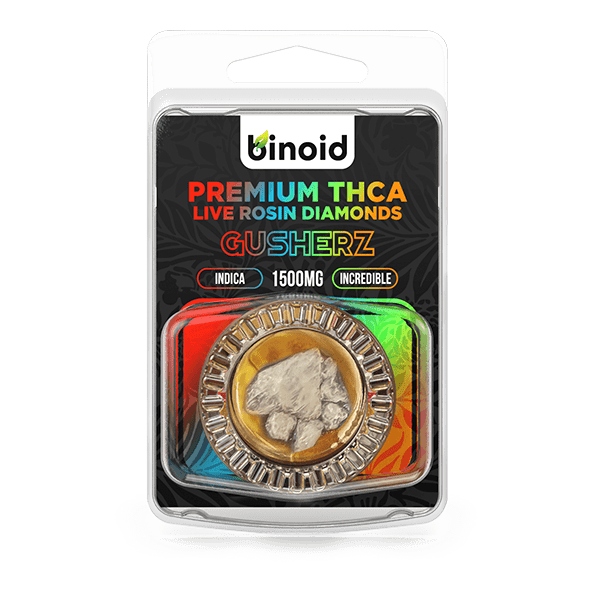
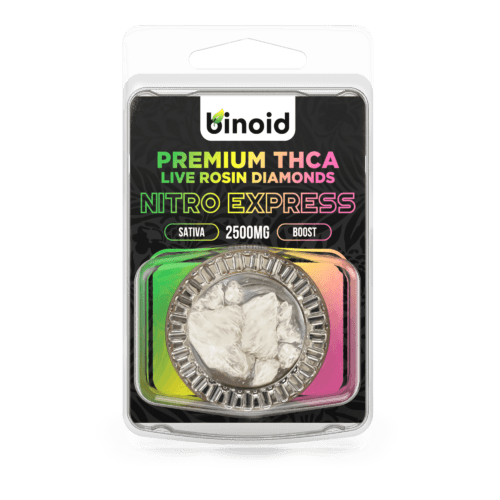
The sample under review arrived in the kind of packaging that signals a brand paying attention to details most competitors skip entirely a sealed, opaque, UV-resistant container with a batch number printed clearly on the label, the kind of small design choice that tells you a company has thought about degradation before the customer ever has to. Cracking the seal reveals THCA Diamonds that are genuinely translucent rather than cloudy or amber-tinted, a visual signal that correlates reasonably well with high purity and minimal residual plant lipids or chlorophyll carried over from extraction. The texture underfoot of a dab tool is exactly what the category promises: hard, glass-like, resistant to the kind of gummy smearing that lower-quality concentrates exhibit when they haven’t been fully purged of residual solvent.
Aroma is where concentrates often reveal their manufacturing shortcuts, because terpenes are notoriously volatile and the first casualty of an aggressive or poorly controlled extraction run. The sample carried a distinct, recognizable terpene signature sharp, slightly citrus-forward, with an undertone that suggested the cultivar’s original aromatic identity had survived the extraction and crystallization process largely intact. This matters more than it might initially seem. A diamond that smells like nothing, or worse, like acetone or butane, is telling you something uncomfortable about either the purging process or the extraction chemistry that produced it. This one smelled like cannabis, which is a lower bar than it should be and a higher one than most competitors clear.
The Lab Data: Reading the Certificate of Analysis Line by Line
No THCA Diamond review deserves to be taken seriously without a genuine engagement with the certificate of analysis, because appearance and aroma are useful but ultimately subjective signals, while a COA from an accredited laboratory is the closest thing this category has to objective truth. The batch-specific COA available through Binoidcbd.com listed a THCA concentration north of ninety-five percent, a figure that sits comfortably within the range serious concentrate connoisseurs expect from a legitimately high-purity diamond rather than a diluted or poorly crystallized batch being marketed with aspirational language. Delta 9 THC, in its raw pre-decarboxylation state, registered comfortably within federal hemp compliance thresholds, which is precisely the regulatory tightrope that makes the entire THCA product category legally viable in the first place.
Beyond potency, the panel included the full battery of safety analytes that any product entering a human body ought to be screened against: residual solvents, heavy metals, pesticide residues, and microbial contamination. Every category returned clean, and the laboratory itself carried ISO 17025 accreditation, which is a detail easy to skim past but genuinely important accreditation means the lab has demonstrated instrument calibration standards and participated in interlaboratory comparison testing that validates the accuracy of its reported numbers. A COA from an unaccredited lab is, at best, a best guess. This was not that. The batch number on the packaging matched the batch number on the certificate, searchable directly on the website without friction, which sounds like a low bar until you’ve spent time on brand websites where that basic transparency is nowhere to be found.
The Decarboxylation Moment: What Actually Happens When You Use It
Here is the part of the THCA conversation that gets flattened into marketing shorthand more often than it deserves careful explanation. THCA, in its raw crystalline form, is not intoxicating. The molecule carries a carboxyl group that creates a steric conflict preventing efficient binding to the CB1 receptor, which means the diamond sitting in the jar is, chemically speaking, inert with respect to psychoactivity until heat is applied. The moment that heat arrives via a dab rig, a vaporizer set to an appropriate temperature, or any consumption method that reaches the roughly 220°F threshold required for decarboxylation the carboxyl group is cleaved away, and what remains is delta 9 THC in its fully psychoactive form. This is the entire experiential premise of the product category, and testing it in practice means paying close attention to exactly this transition.
Applied to a low-temperature dab setup, the sample vaporized cleanly, without the harsh, acrid quality that lower-purity concentrates sometimes produce when residual plant material or incompletely purged solvents are present in the mix. The resulting vapor carried a genuine terpene-forward flavor profile rather than the flat, cardboard-like taste that overprocessed distillate sometimes exhibits, and the onset of effects arrived quickly, consistent with what would be expected from a concentrate delivering a highly bioavailable, rapidly absorbed dose of decarboxylated THC. Given the concentration involved, a single small dab represents a substantial dose, and this is a category that rewards patience and a working knowledge of one’s own tolerance far more than it rewards enthusiasm. This is not a beginner’s product, and treating it as one is the single most common mistake new concentrate consumers make.
Comparing the Category: Where Binoid’s Diamonds Sit Against the Field
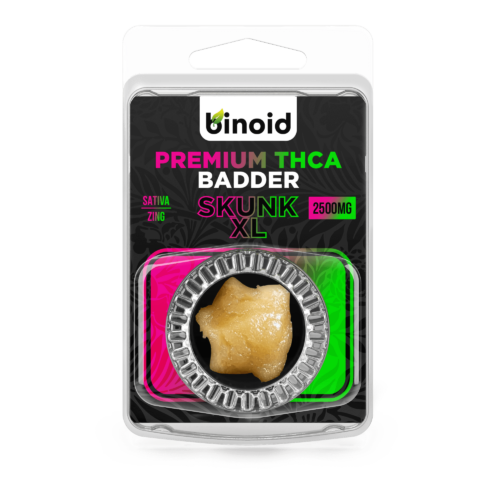
The broader THCA concentrate market has expanded rapidly, and with that expansion has come the predictable spread of quality some genuinely excellent, much of it mediocre, and a meaningful percentage that fails basic scrutiny the moment a COA is actually requested rather than assumed. Diamonds sourced from biomass of uncertain origin, processed through extraction runs without adequate purging protocols, frequently present as cloudy, unstable, or prone to degrading back into a sugary, less potent form within weeks of purchase. The structural integrity of a properly made diamond should hold for a meaningful period under correct storage conditions, and the sample reviewed here showed no signs of that kind of premature breakdown even after an extended observation window.
What distinguishes Binoid’s approach, based on both the physical product and the documentation supporting it, is a consistency across the entire chain of custody domestic hemp sourcing, controlled extraction methodology, and batch-specific verification that is actually accessible rather than theoretically available. BinoidCBD‘s broader concentrate lineup reflects this same standard throughout, which matters because a single excellent product from a brand with inconsistent quality control elsewhere is a much weaker signal than a single excellent product from a brand whose entire catalog demonstrates the same rigor. The diamonds reviewed here did not feel like an outlier success. They felt like the expected output of a manufacturing process built around genuine quality control rather than one lucky batch photographed for marketing purposes.
The Verdict: Who This Product Is Actually For
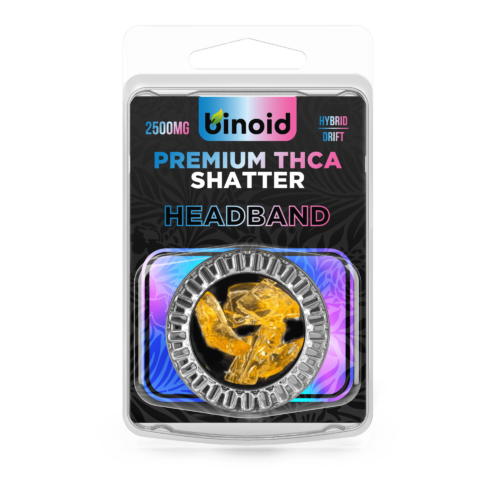
A THCA diamond of this purity and quality is not a casual purchase, and it would be dishonest to frame it as an entry point for anyone newly exploring hemp-derived cannabinoids. It is, instead, a product built for the consumer who already understands concentrate consumption, who has developed enough tolerance and experiential literacy to appreciate the difference between a properly purged, terpene-rich diamond and the harsher, less refined alternatives that dominate the lower end of the market. For that consumer, the combination of visual clarity, aromatic integrity, verified potency, and clean safety analytes makes a genuinely compelling case. The experience delivered upon decarboxylation was consistent, potent, and free of the harshness or off-flavors that signal cut corners somewhere upstream in the production process.
The larger takeaway extends beyond this single product and speaks to something more useful for navigating the category generally: the physical and sensory cues that suggest quality clarity, aroma, clean vaporization turned out to align closely with what the laboratory data independently confirmed, which is exactly the kind of correlation a discerning consumer should be looking for before trusting a brand with repeat business. Concentrates purchased through BinoidCBD come with that alignment built in, batch after batch, which is ultimately the only claim that matters in a category this potent and this easy to get wrong.