The Most Spectacular Thing in the Hemp Derived Concentrate Market
There is a particular kind of silence that falls over a room when someone produces a jar of THCA Diamonds for the first time. It is the silence of people who thought they understood what a cannabis concentrate was supposed to look like a silence quickly filled by the kind of questions that reveal just how much the hemp derived concentrate market has evolved beyond the amber slabs and dark waxes that defined an earlier era. THCA Diamonds do not look like a drug. They look like something a geologist would lock in a display case, or something a jeweler might examine under magnification before setting into platinum.
They are crystalline, architecturally precise, and faintly luminous in the right light and they represent one of the most technically sophisticated expressions of cannabinoid science currently available to the legal hemp consumer. Understanding what they are, how they are made, and how to use them intelligently is the project of this article, and it is a project that rewards patience, because the science underneath the spectacle is genuinely fascinating.
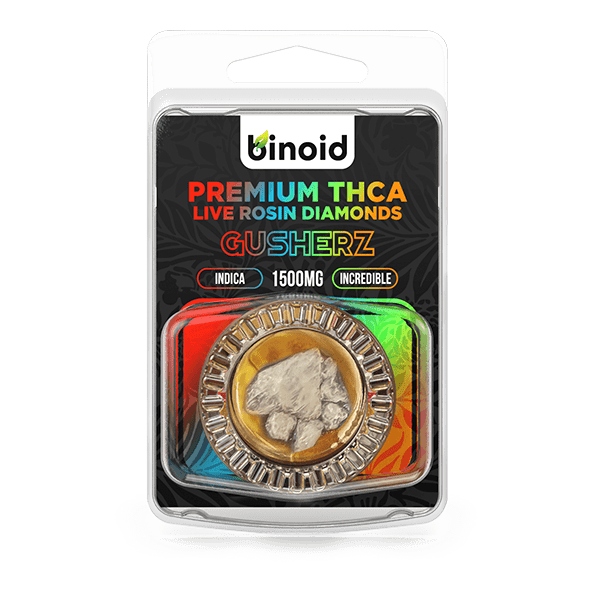
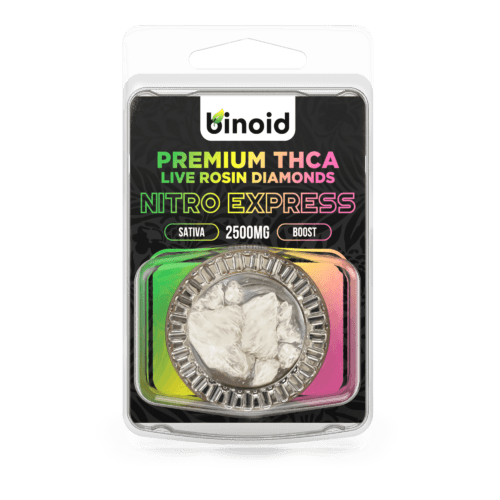
The word “diamond” in this context is not purely metaphorical, though it earns its name on aesthetic grounds alone. THCA Diamonds are crystalline structures composed almost entirely of THCA tetrahydrocannabinolic acid in its purest isolated form, often testing at concentrations between 95 and 99 percent purity. That level of concentration is essentially unachievable through any other extraction methodology currently available at commercial scale, which is one of the reasons diamonds occupy a category of their own in the concentrate market rather than simply being a more refined version of existing products.
They are the result of a specific set of conditions temperature, pressure, solvent saturation, and time conspiring to coax a cannabinoid out of solution and into an ordered crystalline lattice, molecule by molecule, in a process that has more in common with industrial chemistry than with anything that traditionally happened in a grow house. The end product is a concentrate that delivers an experience of remarkable clarity and intensity, and one that raises genuinely interesting questions about the relationship between purity and complexity in cannabinoid science.
To Buy THCA Diamonds Products Click Here
The Molecular Foundation: THCA Before the Heat
To understand what THCA Diamonds are, you first need a precise understanding of what THCA itself is not as a regulatory category or a marketing term, but as a molecule with a specific structure, a specific behavior, and a specific relationship to the more famous compound it becomes under the right conditions. THCA, or tetrahydrocannabinolic acid, is the biosynthetic precursor to Delta 9 THC. In the living cannabis plant, the vast majority of the psychoactive potential exists not as active THC but as this carboxylated acid form, which carries an additional carboxyl group a COOH molecular appendage that fundamentally alters how the compound interacts with the human body’s endocannabinoid system.
In its raw, unheated state, THCA does not bind effectively to the CB1 receptors that produce the psychoactive effects most consumers associate with THC. It is, in a meaningful pharmacological sense, inert with respect to intoxication which is precisely what allows hemp-derived THCA products to exist within a federal compliance framework that defines hemp by its Delta 9 THC concentration in the unactivated state.
The transformation from THCA to active Delta 9 THC is called decarboxylation, and it is one of the most consequential chemical reactions in the entire cannabinoid space. When sufficient heat is applied temperatures above approximately 220 degrees Fahrenheit, sustained for enough time to drive off the carboxyl group as carbon dioxide the molecular architecture of THCA reorganizes itself, and what remains is Delta 9 THC in its fully active form.
This reaction happens instantaneously in the context of a dab rig or a vaporizer, which means that consuming THCA Diamonds through any heat-based method produces an experience that is essentially identical to consuming an equivalent concentration of activated Delta 9 THC. The practical implication for the consumer is significant: a concentrate testing at 97 percent THCA is not a mild or supplemental product. It is, upon application of heat, one of the most potent cannabinoid experiences currently available in the legal hemp market, and it should be approached with the respect that any high-concentration active compound demands.
The Architecture of Crystallization: How Diamonds Are Actually Made
The production of THCA Diamonds is where cannabinoid science shades into something that would feel at home in a materials engineering laboratory, and the process is worth understanding in some detail because it explains both the product’s exceptional purity and its position at the premium end of the concentrate market. There are two primary pathways to diamond formation, and while they share the same fundamental chemistry, they produce products with meaningfully different character profiles that matter enormously to the discerning consumer.
The first is the closed-loop crystallization method, which begins with a high-purity hydrocarbon extraction typically using butane or a butane-propane blend as the solvent followed by a deliberate supersaturation process in which the extract is placed in a sealed vessel and allowed to rest under specific temperature and pressure conditions over a period of days or weeks. As the solvent slowly evaporates and the solution becomes increasingly concentrated, THCA molecules begin to organize themselves into crystalline structures, nucleating around microscopic impurities and growing outward in the same way that geological crystals form in mineralizing solutions deep in the earth’s crust.
The second pathway is the “diamond mining” technique applied to live resin extractions, where freshly frozen cannabis material harvested and immediately frozen to preserve the full terpene and cannabinoid profile of the living plant is extracted at low temperatures to produce a full-spectrum sauce. This sauce, a heterogeneous mixture of crystalline THCA and a terpene-rich liquid phase sometimes called “the terp sauce,” is then allowed to separate naturally over time, with the THCA crystals sinking through the more fluid terpene matrix and accumulating at the bottom of the vessel.
The resulting diamonds, while chemically similar to those produced through closed-loop crystallization, carry trace amounts of the surrounding terpene environment that the crystallization process cannot entirely exclude, giving them a marginally more complex aromatic profile than their laboratory-crystallized counterparts. Both methods, when executed with the sourcing integrity and technical discipline that defines operations like Binoid CBD, produce diamonds of extraordinary quality but the live resin pathway tends to attract consumers who prioritize experiential complexity, while the closed-loop pathway appeals to those seeking maximum cannabinoid concentration and purity above all other considerations.
The Consumption Landscape: How to Actually Use THCA Diamonds
There is a persistent myth in the concentrate community that THCA Diamonds are an exclusively advanced-consumer product something reserved for veterans with elaborate glass rigs and a working knowledge of titanium nail metallurgy. That myth is understandable in its origins. Diamonds emerged from the same high-end extract culture that produced elaborate quartz banger setups, infrared thermometers for precision temperature monitoring, and a vocabulary of consumption technique that can feel genuinely intimidating to anyone approaching concentrates for the first time.
But the reality of modern diamond consumption is considerably more accessible than that mythology suggests, and the expansion of hardware options available to today’s consumer has made it possible to engage with these extraordinary crystalline structures across a spectrum of formats that range from the elegantly simple to the technically sophisticated. Understanding those formats and the meaningful differences between them is essential to getting the most from a product that, at its best, represents the apex of what hemp derived cannabinoid science can currently produce.
The most traditional consumption method, and still the one that most experienced concentrate consumers consider definitive, is dabbing the process of applying a small quantity of concentrate to a pre-heated surface, typically a quartz banger or ceramic nail attached to a water pipe, and inhaling the resulting vapor through a water filtration chamber. For THCA Diamonds, dabbing is particularly well-suited because the high surface temperature of a properly heated banger ensures complete and instantaneous decarboxylation of the THCA, converting it entirely to active Delta 9 THC in the moment of contact and delivering the full potency of the concentrate in a single, clean inhalation.
The temperature at which that banger is heated matters enormously a distinction that separates the casual dabber from the genuinely sophisticated consumer. Low-temperature dabs, typically in the range of 450 to 550 degrees Fahrenheit, preserve more of the terpene character in the vapor and produce a smoother, more flavorful experience, while high-temperature dabs above 700 degrees Fahrenheit produce larger, denser vapor clouds at the cost of terpene degradation and a harsher respiratory experience. For pure THCA Diamonds with minimal terpene content, the temperature debate is somewhat less consequential than it is for full-spectrum concentrates, but the low-to-mid temperature range remains the preferred approach for consumers who prioritize the quality of the experience over its sheer visual drama.
The second major consumption format has emerged more recently and represents a genuine democratization of the diamond experience: the electronic dab rig, or e-rig, and its more portable cousin, the dab pen. Devices like the Puffco Peak and its various competitors have eliminated the need for a torch, a precisely timed heat cycle, and the particular hand-eye coordination that traditional dabbing demands, replacing the entire ritual with an electronically controlled ceramic or quartz atomizer that heats to a user-selected temperature at the press of a button.
For THCA Diamonds, these devices work exceptionally well precisely because the crystalline form factor is easy to load, melts cleanly on the heated surface without the splatter or runoff associated with waxier concentrates, and delivers a consistent experience that is reproducible across sessions in a way that torch-based dabbing rarely achieves for newer consumers. Binoid CBD has recognized this shift in the consumption landscape and formulates and packages its diamond products with the full range of consumption hardware in mind, which reflects the kind of consumer-forward thinking that distinguishes a genuinely sophisticated operation from brands that design exclusively for a single use case.
THCA Diamonds in Context: Badder, Crumble, and Hash Rosin
To appreciate where THCA Diamonds sit in the broader concentrate ecosystem, it is necessary to understand the landscape they inhabit a landscape populated by a rich diversity of textures, extraction methodologies, and experiential profiles, each with its own devoted constituency and its own legitimate claim to a place in the discerning consumer’s rotation. The concentrate market is not a hierarchy with diamonds at the apex and everything else arranged beneath them in descending order of merit. It is more accurately understood as a palette, with different products offering different qualities that suit different moments, moods, and consumption contexts. Diamonds are extraordinary for what they are, but they do not make Badder, Crumble, or Hash Rosin obsolete they simply occupy a different position in a more complete picture of what concentrated cannabinoids can be.
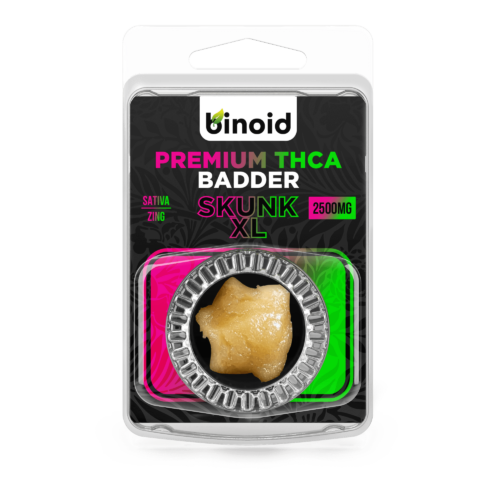
Badder sometimes spelled “batter” and occasionally marketed under the broader category of “budder” is a whipped, emulsified concentrate with a soft, malleable consistency that falls somewhere between cake frosting and peanut butter depending on its specific terpene content and processing conditions. It is produced by agitating a concentrate during the purging process, incorporating air into the matrix and breaking up the crystalline structures that would otherwise form spontaneously in a high-THCA extract. The result is a product that is significantly easier to handle and portion than diamonds it scoops cleanly, loads easily onto a dab tool, and melts predictably on a heated surface while retaining a terpene profile that is often richer and more expressive than that of a pure crystalline isolate.
The trade-off is concentration: Badder typically tests in the 70 to 85 percent total cannabinoid range, meaningfully below the 95-plus percent purity of premium diamonds, which means the per-draw potency is lower and the flavor is more prominent. For consumers who prioritize a nuanced, full-spectrum experience over maximum cannabinoid concentration, Badder is frequently the more satisfying choice and the Badder formulations available through Binoidcbd.com reflect the same sourcing and testing standards that define the brand’s diamond lineup.
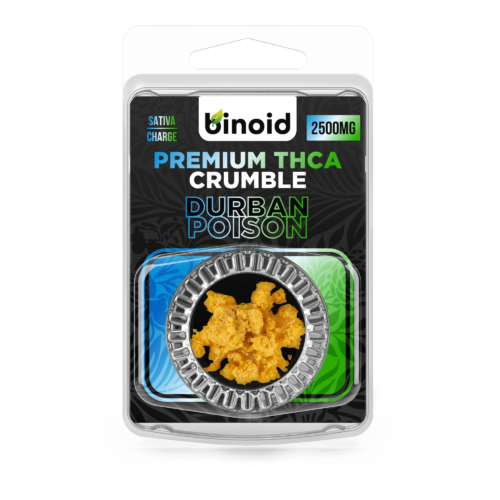
Crumble occupies an adjacent space in the concentrate taxonomy, sharing Badder’s emulsified character but achieving a drier, more friable texture that breaks apart into irregular pieces rather than spreading. The crumble texture is typically the result of a longer, lower-temperature purging process that removes more residual solvent from the extract while simultaneously allowing partial crystallization to occur in a disordered, non-uniform pattern producing something that looks vaguely like honeycomb or compressed yellow sugar. It is an exceptionally versatile format. Crumble can be dabbed in the conventional sense, loaded into a dab pen, or in a consumption approach that remains popular among flower-forward consumers crumbled over the top of a packed bowl or rolled into a joint or blunt to amplify the potency of a traditional smoking experience.
The latter technique is particularly relevant in the context of THCA concentrates, because the combustion temperatures of a bowl or a joint are more than sufficient to decarboxylate the THCA in real time, delivering the full cannabinoid payload of the crumble alongside the terpene and cannabinoid profile of the flower beneath it. It is not the most efficient delivery mechanism from a pure bioavailability standpoint, but it is a deeply satisfying experiential ritual for consumers who maintain an emotional connection to the traditions of flower-based consumption while seeking a meaningful potency elevation.
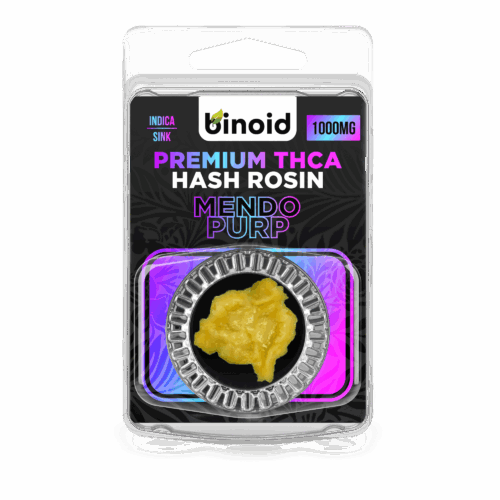
Hash Rosin is perhaps the most philosophically distinct product in this constellation, and its differences from the solvent-extracted concentrates that dominate the commercial market go beyond chemistry into something that feels almost like an argument about values. Hash Rosin is produced through a solventless extraction process no butane, no propane, no ethanol that uses only heat and pressure, applied to carefully prepared ice water hash, to mechanically separate the resin from the plant material and consolidate it into a concentrated form. The absence of solvent in the production process is, for a significant and growing segment of the concentrate consumer market, not simply a technical distinction but a genuine quality preference a belief that the most authentic expression of a plant’s cannabinoid and terpene profile is one that has never been exposed to the chemical interventions that solvent extraction necessarily involves.
The resulting product tends to have a richer, more complex terpene profile than solvent-extracted concentrates, a softer and more varied texture that ranges from a stable, creamy consistency to a more fluid, sauce-like form depending on the cultivar and pressing conditions, and a flavor that many experienced consumers describe as the most faithful representation of the living plant available in any concentrated format. Binoid CBD approaches the Hash Rosin category with the same commitment to sourcing integrity and third-party verification that defines its entire catalog, recognizing that solventless does not automatically mean cleaner in the absence of rigorous testing a nuance that matters enormously in a market where the “natural” positioning of a product is not always matched by its actual production standards.
The Art of the Combination: Diamonds in Sauce
One of the most sophisticated and increasingly mainstream ways to experience THCA Diamonds is not in their pure, isolated form at all, but in combination with the terpene-rich liquid phase that naturally accompanies them in a live resin extraction. This combination format, typically marketed as “diamonds and sauce” or “THC-A diamonds in terp sauce,” represents a considered answer to the central tension in the pure diamond experience: the trade-off between maximal cannabinoid concentration and the experiential richness that terpenes provide. By suspending high-purity THCA crystals in a matrix of liquid terpenes derived from the same extraction, formulators can deliver a product that combines the potency ceiling of crystalline isolate with the flavor complexity and potential entourage effects of a full-spectrum terpene profile a both/and solution to what initially presents as an either/or problem.
The terpene sauce in a diamonds-and-sauce product is not simply a flavor additive. It is a chemically complex mixture of monoterpenes, sesquiterpenes, and occasionally preserved minor cannabinoids that interact with the THCA in the vessel and with the consumer’s endocannabinoid system in ways that are meaningfully different from either component consumed in isolation. Myrcene, one of the most abundant terpenes in cannabis-derived terpene profiles, contributes a musky, earthy aromatic character while also appearing to influence the speed and intensity of cannabinoid onset through mechanisms that researchers are still working to fully characterize.
Limonene adds a sharp citrus brightness that tends to produce a more energetically oriented experiential profile. Caryophyllene, a sesquiterpene found in black pepper and cloves as well as cannabis, interacts directly with CB2 receptors in a way that distinguishes it from purely aromatic terpenes and contributes a distinctive spiced warmth to the flavor profile. When Binoid CBD curates a diamonds-and-sauce product, the terpene selection is not an afterthought appended to a cannabinoid formulation it is an integral dimension of the product’s design, and the COA documentation available at Binoidcbd.com reflects that by providing terpene profile data alongside the cannabinoid panel, giving consumers the informational tools to understand exactly what they are engaging with.
The Final Verdict: Do THCA Diamonds Belong in Your Rotation?
The honest answer to this question is conditional, which is perhaps the most useful thing that can be said about any product operating at the extreme end of a potency spectrum. THCA Diamonds are not the right entry point for someone new to concentrated cannabinoids not because they are inherently dangerous or irresponsible products, but because their extraordinary concentration demands a calibrated relationship with dosage that takes time and experience to develop. A consumer who has never worked with concentrates does not yet have the tolerance baseline or the consumption intuition required to interact productively with a 97 percent THCA crystalline isolate, and the experience of misjudging that interaction is not one that tends to produce loyal advocates for the product category. The concentrate journey has a logical progression, and diamonds sit near its summit.
For the consumer who has developed genuine fluency with the concentrate landscape who understands the difference between a low-temperature dab and a high-temperature one, who has learned to read their own response to cannabinoid potency with reasonable accuracy, and who approaches new products with curiosity rather than bravado THCA Diamonds represent one of the most remarkable experiences currently available in the legal hemp market. They are pure in a way that very few consumable products achieve. They are technically fascinating in their production.
They deliver an experience of exceptional clarity and intensity that the best flower and even most other concentrates simply cannot replicate. And when they are sourced from an operation like Binoid CBD, where the commitment to testing integrity, transparent documentation, and formulation sophistication is embedded in the brand’s actual operating standards rather than its marketing language, they represent an extraordinary intersection of science, craft, and consumer respect that is genuinely rare in a market that still has far too much space between its best and its worst offerings.
The jar of diamonds sitting on the table, catching the light in a way that makes everyone in the room stop talking, is not just a visually striking product. It is the material expression of a set of decisions about sourcing, about chemistry, about hardware, about honesty that separates a brand worth trusting from one worth avoiding. In a market defined by its opacity, that clarity is worth more than any purity percentage printed on a label. It just happens to be that Binoidcbd.com offers both.