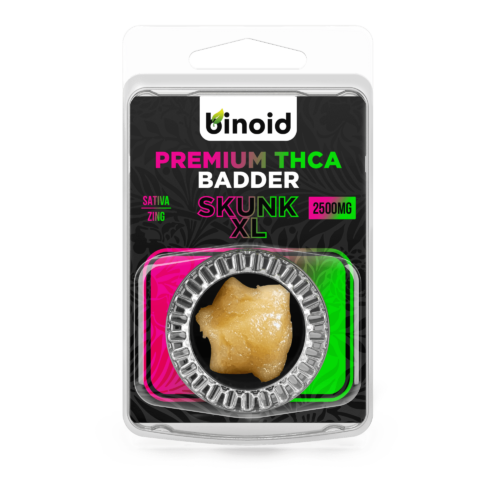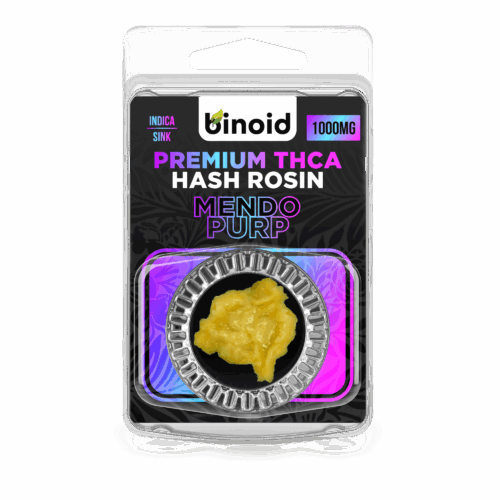
Every plant has a public face and a private one. The public face of hemp-derived THCA is the flower, a frosted, fragrant bud that looks like it belongs in a botanical illustration. The private face is a crystal, a translucent shard of nearly pure tetrahydrocannabinolic acid that looks more like something a jeweler would inspect under a loupe. Both are the same molecule at their core, and both eventually deliver the same experience once heat completes their transformation. The comparison of THCA Diamonds vs flower is really a comparison of philosophies, one that prizes the plant in all its complexity and one that prizes the compound in all its concentration.
To Buy THCA Products Click Here
Recommended products
-
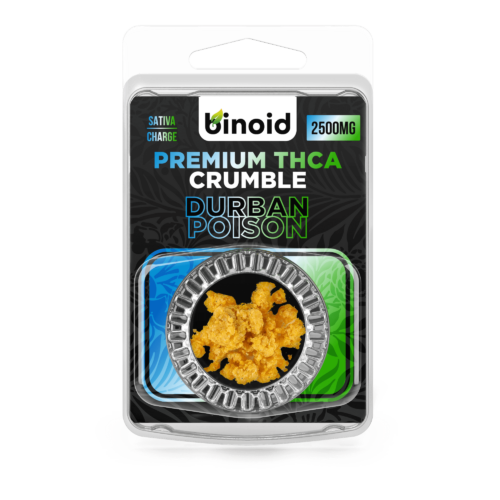
THCA Crumble – 2500mg
$37.99$59.99 -
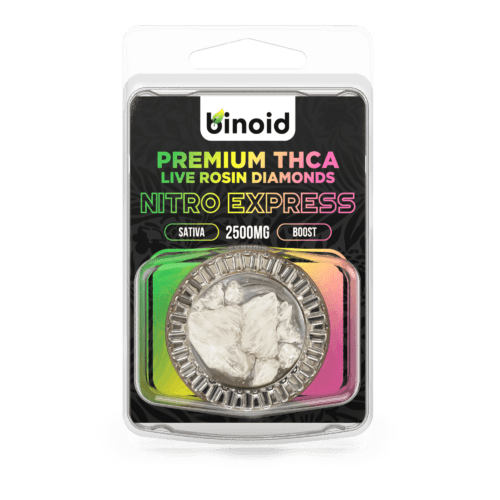
THCA Diamonds 2500mg – Live Rosin
$37.99$59.99 -
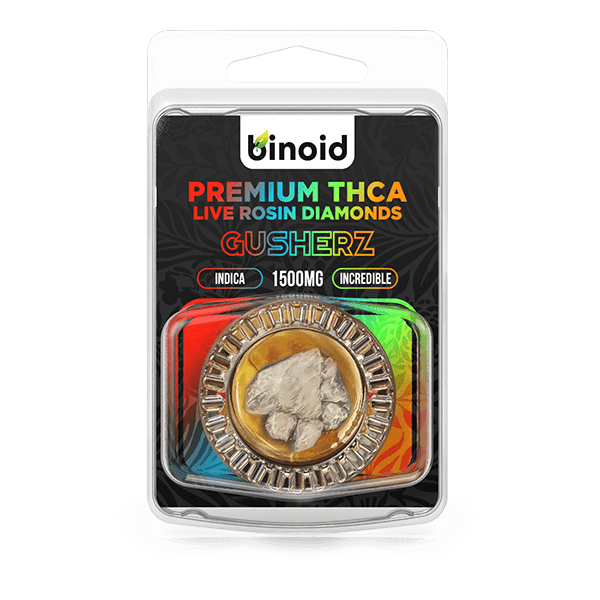
THCA Diamonds 1500mg – Live Rosin
$30.99$59.99 -
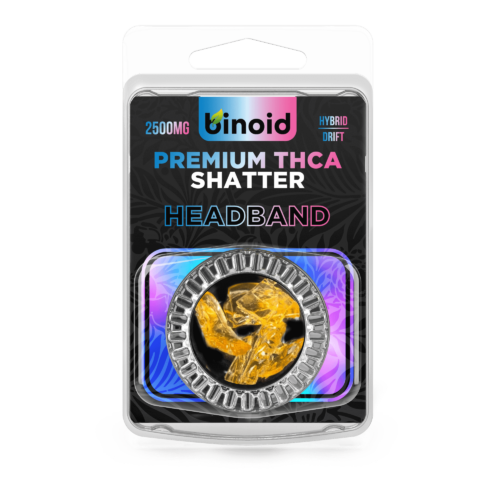
THCA Shatter – 2500mg
$37.99$59.99
One Molecule, Two Expressions
THCA is the acidic precursor to delta 9 THC, synthesized in the trichomes of the cannabis plant and carrying a carboxyl group that keeps it from binding efficiently to the CB1 receptor. In raw form it is not intoxicating, and the change occurs only when heat drives decarboxylation, releasing carbon dioxide and leaving delta 9 THC behind. Flower presents this molecule inside a living architecture, with trichomes, terpenes, minor cannabinoids, plant fiber, and residual moisture all intact. Premium THCA flower commonly tests somewhere in the twenties as a percentage of THCA by weight, with the rest of the mass made up of that botanical material.
Diamonds strip nearly all of that away. They are crystalline THCA, often testing at ninety-five percent or higher, formed from a concentrated extract under carefully controlled conditions. What remains is the compound with almost nothing else attached, which is why diamonds are usually described in the language of purity and potency rather than aroma and bouquet. Neither expression is inherently better, since they answer different questions. Flower asks what the whole plant can offer, and diamonds ask how concentrated a single molecule can become.
How a Diamond Is Grown
The word “grown” is not decorative. THCA crystals form through nucleation, the same process by which rock candy appears on a string, and it depends on a solution that holds more dissolved THCA than it can comfortably keep. A producer begins with a high-quality extract, often prepared from fresh-frozen plant material, and holds it under precise conditions of temperature, pressure, and time. Over days or weeks, THCA molecules organize themselves into faceted crystals that separate from the surrounding terpene-rich liquid, which is commonly sold as sauce. The result is a two-part product, crystalline diamonds and aromatic sauce, that can be combined or used separately.
This process is unforgiving of shortcuts. Poor starting material, inconsistent conditions, or rushed timelines produce cloudy, small, or inconsistent crystals, and the extraction chemistry raises a question flower never does, which is whether every trace of solvent has been purged. That is why the documentation attached to a concentrate matters more than the marketing around it. A serious COA should show not only the THCA percentage but also a residual solvent panel, and a brand that hides or omits that panel is telling you something. Concentrates reward the buyer who reads paperwork with the same attention they give to the crystals.
The Potency Arithmetic
The intuitive way to compare the two formats is to compare the printed THCA percentages, and that comparison is only half right. Because decarboxylation removes a carboxyl group, the molecule loses mass in the process, and the standard conversion multiplies THCA by roughly 0.877 to estimate the delta 9 THC that results. A flower testing at twenty-five percent THCA therefore has a theoretical potential of about twenty-two percent, and a diamond testing at ninety-five percent has a theoretical potential of about eighty-three percent. This is the same arithmetic regulators use when they discuss total THC, and it explains why the acid form is not treated as separate from the active one in the law.
Real-world delivery is messier than the theory. Combustion destroys a portion of the cannabinoids before they can be inhaled, while lower-temperature vaporization preserves more. Even so, the gap between the two formats remains dramatic, on the order of three to four times in potential potency by weight. That gap explains why a small amount of diamonds can feel like a very different proposition than a similar amount of THCA flower. It is also the strongest argument for treating the two as different categories of experience rather than as larger and smaller versions of the same thing.
Flavor, Texture, and Ritual
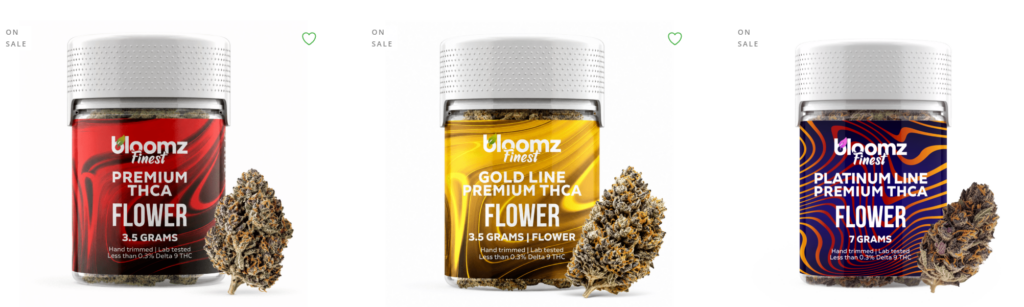
Flower is the format of ritual and variety. The cultivar, the growing conditions, and the quality of the cure all shape aroma, and the experience of grinding, packing, and lighting a bowl is part of what many consumers value. Indoor-grown THCA flower, cultivated under controlled light and humidity, tends to show denser trichome coverage and better terpene preservation, which is why sourcing matters so much in this category. A well-cured bud can move from citrus to pine to fuel across a single session, and the entourage of minor compounds gives each cultivar a character you can learn to recognize.
Diamonds trade that breadth for precision. They are typically used in a dab rig, where a heated surface vaporizes the crystals at a controlled temperature, though many people also add small amounts to flower or a vaporizer. Flavor comes largely from the accompanying sauce, and it can be intensely expressive, but it is a different sensory register than bud, sharper and more concentrated. Dabbing is a deliberate practice with its own equipment and etiquette, and it suits the consumer who enjoys the technical side of consumption. The smoother, more gradual ritual of flower suits the consumer who wants ease, familiarity, and a natural pace.
Tolerance, Titration, and Knowing Your Lane
The practical consequence of the potency gap is that pacing matters far more with diamonds. Inhaled THC acts within minutes, and because concentrates deliver a large amount quickly, the distance between a comfortable session and an overwhelming one is short. Experienced consumers who understand their own tolerance can navigate that comfortably, but newcomers are better served by starting with flower, where the lower concentration and the slower ritual allow gradual adjustment. There is no prize for starting at the top of the potency ladder, and the connoisseur culture that surrounds concentrates is built on restraint as much as appetite.
A good habit with either format is to begin with less than you think you need and to give the experience time to develop before deciding on more. Avoid combining THC with alcohol, keep track of how different products affect you, and never drive or operate machinery after consuming. These are products for adults of legal age, and they are best approached as a lifestyle choice made thoughtfully rather than a contest of endurance. The experience you want is one you can enjoy, remember, and repeat comfortably.
Sourcing and the Paper Trail
Both formats depend on the same foundation, which is the integrity of the source and the transparency of the testing. For flower, a complete COA should cover cannabinoid potency, terpene content, pesticides, heavy metals, and microbial contaminants, and the lab should be independent and accredited to ISO 17025. For concentrates, the panel should add residual solvents and confirm that delta 9 THC levels are reported accurately alongside THCA. Hemp is a bioaccumulator that absorbs what is in its soil, which is why domestic cultivation under agricultural oversight is a meaningful quality signal rather than a slogan.
This is where Binoid CBD has staked its position, sourcing from USA-made hemp farms and publishing batch-specific documentation for its THCA range, with flower and concentrate formats available through BinoidCBD.com. A brand that treats the COA as a consumer resource rather than a compliance formality gives you the ability to check its claims yourself. Whatever format you choose, be skeptical of certificates that are outdated, lack batch numbers, or come from labs you cannot verify. The paperwork is the only objective evidence you have that the product matches the promise.
The Legal Landscape for THCA
THCA products grew out of a quirk in the 2018 Farm Bill, which defined hemp by its delta 9 THC content and said nothing about THCA. That gap allowed high-THCA flower and concentrates to qualify as hemp in their raw state. The legislation enacted in November 2025 changes the picture by adopting a total THC standard, under which THCA that converts to THC counts toward the limit. Once the new rules take effect, most THCA flower and concentrates would fall outside the federal hemp definition.
The effective date for most of the new restrictions is currently December 11, 2026, after a recent extension from November 12, and state laws may differ or act sooner. Because the situation continues to develop, verify the current federal and state position before you purchase or travel with any hemp-derived product. This article is educational and not legal advice, and any brand worth trusting will be candid with you about the regulatory picture rather than pretending it is settled.
A Decision Framework for Choosing Your Format
Deciding between diamond and flower is easiest if you begin with your own preferences rather than the numbers. If you enjoy the ritual of consumption, the aroma of a well-cured cultivar, and a gentler pace, flower is your natural home, and its variety will keep rewarding exploration. If you value concentration, precision, and the technical craft of dabbing, and you have the tolerance and equipment to match, diamonds offer something flower cannot. Many experienced consumers keep both, using flower for everyday enjoyment and diamonds for occasions that call for something more deliberate.
Whichever direction you lean, three checks apply universally. Confirm that the product is legal where you live under current law, confirm that the brand publishes recent batch-specific COAs from an accredited lab, and confirm that you are choosing a potency you can handle comfortably. Get those three right, and the crystal-versus-bloom question becomes a matter of taste rather than risk. That is the mark of a well-informed consumer, and it is the standard the best retailers are quietly working to help you meet.
To Buy THCA Products Click Here
Recommended products
-
THCA Crumble – 2500mg
$37.99$59.99 -
THCA Shatter – 2500mg
$37.99$59.99 -
THCA Badder – 2500mg
$37.99$59.99 -
THCA Hash Rosin Dabs – 1000mg
$33.99$59.99