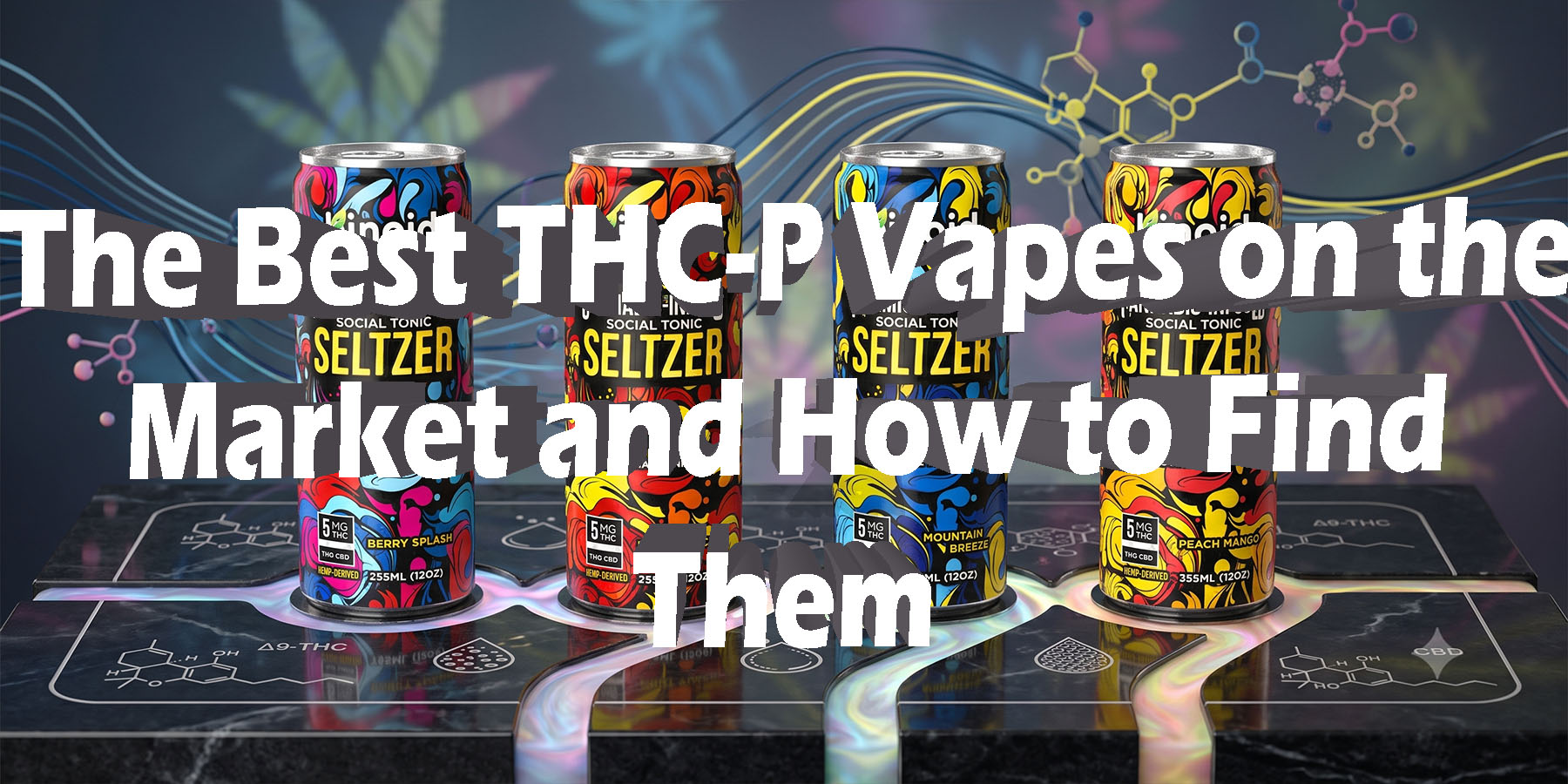
A Cannabinoid That Rewrote the Ceiling
Every so often, a molecule enters the hemp-derived cannabinoid market and forces a genuine recalibration of what consumers thought was possible from a legal, shippable product. THC-P was one of those moments. First identified by Italian researchers in 2019 and subsequently adopted with real enthusiasm by hemp cannabinoid formulators, THC-P didn’t just add another entry to an already crowded cannabinoid alphabet — it fundamentally changed the conversation about potency ceilings in a market that had, until that point, largely assumed delta 9 THC represented the practical upper limit of what hemp-derived chemistry could deliver.
The reason THC-P vapes in particular have become such a sought-after category comes down to a combination of pharmacology and delivery format working in concert. Vaping already offers the fastest, most bioavailable route into the bloodstream of any consumption method, bypassing digestion entirely and delivering cannabinoids to the brain within minutes. Pair that immediacy with a cannabinoid research suggests binds to the CB1 receptor with dramatically higher affinity than delta 9 THC, and you get a product category capable of producing an intensity of experience that has genuinely surprised even veteran cannabis consumers accustomed to high-tolerance dispensary flower.
To Buy THC-P Products Click Here
The Molecular Reason THC-P Hits So Differently
To understand why THC-P vapes occupy such a distinct tier within the cannabinoid landscape, it helps to look at what actually separates THC-P from delta 9 THC at the structural level. Both molecules share the same core cannabinoid scaffold, but THC-P features a notably longer alkyl side chain — seven carbon atoms rather than delta 9 THC’s five. This might sound like a minor architectural footnote, but in cannabinoid pharmacology, side chain length has an outsized effect on receptor binding affinity. The longer chain allows THC-P to nestle into the CB1 receptor’s binding pocket with a snugness that delta 9 THC simply cannot achieve, and early research examining this relationship found binding affinity many times greater than that of delta 9 THC at the same receptor site.
This is not simply an academic curiosity. Receptor binding affinity translates directly into experiential intensity, which is why THC-P vape formulations are consistently described by experienced users as producing effects that arrive faster, hit harder, and in some cases last measurably longer than an equivalent volume of delta 9 THC vapor. It’s worth being precise here: this describes the compound’s receptor pharmacology and the subjective experience it tends to produce, not any claim about therapeutic effect or medical benefit. THC-P is, at its core, a potency story — one rooted in genuine molecular science rather than marketing embellishment, which is precisely why it has earned a devoted following among consumers who have built up meaningful tolerance to standard delta 9 formulations and are looking for a qualitatively different, more powerful experience.
What Actually Separates a Great THC-P Vape From a Mediocre One
The explosive popularity of THC-P has, predictably, attracted a flood of manufacturers eager to capitalize on the compound’s reputation, and the resulting quality variance across the category is considerable. The first and most important differentiator is concentration transparency — a genuinely well-formulated THC-P vape will clearly disclose the actual milligram percentage of THC-P in its distillate, typically blended with a base of delta 8 or delta 9 THC distillate rather than offered as an isolated compound, since pure THC-P at high concentration would produce an intensity most consumers would find genuinely unmanageable. Products that obscure this ratio, or that market vague claims of “potency” without specific percentages, are signaling either a lack of formulation rigor or a deliberate choice to avoid scrutiny — neither of which inspires confidence in what you’re actually inhaling.
The second differentiator is extraction and distillate quality, which matters more with THC-P than almost any other cannabinoid precisely because of how potent the compound is. A distillate produced through supercritical CO2 extraction followed by careful isomerization and purification will contain minimal residual solvents, reaction byproducts, or off-target isomers — impurities that become proportionally more consequential when the primary active compound is already many times more potent than standard THC. A poorly purified THC-P distillate doesn’t just deliver an inferior flavor and vapor experience; it introduces genuine uncertainty about what else is present in a product being inhaled directly into the lungs, which is precisely the kind of uncertainty a category this potent cannot afford to carry.
Hardware quality is the third pillar, and it is one that lower-cost THC-P disposables and cartridges frequently shortchange. Because THC-P distillate tends to be formulated at higher viscosity to accommodate its blend ratios, the heating element needs to be engineered specifically to vaporize that viscosity cleanly, without scorching the oil or producing the harsh, acrid pull that signals a coil struggling against a distillate it wasn’t designed to handle. Ceramic or quartz coil configurations, properly calibrated wattage, and airflow designed around the specific distillate blend are the kinds of hardware details that separate a smooth, terpene-forward THC-P vape session from one that tastes burnt and delivers inconsistent hits.
Reading the Certificate of Analysis for a THC-P Product
Given the potency stakes involved, certificate of analysis documentation matters more for THC-P vapes than for almost any other cannabinoid category on the market. A trustworthy COA for a THC-P product should come from an ISO 17025 accredited independent laboratory and should specify, with real precision, the exact percentage breakdown of THC-P relative to whatever base distillate it’s blended with — commonly delta 8 or delta 9 THC — rather than presenting a vague total cannabinoid figure that obscures the actual THC-P concentration a consumer is inhaling. Beyond potency, the same document needs to confirm the product has been screened for residual solvents left over from extraction, heavy metals that may have accumulated during cultivation, and pesticide residues, along with microbial safety testing appropriate to an inhaled product.
The consumer who takes the time to actually read this documentation before purchasing a THC-P vape is doing something the majority of the category’s buyers still skip entirely, and it is precisely the habit that separates an informed potency-seeking consumer from someone simply gambling on an attractive package design. Binoid CBD publishes batch-specific COA documentation across its full THC-P vape lineup, allowing exactly this kind of verification before a single cartridge is opened — a standard that becomes considerably more important in a potency category where the margin for formulation error carries real experiential consequences.
Matching Format to Intention: Disposables Versus Cartridges
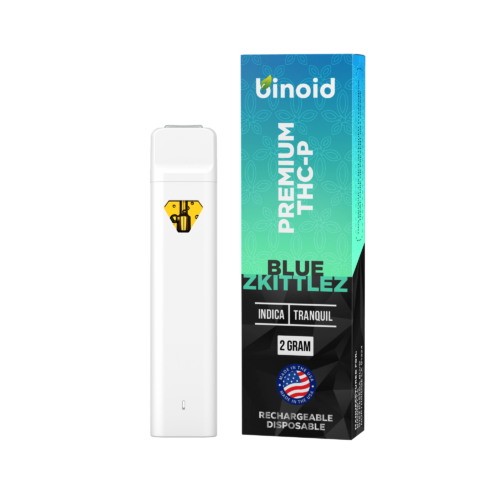
Within the THC-P vape category, the choice between a disposable unit and a refillable cartridge-and-battery system is less about hardware preference and more about how a consumer intends to use the product. Disposable THC-P vapes offer the appeal of simplicity — draw, inhale, done, with no battery to charge or hardware to maintain — and they tend to be the preferred entry point for consumers who are curious about THC-P’s potency but not yet ready to commit to a dedicated hardware ecosystem. The trade-off is that disposables are, by design, a fixed formulation locked into a single hardware configuration, which means the quality of that specific unit’s coil and airflow engineering matters enormously, since there’s no opportunity to swap components if something underperforms.
Cartridge systems, by contrast, appeal to the more deliberate THC-P consumer who has settled into a preferred consumption rhythm and wants the flexibility of variable voltage batteries that allow fine control over vapor temperature and, by extension, the intensity and flavor profile of each pull. Lower voltage settings tend to preserve terpene integrity and produce a smoother, more flavor-forward experience, while higher voltage settings extract a more immediate, heavier hit — a level of control that serious THC-P enthusiasts often come to value once they’ve developed a clear sense of their own preferences and tolerance. Binoidcbd.com offers both formats across its THC-P line specifically because the brand recognizes that potency-seeking consumers arrive with genuinely different use cases, from the casual curious first-timer to the committed connoisseur fine-tuning every variable of the experience.
Recommended products
-
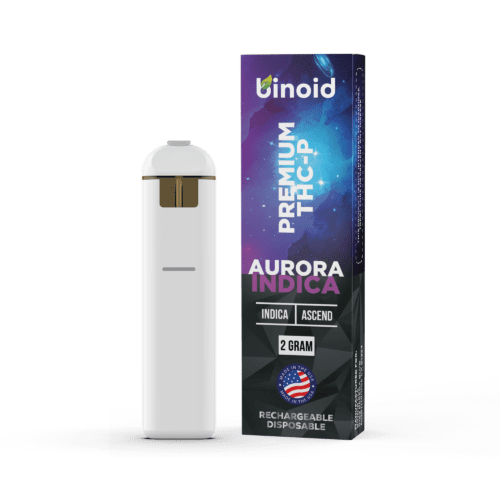
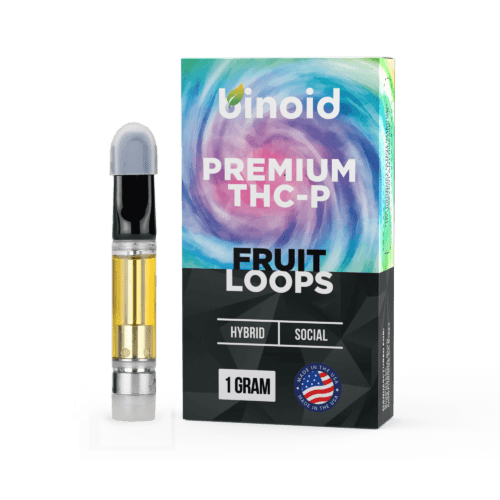
THC-P Vape Cartridge – Fruit Loops
$30.99$59.99 -
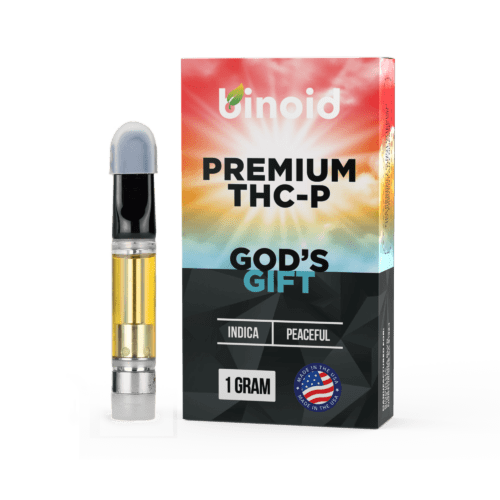
THC-P Vape Cartridge – God’s Gift
$30.99$59.99 -
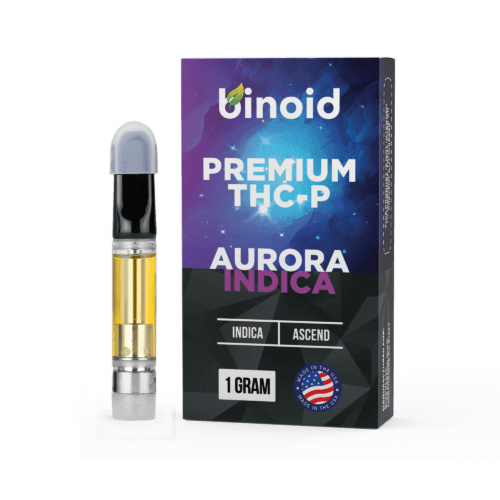
THC-P Vape Cartridge – Aurora Indica
$30.99$59.99 -
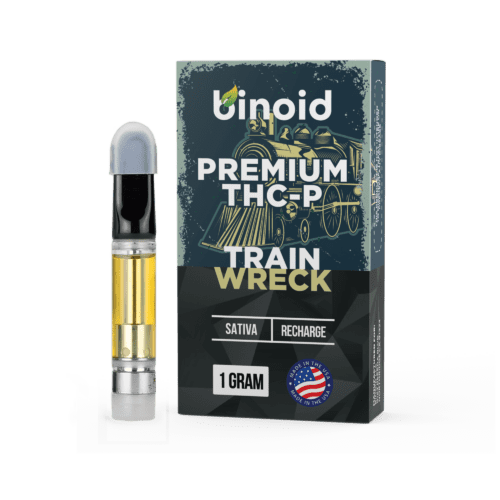
THC-P Vape Cartridge – Trainwreck
$30.99$59.99
The Terpene Question: Why Flavor Still Matters at This Potency Level
It would be easy to assume that a cannabinoid as potent as THC-P renders flavor and aroma secondary concerns — that consumers chasing this level of intensity care only about the effect and not the sensory experience delivering it. In practice, the opposite tends to be true among the most experienced THC-P consumers, who have quickly learned to distinguish between distillate blends that preserve genuine terpene complexity and those that rely on generic, artificially reintroduced flavoring to mask a flat or chemically harsh base. Live resin-derived terpene profiles, extracted from the plant at peak freshness and reintroduced into the THC-P distillate blend with precision, produce a vapor experience that carries genuine strain-specific character — a citrus-forward sativa profile or an earthy, myrcene-rich indica character — layered on top of the compound’s already formidable potency.
This matters because the entourage effect, however loosely defined in casual industry usage, describes something real: the way terpenes and cannabinoids appear to modulate each other’s experiential qualities when present together rather than in isolation. A THC-P vape built around a genuinely well-preserved terpene profile doesn’t just taste better in the moment — it tends to produce a more textured, more nuanced experience than a flavorless, mass-market equivalent relying on the same raw potency alone. This is a distinction that becomes especially apparent in extended vape sessions, where a poorly terpene-balanced product tends to grow monotonous and harsh, while a well-formulated one retains its character from the first pull to the last.
The Decision Framework: Choosing a THC-P Vape With Confidence
For the consumer approaching THC-P for the first time, or the experienced user simply trying to separate genuine quality from marketing noise in an increasingly crowded field, the decision ultimately rests on a small handful of concrete, verifiable factors rather than packaging appeal or vague potency claims. Look first for explicit, percentage-specific THC-P concentration disclosure rather than ambiguous total cannabinoid figures. Confirm that the accompanying certificate of analysis comes from an ISO 17025 accredited laboratory and covers the full panel of residual solvents, heavy metals, and pesticide screening appropriate to an inhaled product. Consider the hardware format that actually matches your intended use — disposable for simplicity and casual exploration, cartridge-and-battery for fine-tuned control and long-term value. And weigh the terpene profile as seriously as the potency figure, since the two together, not potency alone, are what define a genuinely satisfying THC-P vape experience rather than a merely intense one.
Binoid CBD has built its THC-P vape catalog around exactly this framework — transparent, batch-verified potency percentages, ISO-accredited lab documentation available directly on the product page, hardware engineered specifically for the viscosity demands of THC-P distillate, and live resin-derived terpene profiles that respect the sensory dimension of the experience rather than treating potency as the only variable worth optimizing. For a consumer navigating a category this potent and this rapidly growing, that combination of verified science and formulation discipline is not a luxury. It is the baseline that distinguishes a THC-P vape worth trusting from one that is simply betting on the compound’s reputation to sell itself.
To Buy THC-P Products Click Here
Recommended products
-
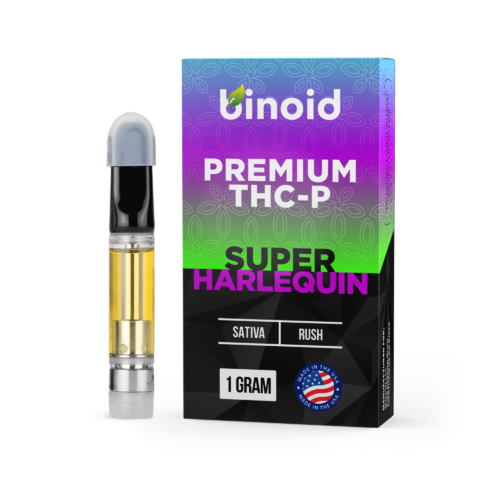
THC-P Vape Cartridge – Super Harlequin
$29.99$59.99 -
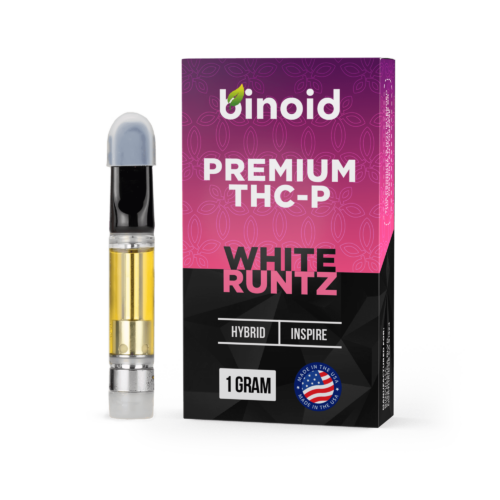
THC-P Vape Cartridge – White Runtz
$29.99$59.99 -
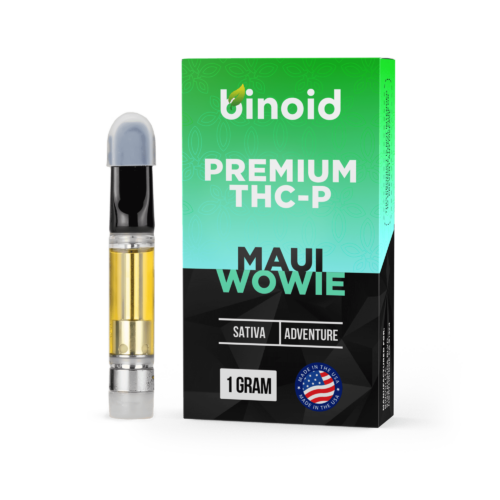
THC-P Vape Cartridge – Maui Wowie
$29.99$59.99 -
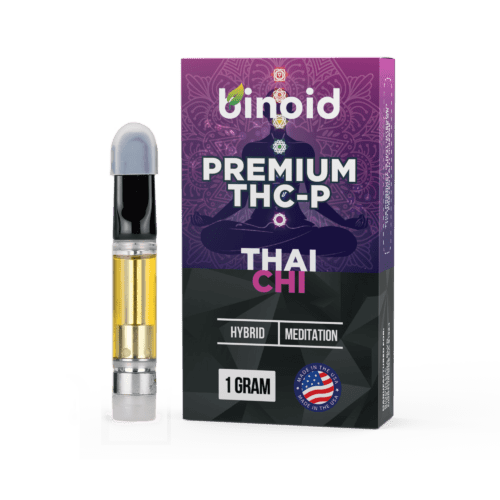
THC-P Vape Cartridge – Thai Chi
$30.99$59.99