There’s a particular kind of confusion that greets anyone stepping into hemp retail for the first time and stumbling across a jar of flower labeled with a THCA percentage north of twenty. The instinct is to assume a typo, or a scam, or some kind of legal sleight of hand — because everything you thought you knew about cannabis regulation suggested that anything this potent should require a dispensary, a state ID, and a conversation with a budtender.
And yet there it sits, shipped legally across state lines, sold openly online, arriving in a plain box at your door. Understanding THCA flower — what it is, why it’s legal, and what actually happens when you use it — is less a matter of decoding marketing language and more a matter of understanding a single, elegant piece of plant chemistry that the hemp industry has built an entire product category around.
To Buy THCA Flower Click Here
What THCA Actually Is
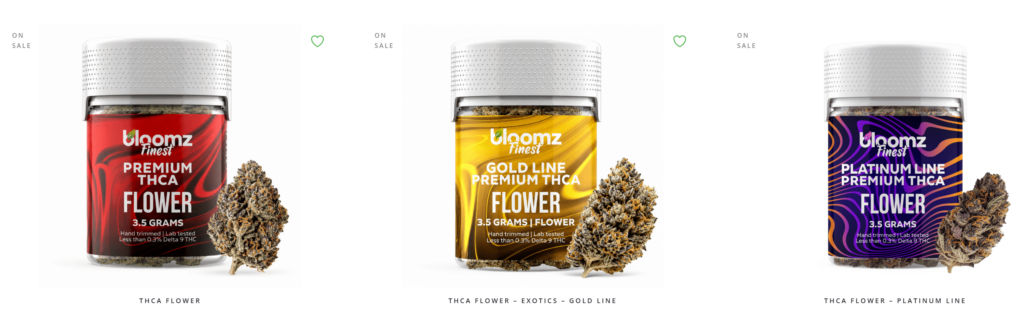
Every cannabis plant, whether grown under state-licensed dispensary regulations or federal hemp statutes, produces the same starting compound. That compound is THCA, or tetrahydrocannabinolic acid, and it is not the intoxicating molecule most people associate with cannabis at all. It’s the raw, acidic precursor to Delta 9 THC, synthesized in the plant’s trichomes — the frosty, crystalline structures that coat a mature flower and give it that unmistakable sheen. In its natural state, THCA does not bind efficiently to the CB1 receptors in the central nervous system that are responsible for cannabis’s characteristic effects, largely because of a carboxyl group attached to the molecule that creates a structural mismatch at the receptor site. This is why chewing on raw cannabis leaves or juicing unheated flower produces no intoxicating effect whatsoever, despite the plant material being loaded with cannabinoids. The molecule simply isn’t shaped correctly, in its raw form, to do what people expect cannabis to do.
The transformation from THCA to Delta 9 THC happens through a process called decarboxylation, which is a mouthful of a word describing a remarkably simple event: the application of heat causes the carboxyl group to break away from the molecule, releasing carbon dioxide and leaving behind streamlined, receptor-ready Delta 9 THC. This happens almost instantly when flower is combusted with a flame, more gradually when it’s heated in an oven for cooking, and somewhere in between when it passes through a vaporizer’s heating element. The practical upshot is that THCA flower and traditional, dispensary-grade cannabis flower are, at the moment of consumption, functionally delivering the same experience — because lighting either one triggers the identical chemical reaction. The difference isn’t in what happens when you use the product. The difference is entirely in how the product is classified before that moment arrives.
The Legal Mechanics Behind a Seemingly Impossible Product
To understand why THCA flower exists as a shippable, federally compliant product, you have to go back to the 2018 Farm Bill, which legalized hemp as an agricultural commodity and defined it, specifically, as cannabis containing no more than 0.3% Delta 9 THC by dry weight. That definition was precise, and it was also, in retrospect, incomplete because it said nothing about THCA itself.
A flower could test at 20% THCA or higher, delivering potency comparable to the strongest dispensary strains, and still satisfy the federal definition of hemp, provided its Delta 9 THC concentration in that raw, unconverted state stayed under the 0.3% threshold. This is not an oversight anyone is trying to hide; it’s simply how the statute was written, and it’s the exact mechanism that allowed an entirely new retail category to spring up almost overnight once the industry recognized what the law actually permitted.
It’s worth being straightforward about the fact that this regulatory landscape isn’t static. Some states have moved to close what they consider a loophole by adopting “total THC” testing methodologies, which calculate potential Delta 9 yield after decarboxylation rather than measuring only the plant’s current, unconverted state. Other states have left the door open.
The federal government has periodically signaled interest in applying similar total-THC standards to hemp compliance testing nationwide, though as of this writing that interpretation hasn’t been codified into enforceable federal regulation. None of this changes what THCA flower is chemically, but it does mean that where you live matters, and that sourcing from a brand serious about compliance documentation isn’t optional it’s the baseline. Binoid CBD has built its THCA catalog around exactly this kind of rigor, with lab documentation attached to every batch rather than treated as an afterthought.
What Sets Good Flower Apart from Mediocre Flower
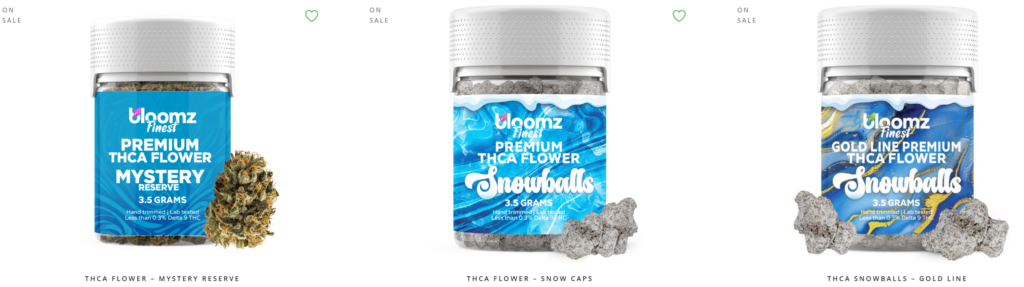
Once you accept that THCA flower is a legitimate, federally compliant product, the next question is quality and here the variance across the market is genuinely enormous. Cultivation conditions matter more than almost anything else in determining what ends up in the jar. Indoor-grown flower, cultivated under controlled light spectra, humidity levels, and nutrient programs, consistently produces denser trichome coverage, more vivid terpene expression, and a more visually appealing final product than flower grown outdoors or in a greenhouse, where environmental variables are harder to manage precisely.
This isn’t an aesthetic preference so much as it’s basic agronomy: the trichome is where the cannabinoids and terpenes are produced, and anything that stresses the plant during that production process inconsistent light, temperature swings, pest pressure shows up as a measurable difference in the finished flower’s potency and aromatic complexity.
Curing is the other variable that separates exceptional flower from flower that merely satisfies a THCA percentage on a label. Properly cured flower has been dried slowly and stored under conditions that allow chlorophyll to break down and terpenes to stabilize, which is what produces the smooth, aromatically complex smoke that connoisseurs are actually chasing. Rushed or improperly cured flower, by contrast, tends to smoke harsh, taste grassy, and lose much of its terpene profile well before it ever reaches a consumer’s hands.
This is precisely the kind of detail that separates premium THCA flower the kind curated and lab-verified through operations like BinoidCBD from the bargain-bin material flooding less discerning corners of the market. When a percentage on a label is the only thing a brand talks about, that’s usually a signal that cultivation and curing weren’t given the same attention.
Reading the Certificate of Analysis Like You Mean It
There is no substitute, in this category, for an actual Certificate of Analysis commonly abbreviated as a COA from an accredited, independent laboratory. Because there is no mandatory, standardized federal testing regime governing hemp-derived cannabinoid products, the burden of verification falls almost entirely on the consumer, and by extension on the brands those consumers choose to trust.
A legitimate COA will report cannabinoid potency down to specific percentages, confirm the product’s compliance with the 0.3% Delta 9 threshold in its raw state, and screen for residual solvents, heavy metals, and microbial contamination. Laboratories accredited to the ISO 17025 standard carry meaningfully more weight than unaccredited facilities, because that accreditation requires demonstrated equipment calibration and interlaboratory validation in other words, proof that the numbers on the page actually reflect what’s in the jar.
A COA that’s current, batch-specific, and easily searchable on a brand’s website is a strong signal that a company views transparency as a genuine consumer resource rather than a compliance checkbox. This is a standard Binoidcbd.com has held itself to across its THCA lineup, publishing lab documentation that covers potency and safety analytes for every batch it sells rather than relying on outdated or generalized testing. The consumer who takes even a few minutes to review that documentation before purchasing walks away with concrete, verifiable knowledge about what they’re actually buying a meaningfully different position than trusting a label at face value in a market where mislabeling remains a documented, recurring problem.
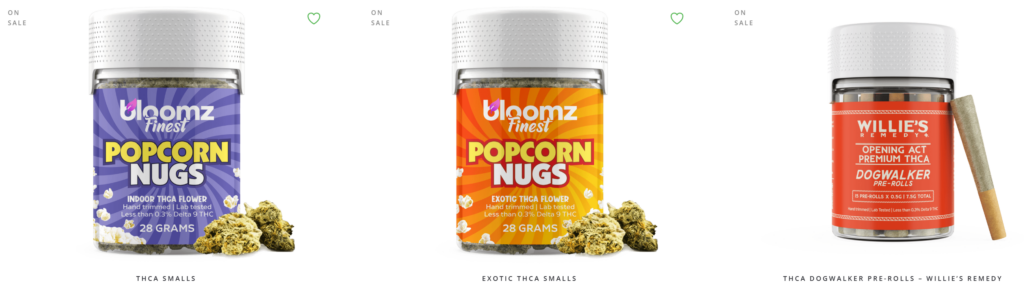
What to Actually Expect When You Use It
Once decarboxylation occurs whether through combustion, vaporization, or baking THCA flower into an edible the resulting experience is, neurochemically, the experience of Delta 9 THC. There is no separate, exotic “THCA high” that survives the heat of a lighter; the acidic form converts completely, and what you feel afterward is governed by the same pharmacology that governs any Delta 9 THC experience, shaped by dose, individual tolerance, consumption method, and the broader terpene profile of the specific cultivar in question.
At moderate amounts, users commonly describe a lifted, sensory-forward state music sounding richer, conversation flowing more easily, a general softening of mental friction. Larger amounts, particularly when consumed as an edible where the liver converts Delta 9 into the more potent 11-hydroxy-THC, tend to produce something heavier and more introspective. None of this is a promise or a guarantee; individual biochemistry varies enormously, and first-time users in particular should approach any new format with a conservative starting point.
Making the Decision
The practical takeaway for a first-time buyer is that THCA flower isn’t a legal gray area or a cleverly disguised knockoff product it’s a chemically legitimate category built on a precise, well-understood transformation that happens the moment heat is applied. The variables that actually matter are the ones that always matter with any agricultural product: how it was grown, how it was cured, and whether the brand selling it is willing to back its claims with accredited, batch-specific lab documentation rather than vague assurances.
A buyer who understands decarboxylation, checks the COA before purchasing, and sources from a retailer with a demonstrated transparency standard the kind of standard Binoid CBD has built its THCA catalog around is a buyer equipped to make a genuinely informed decision in a market that still rewards skepticism far more than it rewards blind trust.
To Buy THCA Flower Click Here