There are moments in the history of cannabinoid science when a single discovery reframes everything that came before it not by invalidating prior understanding, but by revealing how much of the picture was missing. The identification and characterization of tetrahydrocannabiphorol, the compound the industry has rapidly abbreviated to THC-P, was one of those moments. When a team of Italian researchers published their findings in the journal Scientific Reports in late 2019, the cannabis science community experienced something close to a collective double-take.
Here was a naturally occurring cannabinoid present in the plant all along, hiding in plain sight within the minor cannabinoid fraction that most analytical methods had been too imprecise to isolate and characterize that demonstrated a binding affinity for the human CB1 receptor somewhere between thirty and thirty-three times greater than conventional delta-9 THC. Not thirty percent stronger. Thirty times more potent at the receptor level. The implications were immediate, significant, and are still being fully absorbed by the market that has since formed around this remarkable molecule.
Understanding what THC-P is, why it produces the experiences it does, and why sourcing it from a brand with genuine scientific credibility matters more here than perhaps anywhere else in the hemp-derived cannabinoid catalog is not merely an academic exercise. It is the difference between an experience you navigate with intelligence and intention and one that arrives with the force of something you were not adequately prepared for. This is a molecule that rewards education the way very few cannabinoids do because the gap between an informed first encounter and an uninformed one is, by the pharmacological numbers, wider here than almost anywhere else in the category.
To Buy THC-P Products Click Here
Recommended products
-
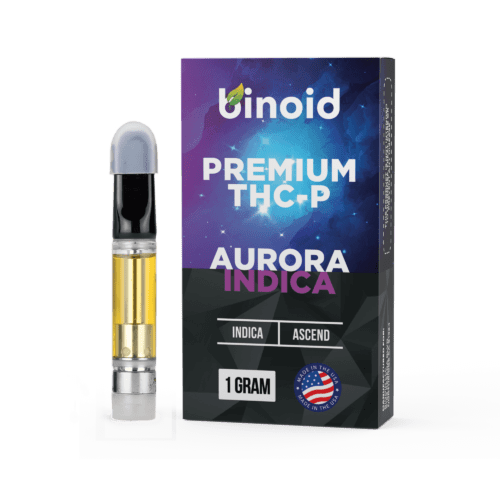
THC-P Vape Cartridge
$29.99$59.99 -
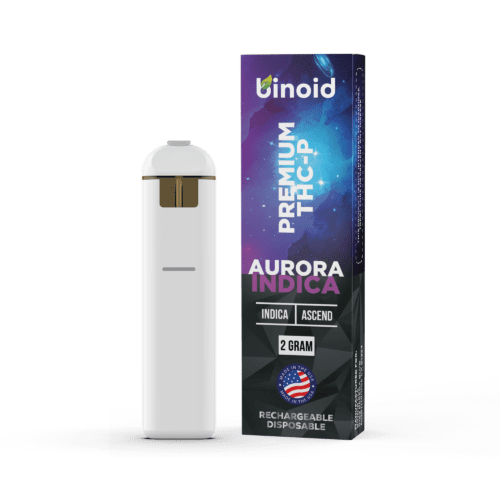
THC-P Rechargeable Disposable – 2 Gram
$31.00$59.99 -
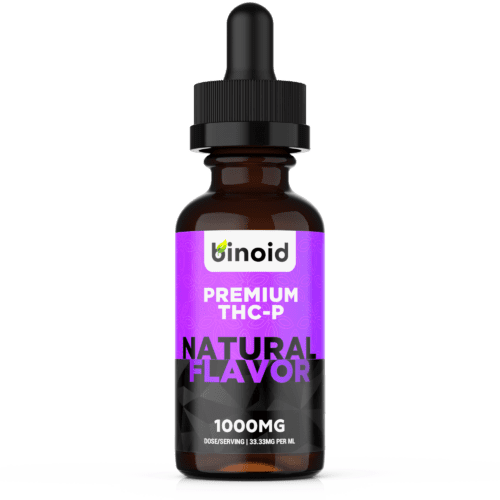
THC-P Tincture – 1000mg
$30.99$79.99
The Discovery That Changed the Potency Conversation Forever
The Italian research team that identified THC-P in 2019 was not looking for a new cannabinoid in the traditional sense. They were conducting a comprehensive phytochemical analysis of a specific cannabis variety using advanced mass spectrometry and liquid chromatography techniques precise enough to resolve compounds present in extraordinarily small concentrations concentrations that earlier analytical methods would have missed entirely or dismissed as measurement noise. What they found, embedded in the minor cannabinoid fraction of the plant, was a homolog of delta-9 THC with a structural characteristic that immediately captured the attention of everyone familiar with cannabinoid pharmacology: an alkyl side chain of seven carbon atoms rather than the five that define conventional delta-9 THC.
That difference of two carbon atoms is, in the language of receptor pharmacology, enormously consequential. The CB1 receptor the primary site of psychoactive cannabinoid activity, distributed throughout the central nervous system with particular density in regions governing mood, perception, memory, and motor function has a binding pocket whose affinity for a given cannabinoid molecule is directly influenced by the geometry and length of that alkyl side chain. Research on synthetic cannabinoid homologs had established decades earlier that extending the side chain from five carbons toward seven produced dramatic increases in CB1 binding affinity, and the Italian team’s in vitro testing confirmed that THC-P followed exactly this pattern.
At thirty-three times the CB1 binding affinity of delta-9 THC, THC-P was not just a new entry in the cannabinoid catalog. It was a recalibration of what the cannabis plant was capable of producing and a retroactive explanation for why certain cultivars had always seemed to punch above their measured THC percentages in ways that the numbers alone could not account for.
The presence of THC-P in natural cannabis had almost certainly been influencing the experiential character of high-potency varieties for decades without anyone having the analytical tools to identify the mechanism. The discovery did not create a new phenomenon. It named one that had always existed.
The Pharmacology of Extreme Potency: What Happens at the CB1 Receptor
To understand why THC-P produces the experiences it does, you need to spend a moment with the receptor itself because the CB1 receptor is not simply an on-off switch that cannabinoids activate to uniform effect. It is a sophisticated G protein-coupled receptor whose downstream signaling behavior varies depending on which molecule is occupying its binding site and how completely that molecule saturates the receptor. The concept of intrinsic efficacy the degree to which a molecule, once bound to a receptor, activates the downstream signaling cascade is as important here as binding affinity, and THC-P appears to combine high binding affinity with robust intrinsic efficacy in ways that translate directly into its potency profile at the experiential level.
What this means in practical terms is that THC-P does not merely knock on the CB1 receptor’s door more insistently than delta-9 THC. It occupies that receptor more fully, holds it longer, and activates the downstream signaling machinery more completely. The neurochemical consequence is an experience that cannabis enthusiasts with high established tolerances consistently describe as qualitatively different from even large doses of conventional THC not simply “more of the same” but a deeper, more total engagement with the endocannabinoid system that can produce profound alterations in sensory perception, time awareness, and cognitive state.
The entourage effect is relevant here as well: in blended formulations that combine THC-P with other cannabinoids as Binoid does in its Super 7, Beast Mode, and Knockout Blend product architectures the pharmacological interaction between THC-P and supporting molecules like Delta-8, Delta-9, THC-H, and THC-B creates experiential profiles that neither compound could produce in isolation.
It is also worth noting what the pharmacology does not tell us, because intellectual honesty demands it. The thirty-three times potency figure is derived from in vitro receptor binding studies experiments conducted on isolated receptor preparations rather than in living biological systems. The translation from in vitro binding affinity to real-world human experience is never perfectly linear, mediated as it is by metabolism, blood-brain barrier penetration, tolerance, individual neurochemistry, and the full complexity of a living endocannabinoid system rather than an isolated receptor preparation. What the number gives us is a directional truth rather than a precise experiential guarantee: THC-P is dramatically, structurally more potent than conventional THC at the receptor level, and the experiential implications of that fact are real and significant, even if they cannot be reduced to a simple multiplication.
THC-P in the Hemp-Derived Market: How It Gets From Plant to Product
Here is where the conversation shifts from pure science to the commercial and manufacturing realities that determine whether the THC-P in a given product is something you should trust or something you should approach with considerable caution. Natural THC-P occurs in cannabis at extremely low concentrations estimates typically place it well below one percent of the plant’s total cannabinoid content, a scarcity that makes extraction of meaningful quantities from raw biomass economically impractical for most commercial applications. The THC-P available in the hemp-derived market is therefore almost universally produced through a semi-synthetic process: the isomerization of hemp-derived CBD isolate, which converts cannabidiol through a series of controlled chemical reactions into THC-P with a purity and yield profile that makes commercial-scale production viable.
This manufacturing pathway is both the opportunity and the responsibility at the center of the THC-P category. When isomerization is conducted by experienced chemists with high-purity CBD starting material, precision process control, and rigorous post-synthesis purification protocols, the resulting THC-P distillate is clean, potent, and free of the reaction byproducts and residual catalysts that contaminated early-generation Delta-8 production gave the broader isomerization category a deserved reputation problem. When it is conducted by operators cutting corners on starting material quality, process monitoring, or purification which describes a non-trivial portion of the unvetted market the resulting product carries risks that its consumers have no way of knowing about from the label alone.
This is precisely why the certificate of analysis from an ISO 17025-accredited independent laboratory is not a nice-to-have in the THC-P category. It is the only document that provides objective evidence of what is actually in the product, at what concentration, and what contaminants have been screened and cleared. Binoid CBD has built its entire THC-P product line vape cartridges, disposables, and gummies available across its catalog at BinoidCBD.com on a foundation of transparent, batch-specific COA documentation that covers cannabinoid potency, terpene profiling, residual solvent panels, heavy metal screening, and microbiological testing. In a category where the manufacturing process introduces specific risks that other cannabinoid categories do not share, this level of documentation is not a marketing gesture. It is the minimum threshold of accountability that a compound with THC-P’s potency profile absolutely requires.
Recommended products
-
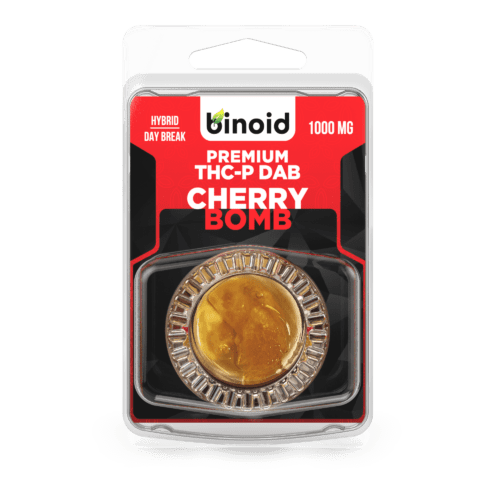
THC-P Wax Dabs
$29.99$57.99 -
13,000mg Good Luck Gummies
$47.99$79.99 -
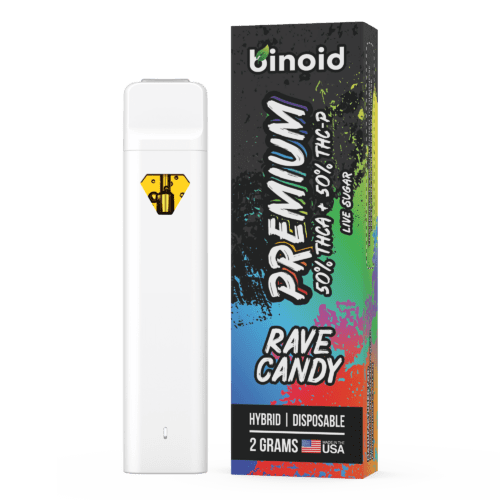
Live Sugar THCA + THC-P Disposable Vape – Pure 50/50
$39.99$69.99 -
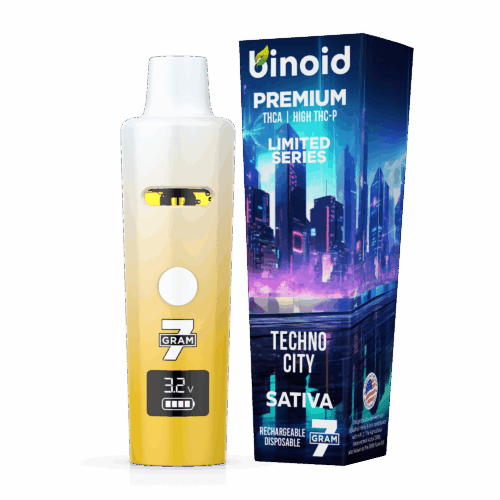
7 Gram THCA + High THC-P Disposable Vape – Limited Series
$67.99$109.99

The Experience Itself: What THC-P Actually Feels Like
Any responsible description of the THC-P experience has to begin with a calibration note, because the most common mistake first-time users make with this compound is treating it the way they would treat a Delta-8 or even a Delta-9 product drawing on established tolerance and dosing intuition developed with less potent cannabinoids and arriving at an experience that is substantially more immersive than they anticipated. THC-P is not a compound that forgives casual dosing, and the consumers who engage with it most successfully are those who approach it with the deliberateness it deserves: starting with the smallest reasonable dose, allowing full onset before any consideration of supplementing, and choosing a setting that supports a potentially deep and extended experience.
Within those parameters, what experienced consumers report from quality THC-P formulations is something that sits in a category of its own within the hemp-derived market. The onset, particularly from vaporized formats like Binoid’s THC-P cartridges and disposables, is notably rapid the pulmonary absorption pathway delivers cannabinoids to the bloodstream and across the blood-brain barrier with a speed that bypasses the digestive delay of edibles entirely. The early phase of a THC-P experience is often described as a wave of cerebral intensity that builds more forcefully and more quickly than comparable doses of conventional THC, accompanied by a heightened sensitivity to sensory input music, light, tactile sensation that can feel qualitatively different from what Delta-9 alone produces.
The middle and later phases of a THC-P experience tend toward the deeply physical, with a body presence that many consumers describe as significantly heavier and more enveloping than conventional THC produces even at high doses. For consumers with high tolerances who have found that most hemp-derived products no longer produce meaningful effects a genuine and frustrating phenomenon that the endocannabinoid system’s remarkable capacity for tolerance upregulation creates over time THC-P is often the compound that breaks through that ceiling in a way nothing else in the catalog can match. Binoid’s blended formulations that incorporate THC-P alongside complementary cannabinoids are specifically architected to leverage this potency while modulating its character through the entourage effect, creating experiences that are intense without being one-dimensional.
THC-P gummies from BinoidCBD.com represent a meaningfully different experiential arc than the vaporized format. Because gummy consumption routes the cannabinoid through the digestive system and then through hepatic first-pass metabolism before it enters systemic circulation, the onset is slower typically thirty to ninety minutes but the duration is extended and the character of the experience can be more total and more sedative than the quicker, cleaner onset of a vaporized dose.
The liver’s conversion of THC compounds during first-pass metabolism into metabolites with their own pharmacological profiles adds additional complexity to the edible experience that experienced consumers factor into their dosing decisions. Starting with the lowest available dose in gummy format and waiting the full ninety-minute onset window before any reassessment is not optional guidance. It is the only sensible approach to a compound with this pharmacological profile.
THC-P vs. The Cannabinoid Landscape: Where It Sits Among Its Peers
The hemp-derived cannabinoid market has expanded with remarkable speed over the past several years, producing a catalog of active compounds that ranges from the familiar Delta-8, Delta-9 through the moderately exotic Delta-10, THC-H, THC-B, THC-X to the genuinely frontier, of which THC-P is the clearest representative. Understanding where THC-P sits relative to its peers helps calibrate expectations and informs the intelligent construction of a personal cannabinoid practice that uses each compound where it belongs rather than treating the entire catalog as interchangeable.
Delta-8 THC is generally characterized by a gentler, more clear-headed experience than Delta-9, with lower anxiety potential and a functional quality that makes it well-suited to daytime use or consumers with lower established tolerances. Delta-9 is the reference-point cannabinoid the baseline against which all others are implicitly measured. THC-H, another homolog with a hexyl side chain between Delta-9’s pentyl and THC-P‘s heptyl, occupies an intermediate potency position. THC-B brings its own distinctive pharmacological profile through a different structural modification. Each of these compounds has its own characteristic that makes it the right choice for specific experiential goals and consumer profiles.
THC-P sits at the far end of this potency spectrum by a meaningful margin not just a step beyond the others but a categorical leap that makes it the appropriate choice for a specific type of consumer: experienced, tolerance-aware, methodical about dosing, and seeking an experience that the rest of the catalog can no longer consistently deliver. Binoid’s Super 7, Knockout Blend, and Beast Mode formulations incorporate THC-P within multi-cannabinoid architectures that temper its raw intensity with the modulating influence of complementary compounds, giving consumers access to its potency within a more balanced experiential framework than pure THC-P isolate would provide. This is sophisticated formulation philosophy the recognition that the most useful version of an extremely potent compound is often the one calibrated by its context rather than presented in isolation.
Why Sourcing THC-P From a Trusted Brand Is Non-Negotiable
The argument for buying any hemp-derived cannabinoid from a brand with rigorous quality standards is compelling. For THC-P specifically, it is non-negotiable, and the reason is as simple as it is consequential: at this level of potency, the margin for error in formulation, dosing accuracy, and product purity is essentially zero. A Delta-8 gummy that is ten percent under its labeled potency is a minor annoyance. A THC-P gummy with the same degree of variance in the opposite direction or with residual synthesis byproducts that a proper COA would have flagged is a different category of problem entirely.
BinoidCBD.com has invested in the manufacturing infrastructure, supply chain accountability, and third-party testing protocols that make its THC-P products genuinely trustworthy in a category where trust is earned through documentation rather than declared through marketing. Every THC-P vape cartridge, disposable, and gummy in Binoid’s catalog is backed by ISO 17025-accredited laboratory analysis conducted on the specific batch you are purchasing not a representative sample from a prior production run, not a lab report that applies to the formula in general, but the actual batch whose lot number appears on your package. This specificity is the standard that a compound with THC-P’s pharmacological profile demands, and it is the standard that BinoidCBD.com has established as the floor of its quality commitment rather than the ceiling.
The cannabis industry’s future belongs to the compounds that science continues to reveal and to the brands rigorous enough to handle them responsibly. THC-P is the clearest current example of both propositions simultaneously a molecule that the plant has always contained, that science has finally characterized with the precision it deserves, and that the most serious brand in the hemp-derived market has built into a product line worthy of what the compound actually is.
To Buy THC-P Products Click Here
Recommended products
-
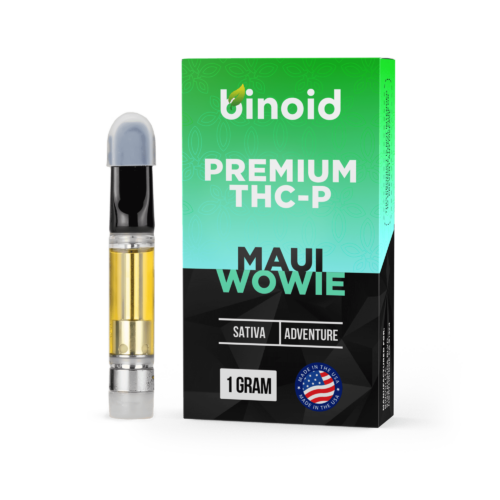
THC-P Vape Cartridge – Maui Wowie
$29.99$59.99 -
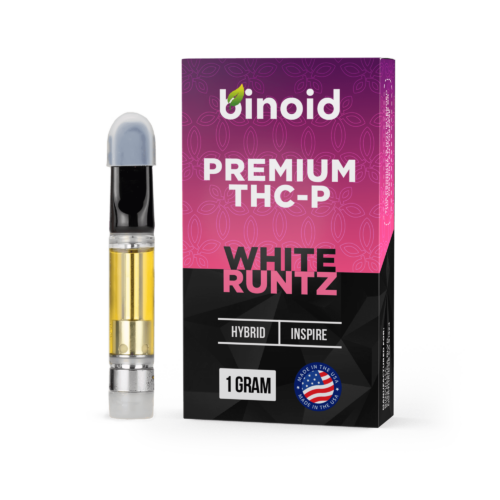
THC-P Vape Cartridge – White Runtz
$29.99$59.99 -
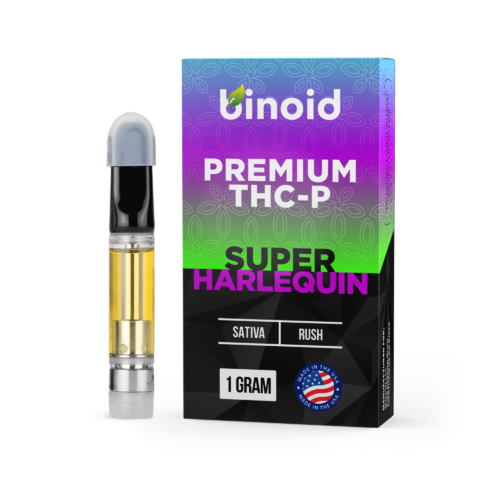
THC-P Vape Cartridge – Super Harlequin
$29.99$59.99