The Weight of the Word “Supposed”
The title of this article contains a deliberate hedge. When it comes to the EPN cannabinoid, sold as Euphorinol and nicknamed “Super Sativa,” the experience that circulates in supplier materials and retailer guides is a description of what the compound is meant to deliver, filtered through the people who sell it, and not a documented outcome.
I found no peer-reviewed research on how the compound behaves, and even sympathetic retailer guides concede that clinical pharmacokinetics data is limited and that effects are documented mainly through user reports and early manufacturer testing. That makes “supposed to” the most honest phrase available. This feature takes that phrase seriously, exploring how the expected experience is described, why those descriptions diverge, how expectation itself shapes what people report, and how a careful consumer can turn a vague promise into usable personal knowledge. Binoid CBD has not added Euphorinol to its lineup, so this is an examination of a claim rather than an endorsement of a product.
TO BUY THC PRODUCTS CLICK HERE
Recommended products
-
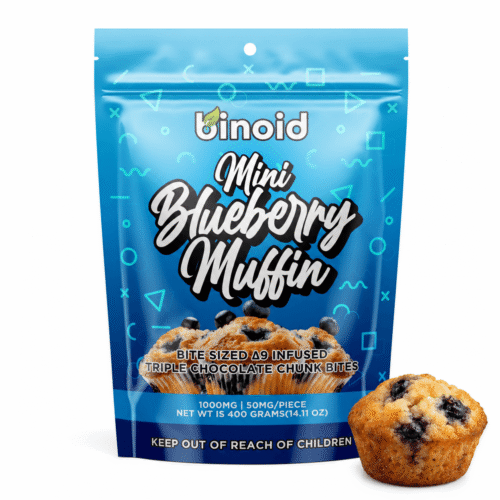
Delta 9 Mini Blueberry Muffin Bites – 1000MG (Limited Supply)
$34.99$39.99 -
THC Seltzer – Good Vibes Cannabis Drink (4 Pack)
$19.99$29.99 -
13,000mg Good Luck Gummies
$47.99$79.99 -
THCA Crumble – 2500mg
$37.99$59.99

Expectation Is Part of the Experience
Before a single milligram is consumed, a great deal of the experience has already been shaped by language. A consumer who reads that a compound is “clear-headed” and “uplifting,” and who is told it is a “Super Sativa,” arrives at the first session primed to notice brightness and to interpret ambiguous sensations in that light. This is not a flaw in the consumer. It is how perception works for any substance, from coffee to wine, and the cannabinoid category is especially responsive to framing because its effects are subjective and its vocabulary is loose. The nickname does real work here, conjuring an entire mythology of daytime energy and creative focus in two words.
That priming effect cuts in both directions. A consumer expecting heaviness may find it, and one expecting lift may report lift, which is part of why early user impressions of any new compound are an unreliable guide to its objective character. It is also why the sativa-versus-indica vocabulary, regarded by many chemists and botanists as an imperfect folk shorthand, remains so persistent: it gives people a story to organize their sensations around. A sophisticated reader keeps both ideas in view, appreciating the marketing language as a window into what a brand intends while remembering that intention and outcome are different things.
The Reported Timeline
Sellers describe a fairly specific arc. Onset is reported in roughly ten to thirty minutes, which places it between the near-instant arrival of an inhaled format and the slow, unpredictable ramp of a traditional edible, and the effects are said to last about three to four hours. If the compound behaves that way, a session unfolds in three broad movements. A first quarter-hour or so passes with little to notice, a gradual lift emerges as the onset window closes, a plateau holds for the bulk of the three-to-four-hour span, and a taper follows as the experience recedes.
The practical value of a timeline like this is planning. A defined arc lets a consumer decide in advance what the window of time will be used for, schedule the rest of the day around it, and avoid the open-ended uncertainty that makes some formats feel like a commitment. It also underlines the single most important behavioral rule for any medium-onset compound, which is not to add more during the onset window just because nothing seems to be happening yet. Impatience is the classic mistake, and a timeline reported as ten to thirty minutes is an invitation to wait the full thirty before drawing conclusions.
Two Descriptions, One Compound
The most striking feature of the Euphorinol literature is that it contains two distinct portraits. In one, the experience is bright, energizing, and crisp, with sellers describing a clear, focused euphoria that avoids the fog or heaviness some people associate with other options, and a manufacturer’s page describes euphoria without sedative effects and without reducing consciousness. In the other, a retailer guide describes mood elevation, mild euphoria, relaxation, and altered sensory perception, a profile that sounds closer to a familiar cannabis experience with an easygoing tilt.
Several explanations could reconcile the two. Dose is the obvious one, since many cannabinoids shift character as amounts rise, and the guide that describes Euphorinol as stronger than delta-8 at comparable doses suggests that the intensity side of the picture may matter. Individual biochemistry is another, since the same compound can feel different from one person to the next. Format and formulation matter as well, because the terpenes and other ingredients accompanying the active compound shape the overall character of a product, and effective vape formulations reportedly use only about 1.5 to 2% of the active ingredient, leaving the remainder to other components. The honest conclusion is that “bright” and “relaxed” are both plausible reports, and that no single description captures the whole.
Compared to What?
Almost every description of Euphorinol is comparative, and comparisons are only as good as the baseline. Calling it “stronger than delta-8” assumes the reader knows how delta-8 feels, and it quietly imports every uncertainty about that baseline, including how a particular consumer’s tolerance and expectations shape their experience of it. Delta 8 is generally described as a milder, smoother cousin of delta 9 THC, while THCA becomes a full delta-9 experience once heat strips away its carboxyl group, and placing a new compound somewhere on that landscape requires a sense of where the reference points themselves sit.
For a consumer, the useful move is to translate relative claims into questions about your own experience. If you have found a particular product gentle, does “stronger” mean you should start with half the amount? If you tend toward the more intense end of the spectrum, does “uplifting” mean you should expect something noticeably lighter than what you are used to? Relative claims are marketing shorthand for a more complicated reality, and the only baseline that really matters is your own. This is why careful dosing and note-taking are not optional extras for a novel compound. They are the only way to turn someone else’s comparison into your own knowledge.
Translating the Vocabulary
The vocabulary around Euphorinol rewards a close reading. “Uplifting” and “euphoric” describe a positive shift in mood or energy, and they are experiential words with no precise measurement behind them. “Clear-headed” and “no brain fog” describe a subjective sense of mental sharpness, a claim that would be testable in principle and has not been tested in practice. “Functional” suggests the ability to carry on with ordinary activity, a phrase that deserves particular skepticism, because a feeling of being fine is not the same as being fit for tasks that require full sobriety. “Smooth” and “consistent” describe predictability, which depends far more on product quality and accurate dosing than on the identity of any single molecule.
Reading the vocabulary this way is not cynicism. It is the equivalent of understanding wine tasting notes, in which a skilled reader knows that “notes of stone fruit” is both a genuine description and a piece of marketing craft. The terms tell you what a brand wants you to anticipate, and the discipline lies in holding that anticipation lightly until your own experience confirms or revises it. A claim stated confidently on a product page is a starting point for observation, never a substitute for it.
What the Descriptions Leave Out
The most important parts of any experience are often the ones that marketing copy skips. Reports of how the effects wind down, how a person feels the next day, how the experience changes with repeated use, and how it interacts with other substances are sparse for Euphorinol, and the claim of no known tolerance buildup reflects an absence of data rather than evidence of absence. The same is true of how the compound behaves in different formats and at different doses, since the materials I reviewed focus largely on vape formulations and say little beyond that.
That silence is not sinister, but it is a gap that individual consumers cannot fill by guessing. A product’s description tells you about the best-case scenario its seller imagines, and the full range of outcomes includes experiences more intense, less pleasant, or simply different from what was promised. Responsible consumption of a novel compound means leaving room in the plan for that variability: choosing a setting where an unexpected response can be managed comfortably, avoiding commitments that depend on sharpness, and having no place to be until the experience has fully passed.
Recommended products
Keeping a Field Journal
The most practical response to a poorly documented compound is to become your own documentarian. A simple record kept for each session turns scattered impressions into a useful picture over time. Note the date and time, the THC product and amount used, the setting, and what you had eaten and drunk beforehand, then jot down when the first effects arrived, how the middle stretch felt, how it wound down, and how the following morning went. Add a sentence on what you expected going in, because comparing expectation to outcome is the quickest way to see how much of an experience was driven by the compound and how much by the story you were told.
Over several sessions, patterns emerge that no seller can predict for you: the dose at which the character of the experience shifts, the settings in which it feels best, the timing that suits your schedule. That personal data is worth more than any quantity of marketing copy, and it travels with you to the next product. The habit also fits neatly with a broader philosophy of intentional consumption, in which the ritual of choosing, preparing, and reflecting is part of what separates thoughtful use from careless use.
EPN Responsibility, Legality, and Documentation
Three practical notes belong in any honest discussion of what a compound is supposed to feel like. First, any intoxicating product deserves respect regardless of how gentle its marketing sounds, which means no driving, no operating machinery, no important decisions, and no casual combination with alcohol or other substances during use. Second, legal status is in motion. Sellers describe Euphorinol as unscheduled federally and legal in most states, but that argument rests on the 2018 Farm Bill’s definition of hemp, which Congress has already rewritten, with the new restrictions scheduled to take effect on November 12 and December 11, 2026 depending on the type of product. A semi-synthetic compound appears to be the kind of product the new exclusions target, and anyone buying or selling should confirm current status with qualified counsel, since this article is not legal advice.
Third, documentation is the foundation of any trustworthy experience. The certificate circulated for Euphorinol by one reseller reports 40.42% CBD and 28.50% CBG with no detectable THC, which describes the hemp material but does not quantify EPN itself, and I found no public document showing how an accredited laboratory measured the compound against a verified reference standard. At Binoidcbd.com, the expectation is the opposite: batch-specific certificates from independent, ISO-accredited laboratories, domestically sourced hemp, and a commitment to carry only what can be verified. An experience you cannot trace to a documented product is an experience you cannot fully interpret.
A Decision Framework for Calibrating Expectations
For a reader weighing everything above, a short set of principles ties it together. Treat each description of the experience as a seller’s hypothesis and your own notes as the data, and remember that expectation shapes perception in ways that are easy to overlook. Prefer hemp products with certificates that actually quantify the compound on the label, favor brands that can trace their hemp to its source, and check the legal rules where you live before buying anything, bearing in mind that the federal definition of hemp is about to change.
If you decide to explore an unfamiliar intoxicating product, begin with a deliberately small amount, wait out the entire onset window, choose a comfortable and unhurried setting, and write down what happens. What the EPN cannabinoid is supposed to feel like is a question the marketing can only partly answer. The rest has to be earned through patience, evidence, and a healthy respect for how much remains unknown, which is the posture that serves consumers well with every new compound the market produces.
TO BUY THC PRODUCTS CLICK HERE
Recommended products
-
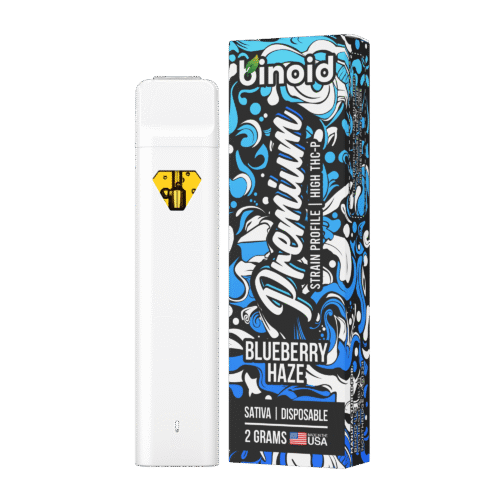
High THC-P 2 Gram Disposable Vape – Strain Series
$41.99$73.99 -
3 Gram Disposable – Blazed
$37.99$69.99 -
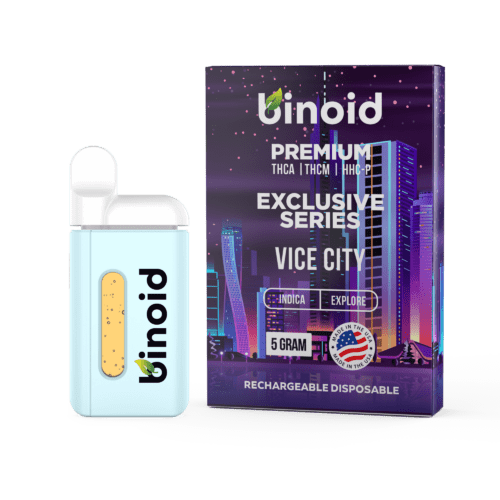
5 Gram Disposable – Exclusive Series
$59.99$89.99 -
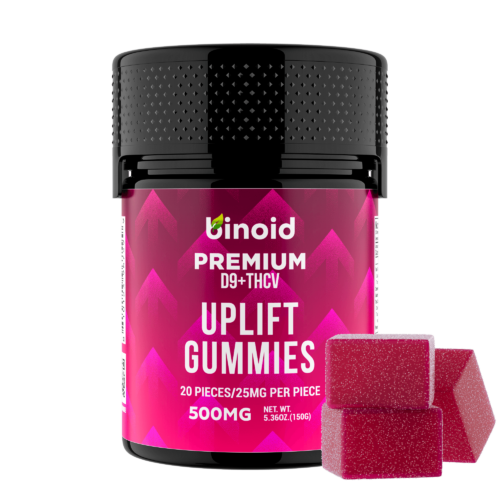
Delta 9 +THCV Gummies- Uplift/Unwind
$29.99$49.99