There is perhaps no botanical subject in the modern American consciousness more thoroughly misunderstood than the cannabis plant and no misunderstanding more consequential, both legally and experientially, than the one that collapses the distinction between hemp and marijuana into a single, undifferentiated category. The confusion is understandable. Both hemp and marijuana are derived from the same species, Cannabis sativa L. Both produce cannabinoids. Both have been subjects of decades of prohibition, cultural mythology, and regulatory controversy.
And yet the differences between them chemical, agricultural, legal, and experiential are so significant that treating them as interchangeable is roughly equivalent to treating wine and grape juice as the same product because they share a botanical origin. Understanding what hemp is, how it differs from marijuana, and why that distinction has reshaped an entire consumer industry is not merely an academic exercise. It is the foundational literacy upon which every intelligent conversation about cannabinoids, hemp-derived products, and the modern legal market must be built.
The story of how these two expressions of the same plant came to occupy such radically different legal and cultural positions is, in many ways, the story of twentieth-century American drug policy a narrative built as much on misinformation and racial anxiety as on any serious pharmacological analysis. Unraveling that story, and replacing it with the molecular and agricultural reality underneath, is the first and most important step toward understanding why a brand like Binoid CBD exists, what it is actually selling, and why the distinction between hemp and marijuana matters enormously to every consumer who interacts with its product catalog.
TO BUY THC PRODUCTS CLICK HERE
Recommended products
-
5 Gram Disposable – Blazed
$51.99$79.99 -
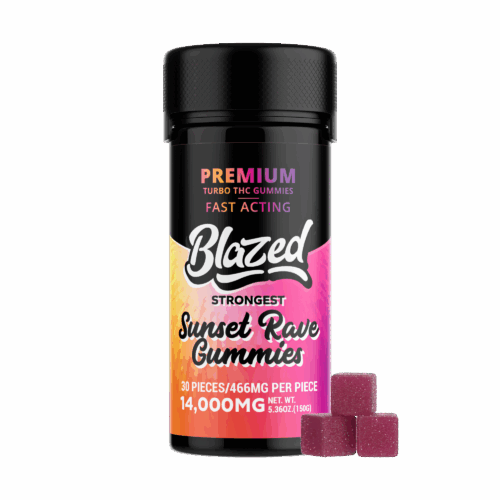
14,000MG Turbo THC Gummies – Blazed
$49.99$84.99 -
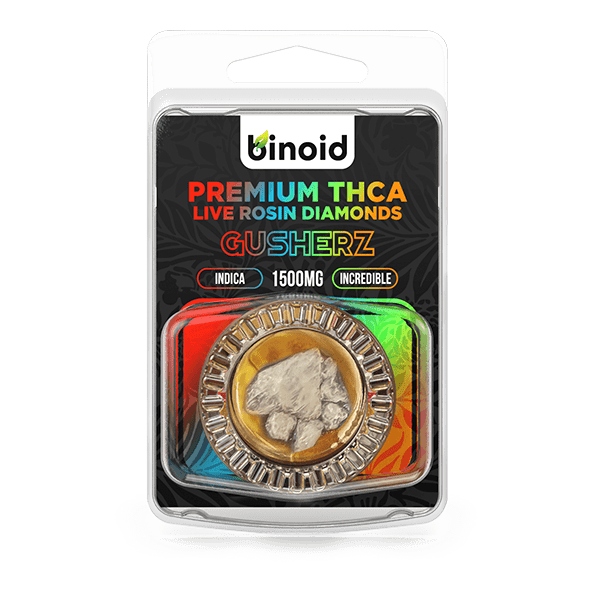
THCA Diamonds 1500mg – Live Rosin
$30.99$59.99 -
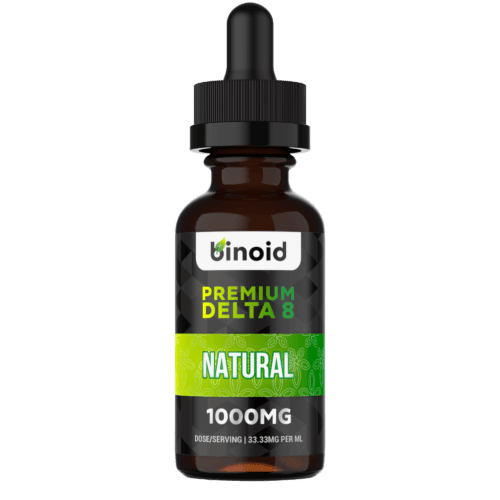
Delta 8 THC Tincture (1000mg, 2500mg, 5000mg)
$25.99$44.99
The Taxonomy of Confusion: One Species, Many Expressions
At the botanical level, the hemp-versus-marijuana distinction begins with a species that has demonstrated remarkable phenotypic plasticity across millennia of human cultivation. Cannabis sativa is, in its wild form, a fast-growing annual herb with a particular gift for adapting to diverse growing conditions and responding to selective breeding pressure with unusual genetic flexibility. Over thousands of years of cultivation across Asia, the Middle East, Europe, and eventually the Americas, human agricultural selection has pushed this single species in two broadly divergent directions: toward high-fiber, low-resin industrial varieties optimized for their stalks, seeds, and structural biomass, and toward high-resin, trichome-dense varieties cultivated specifically for their psychoactive and therapeutic chemical output. The first category, broadly speaking, is what we now call hemp. The second is what we now call marijuana. The plant hasn’t changed its fundamental biology. Human intention shaped which characteristics were amplified and which were suppressed across successive generations of cultivation.
The chemical expression that most sharply defines this divergence is the relative concentration of delta-9-tetrahydrocannabinol, or THC the primary psychoactive cannabinoid in the cannabis plant. Hemp, as formally defined by the 2018 Farm Bill’s federal legal framework, is cannabis containing no more than 0.3% delta-9 THC by dry weight. Marijuana, by contrast which remains a Schedule I controlled substance under federal law is cannabis that exceeds that threshold, typically by a substantial margin.
Modern high-potency marijuana cultivars developed for the recreational and medical dispensary markets routinely test between 20% and 30% total THC, a concentration that reflects decades of intentional selective breeding for psychoactive potency. Hemp varieties, bred in precisely the opposite direction, express negligible THC while often producing robust concentrations of cannabidiol, or CBD, and an expanding roster of other non-intoxicating cannabinoids that have become the commercial foundation of the legal hemp products industry.
The 0.3% Threshold: Where Science Ends and Policy Begins
It is worth pausing on that 0.3% figure, because it is doing an enormous amount of legal and cultural work while resting on a foundation that is more arbitrary than it might appear. The threshold did not emerge from a rigorous pharmacological study establishing that 0.3% THC represents a meaningful boundary of psychoactivity. It originated in a 1976 taxonomic paper by Canadian botanist Ernest Small, who used it as a rough statistical dividing line in a study attempting to classify cannabis varieties not as a regulatory standard designed to define the boundary between intoxicating and non-intoxicating cannabis.
That number traveled from an academic botanical paper into United States federal law through a legislative process that treated it as established science when it was, in reality, a convenient approximation. The 2018 Farm Bill codified it as the legal definition of hemp, and in doing so, created the entire commercial framework within which brands like Binoid CBD operate.
This is not a criticism of the legislative outcome the 0.3% threshold, whatever its origins, has functioned as a workable regulatory boundary that enabled the hemp products industry to develop and mature with remarkable speed. It is, rather, an observation that the hemp vs marijuana distinction is fundamentally a legal and cultural construction layered onto a biological continuum, and that understanding this prevents the kind of category confusion that leads consumers to make poorly informed purchasing decisions. A hemp plant producing 25% CBD and 0.29% delta-9 THC is legally, commercially, and experientially distinct from a marijuana cultivar producing 0.5% CBD and 22% THC even though both are expressions of the same underlying species. The molecule is the message. The threshold is the law.
Recommended products
-
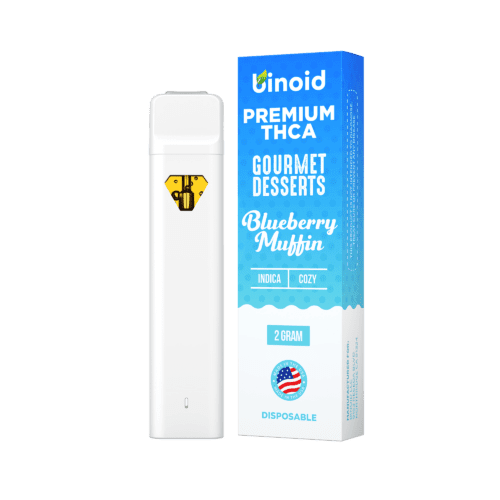
THCA Disposable 2 Gram – Gourmet Desserts
$37.99$73.00 -
Super 7 Gummies – Summer Slush Series
$37.99$49.99 -
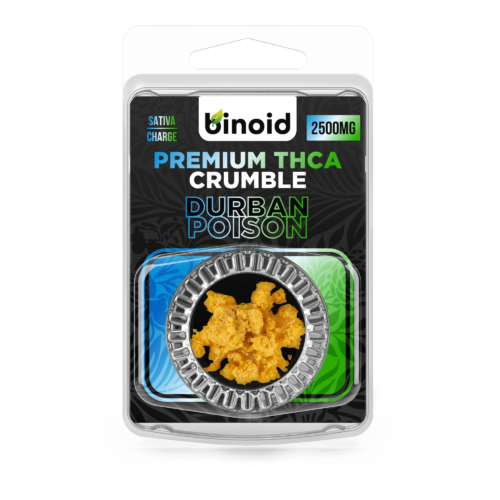
THCA Crumble – 2500mg
$37.99$59.99 -
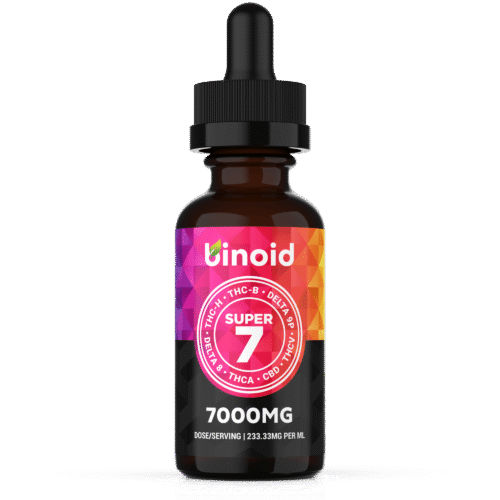
Super 7 Tincture – 7000mg
$39.99$59.99

Industrial Hemp: A Plant That Built Civilizations
Before hemp became the subject of drug policy debates, it was one of the most economically significant crops in human agricultural history and understanding this industrial dimension is essential to grasping why the modern hemp vs marijuana distinction is so important. Hemp fiber, derived from the bast of the plant’s stalks, is among the strongest natural fibers known to agriculture. It was used to make rope, sails, and canvas the word “canvas” itself is etymologically derived from “cannabis” for centuries of maritime civilization.
The United States government, during World War II, actively promoted hemp cultivation through the “Hemp for Victory” program, recognizing the crop’s strategic value for rope and textile production. Hemp seeds, rich in essential fatty acids and complete protein, have been a human food source across multiple cultures for millennia. Hemp-derived cellulose has applications in paper, construction materials, and bioplastics. The plant’s capacity to grow quickly, fix nitrogen in soil, and produce high biomass on modest agricultural inputs made it a staple of sustainable farming systems long before sustainability became a marketing concept.
What changed everything for hemp’s industrial trajectory in the United States was the Marihuana Tax Act of 1937, which effectively prohibited all cannabis cultivation regardless of THC content, conflating the industrial hemp crop with the psychoactive marijuana plant in a legislative maneuver that many historians have traced to a combination of economic interests in the competing synthetic fiber industry and the racial politics of the era.
For eight decades, this prohibition suppressed domestic hemp agriculture entirely, forcing the United States to import hemp fiber and seeds from countries that never abandoned cultivation. The 2018 Farm Bill’s relegalization of hemp as an agricultural commodity was not merely a drug policy reform it was the restoration of a crop with deep agricultural, industrial, and cultural roots in American history, and it opened the door to the cannabinoid product industry that has since developed into a multi-billion-dollar consumer market.
The Cannabinoid Landscape: What Hemp Actually Contains
The commercial hemp products industry that has emerged in the years following the 2018 Farm Bill is built not on hemp fiber or hemp seeds but on the plant’s extraordinary capacity to produce cannabinoids a class of compounds that interact with the human body’s endocannabinoid system, a vast regulatory network of receptors, enzymes, and endogenous ligands distributed throughout the brain, nervous system, immune tissue, and peripheral organs. The endocannabinoid system modulates a remarkable range of physiological processes, and the cannabinoids produced by hemp interact with it in ways that researchers have been studying with increasing sophistication and that consumers have been exploring with increasing intentionality.
CBD, or cannabidiol, is the cannabinoid most abundantly produced by industrial hemp varieties and the compound around which the first wave of the modern hemp products industry was built. Unlike THC, CBD does not produce psychoactive intoxication it does not bind to the CB1 receptor in the central nervous system with the affinity necessary to generate the altered state associated with marijuana consumption.
Its receptor pharmacology is more complex and less fully characterized, involving partial agonism, antagonism, and allosteric modulation across multiple receptor systems, but its experiential profile as reported by millions of consumers across tinctures, gummies, topicals, and capsules is distinctly non-intoxicating. Binoid CBD built its initial brand reputation on precisely this foundation: high-quality, third-party tested CBD products derived from domestically sourced hemp and formulated with the molecular specificity that the compound’s subtle effects require to be meaningfully experienced.
The cannabinoid catalog that hemp can produce extends far beyond CBD, and the past several years have seen an explosion of consumer interest in minor cannabinoids compounds present in smaller concentrations in the plant but capable of producing experiences that are meaningfully distinct from CBD alone. Delta-8 THC, Delta-9 THC in compliant concentrations, THC-P, THC-H, THC-B, HHC, and an expanding roster of novel cannabinoids have all become commercial categories in their own right, each with its own receptor binding profile, its own experiential character, and its own place in Binoid CBD‘s comprehensive product catalog at Binoidcbd.com.
The capacity of hemp to serve as the starting material for this entire spectrum through cultivation, extraction, and in some cases isomerization chemistry is what makes the hemp vs marijuana distinction commercially as well as legally significant. The hemp plant is not merely a compliant alternative to marijuana. It is the raw material for an entirely new category of legal, accessible cannabinoid products that would not exist without it.
Recommended products
-
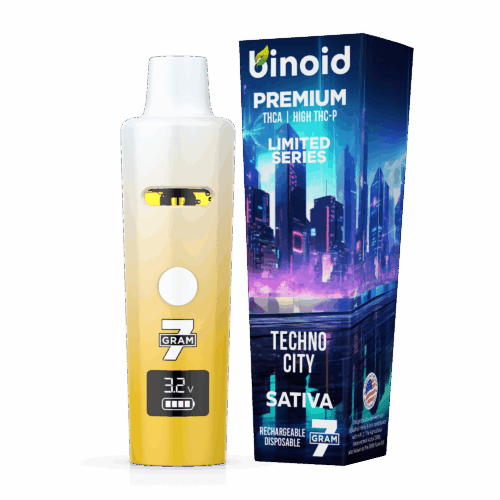
7 Gram THCA + High THC-P Disposable Vape – Limited Series
$67.99$109.99 -
13,000mg Good Luck Gummies
$47.99$79.99 -
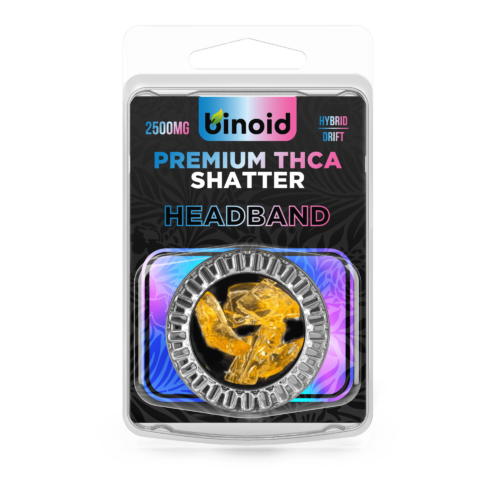
THCA Shatter – 2500mg
$37.99$59.99 -
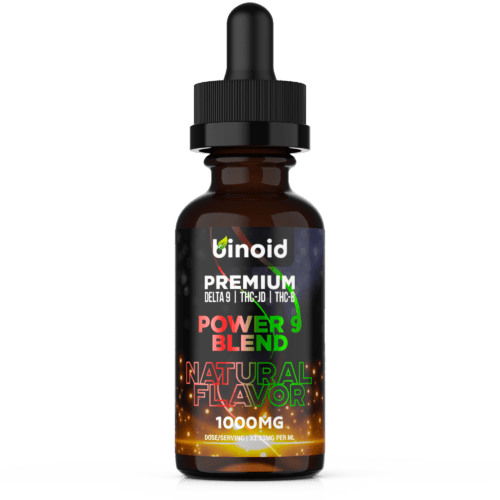
Power 9 Blend Tincture – 1000mg
$34.99$59.99

The Extraction Architecture: From Plant to Product
Understanding how hemp becomes the tinctures, gummies, vape cartridges, and disposables that populate Binoid CBD’s catalog requires a brief but important engagement with the extraction science that bridges raw agricultural material and finished consumer product. Hemp biomass the harvested, processed plant material contains cannabinoids, terpenes, flavonoids, chlorophyll, waxes, and a range of other compounds distributed throughout its cellular structure. Extraction is the process of separating the target compounds from this complex matrix with sufficient precision to produce a distillate or isolate suitable for formulation into consumer products.
Supercritical CO2 extraction is widely regarded as the gold standard methodology for hemp cannabinoid extraction, because it produces a clean, precise extract without the solvent residues associated with hydrocarbon or ethanol extraction processes, and because its operating parameters can be tuned to target specific compound classes with a selectivity that cruder methods cannot achieve. The resulting extract a full-spectrum or broad-spectrum oil containing cannabinoids, terpenes, and associated plant compounds is then processed through distillation, winterization, and where applicable, isomerization to produce the specific cannabinoid profiles that different product formulations require.
This processing chain, applied to domestically sourced hemp by manufacturers operating within the accountability frameworks of the U.S. regulatory environment, is what produces the consistent, verified distillates that fill Binoid CBD’s vape cartridges, tinctures, and edible formulations. The quality of the starting material and the precision of the extraction methodology are not separable from the quality of the finished product a principle that Binoid CBD has built its entire supply chain philosophy around.
Hemp-Derived THC and the Legal Market That Changed Everything
One of the more intellectually interesting dimensions of the contemporary hemp vs marijuana discussion is the degree to which hemp-derived cannabinoid products have closed the experiential gap with marijuana in ways that legislators who crafted the 2018 Farm Bill may not have fully anticipated. The legal definition of hemp as cannabis containing no more than 0.3% delta-9 THC by dry weight created space for a category of products THCA flower, hemp-derived delta-9 gummies, THC-P vapes, and a range of formulations featuring cannabinoids with significant psychoactive potency that deliver experiences functionally similar to marijuana products available in state-licensed dispensaries, through a legal commercial channel accessible to consumers in states where marijuana remains prohibited.
This is not a loophole exploited by rogue operators. It is a legitimate reading of a statutory framework applied with genuine rigor by brands that invest heavily in compliance documentation, third-party testing, and transparent certificate-of-analysis publication. Binoid CBD’s approach to this landscape reflected across its full catalog of THC-containing products from compliant delta-9 gummies to THCA flower to multi-cannabinoid disposables is precisely that of a brand that treats regulatory compliance as a foundational commitment rather than a box-checking exercise.
Every product available through Binoidcbd.com is developed against the 2018 Farm Bill’s definitions, tested by ISO 17025-accredited independent laboratories, and accompanied by batch-specific COA documentation that verifies both potency and compliance. The consumer navigating the hemp vs marijuana distinction in a purchasing context can, with Binoid CBD’s products, do so with the confidence that the brand has already done the legal and scientific work that the distinction requires.
What the Difference Means When You’re Actually Shopping
Translating the hemp-marijuana distinction from molecular science and regulatory policy into practical consumer decision-making is, ultimately, what this entire conversation is building toward. The consumer who understands that hemp is a legally defined agricultural category producing a specific chemical profile low THC, diverse minor cannabinoids, accessible through interstate commerce and online retail and that marijuana is a separate legal category subject to state-by-state dispensary frameworks and federal prohibition, is a consumer equipped to navigate the modern cannabinoid market with genuine intelligence. That intelligence is what separates a purchasing decision based on the actual properties of the product from one based on cultural assumption, marketing language, or the blunt-force confusion of treating all cannabis products as equivalent.
Binoid CBD’s product catalog is, in a very real sense, a map of what hemp can become in the hands of a brand with genuine formulation expertise, rigorous sourcing standards, and a commitment to transparency that extends from the farm to the certificate of analysis to the consumer’s hands. Whether you are beginning your cannabinoid journey with a CBD tincture, exploring the psychoactive territory of a compliant delta-9 gummy, calibrating your experience with a THC-P vape cartridge, or reaching for the full-spectrum expression of a live resin disposable, every product in that catalog begins as hemp legally defined, domestically sourced, and processed with the molecular precision that the plant’s extraordinary chemical complexity deserves.
The plant has two identities and one complicated history. The products it makes possible, when handled with the intelligence and accountability that Binoid CBD brings to the category, represent something considerably simpler: an opportunity to experience what hemp has always been capable of, now finally freed to demonstrate it.
TO BUY THC PRODUCTS CLICK HERE
Recommended products
-
2 Gram THCA Disposable Hash Rosin – Blazed
$37.99$59.99 -
THCA Hash Rosin Dabs – 1000mg
$33.99$59.99 -
Beast Mode Blend Tincture – 1000mg
$34.99$59.99