
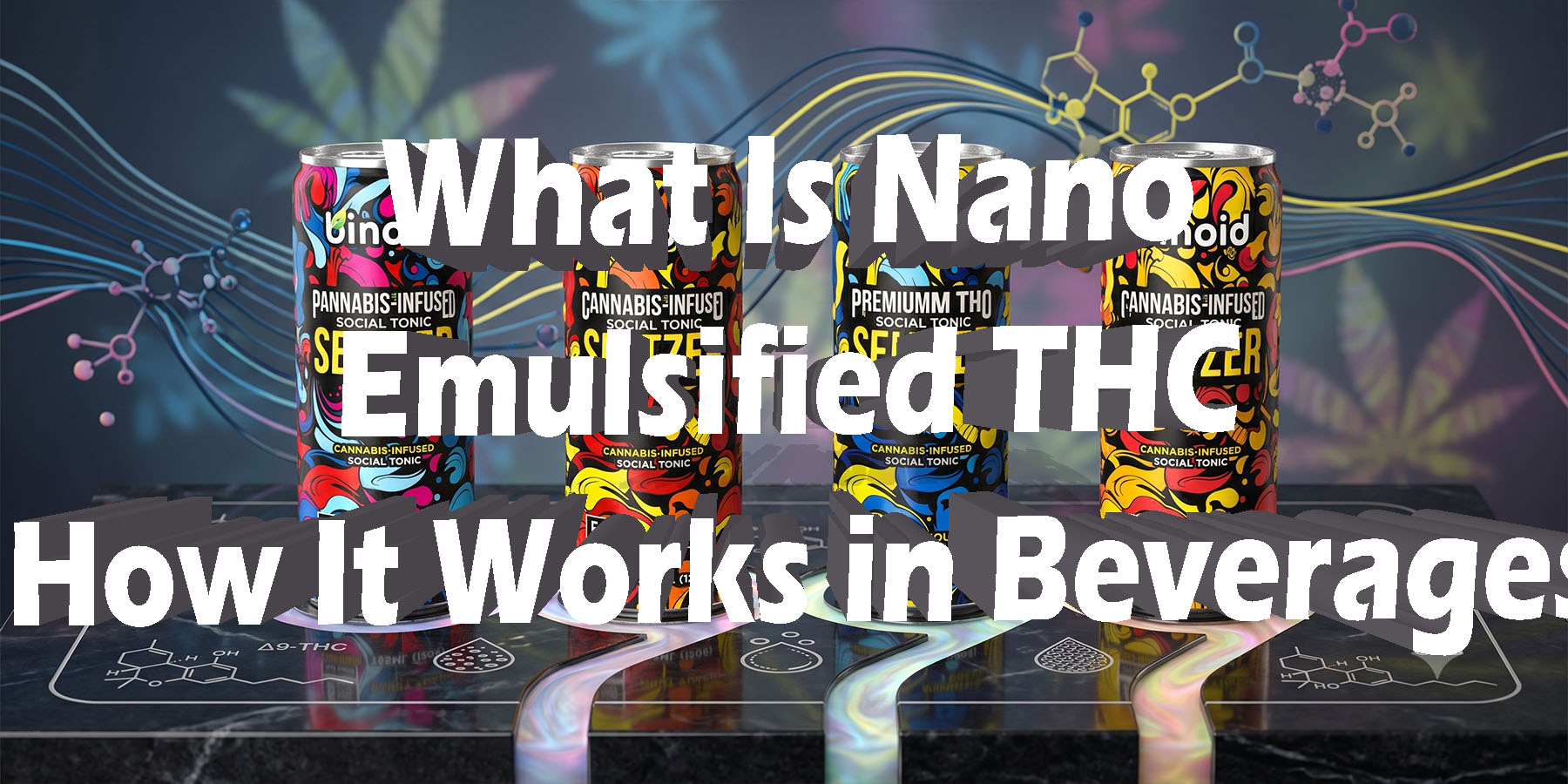
Pour a glass of water, add a spoonful of olive oil, and watch physics deliver its oldest lesson: the two refuse to mingle. The oil gathers into wobbling golden lenses, drifts to the surface, and sulks there, indifferent to any amount of stirring. Now imagine that the oil carries a precisely measured dose of delta 9 THC, and that your task is to make it disappear into a can of sparkling water so completely that the first sip and the last sip deliver the same thing. That is the engineering problem behind every serious cannabis beverage, and it explains why nano emulsified THC has become the most quietly consequential idea in the category. It is the difference between a drink that behaves and a drink that gambles with you.
To Buy THC Beverages Click Here
A Molecule That Fears the Glass
THC is profoundly lipophilic, meaning it dissolves readily in fats and oils and wants almost nothing to do with water. This preference is written into its structure, a largely hydrocarbon skeleton with very little polar surface for water molecules to grip. It is the reason cannabis has historically been infused into butter, coconut oil, and chocolate, and the reason a naive attempt to stir tincture into a soda produces a slick that clings to the glass. The first generation of cannabis drinks tried to brute-force the problem with crude dispersions, and the results were exactly what a chemist would predict. Some cans delivered almost nothing while others delivered far more than the label promised, because the THC had settled, floated, or stuck to the packaging in proportions no one could control.
The consumer experience of those early products was as unpredictable as the chemistry. Onset could arrive in a half hour or after an hour and a half, and the intensity seemed to depend more on luck than on anything printed on the label. For a beverage, which people naturally sip and gauge in real time, this is a special kind of failure, because a drink is supposed to be the most legible format in the world. You expect to understand it by the second sip. A product that cannot be understood by the second sip is not a premium product, and the industry spent years learning that lesson in public before the science caught up with the ambition.
What Nano-Emulsification Actually Does
An emulsion is a suspension of one liquid in another that would not normally blend, and mayonnaise is the everyday proof that it can be done. Nano-emulsification pushes the same principle to a far finer scale, using high-energy processing to shear the THC-bearing oil into droplets measured in nanometers, small enough that they behave less like a floating layer and more like part of the liquid itself. Each droplet is then wrapped in an amphiphilic emulsifier, a molecule with a water-loving end and an oil-loving end. The oil-loving end anchors into the droplet while the water-loving end faces outward, so the droplet presents a friendly surface to the surrounding water and stays dispersed instead of merging with its neighbors.
Size matters here for reasons that go beyond elegance. According to Stokes’ law, the speed at which a particle rises or sinks in a liquid scales with the square of its radius, so shrinking a droplet by a factor of ten slows its drift by a factor of one hundred. At nano dimensions the drift becomes so slow that the constant random jostling of water molecules, known as Brownian motion, effectively wins the contest and keeps the droplets suspended. The liquid stays clear or evenly opalescent, the dose stays evenly distributed, and a can that sits on a shelf for months does not develop the sediment or oily ring that plagued early formulations. This is the quiet triumph of the technology, and it is why the best drinks look like ordinary sparkling water, which is precisely what a well-made one should look like.
The Body’s Side of the Story
The second reason nano emulsified THC matters is what happens after the sip. Conventional edibles are swallowed, absorbed in the gut, and routed through the liver in what pharmacologists call first-pass metabolism, where a large share of delta 9 THC is converted into 11-hydroxy-THC, a metabolite widely described as more intense and longer-lasting than its parent. That pathway is why a traditional gummy can feel slow to arrive and heavy once it does. Nano-emulsified formulations are designed to present the THC in a form that absorbs more readily and more evenly, and many consumers describe an onset that begins in roughly fifteen to thirty minutes with a shape that feels cleaner and easier to read than a classic edible.
It is worth being disciplined about what that means. Absorption is influenced by the drinker’s metabolism, whether they have eaten, their tolerance, and the specific emulsifier system used, so no honest producer promises a stopwatch-perfect experience. What the technology offers is a narrower band of variability, not the elimination of it. A drinker who understands that distinction treats a nano-emulsified seltzer as a format that rewards patience: sip, wait, and let the experience declare its shape before deciding whether a second can belongs in the evening. That habit is part of the appeal, and it is the reason the beverage format has attracted consumers who dislike surprises.
Stability, Carbonation, and the Long Life of a Can
Building an emulsion is one achievement, and keeping it intact for months is another. Emulsions are thermodynamically restless, and over time droplets can drift together, a process called coalescence, or larger droplets can grow at the expense of smaller ones, a phenomenon known as Ostwald ripening. Formulators fight these tendencies by choosing emulsifiers carefully, controlling droplet size distribution so it is tight rather than merely small, and tuning the pH of the drink so the droplets keep enough surface charge to repel one another. Carbonation adds another wrinkle, since dissolved gas and the acidity it brings can nudge that electrical balance. A stable sparkling THC beverage is therefore the product of a great deal of unglamorous bench work that the drinker never sees.
The consumer’s part in preserving all that work is refreshingly simple. Heat, prolonged sunlight, and repeated freeze-thaw cycles are the enemies of both the emulsion and the THC itself, which degrades under light and warmth toward compounds like CBN. Store cans in a cool, dark place, chill them before drinking rather than after, and never leave a case in a hot vehicle. If a can is ever visibly separated, with an oily film at the neck or clumps that do not disperse after a gentle tilt, treat that as a signal that the emulsion has failed. A well-formulated drink should look the same on its last day as on its first.
Reading a Seltzer Label Like an Insider
Because a beverage is mostly water, the label tells you less than you might think, and the real evidence lives in laboratory documentation. A batch-specific certificate of analysis from an ISO 17025-accredited lab should confirm the cannabinoid content per can, and the sophisticated reader looks for a dose that matches the label within a tight tolerance. Uniformity is the true test of an emulsion, since a product can average out to the right number while individual cans wander. Brands that publish COAs by batch number, as Binoid CBD does across its catalog, give the consumer a way to verify that the promise printed on the can was the promise the laboratory measured.
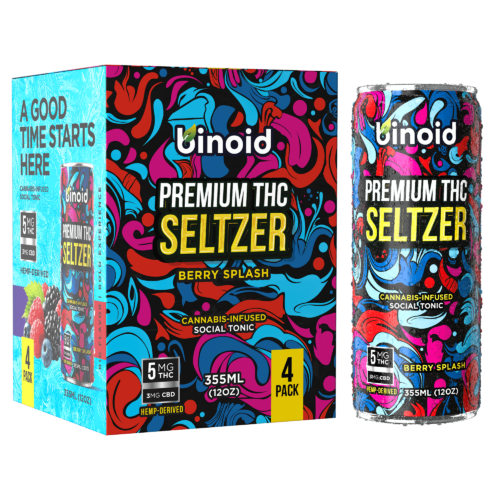
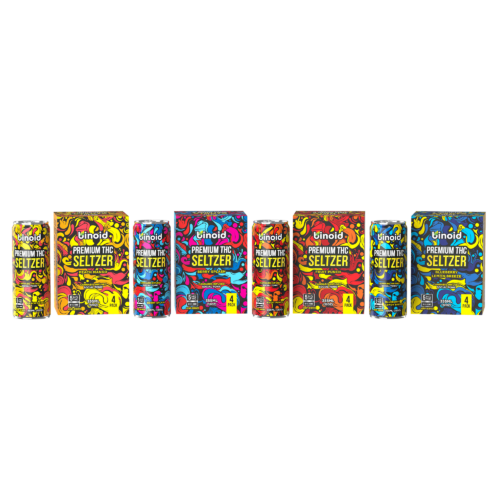
The sensory side deserves equal scrutiny, because a technically flawless emulsion in a flavor no one wants to drink is a wasted achievement. The Binoid seltzer lineup, with its Berry Splash, Fruit Punch, Blueberry Lemon, Peach Mango, expressions, treats flavor as a design problem rather than a mask, and the Super 7 Orange Creamsicle THC Beverage extends that thinking into a multi-cannabinoid format built around a creamy citrus profile. You can browse the range and the accompanying lab documentation at Binoidcbd.com. A good rule for any brand is that the flavor should taste like something you would choose without the THC, since that is the surest sign the formulators sweated the details.
The Regulatory Ground Is Moving
No responsible discussion of hemp-derived THC beverages can skip the legal context, and here the story has changed materially. The 2018 Farm Bill defined hemp by its delta 9 THC concentration on a dry-weight basis, and that definition is what allowed a market of hemp-derived edibles and drinks to flourish. In November 2025, Congress enacted legislation that replaces that approach with a total THC standard and caps finished hemp products at a very small amount of THC per container. Most intoxicating hemp beverages currently on the market would not meet that limit once it takes effect.
The effective dates have also shifted. Most of the new restrictions were originally set for November 12, 2026, and a recent continuing resolution moved them to December 11, 2026, although certain cannabinoids that the plant cannot produce on its own remain on the earlier schedule. State rules add another layer, with some states regulating or restricting hemp beverages independently of the federal calendar. Because this is a fast-moving area, the honest advice is to check current federal and state law before you buy, and to treat any brand that ignores the subject entirely with some suspicion. This is general information rather than legal advice, and it may change again before you read it.
A Decision Framework for the Curious Drinker
Choosing a nano-emulsified THC beverage comes down to four questions asked in order. First, is the product legal where you live, given both the current federal position and your state’s rules? Second, can the brand show you a recent, batch-specific COA from an accredited lab that confirms the dose per can? Third, does the emulsion look and taste stable, with a flavor you would enjoy on its own merits? Fourth, are you approaching the experience the way the format rewards, which is patiently and with a plan?
That last question is the one that separates a satisfying evening from a regrettable one. Start with a modest amount, wait a full hour before deciding on more, avoid mixing with alcohol, and never drive or operate machinery after drinking a THC beverage. These products are for adults of legal age, and the format works best when you treat it with the respect you would give any serious ingredient. Get the sourcing right and the science does the rest, turning the oldest problem in beverage chemistry into a can of something that simply tastes like summer.
To Buy THC Beverages Click Here
Recommended products
-
THC Seltzer – Good Vibes Cannabis Drink (4 Pack)
$19.99$29.99 -
THC Seltzer – Good Vibes Bundle
$71.99$159.99