Pick up two THC vape cartridges side by side — one from a brand that has clearly invested in its craft, and one assembled by an operation chasing margin over quality — and to the untrained eye, they might look nearly identical. Both are small, both are cylindrical, both promise the same basic proposition: heat this oil, inhale the vapor, experience the effect.
But that surface-level similarity is precisely what makes the vape cartridge category one of the most consequential places for an informed consumer to develop real discernment, because the difference between a genuinely premium cartridge and a mediocre one is invisible until you understand what to actually look for — in the hardware, in the oil, in the documentation, and in the sourcing decisions that precede all of it.
A premium THC vape cartridge guide worth its name has to go deeper than flavor descriptions and marketing copy. It has to function as an anatomy lesson, because a vape cartridge is, at its core, a small feat of applied engineering wrapped around a precisely formulated concentrate — and every component of that engineering either serves the consumer’s experience or quietly undermines it.
To Buy THC Vape Cartridges Click Here
Recommended products
-
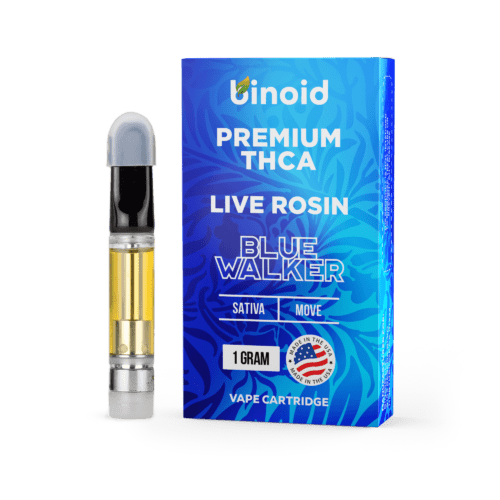
THCA Vape Cartridge Blue Walker – Live Rosin
$30.99$59.99 -
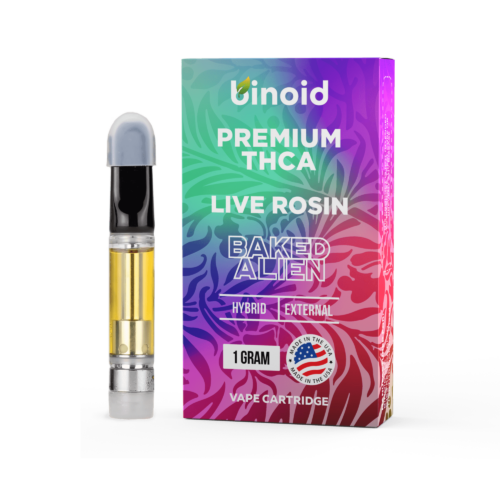
THCA Vape Cartridge Baked Alien – Live Rosin
$30.99$59.99 -
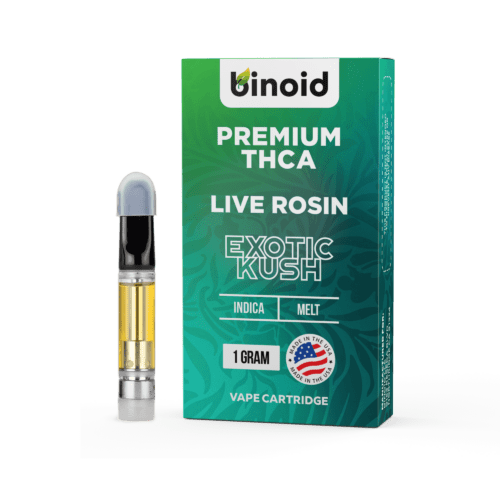
THCA Vape Cartridge Exotic Kush – Live Rosin
$30.99$59.99 -
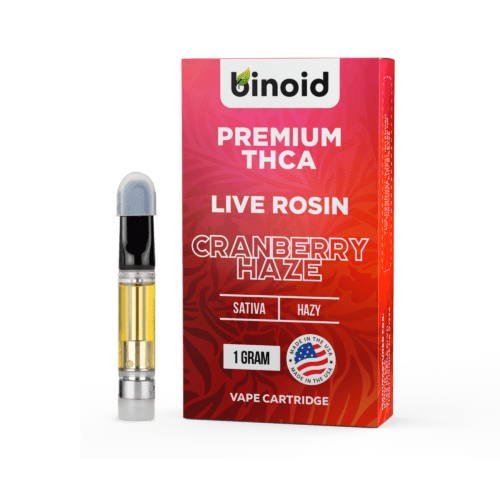
THCA Vape Cartridge Cranberry Haze – Live Rosin
$30.99$59.99
The Hardware: Ceramic, Ports, and the Physics of a Clean Draw
Start with the coil, because it is the single component most responsible for the difference between a smooth, flavorful draw and a harsh, burnt one. Premium vape cartridges overwhelmingly use ceramic heating elements rather than the coiled metal wire wrapped around cotton wicking that characterizes cheaper hardware. Ceramic heats more evenly across its surface, avoids the metallic off-notes that wire coils can impart to a concentrate’s flavor profile, and holds up considerably better over the full lifespan of a cartridge, resisting the kind of degraded performance that shows up as bitter, acrid hits toward the end of a cartridge’s use. The airflow architecture matters just as much, and it is one of the most frequently overlooked engineering details in the entire category.
A well-designed cartridge features precisely calibrated airflow ports that allow enough oxygen to mix with vapor to keep the draw smooth without so much airflow that the vapor becomes thin and flavorless, or so little that the draw becomes an effortful, lung-straining exercise. The mouthpiece material and geometry contribute here too — inexpensive plastic mouthpieces can impart their own faint chemical taste under heat, while glass or high-grade ceramic mouthpieces remain neutral and let the actual concentrate’s flavor come through unobstructed. None of this is visible on a product page photo, which is exactly why sourcing from a brand that discloses its hardware specifications and manufacturing partnerships — as Binoid CBD does across its cartridge lineup on Binoidcbd.com — matters more than most consumers initially assume.
Recommended products
-
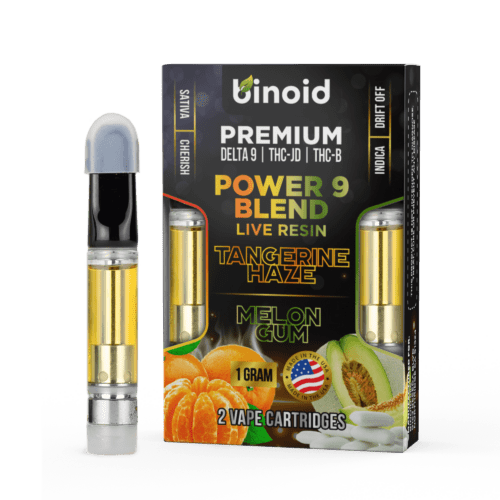
Power 9 Blend Live Resin Cartridge – 2 Pack Combo (Limited Time Sale)
$40.99$89.99 -
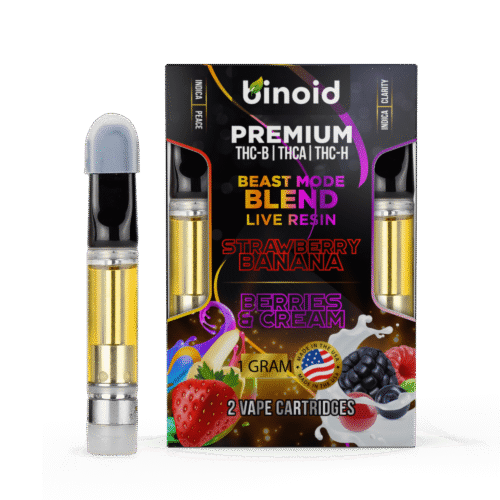
Beast Mode Blend Live Resin Cartridge – 2 Pack Combo (Limited Time Sale)
$40.99$89.99 -
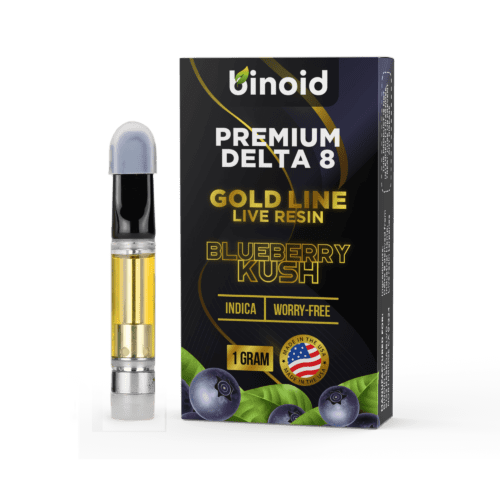
Delta 8 Live Resin Vape Cartridge – Blueberry Kush
$26.99$59.99 -
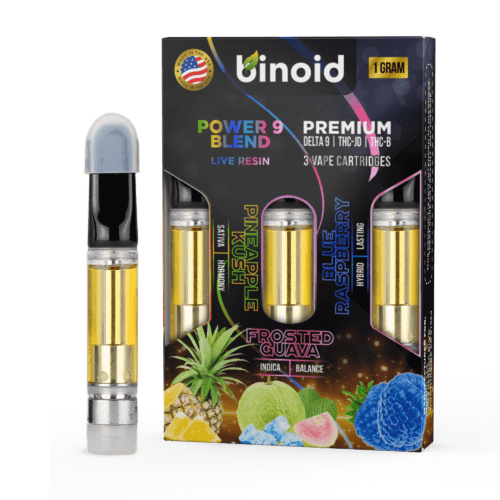
Power 9 Blend Live Resin Vape Cartridges – 3 Pack Combo
$54.99$89.99
Viscosity, Cutting Agents, and the Honesty of a Clean Fill
The oil itself is where premium and mediocre vape cartridges diverge most dramatically, and viscosity is the first tell. Cannabis distillate at room temperature is naturally thick — thick enough that it needs some engineering consideration to flow properly through a cartridge’s wicking system without pooling, flooding, or leaking.
Some manufacturers address this by using high-quality live resin or live rosin formulations that retain natural viscosity-modifying compounds from the plant itself, while others reach for cutting agents — thinning compounds like propylene glycol, polyethylene glycol, or vitamin E acetate — to artificially reduce viscosity at a lower production cost. The last of these deserves specific mention: vitamin E acetate was directly implicated in the 2019 EVALI vaping-illness outbreak, and its presence in a premium vape cartridges is a serious red flag that has largely — though not universally — been eliminated from the reputable end of the market following that public health crisis.
A premium cartridge either uses a naturally appropriate viscosity distillate or discloses precisely what cutting agents, if any, have been used and at what concentration, verified through third-party testing. Binoid CBD’s cartridge formulations are built around distillate and live resin viscosities engineered to perform correctly without relying on undisclosed thinning agents, a standard that should be treated as a baseline expectation rather than a premium feature, even though a disappointing share of the broader market fails to meet it.
Recommended products
-
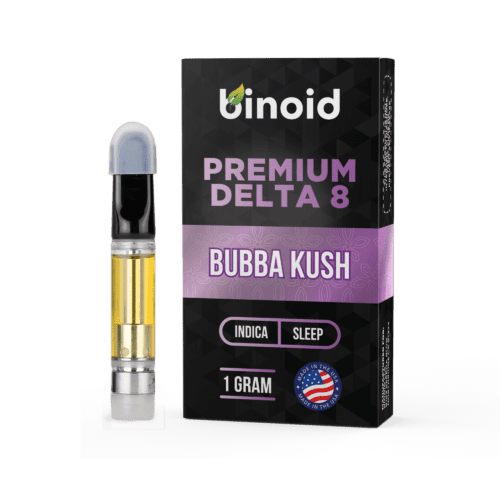
Delta 8 THC Vape Cartridge – Bubba Kush
$26.99$59.99 -
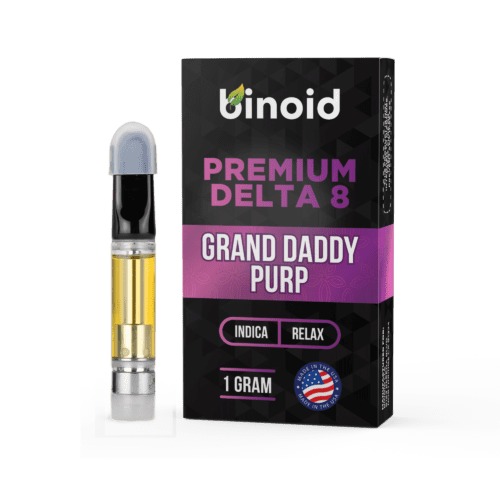
Delta 8 THC Vape Cartridge – Grand Daddy Purp
$26.99$54.99 -
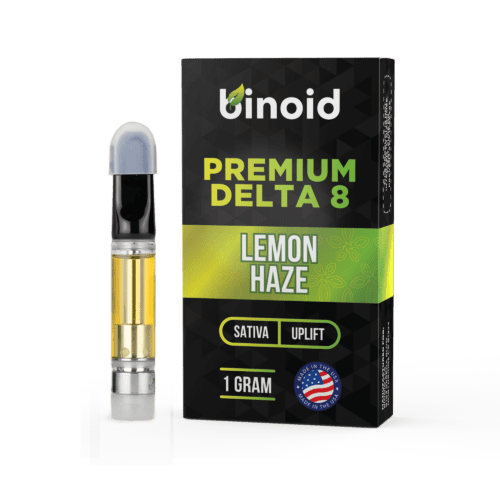
Delta 8 THC Vape Cartridge – Lemon Haze
$26.99$54.99 -
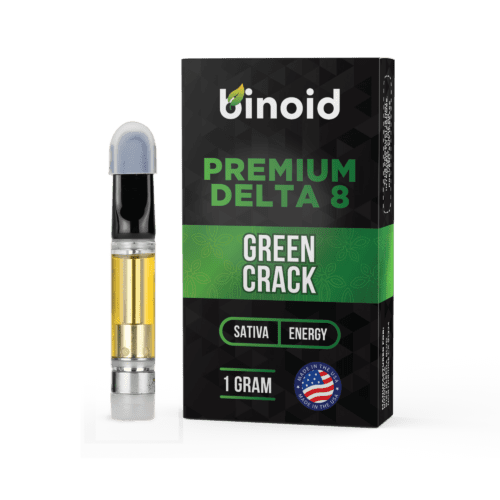
Delta 8 THC Vape Cartridge – Green Crack
$26.99$59.99
Terpenes: The Difference Between Flavor and Flavoring
Terpene sourcing is where the connoisseur-versus-casual divide in vape cartridge becomes most apparent, because there are fundamentally two approaches to flavoring a cartridge, and they produce dramatically different experiences. The first approach uses cannabis-derived terpenes — aromatic compounds extracted from the same plant material as the cannabinoids themselves, ideally through low-temperature extraction methods that preserve the volatile compounds intact rather than degrading them under heat.
The second approach uses botanically-derived or synthetic terpenes, flavor compounds sourced from non-cannabis plants or manufactured to approximate a cannabis flavor profile, which can be significantly cheaper to source but that experienced consumers frequently describe as tasting subtly artificial or one-dimensional compared to cannabis-derived alternatives. Live resin cartridges represent the highest expression of terpene integrity in the category, because live resin extraction begins with fresh-frozen plant material rather than dried and cured biomass, preserving a terpene profile that is closer to what the living plant actually expressed at the moment of harvest, before oxidation and time have had the chance to degrade the more delicate volatile compounds.
Binoid CBD’s live resin cartridge lineup on Binoid CBD reflects a deliberate commitment to this higher standard, using cannabis-derived terpene profiles that preserve strain-specific character rather than approximating it with a generic flavoring system, which is precisely the distinction that separates a cartridge that tastes like the plant it claims to represent from one that merely gestures in that direction.
Recommended products
-
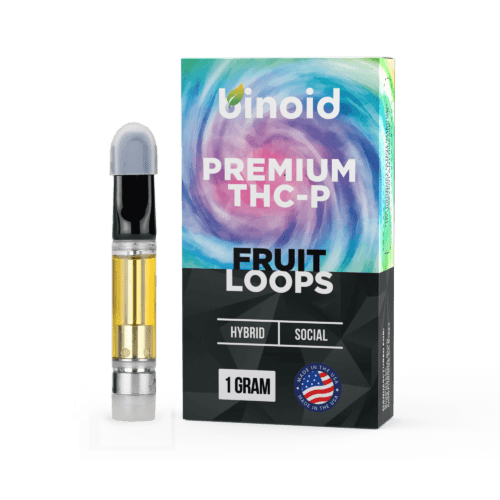
THC-P Vape Cartridge – Fruit Loops
$30.99$59.99 -
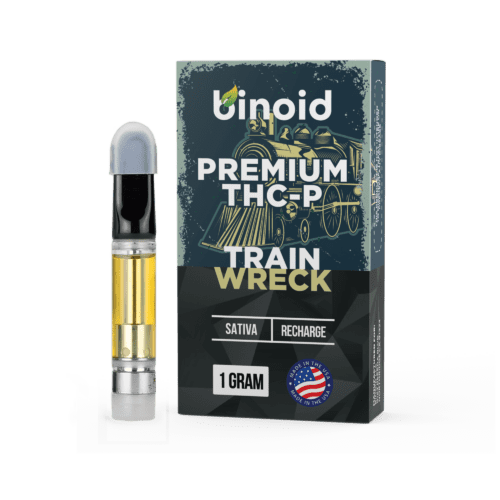
THC-P Vape Cartridge – Trainwreck
$30.99$59.99 -
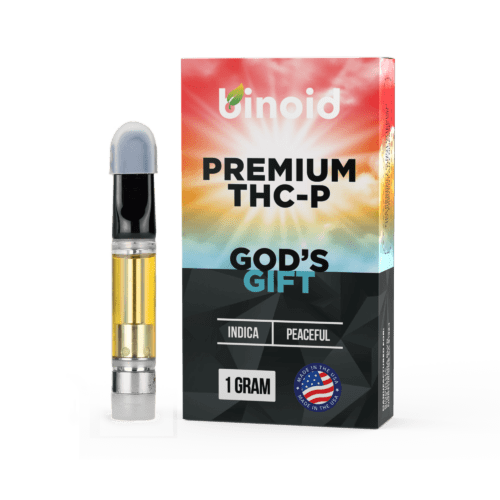
THC-P Vape Cartridge – God’s Gift
$30.99$59.99 -
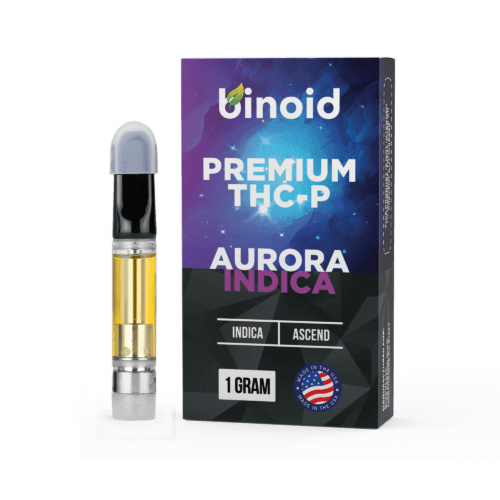
THC-P Vape Cartridge – Aurora Indica
$30.99$59.99
The Extraction Question: Why the Process Behind the Oil Matters
Before terpenes and cutting agents even enter the conversation, the extraction method used to pull cannabinoids from the raw plant material shapes everything downstream. Supercritical CO2 extraction remains the gold standard for premium vape cartridge production, using pressurized carbon dioxide in a supercritical state to selectively pull cannabinoids and terpenes from plant material without the residual solvent risk that hydrocarbon extraction methods can introduce if not executed with rigorous post-processing purification.
This is not to say hydrocarbon extraction — using solvents like butane or propane — is inherently disqualifying; when performed by an experienced manufacturer with proper purging protocols and verified through residual solvent testing, hydrocarbon extraction can produce exceptionally high-quality concentrate, particularly for live resin and live rosin formats where certain hydrocarbon methods better preserve terpene integrity than CO2 processes do. What matters far more than the specific extraction method is whether the manufacturer can document, through accredited third-party laboratory testing, that the finished concentrate is free of residual solvents at levels that could pose any concern.
This is where the certificate of analysis becomes the single most important piece of information a vape cartridge shopper can review, because it is the only objective evidence bridging the gap between a brand’s extraction claims and the actual chemical reality of what ends up in the cartridge a consumer purchases.
Reading the COA: What a Vape-Specific Certificate Should Actually Show
A certificate of analysis for a vape cartridge needs to answer several specific questions that a COA for, say, a tincture or edible does not necessarily need to address with the same urgency. It should verify cannabinoid potency — confirming that the labeled milligram content of THC and any other cannabinoids present actually matches the laboratory-measured concentration, since cartridge potency claims are a documented area of industry-wide inconsistency. It should include a residual solvent panel specifically relevant to whatever extraction method was used, screening for butane, propane, or ethanol residues at levels below established safety thresholds.
It should test for heavy metals, since certain cartridge hardware components — particularly lower-quality metal heating elements and connector pieces — can leach trace metals into the oil under repeated heating cycles. And increasingly, sophisticated consumers are looking for cartridges that disclose testing for vitamin E acetate specifically, given its documented health risks, even in cartridges that don’t use it, simply as a transparency gesture that builds confidence.
A COA that addresses all of these categories, that comes from an ISO 17025 accredited laboratory, and that is searchable by batch number directly on the brand’s website — as is the case across Binoid CBD’s cartridge catalog — represents the kind of documentation standard that should inform every serious vape cartridge purchase decision, rather than being treated as an optional bonus reserved for the most expensive tier of the market.
Battery Compatibility and the Overlooked Hardware Half of the Equation
It is worth remembering that a cartridge is only half of a functioning system, and battery compatibility is a frequently underdiscussed variable that shapes the actual consumer experience as much as the oil itself. Standard 510-thread cartridges are designed to be broadly compatible across most vape battery devices, but voltage output varies meaningfully between battery models, and a cartridge’s oil viscosity and coil resistance are calibrated with certain voltage ranges in mind.
Running a premium, thoughtfully formulated cartridge on a battery with mismatched voltage output — too high, and the oil combusts rather than vaporizes cleanly, degrading flavor and potentially creating harmful byproducts; too low, and the draw becomes weak and unsatisfying regardless of how well-engineered the cartridge itself is. Consumers investing in a premium cartridge experience owe it to that investment to pair it with an appropriately calibrated battery, typically one offering adjustable voltage in the 3.0 to 4.0 volt range, allowing fine-tuning to the specific viscosity and terpene profile of the oil in question.
Making the Choice: A Consumer Decision Framework
Evaluating a THC vape cartridge with real sophistication ultimately comes down to a handful of concrete questions a shopper can and should ask before purchasing. Does the brand disclose its hardware specifications, including coil material and mouthpiece composition, rather than leaving the consumer to guess at what’s actually heating the oil they inhale?
Is the terpene sourcing cannabis-derived, and does the brand distinguish between standard distillate and live resin formulations rather than blurring the line between them? Is there a current, batch-specific, ISO-accredited certificate of analysis covering potency, residual solvents, and heavy metals, accessible before checkout rather than buried in customer service correspondence after the fact? And does the brand’s broader catalog reflect the same standard of transparency across its full range, rather than reserving genuine quality control for a single flagship product while cutting corners elsewhere?
A cartridge that answers all four questions satisfactorily is one built by a brand that understands vape cartridges as precision instruments rather than commodity accessories — and it is precisely that standard that Binoid CBD has built its cartridge program around, offering the kind of hardware transparency, terpene integrity, and laboratory documentation on Binoidcbd.com that lets an informed consumer make a genuinely confident purchasing decision rather than a hopeful guess.
To Buy THC Vape Cartridges Click Here
Recommended products
-
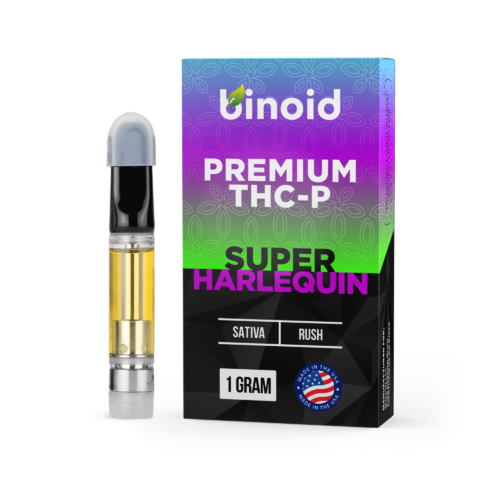
THC-P Vape Cartridge – Super Harlequin
$29.99$59.99 -
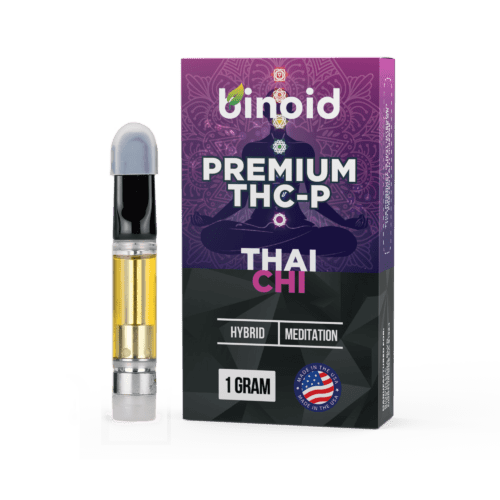
THC-P Vape Cartridge – Thai Chi
$30.99$59.99 -
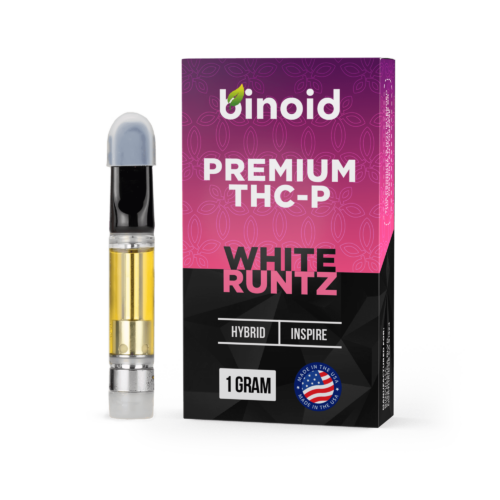
THC-P Vape Cartridge – White Runtz
$29.99$59.99 -
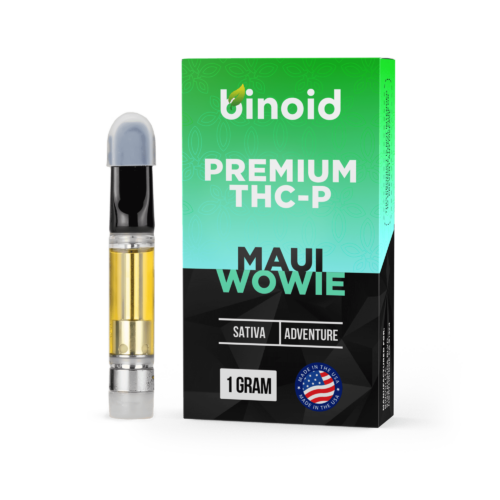
THC-P Vape Cartridge – Maui Wowie
$29.99$59.99