
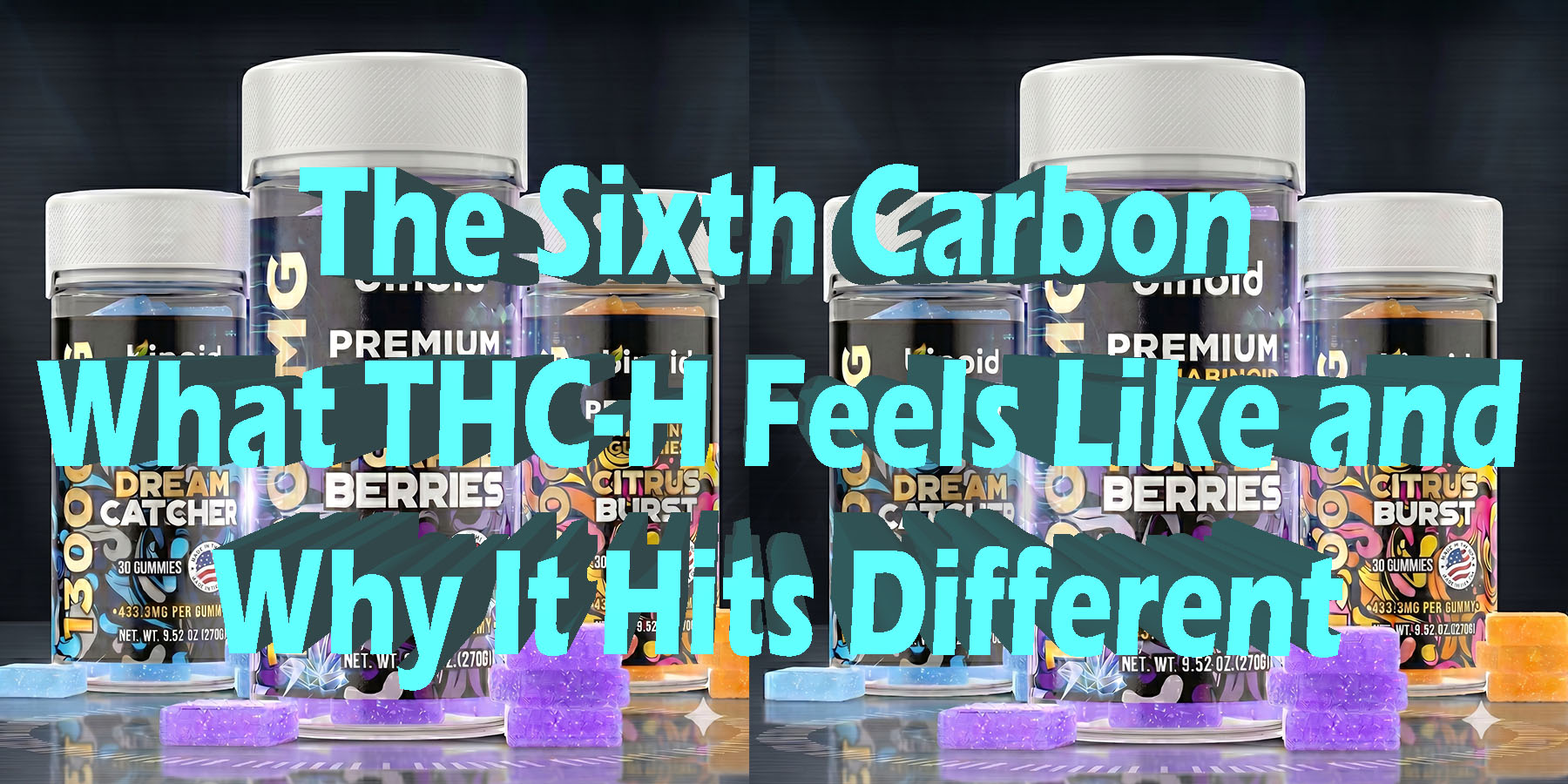
There is a particular rhythm to how the cannabis industry discovers itself. A compound emerges from the literature usually buried in a pharmacology journal that the average consumer will never encounter and then, with the unhurried momentum of genuine scientific interest colliding with commercial opportunity, it begins its migration from academic abstraction to retail shelf. Delta 8 went through this arc. So did THC-P. And now, moving through exactly this trajectory with the quiet confidence of a compound that has genuinely earned its reputation, comes THC-H tetrahydrocannabihexol a naturally occurring cannabinoid that is rewriting assumptions about what the hemp plant is capable of delivering and why the most experienced consumers in this space are paying such careful attention to what comes next.
The question what is THC-H is deceptively simple. It sounds like a beginner’s inquiry, the kind of foundational question that a first-time dispensary visitor might type into a search bar on a slow Tuesday afternoon. But the honest answer to that question reaches into receptor pharmacology, organic chemistry, agricultural science, and the evolving legal architecture of the hemp-derived cannabinoid market in ways that reward genuine engagement. This is not a compound that can be fairly summarized in a single sentence or a marketing tagline. It is a molecule with a specific structural logic, a distinctive experiential character, and a sourcing story that matters enormously and it deserves the kind of serious, sustained attention that its growing community of devoted consumers has already decided it warrants.
TO BUY THC-H PRODUCTS CLICK HERE
The Structural Story: Six Carbons and the Science of Receptor Engagement
To understand what THC-H is at the level of molecular architecture, you need to hold two things in mind simultaneously: the basic structure of delta 9 THC, which most cannabis consumers have at least passing familiarity with, and the concept of the alkyl side chain, which is the portion of the cannabinoid molecule that most directly governs its interaction with the CB1 receptor in the central nervous system. Delta 9 THC carries a five-carbon alkyl side chain this is the molecular feature that gives it the specific geometric profile necessary to engage CB1 receptors with sufficient affinity to produce its well-documented psychoactive effects.
THC-H carries a six-carbon side chain. That single additional carbon atom, seemingly inconsequential from the outside, produces a compound with a meaningfully different receptor binding profile one that positions THC-H as a step beyond delta 9 on the potency spectrum, with a character that experienced consumers describe as deeper, more sustained, and more gravitationally present than conventional cannabis benchmarks would lead you to expect.
The Italian research team responsible for formally characterizing both THC-H and its more famous cousin THC-P in 2020 was working at the frontier of cannabinoid science, applying mass spectrometry techniques sophisticated enough to identify compounds present in cannabis in quantities too small for earlier analytical methods to detect. Their publication in Scientific Reports did not merely add two entries to the cannabinoid catalog it established a structural logic for a whole class of compounds defined by their elongated side chains, and it suggested that the cannabis plant’s molecular inventory was considerably richer and more pharmacologically interesting than the delta 9-centric conversation had allowed for.
THC-H, in this context, is not a synthetic novelty or a laboratory curiosity engineered for potency’s own sake. It is a phytocannabinoid a compound the plant itself produces that advanced science finally equipped us to find and characterize. That distinction matters, philosophically and practically, for consumers trying to understand what they are actually engaging with when they choose a THC-H product from a premium retailer like BinoidCBD.com.
The Hexyl Advantage: Where THC-H Sits in the Potency Landscape
Situating THC-H accurately within the contemporary cannabinoid landscape requires the kind of honest, non-hyperbolic potency benchmarking that the hemp-derived market has historically been reluctant to offer. The instinct to position every novel compound as the most powerful thing ever synthesized serves short-term marketing goals and long-term consumer trust poorly, which is why a more calibrated account of where tetrahydrocannabihexol actually sits relative to its molecular relatives is both more useful and more credible. Delta 8 THC, with its five-carbon side chain and its tendency toward what many users describe as a cleaner, somewhat less anxious psychoactive profile than delta 9, sits toward the approachable end of the spectrum.
Delta 9 occupies the conventional benchmark position the molecule against which everything else in the market tends to be measured. HHC, the hydrogenated form of THC, offers a comparable but chemically distinct experience that some consumers prefer for its reported stability and shelf life characteristics. THC-H, with its six-carbon hexyl chain, occupies a position meaningfully above delta 9 and HHC on the binding affinity gradient a compound that arrives at the CB1 receptor with greater structural authority and engages it with a persistence that produces effects of both greater intensity and longer duration than the mainstream benchmarks most experienced consumers have calibrated themselves against.
What separates THC-H from the logical next step on the chain THC-P, with its seven-carbon side chain is a matter of degree rather than kind, but it is a degree that experienced consumers consistently identify as significant. THC-H occupies what might be described as the advanced-intermediate position in the high-potency novel cannabinoid category: demanding enough to warrant genuine respect and deliberate dosing practice, but possessed of a profile that many experienced users find more navigable than THC-P’s furthest-frontier intensity.
It is, in the language of the sommelier, a grand cru rather than a first growth exceptional, complex, and worthy of the connoisseur’s full attention, without requiring the near-ceremonial caution that THC-P’s ceiling demands. The Binoid THC-H product line reflects this positioning, offering experienced consumers a compound that rewards curiosity and respect in equal measure, backed by the sourcing integrity and laboratory verification that allow that engagement to happen on informed terms rather than speculative ones.

The Experience Economy: What THC-H Actually Delivers
The most honest answer to what THC-H feels like is that it feels like a version of the delta 9 THC experience that has been both amplified and extended in ways that the experienced cannabis consumer will immediately recognize as qualitatively different from what they have previously encountered, rather than merely more of the same. At conservative doses the entry point that responsible engagement with any high-potency novel cannabinoid demands early users of THC-H products report an onset that carries the familiar arc of a quality cannabis edible but builds toward a plateau that sits noticeably higher than conventional delta 9 benchmarks.
The cerebral qualities the perceptual heightening, the particular attentiveness to sensory input that makes music more architectural and conversation more layered arrive with a clarity and weight that users consistently describe as more immersive than comparably dosed delta 9. The physical dimension of the experience, the characteristic body relaxation that accompanies CB1 activation in the peripheral nervous system, tends to be more pronounced as well a feature that makes THC-H particularly compelling for evening use or for contexts where deep physical ease is part of the intended experiential palette.
Duration is perhaps the most practically significant distinguishing feature of THC-H for the consumer making decisions about when and how to engage with it. The same molecular logic that produces greater receptor binding affinity the extended side chain creating a more stable, persistent receptor-ligand interaction also produces effects that outlast what most experienced consumers have come to expect from high-quality delta 9 edibles. Where a premium delta 9 gummy might deliver a three-to-five hour experiential window, THC-H tends to extend that window in ways that have concrete scheduling implications.
This is not a compound for the middle of a productive workday, or for occasions where a predictable return to baseline within a few hours is operationally important. It is a compound for long evenings, for weekends with clear calendars, for the kind of deliberate recreational time that allows the full arc of the experience to resolve without competition from external obligations. The BinoidCBD.com THC-H lineup is positioned with exactly this consumer intelligence in mind not as a casual impulse purchase but as a considered acquisition for the experienced enthusiast who knows what they are looking for and is ready to engage with a compound that will deliver it at a higher register than they may have previously accessed.
Recommended products
The Legal Architecture: How THC-H Exists in the Hemp-Derived Market
Understanding what THC-H is in legal terms requires the same engagement with the regulatory framework governing hemp-derived cannabinoids that any serious conversation about novel compounds in this market demands. The 2018 Farm Bill’s definition of hemp cannabis containing no more than 0.3% delta 9 THC by dry weight established the statutory foundation on which the entire hemp-derived cannabinoid market rests, and it is within this framework that THC-H occupies its commercial position. As a hemp-derived compound produced through manufacturing processes that begin with legally compliant hemp biomass, tetrahydrocannabihexol exists in a legal category that the Farm Bill’s language accommodates, provided the production chain is architected around compliance at every stage.
This means that the brands operating in this space with genuine integrity those that have built their supply chains around documented domestic hemp sourcing, rigorous manufacturing controls, and transparent laboratory verification are doing something substantively different from those treating regulatory compliance as an obstacle to be minimized rather than a standard to be met.
The state-by-state regulatory landscape adds complexity that the federal framework alone cannot resolve. Several states have moved to restrict or explicitly prohibit specific hemp-derived cannabinoids regardless of their federal status, and the responsible brands operating in the THC-H space maintain dynamic compliance monitoring and geo-restrict shipping accordingly. This is not a trivial operational commitment it requires ongoing legal surveillance, technology infrastructure capable of enforcing geographic restrictions at the point of sale, and a willingness to turn away revenue in markets where compliance cannot be assured.
It is precisely the kind of infrastructure investment that separates BinoidCBD.com from the more opportunistic participants in this market, and it is one of the structural reasons that choosing Binoid as your source for THC-H products carries a layer of assurance that extends well beyond the product itself to the regulatory sophistication of the company behind it.
Sourcing and Manufacturing: Why the Supply Chain Is the Product
No serious treatment of what THC-H is can responsibly conclude without a frank examination of the manufacturing realities that determine whether any given THC-H product is what its label claims, or merely an attractive container for an inadequately verified compound. THC-H, like THC-P and the other novel cannabinoids that have emerged from the Farm Bill era’s creative chemistries, is produced through isomerization and synthesis processes that begin with hemp-derived CBD or other cannabinoid precursors and require a level of chemical precision that the industry’s quality distribution does not uniformly provide.
The starting material matters enormously: a CBD isolate derived from contaminated biomass, or from extraction processes that leave behind residual solvents or heavy metal signatures, introduces impurities that propagate forward through the synthesis process and arrive, concentrated, in the finished product that the consumer is ultimately dosing. Supercritical CO2 extraction of base distillates the methodology that BinoidCBD.com has built its manufacturing approach around produces a cleaner starting material precisely because it avoids the solvent residue risks associated with less capital-intensive extraction approaches, and because it preserves the full cannabinoid and terpene profile of the source material in ways that support both product quality and the entourage effect dynamics that sophisticated formulators actively design for.
The certificate of analysis, in the context of a compound as potent and as chemically specific as THC-H, is not a marketing document or a regulatory checkbox. It is the primary evidence that what you are consuming corresponds to what you believe you are consuming that the milligram count on the label reflects actual measured potency, that the residual solvent screening returned clean results, that the heavy metal panel confirmed the absence of agricultural contaminants from the source biomass, and that the microbial testing cleared the product for safe consumption. ISO 17025 accreditation of the testing laboratory is the quality marker that elevates a COA from a document that resembles verification to one that actually constitutes it, because accreditation requires demonstrated analytical competence, equipment calibration standards, and interlaboratory comparison participation that validate the accuracy of reported results.
Binoid’s commitment to batch-specific COA transparency across its entire THC-H product range accessible directly through BinoidCBD.com reflects the understanding that at this potency level, laboratory verification is not optional infrastructure. It is the minimum standard that a compound this consequential demands, and the baseline from which any credible quality conversation must begin.
The Considered Consumer’s Guide to THC-H: Approach, Dosing, and Discovery
The consumer who arrives at THC-H with the right preparation is a consumer who has done the foundational work of understanding their own endocannabinoid system’s responsiveness who has moved through the cannabinoid spectrum deliberately enough to have a genuine sense of where their tolerance sits, how their body processes high-potency compounds, and what experiential outcomes they are actually seeking rather than simply curious about.
This is not an exclusionary standard. It is an honest one. THC-H is not a compound that punishes the unprepared out of malice, but it is a compound whose dose-response curve is steep enough that the consumer who approaches it without prior experience in the high-potency cannabinoid category is likely to find their first encounter more educational than enjoyable. Starting with a fraction of a standard serving a quarter to a half dose, depending on prior experience with novel cannabinoids and allowing a full two hours before considering any supplementation is the practice that consistently produces the best outcomes for new users of high-affinity compounds.
The discovery of THC-H as a regular part of a considered cannabinoid practice is, for the right consumer, genuinely rewarding in a way that moves beyond novelty into something more like loyalty. The specific character of the experience its depth, its duration, its particular quality of immersive physical and cerebral engagement occupies a niche that neither delta 9 nor the lighter novel cannabinoids quite fill, and that makes it genuinely valuable to the enthusiast who has developed enough experience to recognize what they were missing.
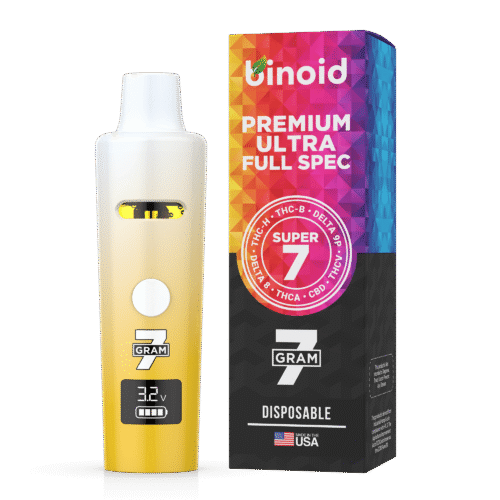
The Binoid THC-H product range at BinoidCBD.com formulated to the sourcing and manufacturing standards that the brand’s reputation is built on, verified through ISO-accredited laboratory testing, and positioned within an educational framework that treats the consumer as capable of handling real information about what they are choosing represents the clearest available path from intellectual curiosity about what THC-H is to genuine, informed, experiential understanding of what it delivers. That path, traveled with appropriate respect for the compound’s potency and appropriate trust in the brand providing it, leads somewhere worth going.