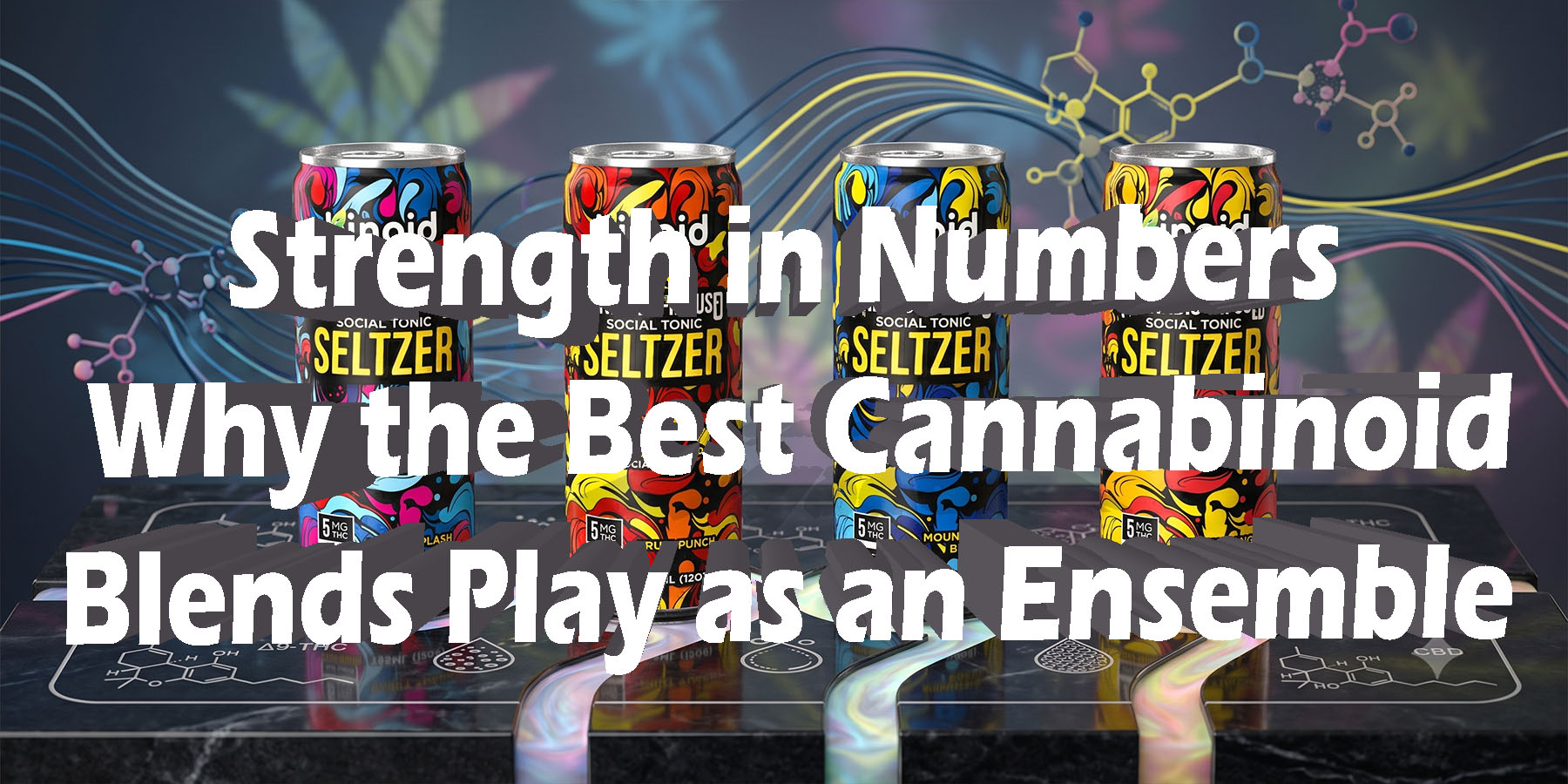
There is a reason that no one remembers the string section of a great orchestra as a collection of individual violins. The magic of an ensemble lies in what happens between the instruments, in the overtones and interference patterns that no single performer could produce alone. Cannabis chemistry has been circling this idea for decades under a name that has become one of the most repeated, and most misunderstood, phrases in the industry: the entourage effect.
The term describes the proposal that cannabinoids, terpenes, and other plant compounds may shape one another’s character when consumed together, producing an experience that differs from what any single isolated molecule delivers. It is an elegant notion, and like most elegant notions in science, it deserves both admiration and scrutiny. This feature takes both seriously, because readers who understand how the idea began, where the evidence is strong, and where it remains an open question are far better equipped to evaluate the multi-compound products now filling the hemp market.
To Buy Cannabinoid Blends Products Click Here
Recommended products
-
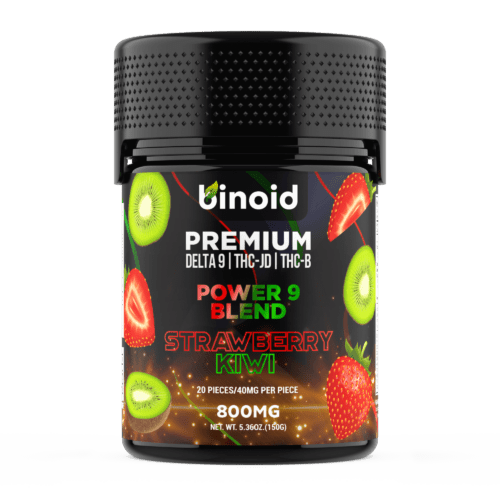
Power 9 Blend Gummies
$36.99$59.99 -
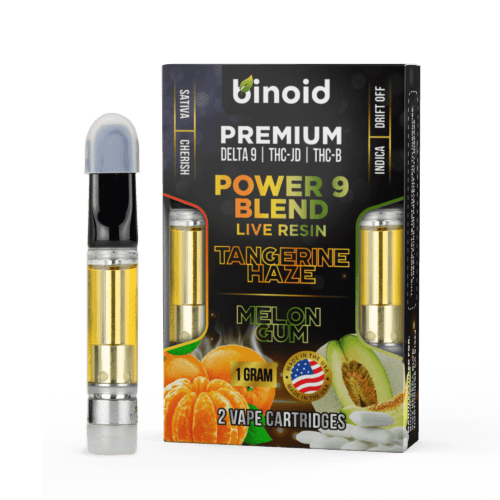
Power 9 Blend Live Resin Cartridge – 2 Pack Combo (Limited Time Sale)
$40.99$89.99 -
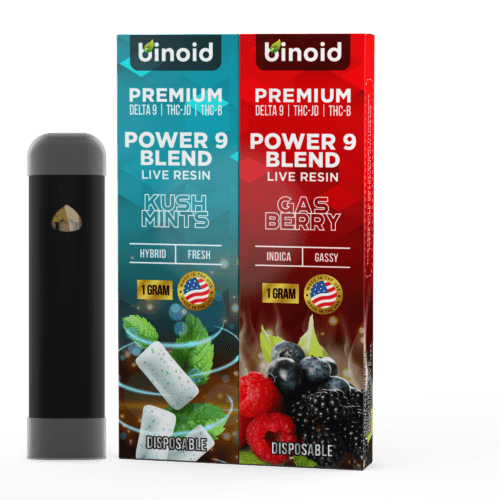
Power 9 Blend Live Resin Disposable – 2 Pack Combo (Limited Time Sale)
$44.99$89.99 -
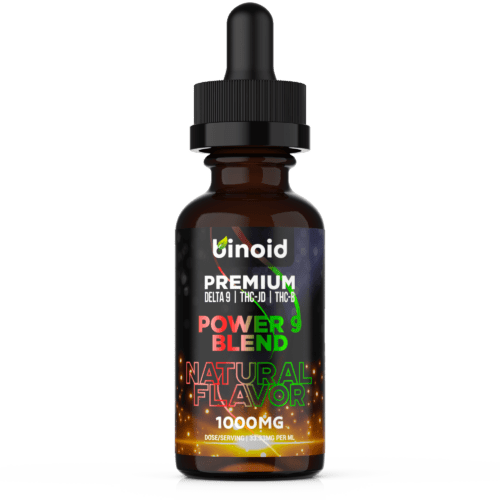
Power 9 Blend Tincture – 1000mg
$34.99$59.99
An Idea with a Pedigree: Where the Entourage Concept Began
The phrase was introduced in 1998 by Shimon Ben-Shabat and Raphael Mechoulam, two researchers working in Israel, who observed that certain inactive compounds found alongside endogenous cannabinoids appeared to boost the activity of the primary molecule. The original observation concerned the body’s own signaling chemistry rather than the cannabis plant itself, but the metaphor proved irresistible. A little over a decade later, the neurologist and researcher Ethan Russo published a widely cited review proposing that cannabinoids and terpenes might act in concert, and that the plant’s chemical complexity could be more than the sum of its parts. From that point forward, the entourage concept migrated from pharmacology journals into dispensary signage, product packaging, and the vocabulary of every brand that wanted to explain why whole-plant chemistry felt different from a single purified compound.
What makes the history interesting is how much of the popular version has drifted from the scholarly one. In the academic literature, the entourage effect is a hypothesis with a mix of supporting observations and unresolved questions, and the more careful researchers describe it in precisely those terms. In the marketing literature, it has sometimes been presented as settled fact, a kind of guarantee that more compounds automatically means a better experience. Neither extreme is useful. The honest position sits in the middle: the idea is scientifically plausible, mechanistically interesting, and supported by enough preliminary work that serious people continue to investigate it, yet it remains incompletely proven, and any brand claiming otherwise is selling a narrative rather than a result.
The Cast of Characters: THC, Its Cousins, and the Aromatic Supporting Players
To understand how an ensemble might work, it helps to meet the performers. Delta 9 THC is the lead vocalist, the compound most strongly associated with the classic cannabis experience through its activity at the CB1 receptor in the central nervous system. Around it orbit a growing family of relatives. CBG, often called the parent cannabinoid because its acidic precursor is the molecule from which others are biosynthesized, brings a different receptor profile. CBN forms as THC ages and oxidizes, and is known for a softer, more sedate character. CBC and THC-P and THC-H each have their own structural signature, most notably in the length and arrangement of the alkyl side chain that influences how snugly a molecule fits the receptor it is reaching for.
Then come the terpenes, the volatile aromatic compounds responsible for the smell of pine, citrus, lavender, and black pepper that define a cultivar’s identity. Terpenes are not cannabinoids and do not bind to cannabinoid receptors in the same way, but the research community has long wondered whether they might modulate the experience through entirely separate pathways, or by influencing how cannabinoids are absorbed and distributed. Whether that modulation is large, small, or negligible in a typical consumer setting is exactly the kind of question that remains under investigation.
Until the research matures, the prudent reading is that terpenes are best appreciated as contributors to flavor, aroma, and ritual, with their deeper influence still a matter of reasonable curiosity. What can be said with confidence is that terpenes dramatically shape the sensory side of consumption, the flavor, the aroma, and the ritual pleasure of the thing, and for a lifestyle product that alone is a legitimate reason to care about preserving them. This is why extraction and formulation choices, such as live resin capture of the fresh plant’s volatile profile, matter so much to the connoisseur market.
Recommended products
-
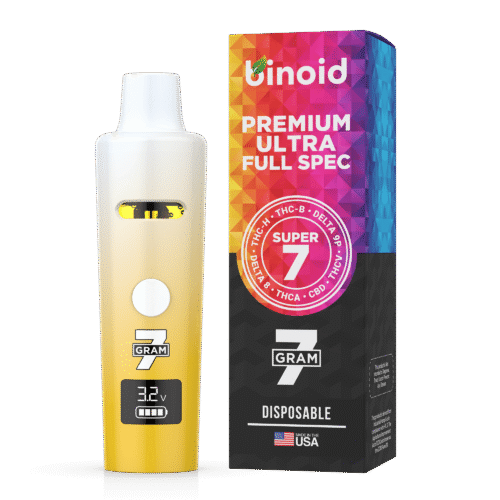
Super 7 UFS Disposable Vape – 7 Gram
$63.99$89.99 -
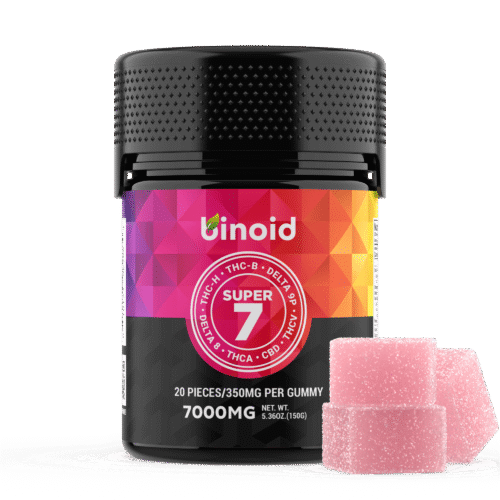
Super 7 Gummies – 7000MG
$39.97$59.99 -
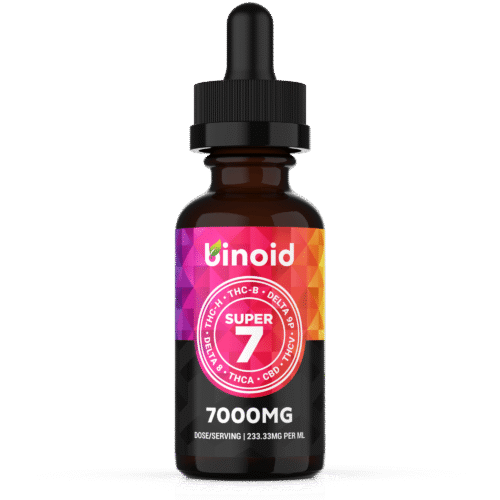
Super 7 Tincture – 7000mg
$39.99$59.99 -
Super 7 Gummies – Summer Slush Series
$37.99$49.99

What the Evidence Suggests, and Where It Goes Quiet
The strongest case for ensemble behavior comes from observations that the receptor system is not a simple lock and key. Cannabinoids can interact with CB1 and CB2 receptors in different ways, some as direct activators, some as modulators that change how another molecule engages the receptor, and some through pathways outside the classical endocannabinoid system altogether. A molecule that does not produce a strong effect on its own may still alter the behavior of a molecule that does, in the same way that a touch of acid can change how a sauce tastes without being the dominant flavor. Laboratory and animal work has offered suggestive examples of this kind of interplay, and these findings are a large part of why the entourage idea has endured.
The difficulty is that translating those findings into confident statements about a consumer drinking a beverage or vaping a cartridge is genuinely hard. Human studies that cleanly isolate the contribution of each minor cannabinoid and terpene are scarce, doses in laboratory settings rarely resemble doses in real-world products, and individual biochemistry varies enormously from person to person. Reviews of the literature have reached cautious conclusions, noting that the concept is reasonable but that robust human evidence for many of the popular claims is limited.
The responsible way to describe the situation is that multi-compound formulations are an exciting area of exploration, that many experienced consumers report meaningful differences in character between isolated and blended products, and that the science has not yet caught up to fully explain why. A mature consumer can hold all three of those statements at once without contradiction. That posture of informed openness, neither credulous nor dismissive, is the natural home of the serious enthusiast, and it is also the posture that tends to produce the best purchasing decisions. The compounds involved are real, the interactions are plausible, and the honest work of measuring them is still underway.
From Theory to Formulation: How Brands Build a Blend on Purpose
For a formulator, the entourage concept is less a scientific claim than a design philosophy. Rather than filling a cartridge or a beverage with a single purified molecule, the goal becomes assembling a deliberate combination in which each component has a reason to be there: one for the intensity of the experience, another for its tone, another for its duration, and aromatic compounds to give the whole thing a recognizable personality. This approach demands far more skill than working with a single ingredient, because the ratios matter, the compounds interact with the carrier medium differently, and the finished product has to remain stable and consistent from the first batch to the fiftieth. A blend that tastes and feels one way in January and another in June is not an ensemble, it is an accident.
This is where the multi-cannabinoid lines at Binoid CBD come into focus. Blends such as Super 7 and Power 9 are named for the number of hemp-derived cannabinoids they combine, and they exist precisely because the brand’s formulators believe that thoughtful combinations can produce a more layered experience than a single-note product. Whether one finds that layering compelling is ultimately a matter of personal preference, and the experienced consumer will want to try a blend and judge it by their own palate and their own response. The point worth emphasizing is that a named, numbered blend is a statement of intent: it tells the buyer that the combination was engineered, not improvised, and that the producer is prepared to be consistent about it.
The Consistency Problem: Why Blends Demand Better Testing
There is an underappreciated catch in the multi-compound approach, which is that every additional ingredient multiplies the ways a product can go wrong. A single-cannabinoid product needs to demonstrate that its potency matches its label. A nine-cannabinoid blend needs to demonstrate that all nine are present in the stated proportions, that none of them has degraded into something else, and that the terpene fraction has not quietly evaporated on the way to the shelf. Without rigorous documentation, the consumer has no way of knowing whether the complexity on the label exists in the container, and the entire premise of an ensemble collapses into marketing copy.
For that reason, the certificate of analysis becomes even more important for blended products than for simple ones. A credible COA from an ISO 17025-accredited laboratory should show the full cannabinoid inventory with batch-specific numbers, alongside the safety panels for residual solvents, heavy metals, pesticides, and microbial contaminants. The consumer who is paying for complexity should expect to see that complexity verified on paper. Binoidcbd.com publishes batch-level lab documentation for its catalog, which means a shopper curious about how a particular blend actually breaks down can look at the numbers rather than trusting an adjective. In a category where the gap between a claim and a measurement can be wide, that kind of transparency is the closest thing to a signature of quality the market currently offers.
Recommended products
-
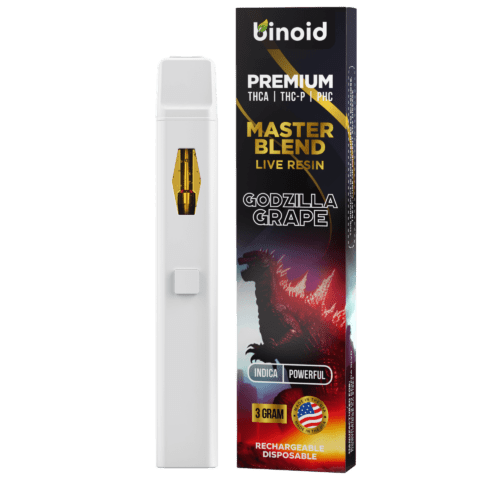
Godzilla Grape Master Blend Disposable – 3 Gram
$43.99$59.99 -
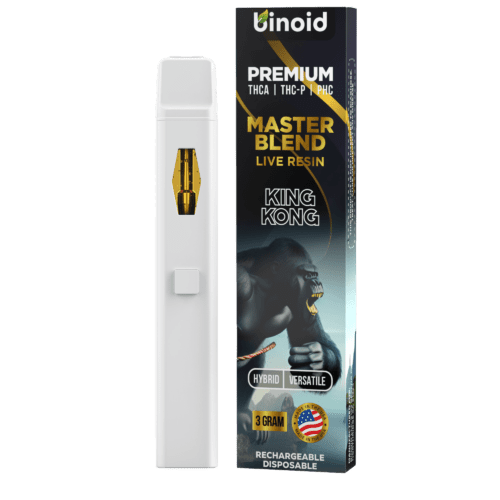
King Kong Master Blend Disposable – 3 Gram
$43.99$59.99 -
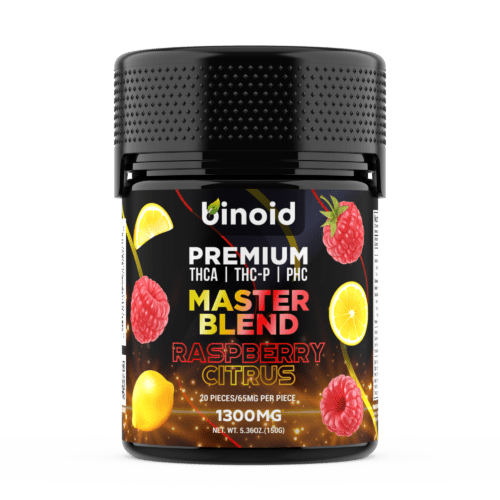
Master Blend Gummies (Release Sale)
$35.99$59.99
Why the Delivery Format Changes the Performance
Even a perfectly built blend is only half of the story, because the format in which it reaches the body shapes how the ensemble is heard. Inhaled formats move compounds into the bloodstream quickly and deliver them with their aromatic companions intact, which is why vapes built on terpene-rich extracts tend to be the favorite format of connoisseurs who care about the sensory dimension. Edibles take a different route through the digestive system and the liver, where first-pass metabolism converts delta 9 THC into 11-hydroxy-THC, a more potent metabolite that produces a characteristically long and full-bodied experience. Beverages built with nano-emulsification sit somewhere in between, offering a faster and more predictable onset than a traditional edible while retaining the ease of a chilled can.
What this means for anyone exploring multi-cannabinoid products is that the same blend can feel meaningfully different depending on how it is consumed, and that comparing formats is part of the exploration rather than a distraction from it. Someone who enjoys the layered character of a blend in a vape may find that a gummy version unfolds more slowly and lingers longer, and someone drawn to a seltzer may appreciate how the experience arrives with more composure than they expected. None of this is about chasing intensity. It is about matching the shape of the experience to the shape of the occasion, which is the skill that separates a thoughtful consumer from a casual one. Because blends with several active compounds can be stronger than their labels first suggest, it is sensible to begin with a modest amount, wait long enough to understand the result, and leave the decision to increase for another day.
A Decision Framework for the Curious Buyer
Anyone deciding whether a multi-cannabinoid blend belongs in their routine can reason through the question in a few sober steps. The first is to treat the entourage effect as an informed hypothesis rather than a promise, which means approaching a blend with curiosity instead of expectations and judging it by direct experience. The second is to insist on documentation, since a blend is only as credible as the lab report that verifies it, and a brand that cannot produce a current, batch-specific COA from an accredited laboratory has not earned the premium that complexity usually commands. The third is to consider the sourcing of the hemp itself, because a carefully engineered formulation built on poor starting material is a beautifully composed piece played on a broken instrument.
The final consideration is personal, and it is the one no article can settle for you. Some consumers will find that a single, clean molecule suits them perfectly and that the extra complexity adds nothing they care about, while others will discover that a thoughtfully assembled blend is the only format that feels complete. Both conclusions are valid, and the market is large enough to reward both. What matters is that the choice is made with open eyes, reliable data, and a healthy skepticism toward anyone who claims the science is finished.
The entourage effect may never be reduced to a neat equation, but the pursuit of understanding it has already pushed the industry toward better testing, more careful formulation, and more honest conversation, and every one of those outcomes is worth an encore, and worth the patience it takes to do properly. For adults in legal markets who want to explore with a brand that shows its work, the catalog at BinoidCBD.com is a sensible place to begin.
To Buy Cannabinoid Blends Products Click Here
Recommended products
-
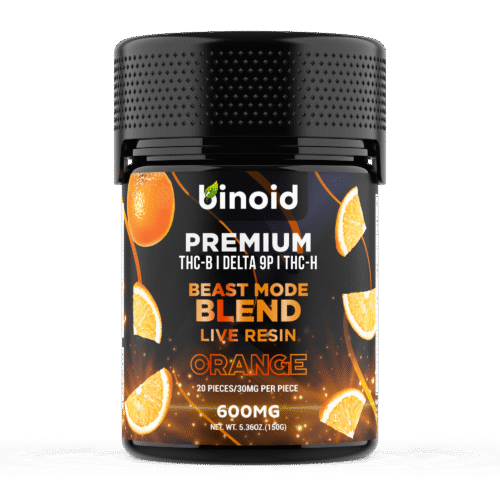
Beast Mode Blend Gummies
$32.99$59.99 -
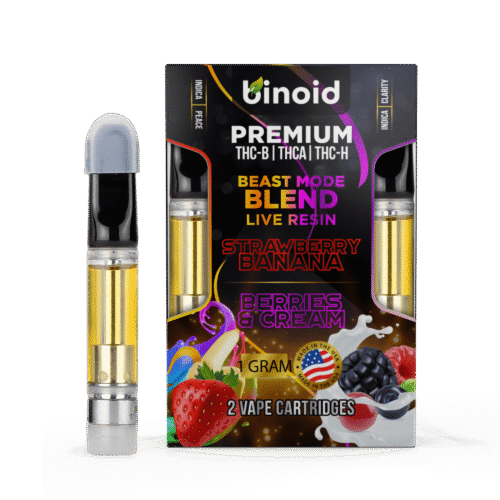
Beast Mode Blend Live Resin Cartridge – 2 Pack Combo (Limited Time Sale)
$40.99$89.99 -
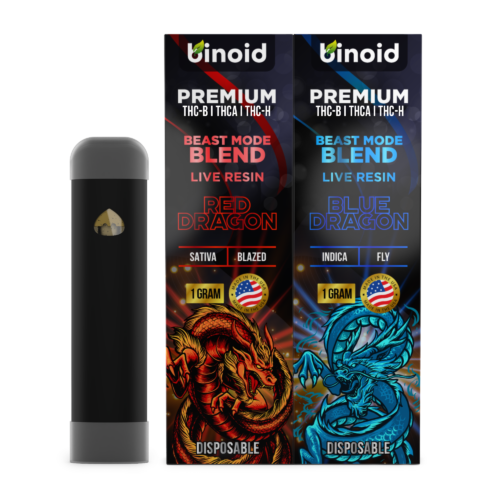
Beast Mode Blend Live Resin Disposable – 2 Pack Combo (Limited Time Sale)
$43.99$89.99 -
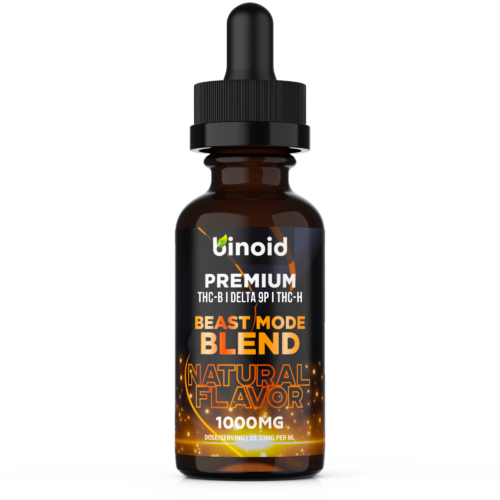
Beast Mode Blend Tincture – 1000mg
$34.99$59.99