There is a particular kind of disagreement that plays out quietly in the comment sections of cannabis forums and the back-and-forth of dispensary counter conversations, one that never quite resolves because both sides are, in their own way, correct. It is the live resin versus distillate debate, and it is less a question of which product is “better” than it is a question of what you are actually trying to buy when you shop for a hemp-derived THC concentrate. One camp wants purity, precision, and a predictable dose delivered with clinical consistency.
The other wants the full sensory signature of the plant at the moment of harvest, terpenes and all, even if that means sacrificing some of that clinical tidiness. Understanding the difference between these two extraction philosophies is not a matter of connoisseur trivia. It is the single most useful piece of knowledge a consumer can carry into the vape and concentrate aisle of the modern hemp market.
TO BUY LIVE RESIN PRODUCTS CLICK HERE
Recommended products
-
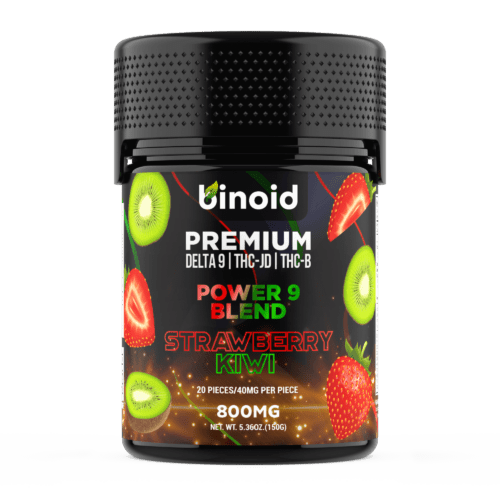
Power 9 Blend Gummies
$36.99$59.99 -
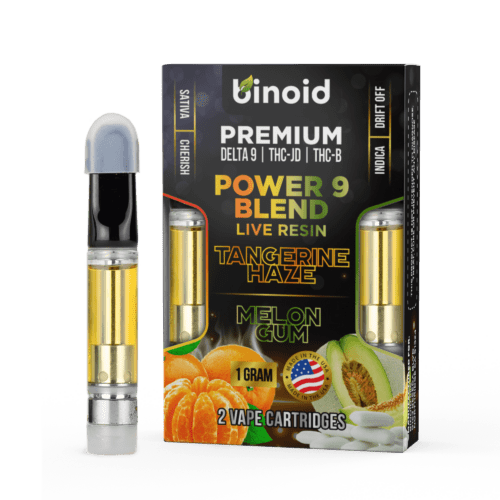
Power 9 Blend Live Resin Cartridge – 2 Pack Combo (Limited Time Sale)
$40.99$89.99 -
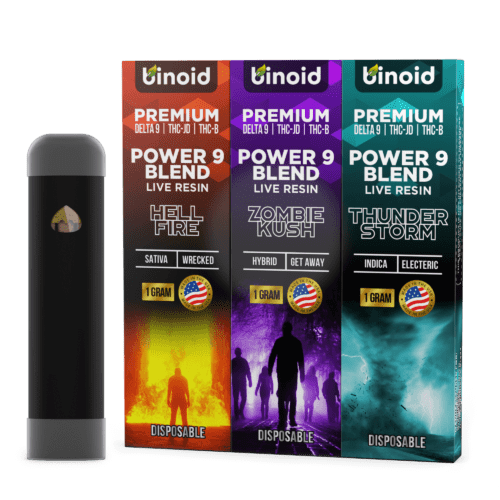
Power 9 Blend Live Resin Disposable – 3 Pack Combo
$60.99$89.99 -
Power 9 Blend Tincture – 1000mg
$34.99$59.99
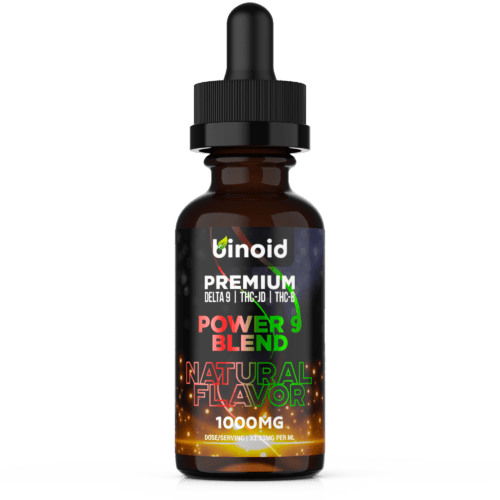
The Distillate Promise: Purity as a Design Philosophy
Distillate is, at its core, an exercise in molecular isolation. The process begins with raw cannabis or hemp biomass, which is first subjected to a broad-spectrum extraction — typically supercritical CO2 extraction — that pulls cannabinoids, terpenes, and a range of other plant compounds out of the plant material in one comparatively unrefined pass. From there, the real work begins. That crude extract is run through a short-path distillation process, where it is heated under vacuum and separated based on the differing boiling points of its individual components.
The result, after multiple passes, is a viscous, often near-translucent liquid that can reach cannabinoid concentrations north of 90 percent, stripped almost entirely of the chlorophyll, waxes, lipids, and volatile terpenes that defined the original plant material. This is precision manufacturing applied to a botanical product, and the appeal is immediate and obvious: distillate is stable, it is consistent from batch to batch, and it allows formulators to hit an exact milligram target with a level of accuracy that raw plant extracts simply cannot match. When you see a vape cartridge or gummy advertising a precise, reliable dose, there is a very good chance distillate is doing the quiet, unglamorous work behind that promise.
The tradeoff, and it is a real one, is that distillation’s aggressive heat and vacuum conditions are brutal on the terpene profile. Terpenes are wildly volatile aromatic compounds, and most of them either evaporate entirely during the distillation process or degrade into a shadow of their original chemical structure. What survives is often a flat, cannabinoid-forward liquid with little of the aromatic complexity that makes cannabis and hemp genuinely interesting as a sensory experience. This is why formulators reintroduce terpenes after the fact, either sourcing them from botanical extracts unrelated to cannabis or reintegrating a small percentage of cannabis-derived terpenes that were captured and preserved separately during processing. Done well, this reintroduction can produce a remarkably convincing final product. Done poorly, it produces something that tastes and smells vaguely artificial, the vape-cartridge equivalent of a candle labeled “ocean breeze.”
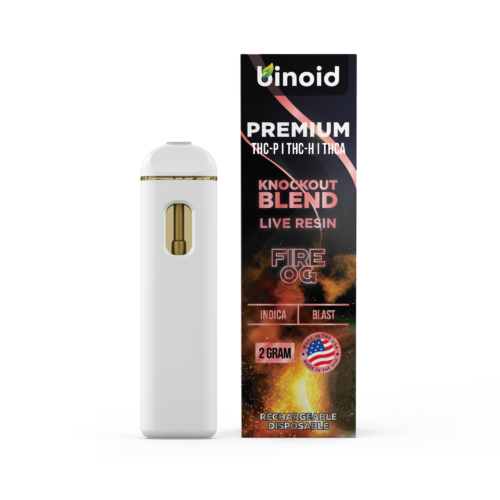
The Live Resin Alternative: Chasing the Plant at Its Peak
Live resin operates on an entirely different premise, one rooted less in isolation and more in preservation. The defining characteristic of live resin is not the extraction solvent or the final potency figure — it is the state of the plant material at the moment of extraction. Where distillate typically begins its life with dried, cured biomass that has already lost a meaningful percentage of its volatile terpene content simply through the drying and curing process, live resin is produced from plant material that is flash-frozen immediately after harvest, often within hours, and kept at sub-zero temperatures all the way through extraction.
This single decision — freeze first, dry never — is the entire philosophy of live resin in miniature. By skipping the drying and curing steps that would otherwise allow terpenes to off-gas and degrade, live resin extraction captures an aromatic and cannabinoid profile that is dramatically closer to what existed in the living plant, trichome-for-trichome, at the exact moment it was cut down.
The extraction itself is typically performed using a hydrocarbon solvent, most commonly butane or propane, applied to the frozen material at low temperatures in a closed-loop system that allows the solvent to be fully purged afterward, leaving behind a concentrate that ranges in consistency from a sappy, viscous liquid resin to a stable, crumbly sugar-like texture depending on how the material is whipped, purged, and finished.
What sets the finished product apart, immediately and unmistakably, is the terpene load. Live resin routinely tests with a significantly higher percentage of preserved terpenes than distillate, and the sensory difference is not subtle. A live resin vape cartridge or dab typically delivers a far more pungent, strain-specific aroma and flavor — the citrus, the diesel, the floral, the gassy funk that cannabis enthusiasts spend years learning to identify and appreciate. This is the product category built for the consumer who wants the experience to taste like the plant it came from, not like a pharmaceutical delivery vehicle with training wheels.
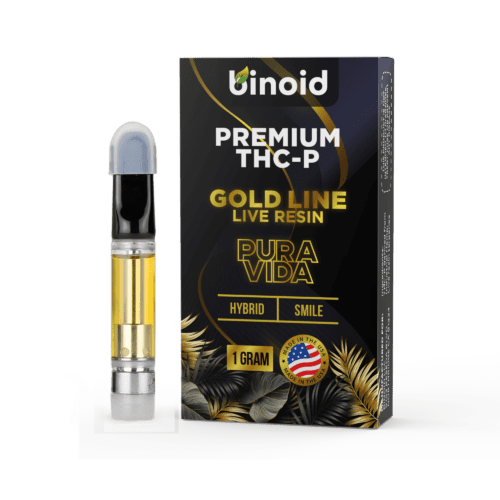
The Entourage Effect and the Case for Whole-Plant Chemistry
Much of the enthusiasm around live resin is tied to a concept the industry calls the entourage effect — the theory that cannabinoids, terpenes, and other minor plant compounds interact synergistically, producing an experience that is qualitatively different from what any single isolated compound could deliver on its own. This is still an area of active research rather than settled science, and it is worth approaching the claim with the same intellectual honesty that governs any conversation about cannabis chemistry: correlation is not the same as mechanism, and individual biochemistry varies enough that no two consumers will describe the entourage effect identically.
What is not up for serious debate, however, is that terpenes influence the sensory character of a product and, according to a growing body of consumer-reported experience, may shape how an effect is perceived — whether it leans more energetic, more relaxed, more cerebral, or more body-forward, independent of the raw cannabinoid percentage on the label. Live resin, by virtue of preserving a far broader and more intact terpene and minor-cannabinoid profile, is the format best positioned to deliver whatever version of that layered experience the plant originally had on offer.
This is not a knock against distillate, which remains an entirely legitimate and, in many contexts, superior choice. A consumer prioritizing dosing precision above all else — someone calibrating a specific milligram target for a specific occasion — is often better served by the predictability of distillate than by the batch-to-batch terpene variability inherent to live resin, which is, after all, an agricultural product subject to the same variance that affects any crop. The honest answer to “which is better” is that they are optimized for different values, and a sophisticated consumer benefits from understanding both well enough to choose deliberately rather than defaulting to whichever term sounds more premium on a label.

Reading the Label Like Someone Who Knows What They’re Looking At
The terminology surrounding these products has, unfortunately, become somewhat degraded by marketing enthusiasm, and a consumer shopping online needs to know how to separate genuine live resin from products borrowing the term for its cachet. A legitimate live resin product should specify the strain or cultivar used, since live resin is inherently strain-specific in a way that reconstituted distillate typically is not. It should also come with a certificate of analysis that includes a full terpene panel, not just a cannabinoid potency breakdown, because the terpene data is precisely the information that distinguishes a genuine live resin extraction from a distillate with terpenes added back in afterward.
This is where third-party lab verification stops being a compliance formality and becomes genuinely useful consumer information. The catalog at Binoid CBD reflects this standard directly, with live resin-infused vape and disposable options that publish batch-specific COAs showing both cannabinoid concentration and terpene composition, giving the consumer the ability to verify exactly what they’re buying rather than taking a marketing claim on faith.
Storage and handling also diverge meaningfully between the two formats, and it is worth understanding why. Distillate is a relatively stable, shelf-hardy product precisely because so much of the volatile, degradation-prone material has already been removed during processing. Live resin, carrying its full terpene payload, is more sensitive to heat, light, and time, and a live resin cartridge left in a hot glovebox for a season will lose a measurably higher percentage of its aromatic character than a comparably stored distillate cartridge would lose, simply because there is more volatile material present to lose in the first place. This is not a flaw in live resin so much as the natural consequence of preserving something closer to the plant’s original chemistry — freshness becomes part of the value proposition, which is why reputable live resin brands emphasize batch dates and recommend consuming products within a defined window rather than treating them as indefinitely shelf-stable.
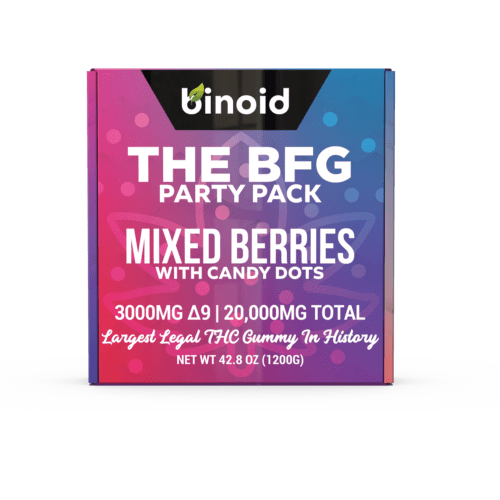
The Format Question: Where Each Extraction Method Shows Up
The distinction between live resin and distillate shows up across nearly every product category in the modern hemp market, though not always with equal prominence. Vape cartridges and disposables are where the difference is most immediately perceptible, since inhalation delivers the aromatic terpene profile directly and instantly to the consumer in a way that other formats mute or transform. A live resin cartridge announces itself with the first pull; a distillate cartridge, even a well-formulated one with reintroduced terpenes, tends to feel one layer removed from the genuine article.
Dabbable concentrates — sauces, sugars, badders — are almost exclusively the domain of live resin and its close relatives, since the entire appeal of dabbing as a consumption method is built around vaporizing a concentrate at a controlled temperature specifically to showcase terpene expression. Distillate, by contrast, tends to dominate categories where consistency and precise dosing matter more than aromatic nuance: gummies, tinctures, and capsules, where the manufacturing process would obscure most terpene character regardless of the starting material, making distillate’s stability and dosing precision the more sensible engineering choice.
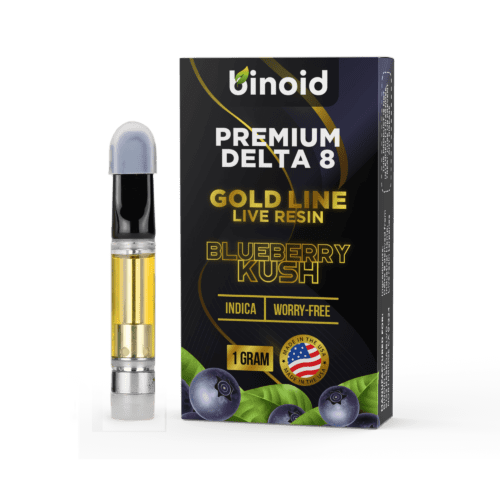
Binoid CBD has built its product architecture around respecting this division rather than blurring it for marketing convenience, which is part of what separates a genuinely knowledgeable formulator from a brand simply chasing trend language. Where the product category calls for live resin’s aromatic complexity — the vape and disposable lines, most notably — the sourcing and extraction reflect that commitment with strain-specific, flash-frozen material processed through low-temperature hydrocarbon extraction. Where the category calls for distillate’s precision, as in the tincture and edible lines, the formulation leans into that strength rather than pretending otherwise. This kind of category-appropriate honesty is not the industry norm. A significant portion of the hemp market applies the word “live resin” to products that are, on close inspection of the certificate of analysis, distillate with a modest terpene boost — a distinction that only becomes visible to a consumer who knows to look for it.
Making the Choice That Matches the Occasion
The decision between live resin and distillate ultimately comes down to matching the product to the moment rather than crowning one format as objectively superior. A consumer reaching for a precisely dosed edible before a long flight or a demanding workday has different priorities than a consumer settling in for an evening dab session built around exploring a specific cultivar’s full aromatic character, and neither priority is more legitimate than the other. What matters is buying with enough knowledge to make that choice deliberately: understanding that distillate offers stability, precision, and a longer shelf life at the cost of some sensory complexity, while live resin offers a richer, more strain-authentic experience that demands slightly more careful storage and a shorter window of peak freshness.
The consumer who reads the certificate of analysis, checks for a genuine terpene panel rather than a bare cannabinoid percentage, and buys from a brand willing to publish that data batch by batch — the standard that Binoid CBD has built its reputation around — is a consumer equipped to navigate this distinction with real confidence rather than guesswork. That is, in the end, what separates an informed purchase from a lucky one, and it is a distinction worth carrying into every concentrate, cartridge, and dab you consider from here forward.
TO BUY LIVE RESIN PRODUCTS CLICK HERE
Recommended products
-
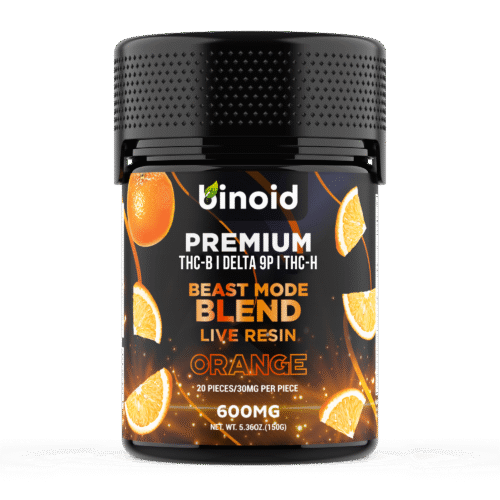
Beast Mode Blend Gummies
$32.99$59.99 -
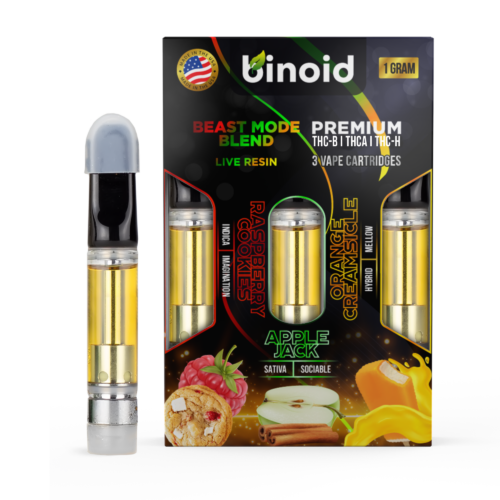
Beast Mode Blend Live Resin Cartridge – 3 Pack Combo
$54.99$89.99 -
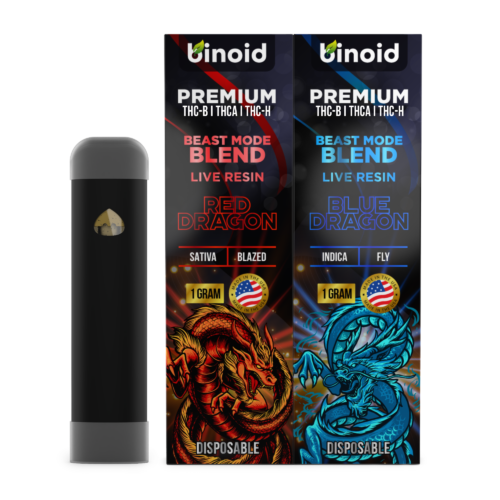
Beast Mode Blend Live Resin Disposable – 2 Pack Combo (Limited Time Sale)
$43.99$89.99 -
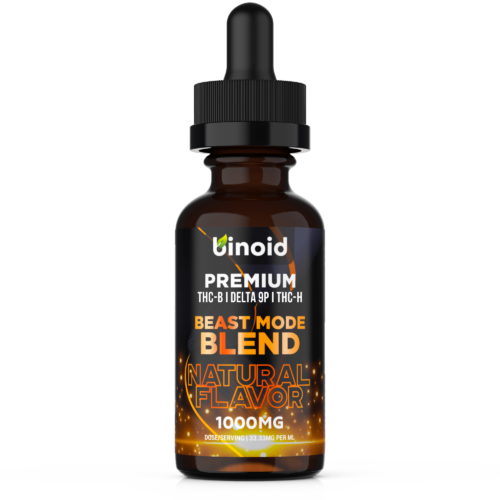
Beast Mode Blend Tincture – 1000mg
$34.99$59.99