The EPN cannabinoid, sold under the brand name Euphorinol and nicknamed “Super Sativa,” is a hemp-derived compound that its sellers describe as newly discovered and semi-synthetic. That means it begins with a molecule extracted from hemp and is then modified through laboratory chemistry rather than being produced by the plant in meaningful quantities on its own. It is positioned as a non-THC, non-traditional analogue intended to deliver an uplifting, clear-headed experience, and it has been circulating through supplier spec sheets, retailer guides, and trade coverage as the latest name in the novel cannabinoid category.
That is the short answer, and it is worth saying plainly that nearly everything in it comes from the people selling the compound. I found no peer-reviewed research on EPN, and the documentation available to the public is thin. This guide covers what the compound is claimed to be, how it differs from more familiar cannabinoids, what is and is not known about it, how its legal status is changing, and how to evaluate any product of this kind. Binoid CBD has not added Euphorinol to its lineup, so the guide is written as education rather than as a product pitch.
TO BUY CANNABINOID PRODUCTS CLICK HERE
Recommended products
-
High THC-P 2 Gram Disposable Vape – Strain Series
$41.99$73.99 -
Super 7 Gummies – Summer Slush Series
$37.99$49.99 -
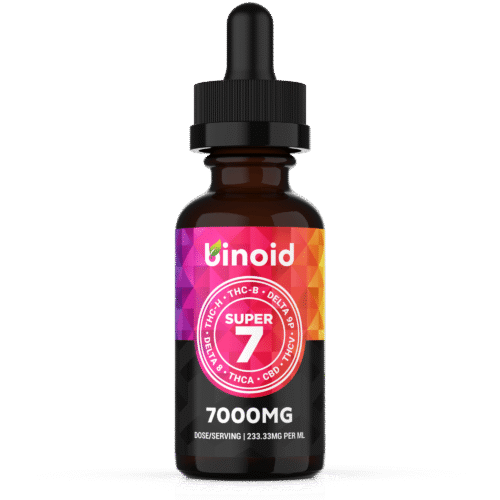
Super 7 Tincture – 7000mg
$39.99$59.99 -
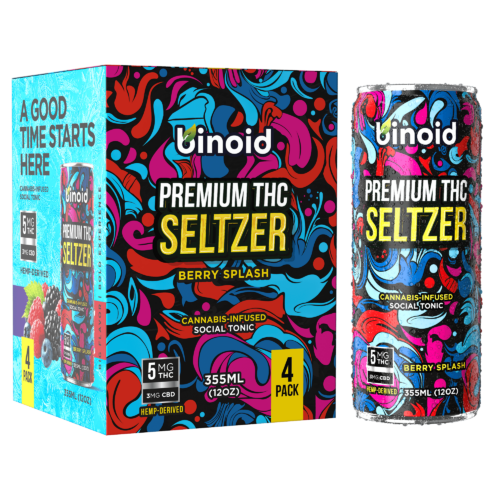
THC Seltzer – Good Vibes Cannabis Drink (4 Pack)
$19.99$29.99

Decoding the Names
Part of the confusion around this compound is that it travels under several names at once. EPN is the abbreviation most often used in trade and search contexts, Euphorinol is the commercial brand name, and “Super Sativa” is the consumer-facing nickname meant to evoke daytime energy and creative focus. A supplier document also gives a full chemical name, “tetrahydromethylisopentyl-ethylcannabinol,” which reads like a THC-style scaffold with altered side-chain groups. That reading is an inference from the name alone and not a confirmed structure, and no published molecular diagram I could find settles the question. The layers of naming are typical of the category: a technical name for the paperwork, an abbreviation for the trade, a brand for the shelf, and a nickname for the customer.
The nickname deserves a note of context. The sativa-versus-indica distinction is a piece of cannabis folklore that many chemists and botanists regard as an imperfect shorthand, because the character of an experience depends on the full cannabinoid and terpene profile, the dose, the format, and the individual. When a laboratory-modified molecule is called “Super Sativa,” the label is borrowing the emotional associations of a beloved plant archetype rather than making a scientific statement. That can be a perfectly reasonable way to communicate what a brand hopes you will feel, and it is also a reminder that the name tells you about the pitch, not the pharmacology.
Where It Comes From: Grown, Converted, and Modified
To understand EPN, it helps to compare how different cannabinoids come into being. THCA is biosynthesized in the trichomes of the cannabis plant through a well-understood enzymatic pathway, and it is abundant in raw flower, sitting one thermal reaction away from becoming delta 9 THC. Delta 8 THC, by contrast, occurs in the plant only in trace amounts, and commercial supply typically depends on converting CBD through an isomerization process that rearranges the molecule into a different form. Euphorinol is described as belonging to the converted family but with a more extensive modification, placing it at the far end of the spectrum from a compound the plant simply makes.
That origin matters because a converted compound inherits the quality of its starting material, the precision of its reaction chemistry, and the thoroughness of its purification. Hemp is a bioaccumulator, a plant that readily absorbs whatever its soil and water contain, so contaminated biomass yields a compromised starting point, and impurities, residual catalysts, and reaction byproducts tend to carry forward through each conversion step. No amount of final polishing can fully restore what a poor starting material lacked. This is the reasoning behind the domestic sourcing and process controls at Binoid CBD, where hemp comes from USA-made farms under state and federal agricultural oversight, and it is the single most useful lens for evaluating any semi-synthetic product.
The Claimed Profile
The numbers attached to Euphorinol in supplier materials sketch a consistent picture. Onset is reported at roughly ten to thirty minutes, with effects lasting about three to four hours, and effective vape formulations are said to require only about 1.5 to 2% of the active ingredient. A retailer guide describes it as stronger than standard delta-8 THC at comparable doses, and other sellers emphasize consistent effects with no known tolerance buildup. In the materials I reviewed, the compound appears primarily in vape formulations, though I could not verify the full range of formats on offer.
Each of those claims deserves its own caveat. A medium onset and a three-to-four-hour window are plausible descriptions of a moderately fast, moderately long experience, but they are reported averages, not measured pharmacokinetics, and retailer guides themselves concede that clinical data is limited. A low inclusion rate suggests a compound that is active at small amounts, which is simultaneously an appeal and a reason for caution. And “no known tolerance buildup” is an absence of data, not a finding that the effect does not occur, since a compound that has been on the market briefly cannot yet have a documented long-term record in either direction.
The Experience, in Brief
The headline experiential claim is a bright, uplifting, clear-headed state that stays free of heaviness, a profile sellers contrast with the thicker character that some consumers associate with other cannabinoids. A manufacturer’s product page frames it as euphoria without sedative effects and without reducing consciousness. The picture is not perfectly consistent, however, because at least one retailer guide describes effects closer to the familiar cannabis spectrum, including mood elevation, mild euphoria, relaxation, and altered sensory perception. Those descriptions are not necessarily contradictory, since dose, format, and individual biochemistry can all move an experience in different directions.
The deeper question of what the compound is supposed to feel like, and how much weight to give each description, is explored in a companion article. For this guide, the relevant point is simple. The experiential claims are the compound’s marketing thesis, supported by supplier materials and user impressions rather than independent measurement, and a thoughtful reader treats them as a hypothesis to be tested with small doses and careful notes.
What Is Not Known
A complete guide has to be complete about its gaps. A search for primary research turns up no peer-reviewed studies on EPN, and the white paper describing a “Sativa-selective” profile is a supplier document, which makes it a sales tool rather than an independent finding. How the compound behaves over repeated use, how it interacts with other substances, how its effects vary across individuals, and how it is metabolized are all open questions. A trade article aimed at retailers describes it as new and relatively untested, which is as candid a summary as any.
None of this means the compound is hazardous or that its fans are mistaken about what they feel. It means that confident statements about its character rest on anecdote and assertion, and that the honest stance is curiosity paired with caution. For a consumer, the practical translation is to avoid treating a smooth marketing story as evidence of a fully understood molecule. Unknowns are not a reason for alarm. They are a reason for small first doses, patient observation, and a willingness to wait for better data before forming strong conclusions.
The Paperwork Problem
If the research record is thin, the certificate of analysis should be the consumer’s safety net, and this is where the Euphorinol paper trail raises its own questions. The certificate circulated by one reseller reports 40.42% CBD and 28.50% CBG with no detectable THC. That says something useful about the underlying hemp material, but it does not quantify EPN itself, and as far as I could find, no public document shows how an accredited laboratory identified and measured the compound against a verified reference standard. A laboratory can only quantify a molecule it can recognize, and recognition requires a reference standard to run alongside the sample.
A strong certificate comes from an independent, ISO-accredited laboratory, reflects the specific batch in question, and quantifies what the label claims, alongside screening for heavy metals, residual solvents, pesticides, and microbial contaminants. That is the standard Binoid CBD applies across its catalog with batch-specific documentation, and it is the benchmark against which any emerging compound’s paperwork should be read. A certificate that is real, current, and from a legitimate laboratory can still fail to answer the question a buyer most wants answered, which is why reading it with care is not optional.
Is It Legal? The Answer Has a Date on It
Sellers generally describe Euphorinol as unscheduled under federal law and legal in most states, an argument built on the 2018 Farm Bill’s definition of hemp as cannabis containing no more than 0.3% delta-9 THC by dry weight. As of this writing on October 8, 2026, that definition is still the operative federal standard. But Congress has already rewritten it. Legislation enacted in November 2025 adopted a total-THC standard, excluded cannabinoids that are not naturally derived from the plant, set a per-container cap of just 0.4 milligrams of total THC, and provided a transition period before the changes take effect.
Recent coverage reports that a funding bill signed in early September moved most of the new restrictions to December 11, 2026, while carving out cannabinoids the plant cannot naturally produce, which still face the original November 12 date. Sources disagree on how lab-converted compounds are sequenced, and further proposals to delay the changes have been introduced. A semi-synthetic compound appears to be the kind of product the new exclusions target, and the Congressional Research Service notes that excluded products would be regulated under the Controlled Substances Act as marijuana. I am not offering a legal conclusion, and nothing here is legal advice. The responsible reading is that “legal in most states” describes the present moment, that state rules vary widely, and that anyone buying or selling should confirm current status with qualified counsel.
Questions People Keep Asking
Several questions come up repeatedly, and it is worth answering them directly. Is EPN the same as delta-8? No. Sellers position it as a distinct, more extensively modified compound and describe it as stronger at comparable doses, though that comparison is unverified. Does it contain THC? The certificate circulated by one reseller reports none detected, but the compound is described as a THC-style analogue, and “non-THC” does not mean non-intoxicating, since sellers themselves compare the experience to mild-to-moderate cannabis effects. Nobody should assume that a certificate showing no detectable THC says anything about workplace or other testing, and those who are subject to testing should consult their employer’s policy rather than a product page.
Is it safe? That question cannot be answered responsibly from the available evidence, because the research does not exist, and this guide makes no claims about health or wellbeing. The prudent assumption is that any intoxicating compound deserves the respect given to any other, which means no driving, no operating machinery, no weighty decisions during use, and no casual mixing with alcohol or other substances. Where can you buy it? Binoid does not carry it, and given the unsettled legal picture and the documentation gap, this guide does not point readers toward sellers.
How to Evaluate Any New Cannabinoid
The most durable value of a guide like this is the method it teaches, because the next novel compound will arrive with a different name and the same sales pattern. Start by asking where each claim originates and whether independent measurement or the seller’s own materials stands behind it. Look for a certificate from an accredited, independent laboratory that reflects the specific batch and quantifies the compound on the label rather than only its better-known neighbors. Ask where the hemp was grown, who made the compound, and what process controls governed the conversion, because provenance is the single most reliable indicator of what is actually in the product.
Then consider the brand’s behavior over time. A company that publishes its lab results, monitors state and federal rule changes, and declines to stock what it cannot verify is telling you something about how it will behave when the next question arises. Binoid CBD operates on that principle, which is why it has passed on a compound whose identity and potency cannot yet be confirmed in public. Restraint of that kind is not a rejection of innovation. It is the discipline that lets a brand say, truthfully, that what is on the label is what is in the product.
A Decision Framework for the Curious
For a reader deciding how to think about Euphorinol, a handful of principles do most of the work. Treat every experiential claim as a hypothesis and every legal claim as a snapshot, and favor documentation over nicknames. Insist on a certificate that actually measures the compound you are buying, check the rules in your state, and remember that the federal definition of hemp is scheduled to change this fall. If you decide to explore any unfamiliar intoxicating product despite the unknowns, begin with a deliberately small amount, wait out the full onset window before considering more, and keep a simple record of how each session goes.
Finally, let curiosity and caution coexist. The interest in a bright, clear-headed cannabinoid experience is entirely reasonable, and the market will likely keep producing candidates for it. The most reliable way to indulge that interest is through products whose contents you can read, whose origins you can trace, and whose makers stand behind the specifics. A compound earns trust the same way a person does: by showing its work over time.
TO BUY CANNABINOID PRODUCTS CLICK HERE
Recommended products
-
THCA Vape Cartridges – Bundle
$177.99$203.99 -
THC-P Tinctures – Bundle
$83.99$139.99 -
Binoid Delta 8 THC Rechargeable Disposable Vapes – Bundle
$133.99$209.94 -
THC Seltzer – Good Vibes Bundle
$71.99$159.99