There is a particular kind of frustration unique to the modern cannabinoid consumer, one that has nothing to do with potency or flavor and everything to do with math. You read the label, you do the arithmetic, you take what you believe to be a precise, calibrated amount — and then the actual experience arrives anywhere from twenty minutes to two hours later, sometimes gentler than expected, sometimes considerably more assertive. This is not a personal failing. It is a structural feature of how different delivery formats interact with human biochemistry, and nowhere is that tension more visible than in the ongoing comparison between THC tinctures and THC capsules, two of the most popular oral formats in the hemp-derived cannabinoid market and two products that, despite often containing chemically similar distillates, can produce meaningfully different dosing experiences depending on how they are formulated and consumed.
Understanding THC tinctures vs capsules is less about declaring a winner and more about understanding two distinct engineering philosophies for solving the same problem: how do you get a lipophilic molecule into a human body with enough consistency that the consumer can trust the number on the label. Tinctures and capsules both start from a similar place — a THC distillate, typically full-spectrum, broad-spectrum, or isolate, suspended in a carrier medium — but the paths they take from bottle to bloodstream diverge in ways that have real consequences for anyone trying to dial in a precise, repeatable experience.
To Buy Cannabinoid Tinctures Click Here
The Tincture Advantage: Sublingual Absorption and the Illusion of Control
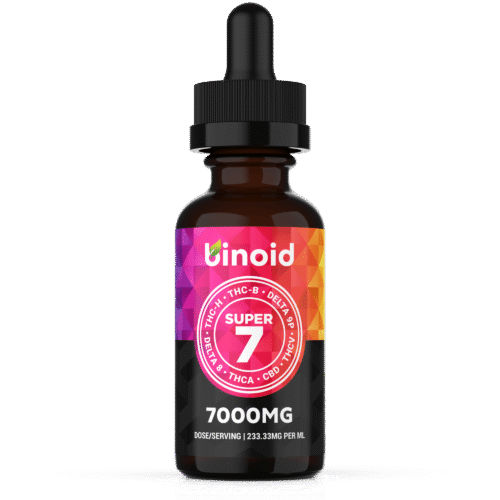
A THC tincture is, in its simplest form, a cannabinoid distillate dissolved into a carrier oil, most commonly MCT oil, and dispensed via a graduated dropper. The appeal of this format lies in its apparent flexibility. A dropper allows for granular, almost infinitely adjustable dosing — half a dropper today, a full dropper next week, a few extra drops for a special occasion. This flexibility is genuinely valuable, particularly for consumers who are still calibrating their preferred experience and want the ability to make small, incremental adjustments rather than committing to a fixed unit dose.
The absorption pathway is where things get more interesting, and more variable. When a tincture is held under the tongue for the recommended interval, typically sixty to ninety seconds, a portion of the THC is absorbed through the sublingual mucosa, a thin, highly vascularized tissue that allows certain compounds to enter the bloodstream directly, bypassing first-pass hepatic metabolism entirely. This is the theoretical promise of sublingual administration: faster onset, and a metabolic profile that skips the liver’s conversion of delta 9 THC into the more potent 11-hydroxy-THC. In practice, however, sublingual absorption of cannabinoids is notoriously incomplete.
Studies on oromucosal cannabinoid delivery have consistently found that a significant percentage of a sublingually administered dose is inadvertently swallowed rather than absorbed through the tissue, meaning that most tincture users are actually experiencing a hybrid effect: partial sublingual absorption combined with a secondary wave of gastrointestinal absorption once the swallowed portion reaches the digestive tract. This hybrid pathway is precisely why tincture onset times can feel inconsistent from one session to the next — sometimes effects emerge in twenty minutes, sometimes closer to an hour, depending on how much of the dose actually made contact with the sublingual tissue versus how much was swallowed.
This variability is not a flaw exactly, but it does mean that tinctures, for all their dosing flexibility on paper, introduce a behavioral variable that capsules simply do not have: technique. How long you hold the oil, how much saliva dilutes it, whether you eat immediately afterward — all of these subtly influence the eventual experience, and none of them are things a label can standardize for you.
The Capsule Case: Engineering Consistency Through Encapsulation
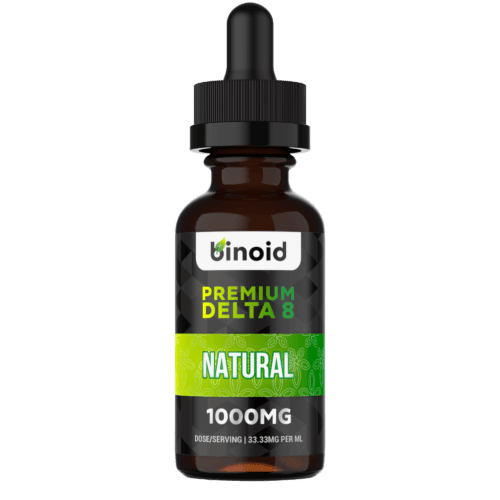
THC capsules take a fundamentally different approach, and it is an approach built almost entirely around the goal of dosing predictability. A capsule contains a fixed, pre-measured quantity of THC distillate, sealed inside a gelatin or vegetable-cellulose shell, designed to dissolve in the stomach and release its contents into the gastrointestinal tract for absorption. There is no dropper to misjudge, no sublingual hold time to get wrong, no ambiguity about whether the full dose made it into your system. You take one capsule, or two, and you know with certainty exactly how many milligrams of THC you have introduced, because the manufacturing process — assuming it is rigorous — has already done the precision work on your behalf.
This is where the sourcing conversation becomes unavoidable. The consistency a capsule promises is only as good as the manufacturing process behind it. A capsule filled through an imprecise or under-calibrated dosing line can vary from unit to unit in ways that undermine the entire premise of the format, which is exactly why third-party lab testing and batch-specific certificates of analysis matter so much in this category. Binoid CBD publishes COA documentation from ISO 17025 accredited laboratories across its capsule and tincture lines specifically because unit-to-unit consistency cannot be taken on faith. It has to be verified, batch by batch, and made available to the consumer who wants to check.
The tradeoff with THC capsule is onset time. Because the entire dose must pass through the digestive tract, get absorbed through the intestinal wall, and travel through the liver before reaching systemic circulation, capsule onset is almost universally slower than tinctures, typically arriving somewhere between forty-five minutes and two hours after ingestion, depending on stomach contents, metabolism, and individual physiology. This delay is compounded by the first-pass hepatic metabolism that a capsule cannot avoid the way a properly administered sublingual tincture can partially sidestep. During this hepatic pass, a meaningful percentage of delta 9 THC is converted into 11-hydroxy-THC, a metabolite that many experienced consumers describe as producing a more sedating, more body-forward character than the parent compound. This is not inherently better or worse — it is simply a different experience profile, one that capsule users should factor into their expectations, particularly regarding timing before social engagements or activities that require a more alert, cerebral state.
Bioavailability, Nanoemulsification, and the Formats That Are Rewriting the Rules
No honest comparison of THC tincture vs capsules can ignore the technological developments that have begun to blur the line between the two categories entirely. Nano-emulsification, the process of breaking THC molecules down into vastly smaller particles and encapsulating them in an amphiphilic shell that interacts favorably with both water and fat, has fundamentally changed what bioavailability looks like in oral cannabinoid products. A nano-emulsified capsule or tincture can achieve absorption rates and onset speeds that would have been unthinkable in traditional distillate formulations just a few years ago, because the smaller particle size allows for faster, more complete uptake across the mucosal and intestinal membranes alike.
This matters enormously for the dosing predictability conversation, because nano-emulsification does something that neither traditional tinctures nor traditional capsules can claim on their own: it narrows the variability between what is stated on the label and what the body actually processes. A consumer taking a nano-emulsified capsule from a manufacturer with rigorous quality controls is dealing with far fewer absorption unknowns than someone using a traditional oil-based tincture with inconsistent sublingual technique. This is precisely the kind of formulation innovation that separates a serious cannabinoid brand from one simply repackaging commodity distillate, and it is why exploring the tincture and capsule lines at Binoid CBD rewards the kind of consumer who reads ingredient panels rather than just marketing copy.

Which Format Actually Wins the Predictability Argument?
If the question is narrowed specifically to dosing predictability — not onset speed, not flexibility, not personal preference, but the ability to know with confidence exactly what you are consuming — capsules generally have the structural advantage. The fixed-unit format removes the human variable entirely. There is no dropper angle to misjudge, no sublingual hold time to shorten unconsciously, no swallowed-versus-absorbed ambiguity clouding the picture. What you see on the capsule count is, assuming manufacturing integrity, what you get in your system.
But predictability is not the only value a consumer might be optimizing for, and this is where the format conversation resolves into something more personal than technical. Tinctures offer a kind of granular control that capsules structurally cannot: the ability to titrate a dose up or down in small increments, session to session, in response to how your body is responding on a given day. For a consumer still exploring their tolerance and preferred experience, that flexibility can be more valuable than the marginal dosing precision a capsule provides. For a consumer who has already established their ideal dose and simply wants to replicate it reliably, week after week, without behavioral variables interfering, the capsule format is very likely the more rational choice.
Making the Decision That Fits Your Consumption Style
The honest answer to the THC tinctures vs capsules question is that the “better” format depends entirely on what problem you are trying to solve. If your priority is flexibility, incremental control, and the ability to adjust your experience in real time based on how a given day is unfolding, a well-formulated tincture — particularly one built on nano-emulsification technology rather than traditional oil suspension — offers a genuinely valuable degree of responsiveness. If your priority is unit-to-unit consistency, the elimination of technique-dependent variability, and a dosing experience you can replicate with confidence indefinitely, a rigorously tested capsule line is the more defensible choice.
What both formats demand, regardless of which one you gravitate toward, is a manufacturer that treats certificate of analysis documentation as a non-negotiable standard rather than an afterthought, and that formulates with modern bioavailability science rather than legacy distillate-in-oil approaches that have changed little in a decade. Binoid CBD CBD has built both its tincture and capsule lines around exactly this standard, which means the decision between the two formats can finally be what it should have been all along: a question of lifestyle and preference, not a gamble on whether the label matches the lived experience.
To Buy THC Capsules Click Here
Recommended products
-
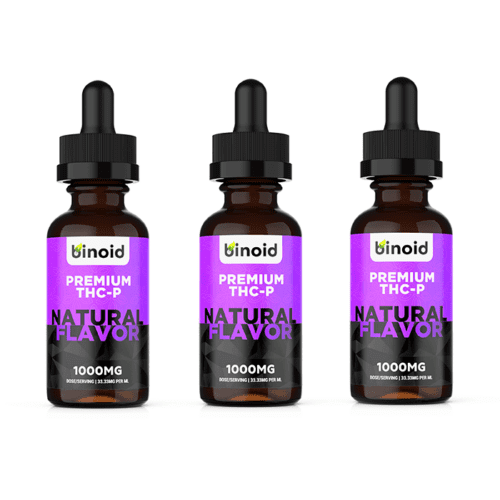
THC-P Tinctures – Bundle
$83.99$139.99 -
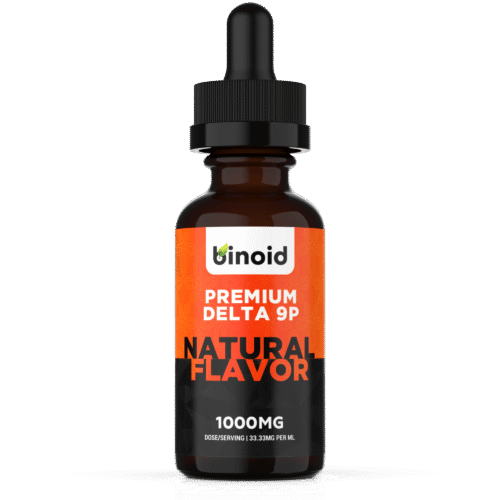
Delta 9P Tinctures – Bundle
$75.99$169.99 -
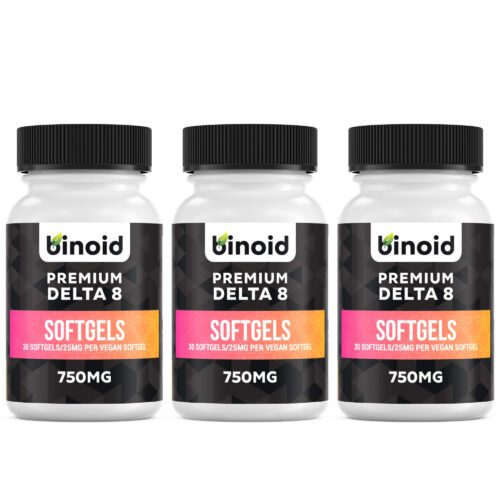
Binoid Delta 8 THC Capsules – Bundle
$78.99$119.99 -
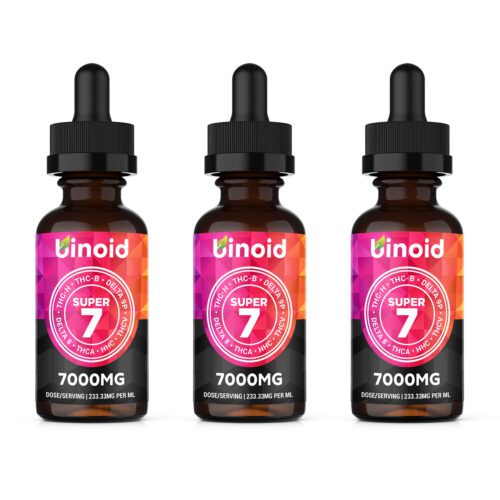
Super 7 Tincture Bundle – 7000mg
$109.99$159.99